Storm Guard Roofing
Call

Bayonne · Hudson County

Roof Repair Services in Bayonne, NJ

Storm Guard Roofing provides targeted roof repair services in Bayonne, New Jersey (ZIP 07002). As a family-owned contractor with over 25 years of local operational experience, we are licensed, insured, and equip property owners with direct 24/7 emergency response and insurance claim support. Bayonne presents specific architectural and environmental demands: high-density residential streets with narrow lots, attached multi-family structures, brownstones, and extensive flat roof systems. Positioned between Newark Bay and the Kill Van Kull, properties in Bergen Point, Constable Hook, Uptown, Midtown, and Centreville face persistent exposure to salt-laden marine air. This exposure accelerates the oxidation of flashing metals, fastener degradation, and lap seam failure. When leaks develop, technical diagnostic accuracy and correct material compatibility are required to halt structural deterioration. Call (201) 403-0024 for direct service.

Bayonne Building Stock and Roof Failure Mechanisms

The predominant residential building stock in Bayonne consists of narrow-lot double-family homes, multi-story masonry structures, and light commercial buildings. Many feature flat or low-slope roof designs using modified bitumen, built-up membranes, or single-ply rubber. In neighborhoods like Midtown and Uptown, high building density means water runoff from one structure directly impacts adjacent parapets, sidewalls, and light wells. Flat roofing relies entirely on pitch-to-drain geometry, scuppers, and internal drains to shedding rain. When scuppers freeze or become obstructed, standing water builds up against flashings and perimeter terminations.

Coastal winds carrying marine salt off Newark Bay and the Kill Van Kull create a harsh environment for metal roof components. In Bergen Point and Constable Hook, standard galvanized steel flashings and bare metal fasteners oxidize rapidly. As rust forms, it expands, loosening anchors, breaking sealant bonds, and creating microscopic entry points for water. This moisture travels horizontally along ceiling joists, making the interior leak point appear feet away from the actual roof entry location.

  • Flat roof membrane splits, lap seam delamination, and edge perimeter failures.
  • Salt-air corrosion on gravel stops, metal edge caps, chimney flashings, and exposed screws.
  • Parapet wall leaks caused by cracked masonry copings and decayed base wall flashings.
  • Valley and sidewall flashing erosion driven by coastal wind exposure and freeze-thaw cycles.

Flashing Repair, Fastener Replacement, and Salt-Air Protection

Flashing details at wall intersections, chimneys, skylights, and vent pipes represent the primary point of weatherproofing failure on Bayonne roofs. Reusing existing flashings during a repair or attempting to re-seal rusted metal with standard asphalt mastics offers only a temporary stopgap. As salt air attacks underlying raw metal, the bond splits and water enters behind the interior wall finish.

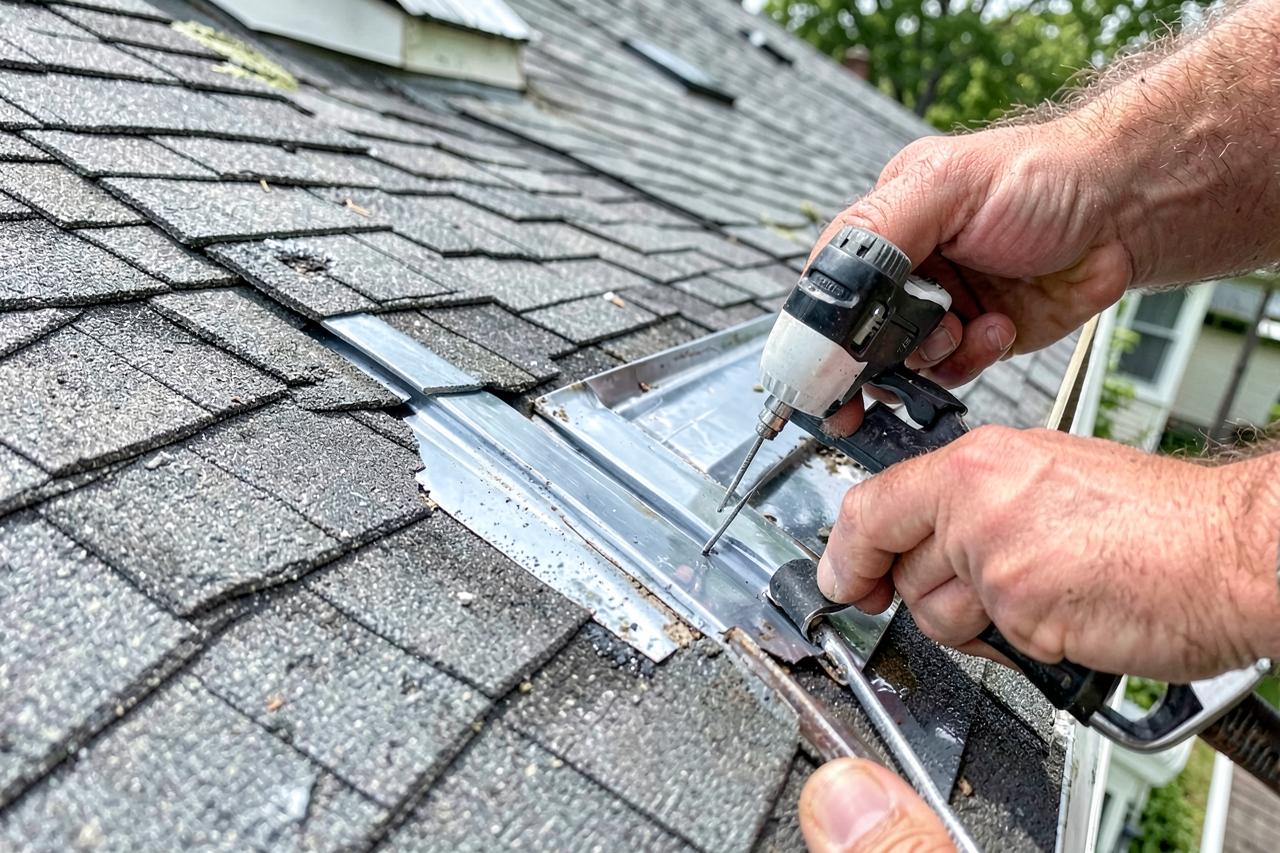
Storm Guard Roofing rebuilds failed perimeter metal using materials selected for salt-air resistance. We use aluminum or coated metal for all new flashing and replace fasteners rather than reusing them. Reusing aged fasteners compromises the original screw hole threads and destroys protective sealing gaskets, leaving the roof vulnerable to high-wind blow-offs along Newark Bay. Heavy-gauge aluminum and factory-coated metals prevent rust-induced expansion, ensuring chimney step flashing, counter-flashing, and wall terminations remain sealed against ocean winds and rain.

  • Complete tear-out of rusted metal components down to original masonry or framing.
  • Custom installation of aluminum or factory-coated step, counter, and valley flashings.
  • Replacement of all structural and trim fasteners with new corrosion-resistant hardware.
  • Polyurethane-based masonry wall seals engineered for concrete and brick adhesion.

Flat Roof Diagnostics and Substrate Integrity Testing

Flat roof leaks on Bayonne buildings must be correctly diagnosed before applying repair materials. A frequent problem in Centreville and Midtown occurs when past repairs consisted of applying successive coats of elastomeric paint or aluminum coating over actively leaking membranes without evaluating structural dry conditions.

Where a roof has been coated repeatedly, we test the substrate before quoting another coating — on a saturated roof, coating traps the water and the deck keeps rotting underneath. Trapped moisture under a waterproof barrier destroys tongue-and-groove wood decking, rots underlying plywood, creates internal steam pressure under summer heat, and causes extensive membrane blistering.

Our diagnostic repair procedure includes non-destructive moisture testing and core sampling where necessary to confirm the underlying insulation board and wood decking are dry. If the substrate is structurally sound, localized repairs—such as heat-welded modified bitumen patches, seam restoration, or target drain detailing—are completed. If saturated decking is discovered, we remove the compromised structural material, replace the wood framing, and tie in fresh membrane coverage.

  • Core sampling and moisture testing to verify substrate condition before quoting repairs.
  • Heat-welded modified bitumen patches on split membranes and compromised seams.
  • Re-sealing and targeted replacement of internal roof drain assemblies and wall scuppers.
  • Removal and replacement of water-damaged structural wood decking prior to patching.

Emergency Tarping and Coastal Storm Damage Mitigation

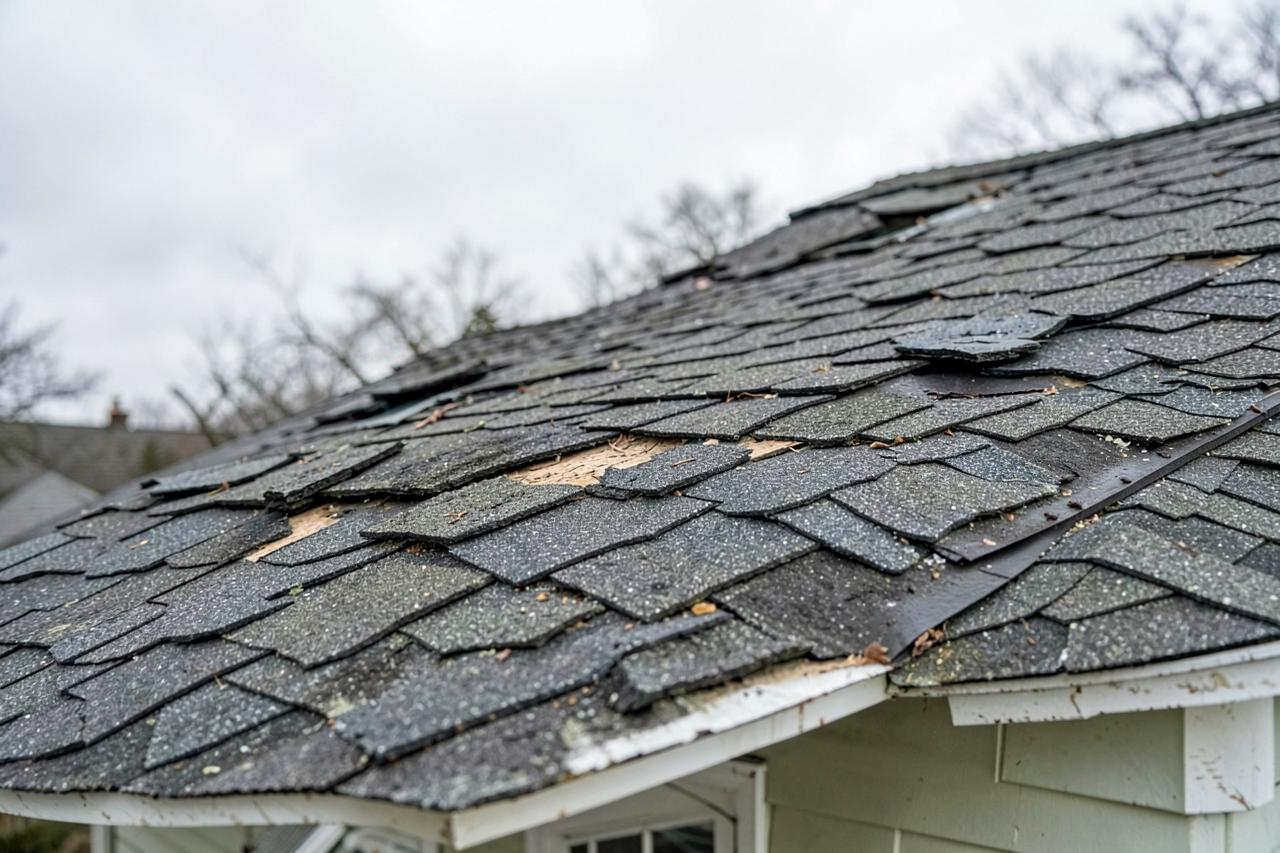
Noreasters, tropical systems, and severe coastal windstorms generate significant uplift pressures across Hudson County roofs. Unsealed shingles can lift, flat roof membrane edges can tear back, and airborne debris can puncture outer weather barriers. Storm Guard Roofing maintains 24/7 emergency response capacity to perform rapid containment across Bayonne, preventing active leaks from damaging plaster interiors, mechanical utilities, and floor structures.

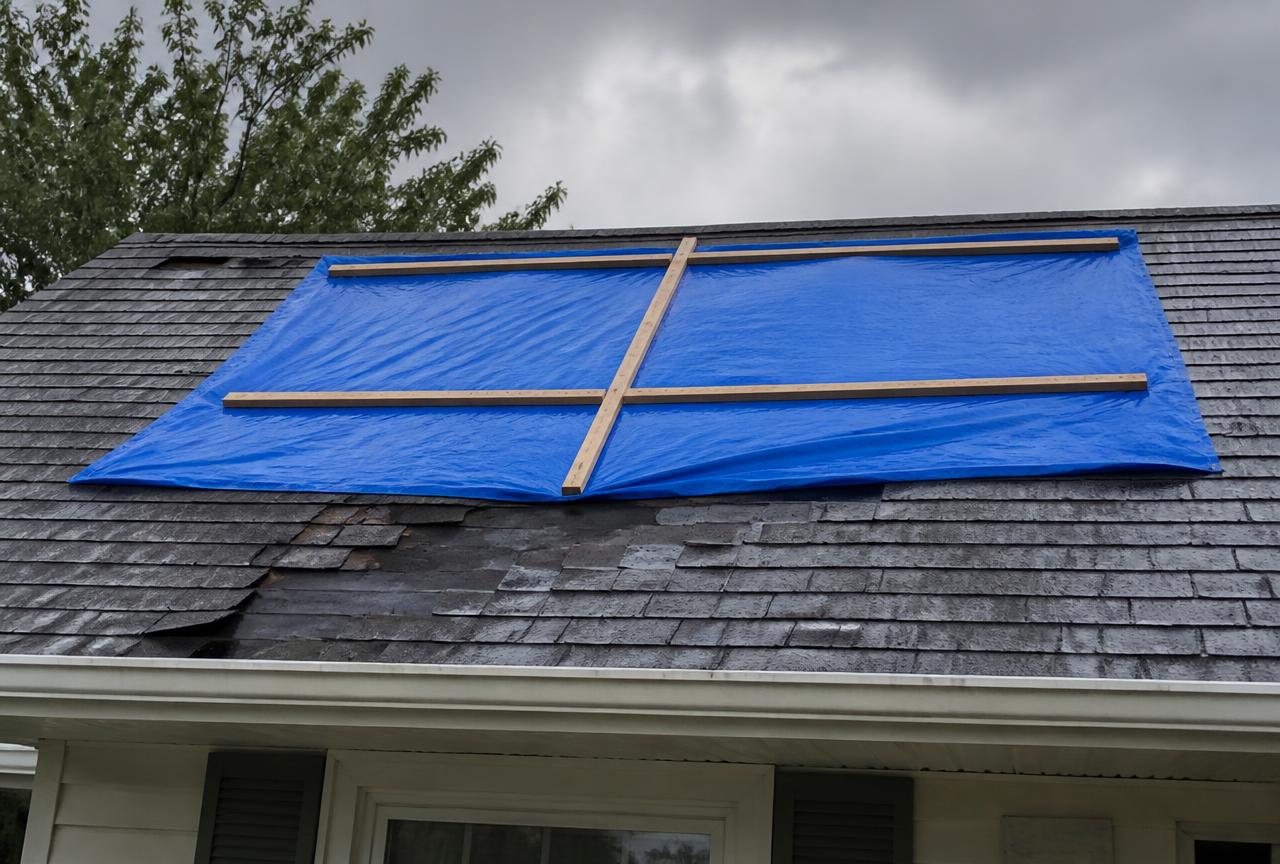
Emergency containment requires secure mechanical installation. We anchor heavy-duty protective tarps using wood furring strips secured directly into solid framing, preventing coastal wind gusts from tearing the tarp away. Following emergency stabilization, we perform a detailed technical inspection, draft clear line-item repair scopes, and assist property owners with insurance claims to expedite formal permanent repairs.

  • 24/7 emergency dispatch across ZIP code 07002 and surrounding Hudson County areas.
  • Wind-resistant emergency tarping and temporary roof membrane sealing.
  • Thorough physical inspection documenting hidden uplift damage and structural water path.
  • Comprehensive insurance claim reporting and coordination with adjusters.

Repair vs. Replacement Cost Analysis for Bayonne Property Owners

Determining whether a roof requires a targeted repair or a complete replacement depends on substrate dryness, membrane age, and overall structural condition. For Bayonne homeowners, targeted roof repairs provide significant cost savings when the leak source is isolated—such as an open pipe boot, localized flashing corrosion, or a single seam failure on a sound flat roof assembly. A correct repair solves the leak without incurring the high cost of a full roof teardown.

When a roof suffers from widespread deck saturation, systemic membrane breakdown, or multi-layer coating failure, localized repairs become inefficient over time. Repair costs depend on labor, materials, street access conditions on narrow Bayonne lots, and structural repairs. All scope work involving structural deck replacement strictly complies with City of Bayonne Building Division regulations and municipal codes.

  • Targeted repairs eliminate leaks at a fraction of full roof tear-off costs.
  • Preserves existing, structurally sound roof sections without unnecessary material disposal.
  • Transparent scope evaluation detailing the remaining service life of original roof materials.
  • Full adherence to City of Bayonne permit standards for all structural repairs.

Bayonne questions we get asked

How does salt air from Kill Van Kull and Newark Bay affect roof flashing in Bayonne?
Salt air accelerates oxidation on standard galvanized steel flashings and bare screws, leading to rust, metal expansion, and seal failure around chimneys, skylights, and parapets. We use aluminum or coated metal for all new flashing and replace fasteners rather than reusing them to ensure long-term corrosion resistance.
Can you apply a new roof coating over my existing flat roof in Uptown or Bergen Point?
Where a roof has been coated repeatedly, we test the substrate before quoting another coating — on a saturated roof, coating traps the water and the deck keeps rotting underneath. We perform substrate moisture testing to confirm the underlying wood deck and insulation are completely dry before applying any repair coatings or patches.
Do I need a City of Bayonne building permit for a roof repair?
Minor isolated repairs, flashing fixes, and patch work generally do not require a building permit. However, if the repair involves replacing structural framing timbers or substantial redecking, permits from the City of Bayonne Building Division may be required. Storm Guard Roofing handles permit determination and submittals when required.
What is included in your 24/7 emergency roof repair service?
When you call (201) 403-0024 during an active emergency, our team dispatches to perform emergency tarping and temporary seals to halt water entry. Once the structure is stabilized and weather permits, we execute a permanent technical repair and provide detailed documentation to assist with your insurance claim.

More in Bayonne

Call (201) 403-0024 for a Bayonne inspection, or send the form.

Or call (201) 403-0024. Emergency line answered 24/7.