North Arlington · Bergen County
Roof Repair Services in North Arlington, New Jersey
Storm Guard Roofing provides localized roof repair services throughout North Arlington, New Jersey. Operating for over 25 years as a family-owned, licensed, and insured contractor, we deliver technical repair solutions for active leaks, structural flashing failures, and weather-related shingle displacement. North Arlington features a specific topography—ranging from the elevated ridge along Ridge Road down toward the Passaic River basin—exposing residential roofs to severe wind shear and driving rain. Emergency repair crews are available 24/7 at (201) 403-0024 to mitigate active water entry, perform structural tarping, and prepare line-item insurance claim documentation. We focus strictly on preserving existing roofing systems whenever structural integrity permits, avoiding full replacements through precise diagnostics and code-compliant repair methods.
Leak Diagnostics for North Arlington Housing Stock
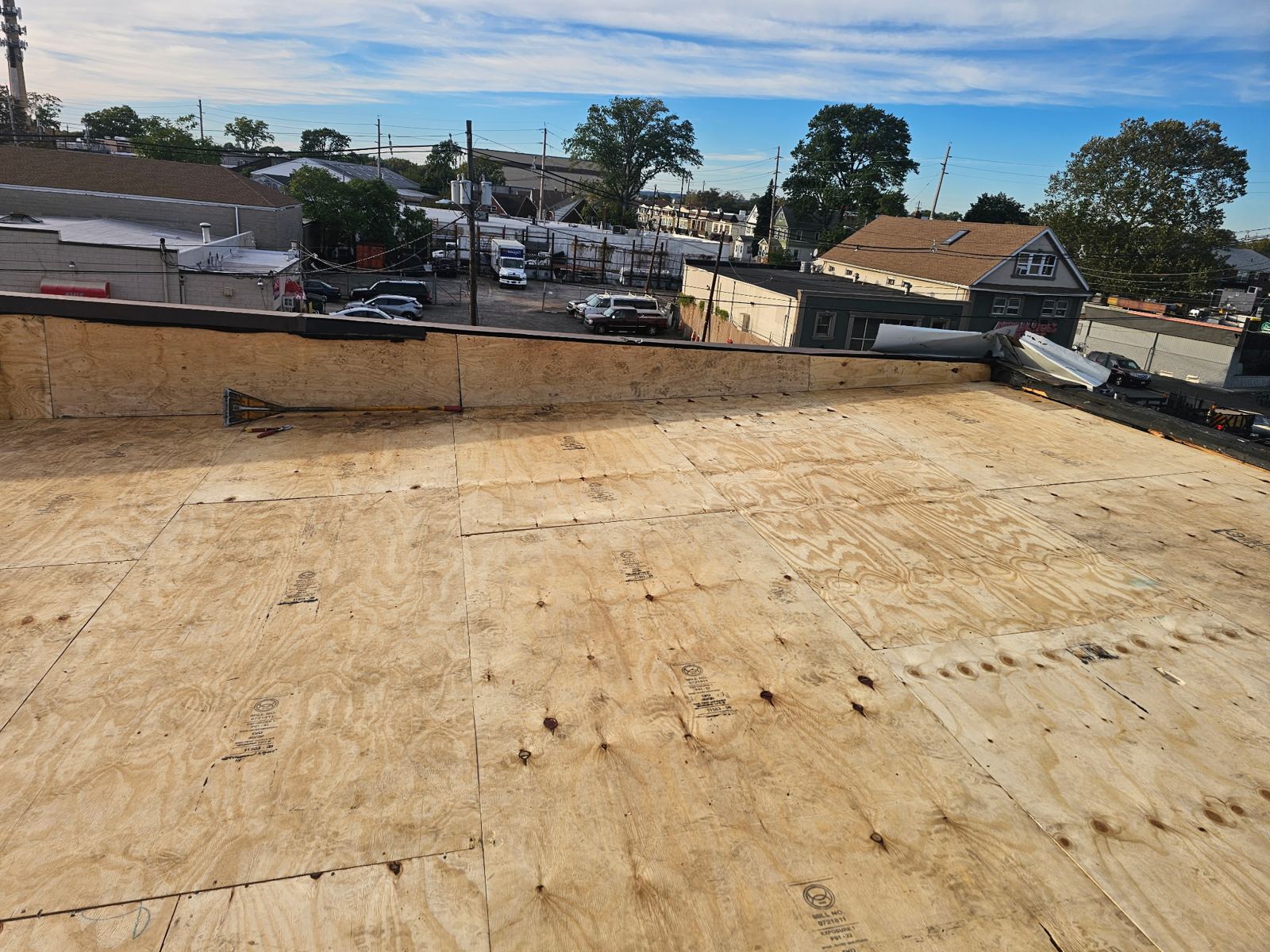
North Arlington's residential architecture requires localized repair strategies tailored to structural configuration. A significant portion of the borough's building stock consists of hillside two-family homes with flat rear roofs and parapet flashing work. These structural configurations introduce specific failure points that differ from standard single-family gable roofs.
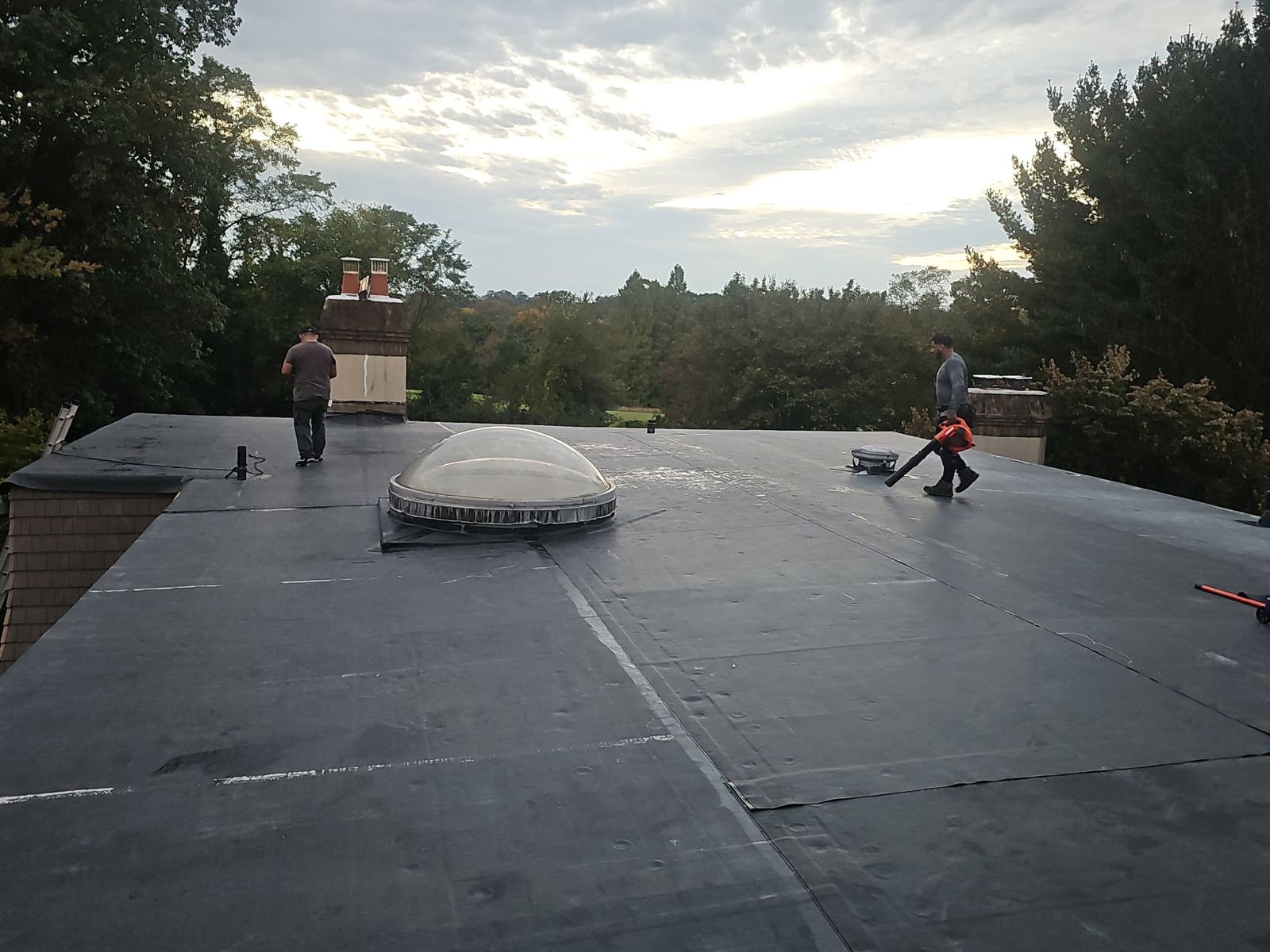
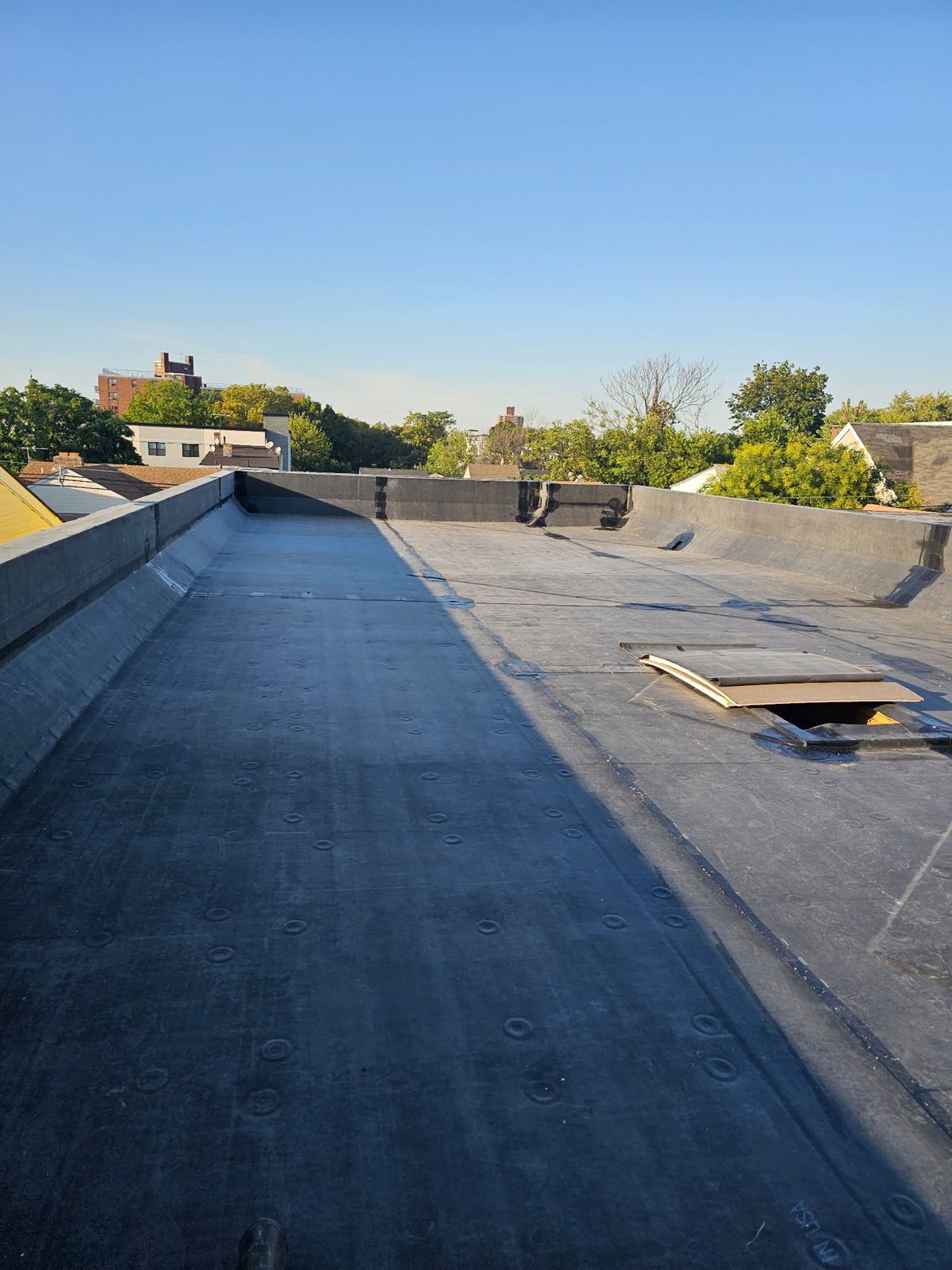
The primary vulnerability in these hillside two-family properties occurs at the pitch transition where the main steep-slope asphalt roof meets the rear flat addition. Rainwater traveling down the steep upper slope accelerates before reaching the low-slope roof, leading to water backing up during extreme downpours. Furthermore, flat rear roofs in North Arlington frequently terminate at brick masonry parapet walls along shared property lines. When parapet flashing degrades or mortar joints open, water migrates behind the exterior wall membrane, leaking into second-story ceilings and interior wall cavities.
- Thermal expansion cracking along flat rear roof EPDM and modified bitumen membrane seams.
- Deteriorated metal coping caps atop brick parapet walls allowing rain to penetrate exterior boundary walls.
- Blocked scuppers and rear gutters causing standing water depth to exceed lap-seal height on flat rear extensions.
- Shingle lift along high-elevation corridors like Schuyler Avenue and Ridge Road due to west-facing wind exposure.
Repairing Flashing Failures, Valleys, and Wall Junctions
Roof leaks rarely originate in the middle of an undamaged shingle; they stem from junction points where roofing materials meet vertical surfaces or intersecting roof planes. Metal flashing acts as the primary moisture barrier at these intersections. Over time, thermal movement causes metal step flashing along dormers and sidewalls to pull away from timber framing, breaking the waterproof seal.
In older North Arlington homes, valley failures are a primary cause of interior water damage. Open metal valleys can corrode through back-side oxidation, while closed-cut shingle valleys accumulate organic debris from tree canopy, trapping moisture along the cut edge. Repairing these areas requires stripping back surrounding shingles, inspecting the underlying wood deck for rot, laying self-adhered ice and water membrane, and fitting fresh corrosion-resistant flashing metal.
Counter-flashing embedded into brick masonry chimneys also requires routine repair. As mortar joints weather under North Arlington freeze-thaw cycles, lead or copper counter-flashing detaches, allowing water to track down the chimney chase into living spaces below.
- Re-securing loose step flashing along sidewalls with self-adhering membrane integration.
- Repairing brick chimney counter-flashing using deep-cut raggle joints and high-grade masonry sealant.
- Clearing and rebuilding decayed shingle valleys with heavy-gauge aluminum or copper valley metal.
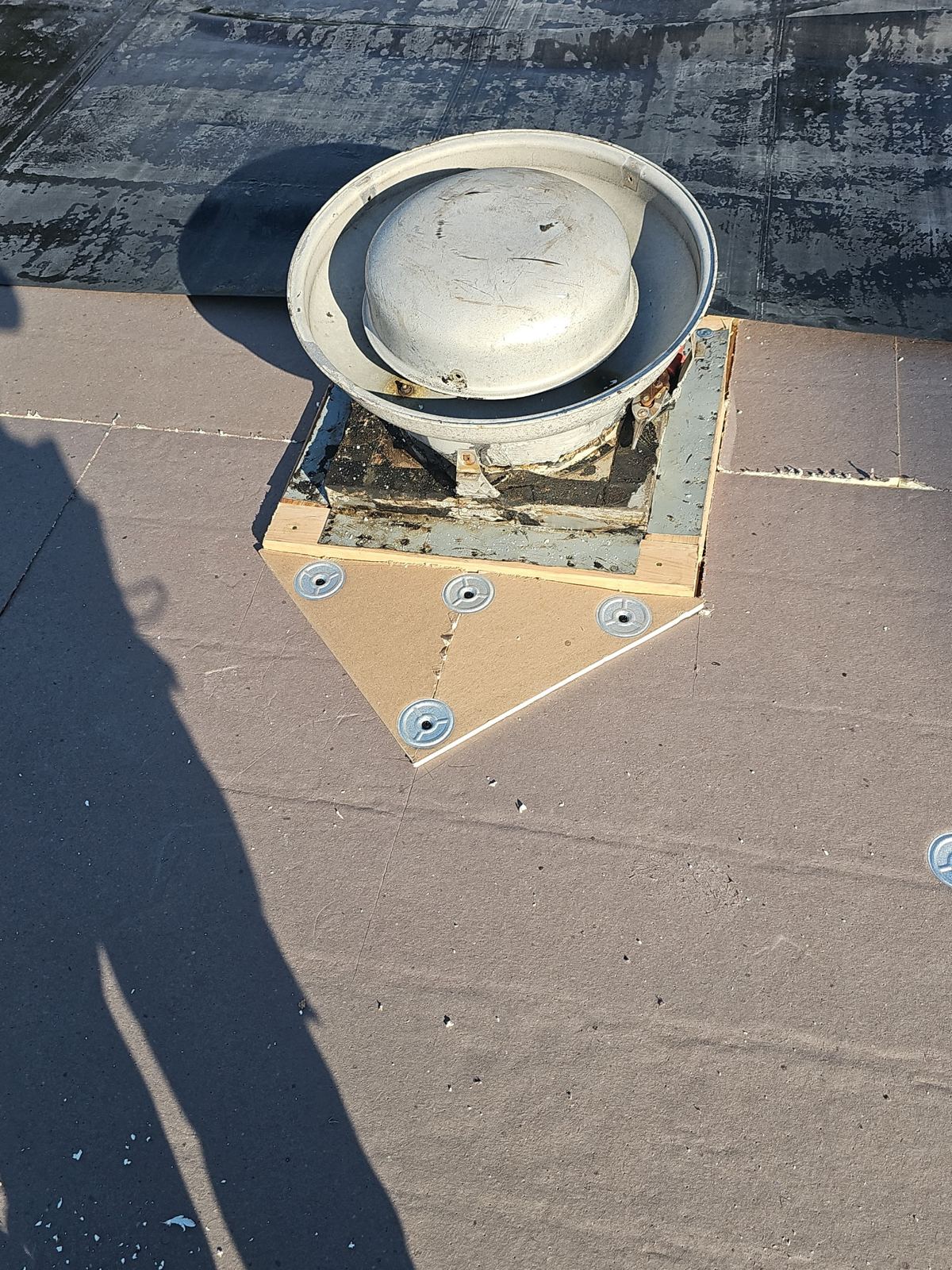
- Replacing cracked pipe boots and roof vent collars damaged by ultraviolet radiation exposure.
Emergency Storm Damage Response and Insurance Claims
Severe weather events along the Passaic River valley bring wind gusts capable of lifting asphalt shingles and detaching rake edge metal. When structural damage occurs during a storm, immediate containment is necessary to prevent severe interior water damage to drywall, insulation, and electrical systems. Storm Guard Roofing maintains a 24/7 emergency response unit reached directly at (201) 403-0024.
Our emergency protocol centers on mechanical tarping. We secure heavy-duty, UV-resistant tarps using wooden furring strips anchored into solid structural framing—never driving fasteners straight through sound shingles. This stabilizes the building envelope until permanent repairs can be completed.
For homes suffering hail impact, wind tear-offs, or fallen tree limb damage, we manage the technical documentation required by property insurance carriers. We generate detailed line-item repair scopes that include pitch calculations, shingle damage counts, decking repair square footage, and necessary code updates. We meet directly with insurance adjusters on-site in North Arlington to verify all field findings match the submitted repair claim.
- 24/7 dispatch for structural tarping and immediate water containment.
- Field inspection of wind-lifted, creased, or missing three-tab and architectural shingles.
- Complete technical documentation of storm damage for line-item processing with insurance adjusters.
- Removal of fallen tree debris and structural reinforcement of compromised rafters or roof sheathing.
Evaluating Roof Repair Versus Complete Roof Replacement
Homeowners in North Arlington often question whether an active leak warrants a total roof replacement or a targeted repair. A full tear-off is an unnecessary expense if the underlying roof substrate is sound and the damage is localized to a specific zone, such as a failed valley, damaged pipe boot, or isolated shingle blow-off.
Determining whether a roof can be safely repaired depends on three key structural factors: shingle flexibility, the extent of moisture saturation in the decking, and overall system age. If asphalt shingles retain their granular coating and remain pliable enough to lift without cracking, isolated repairs are technically viable. Targeted repairs preserve the functional service life of the remaining roof surface for a fraction of full replacement overhead.
However, if an inspection reveals widespread mat decay, brittle asphalt throughout multiple slopes, or soft plywood decking across broad areas, patch repairs become temporary fixes. Storm Guard Roofing provides an honest, objective engineering assessment of your roof's condition, presenting clear repair parameters rather than pushing unneeded replacement jobs.
- Precise leak tracing to isolate water entry to specific mechanical components or shingle courses.
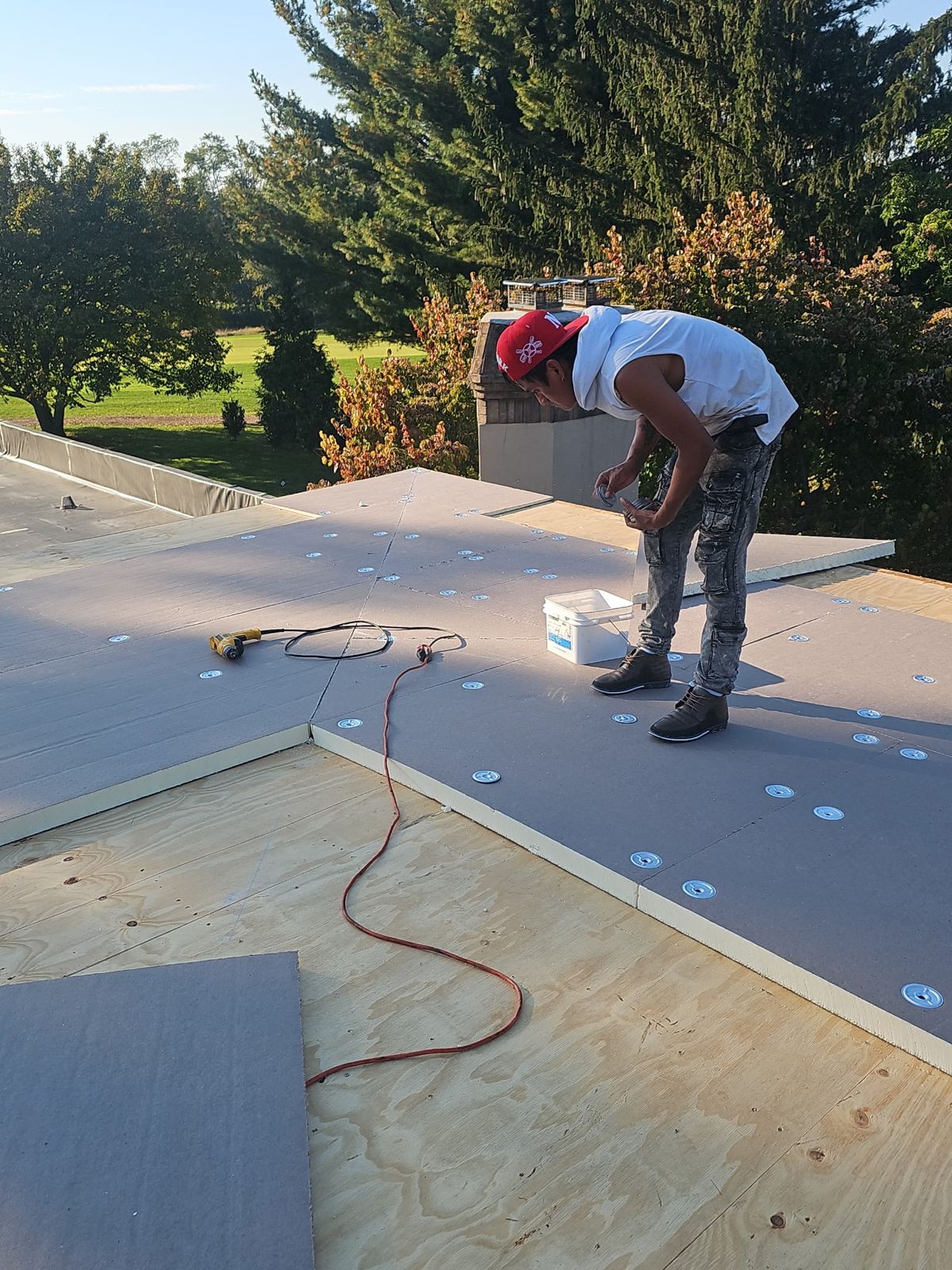
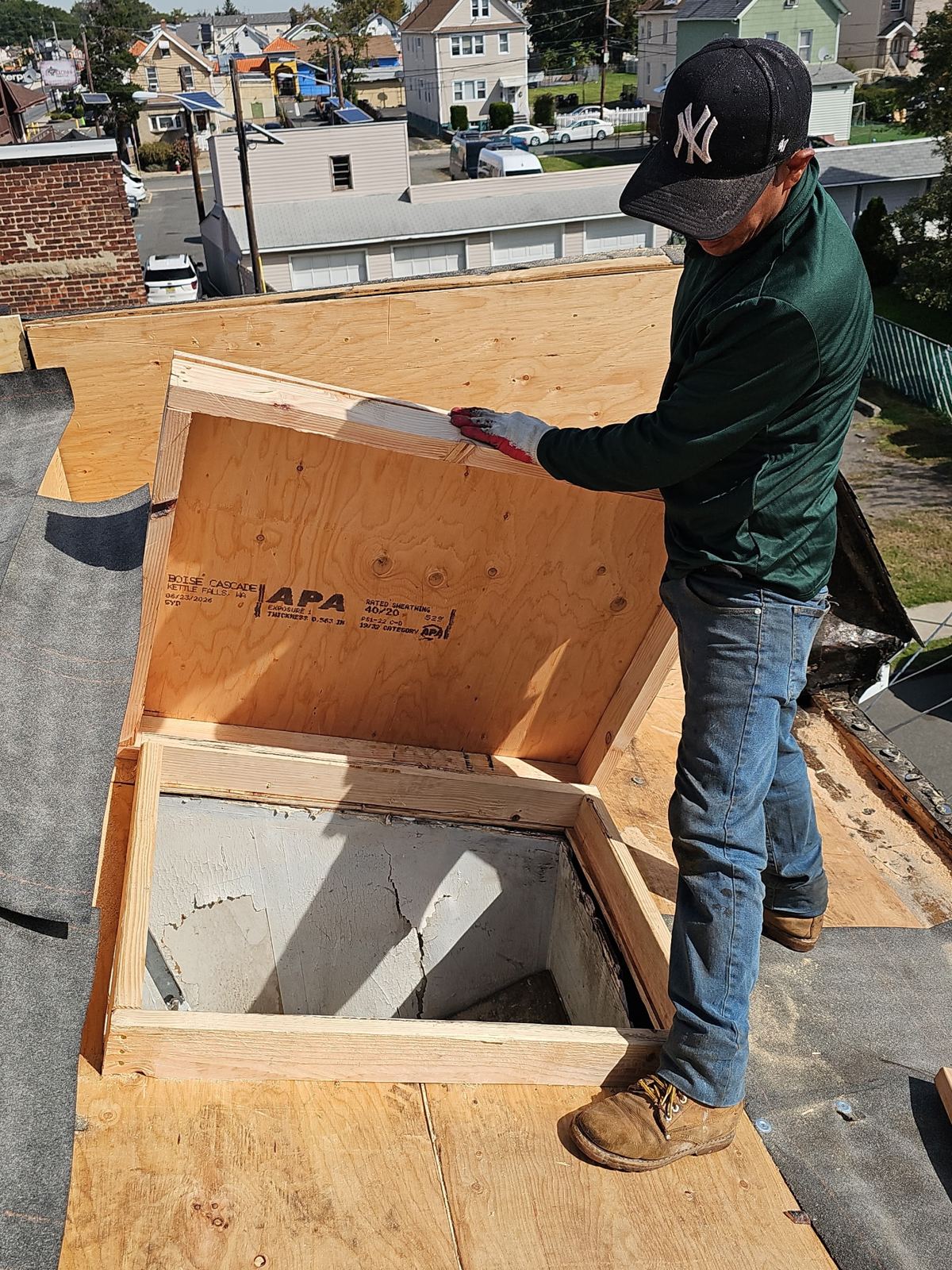
- Decking inspection using moisture meters to verify structural integrity before laying new material.
- Cost-effective spot repairs for roofs under 15 to 20 years of age with localized damage.
- Clear technical threshold reporting detailing when total replacement becomes structurally necessary.
Local Building Codes and Repair Standards in North Arlington
Roof repairs in North Arlington must conform to local municipal codes enforced by the Borough of North Arlington Construction Department. While minor maintenance and localized shingle patches under specific square-footage thresholds may not require full permitting, structural repairs involving decking replacement, flat roof membrane installation, or major section overhauls must adhere to New Jersey Uniform Construction Code (NJ UCC) standards.
Proper repair execution requires strict adherence to ice barrier requirements. In Bergen County, code dictates self-adhering polymer-modified bitumen sheet installation extending from the eave edge to a point at least 24 inches inside the exterior wall line. On North Arlington's hillside two-family homes, ensuring proper flashing at the parapet wall and rear flat roof transition is critical to passing municipal inspections and avoiding future structural failure.
Storm Guard Roofing pulls all required municipal permits, coordinates required municipal inspections, and executes every repair to meet or exceed current New Jersey building code mandates.
- Compliance with Borough of North Arlington Construction Department permitting guidelines.
- Installation of ice and water protection compliant with Bergen County snow-load and ice-damming standards.
- Parapet wall cap sheet installation matching NJ UCC low-slope residential requirements.
- Full post-repair cleanup and jobsite safety practices compliant with OSHA standards.
North Arlington questions we get asked
- How do flat rear roofs on North Arlington hillside two-family homes cause interior leaks?
- Flat rear additions collect heavy runoff from the upper pitched roof. Leaks usually occur when EPDM or modified bitumen seams degrade, drainage scuppers become clogged, or wall flashing along the brick parapet separates due to structural settling and thermal expansion.
- Are building permits required for roof repairs in North Arlington, NJ?
- Minor spot repairs replacing a few shingles typically do not require a permit. However, extensive repairs involving structural plywood sheathing, flat roof re-roofing, or large section replacements require permits issued through the Borough of North Arlington Construction Department.
- How fast can Storm Guard Roofing respond to an active roof leak emergency in North Arlington?
- We operate 24/7 emergency dispatch at (201) 403-0024. Crews deploy immediately to install emergency tarping and stop water intrusion, protecting the interior of your home until permanent structural repairs can be completed.
- What causes flashing leaks around chimneys on older North Arlington houses?
- Mortar between chimney bricks degrades over time from freeze-thaw cycles, allowing water behind the metal counter-flashing. Additionally, differential settling between the masonry chimney and wood roof framing can pull metal step flashing out of the raggle joints.
More in North Arlington
Call (201) 403-0024 for a North Arlington inspection, or send the form.