Storm Guard Roofing
Call

West New York · Hudson County

Roof Repair Services in West New York, NJ

Storm Guard Roofing provides direct, technical roof repair services in West New York, New Jersey (ZIP 07093). For over 25 years, our family-owned company has serviced the specific building stock of Hudson County, focusing on attached and semi-attached multi-family residences, rowhouses, and commercial structures. We operate throughout all local neighborhoods, including Bergenline, Boulevard East, Central, and the Hudson Heights side. Whether responding to storm damage caused by wind exposure off the Hudson River or fixing persistent leaks on low-slope membrane systems, our licensed and insured teams are available 24/7. We handle complete insurance claims documentation, emergency tarping, and targeted leak repairs. Call (201) 403-0024 to schedule an diagnostic inspection on your roof.

Diagnosing Leaks in West New York Attached and Semi-Attached Buildings

The building stock in West New York consists heavily of attached and semi-attached brick structures featuring flat or low-slope roofing systems. These multi-family and rowhouse properties present specific waterproofing challenges. Because buildings along Bergenline Avenue and Central Avenue share structural party walls, water entering through a roof defect on one building can migrate laterally across wood joists before dripping into a ceiling several feet away. The vast majority of roof repairs in 07093 involve failing membrane seams and compromised parapet caps.

High wind exposure along Boulevard East accelerates material fatigue along roof edges and flashings. When modified bitumen, EPDM, or TPO membrane seams unbond, wind-driven rain penetrates under the field sheet, saturating the insulation boards and timber decking below. Storm Guard Roofing performs systematic evaluations on every roof before proposing a solution. We probe seams with mechanical tools to locate hidden unbonded laps and inspect all parapet caps and joints for cracked mortar or loose metal fasteners before delivering a written quote.

  • Mechanical seam probing across modified bitumen, EPDM, and single-ply membranes.
  • Inspection of terracotta, concrete, and metal parapet coping caps and joints.
  • Tracing lateral water migration routes along shared building party walls.
  • Clearing and resealing internal drain bowls, scuppers, and collector boxes.

Masonry Counterflashing and Abutting Wall Repair Standards

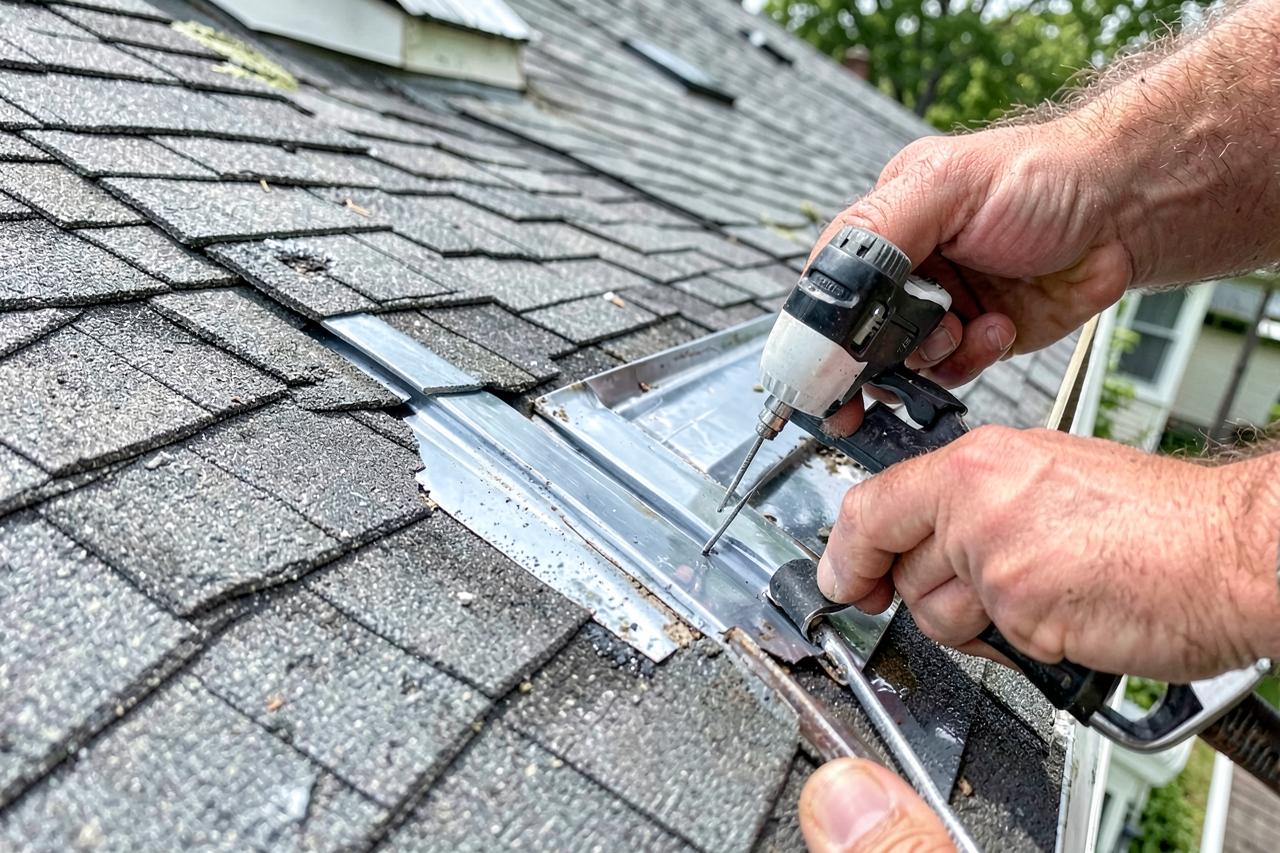
A frequent source of active roof leaks in West New York occurs where a lower roof abuts a higher neighboring masonry wall. This condition is widespread on the Hudson Heights side and across attached residential streets. Water running down the vertical brick wall during severe storms will enter the building interior if the wall-to-roof intersection is improperly flashed. Proper installation against brick or brownstone requires reglet-cutting the counterflashing directly into the masonry mortar joints, securing it with lead wedges, and sealing the joint with industrial sealant.

Surface-mounted metal strips secured to exterior brick with masonry anchors and caulk represent the most common failed repair attempt we encounter in West New York. Thermal movement rapidly breaks the caulk seal on surface-mounted flashing, allowing rain to run behind the metal and under the roof membrane. Storm Guard Roofing removes these failed surface patches, grinds clean reglet channels into the mortar lines of the abutting wall, and embeds new lead-coated copper or aluminum counterflashing directly into the masonry structure.

  • Grinding reglet channels into masonry mortar joints for embedded counterflashing.
  • Removal of failed surface-mounted metal flashing strips and temporary caulk patches.
  • Installation of step flashing and apron flashing at vertical masonry wall junctions.
  • Tuckpointing deteriorated brick joints above rooflines to prevent water bypass.

24/7 Emergency Tarping, Storm Damage, and Insurance Claims

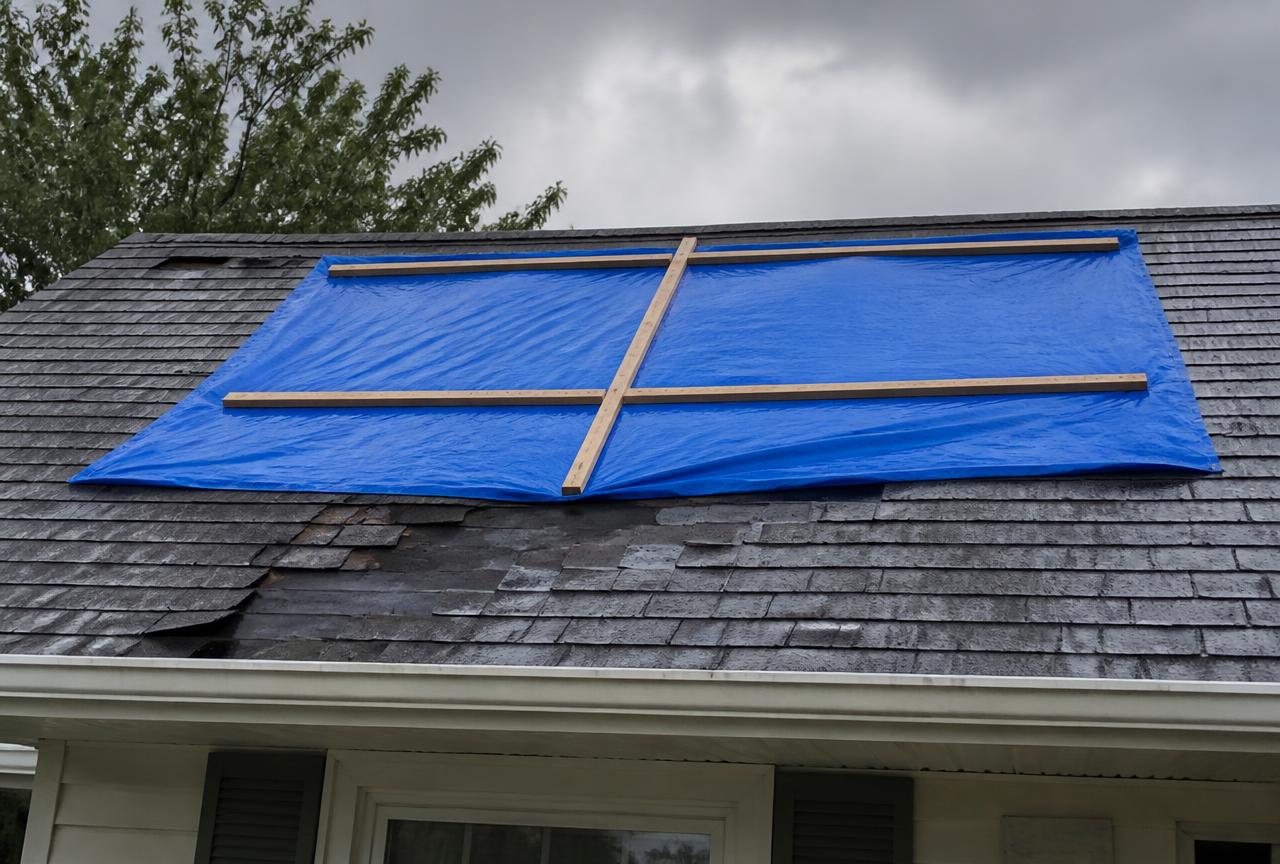
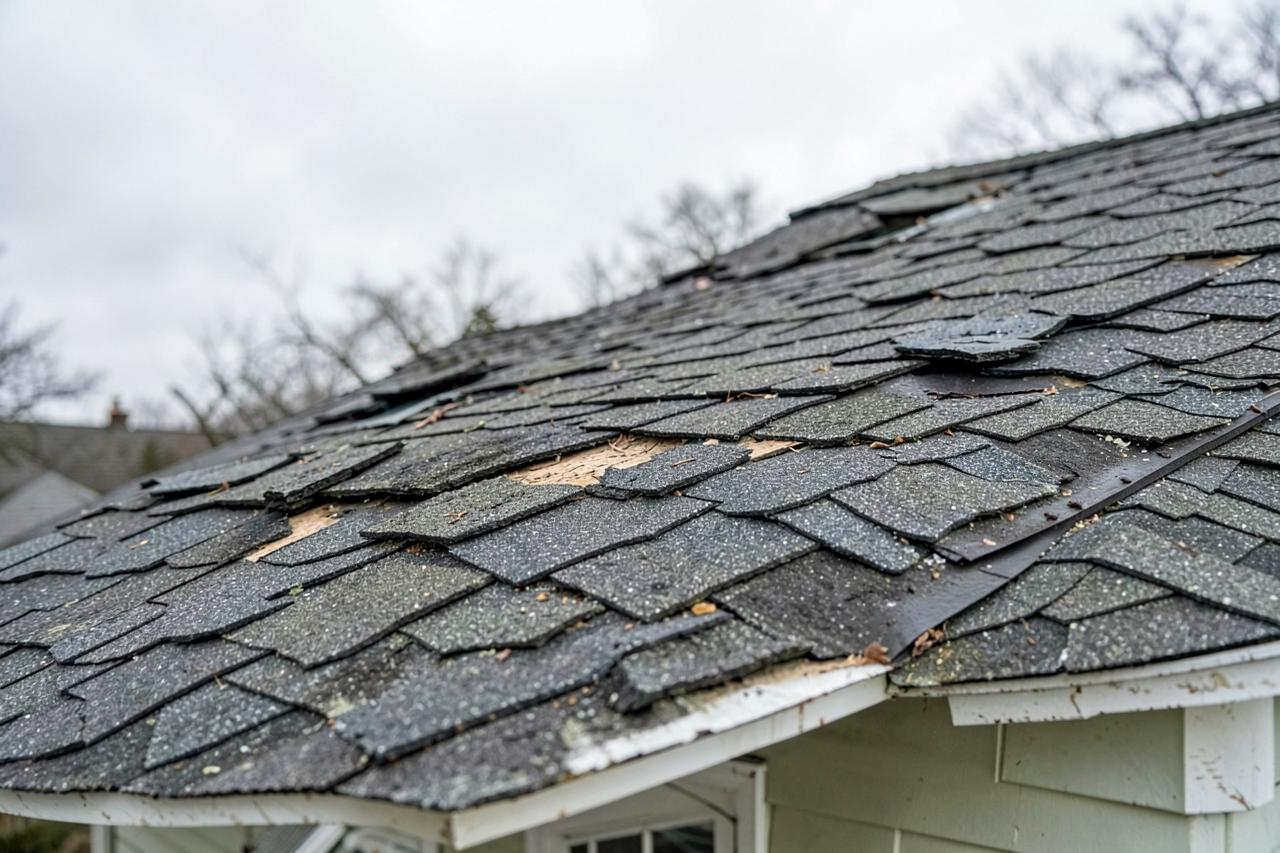
Severe coastal weather, nor'easters, and high wind gusts rising off the Hudson River palisades can detach edge metal, loosen parapet covers, or tear roof membranes. When roof integrity fails during a storm, immediate containment is required to avoid major interior damage and structural deck rotting. Storm Guard Roofing maintains a 24/7 emergency response team for property owners in West New York. Our crews deploy heavy-duty, sandbag-anchored tarps over damaged sections to seal out water until permanent repairs can be completed.

Managing an insurance claim for storm damage requires precise field documentation. We record all physical damage, moisture intrusion points, and deck deterioration using moisture meters, photographic evidence, and written field reports. Our staff works directly with your insurance adjuster to review the repair scope, verifying that the claim covers all required labor, staging, and material replacement according to Hudson County building codes.

  • 24/7 emergency dispatch for tarping and immediate structural weatherproofing.
  • Comprehensive storm damage field inspections for wind uplift and impact damage.
  • Itemized field reports and photo documentation provided for insurance adjusters.
  • Direct assistance throughout the insurance loss adjustment process.

Evaluating Repair Costs Relative to Full Roof Replacement

Property owners in West New York often assume that an active ceiling leak requires a complete roof tear-off and replacement. In many cases, a targeted repair restores full watertight protection at a small fraction of replacement costs. A full tear-off on an attached building along Bergenline Avenue or Boulevard East requires complex logistical coordination, including street occupancy permits for dumpsters, crane staging, and high disposal fees for multi-layer flat roof systems.

If the underlying roof deck and insulation boards remain dry and structurally sound, repairing open membrane seams, replacing parapet caps, and installing reglet-cut wall counterflashing is the most logical economic choice. Storm Guard Roofing evaluates the moisture level of your roof core during our diagnostic check. If a localized repair can extend the reliable service life of your existing roof assembly, we outline the exact scope of work necessary to secure the building without unnecessary replacement expense.

  • Significant cost savings compared to full roof tear-offs when structural decking is dry.
  • Avoidance of municipal street obstruction permits and crane rental expenses.
  • Targeted rebuilding of failing components including seams, flashings, and parapet caps.
  • Preservation of sound substrate materials to reduce environmental waste.

Diagnostic Inspection Protocols Before Quoting

Storm Guard Roofing does not provide telephone estimates or visual guesses from the street. Repairing low-slope roofs on attached urban buildings requires hands-on diagnostic testing. When our technicians arrive at your property in West New York, we access the roof to execute a thorough inspection protocol. We map interior water damage back to exterior structural points, considering roof slope, joist direction, and wall intersections.

Our diagnostic protocol includes physically probing all membrane seams with a specialized roofing hook, inspecting parapet coping cap joints, and checking wall counterflashing depth. Where higher neighboring walls meet your roof, we inspect the condition of the masonry and the existing metal flashing. This detailed process ensures we provide an accurate, fixed-price quote that addresses the actual root cause of the leak.

  • Physical hook probing of all field seams, wall laps, and edge terminations.
  • Inspection of coping stone joints, parapet wall masonry, and metal crest caps.
  • Verification of counterflashing insertion depth in wall mortar reglets.
  • Provision of detailed, fixed-price repair quotes with clear scopes of work.

West New York questions we get asked

Do I need a building permit from West New York for a roof repair?
Minor roof repairs, such as patching localized membrane seams, replacing parapet caps, or renewing wall counterflashing, generally do not require a permit in West New York. However, if the repair involves replacing more than 25% of the total roof surface or modifying structural decking, a permit from the West New York Building Department is required. Storm Guard Roofing handles permit applications when required for your scope of work.
Why does my roof leak only when rain blows from the east along Boulevard East?
East winds off the Hudson River push rain horizontally against exposed vertical masonry walls and parapets. If your roof counterflashing is surface-mounted with sealant rather than reglet-cut into the brick mortar joints, wind-driven water gets pushed behind the metal strip and flows under your roof membrane. Repairing this requires grinding reglets into the brick mortar lines and embedding new counterflashing.
How do you handle repairs on attached rowhouses with limited access?
Working on attached buildings along narrow corridors like Bergenline Avenue or Central Avenue requires specialized staging. We transport equipment and repair materials using controlled ladder hoists or manual transport to avoid blocking pedestrian sidewalks or neighboring properties. We also isolate work areas to protect shared party wall connections during repairs.
What causes parapet cap leaks on West New York flat roofs?
Parapet caps experience extreme thermal expansion and contraction. Over time, mortar joints between concrete coping stones crack, or lap sealant on metal caps splits open. Water enters the top of the brick parapet wall, bypasses the main roof membrane, and travels downward into top-floor ceilings. We resolve this by raking out failed joints, applying specialized sealants, or capping the wall with custom metal covers.

More in West New York

Call (201) 403-0024 for a West New York inspection, or send the form.

Or call (201) 403-0024. Emergency line answered 24/7.