
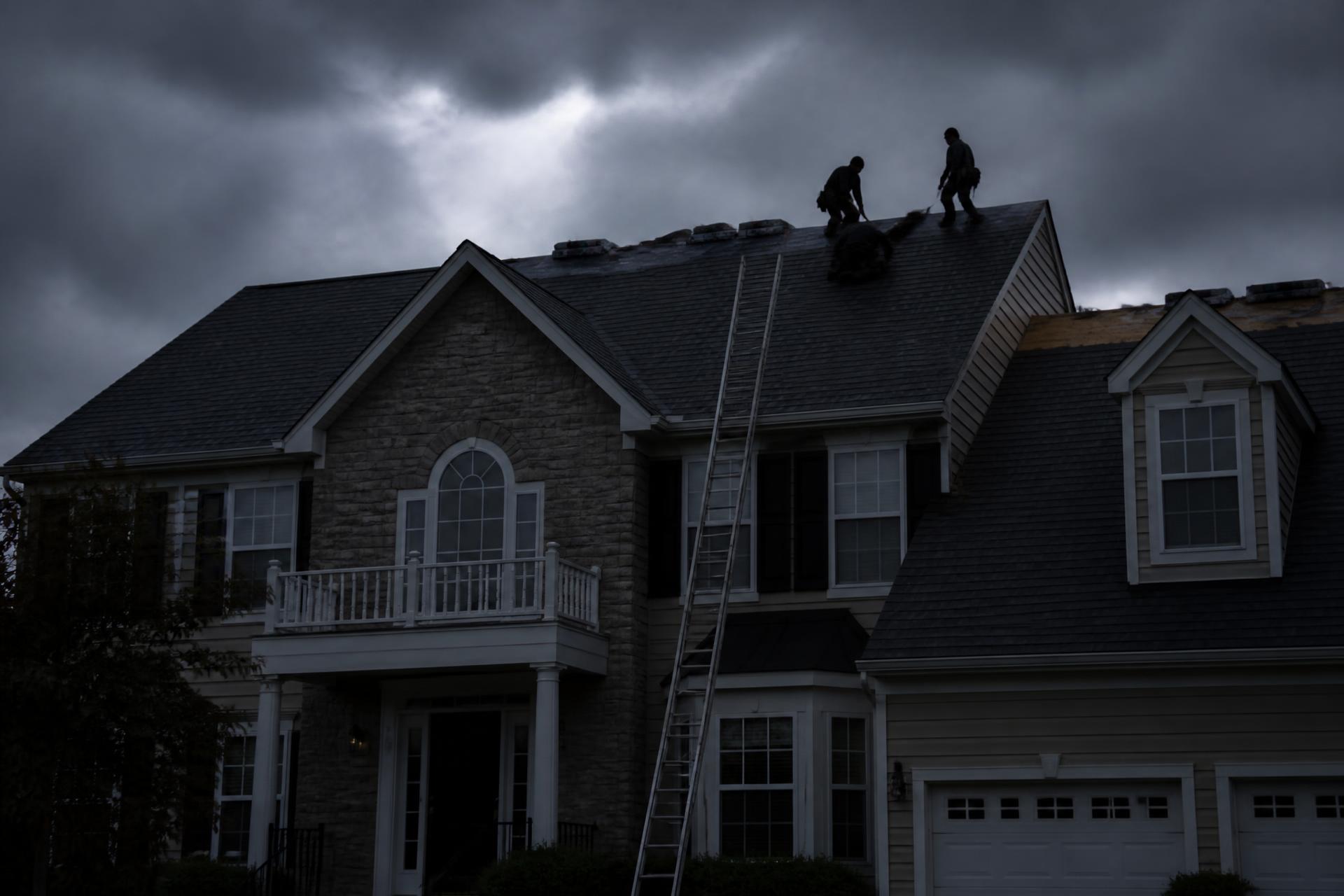
New Jersey roof replacement
Roof replacement in New Jersey, torn off and done to spec
Full tear-off, decking replaced where it is bad, new flashing at every penetration, and ventilation corrected so the new roof reaches its rated life. Written line-item scope before anything starts, permits and inspection handled by us.
(201) 403-0024NJ HIC# 13VH13549100 — independently owned and operated in New Jersey.
- 25+ years residential and commercial
- Family owned, licensed and insured
- Insurance claims handled start to finish
- Matches or beats any written quote
Price your replacement
Measurement, attic check, and a line-item estimate at no cost.
Repair or replace — how the call gets made
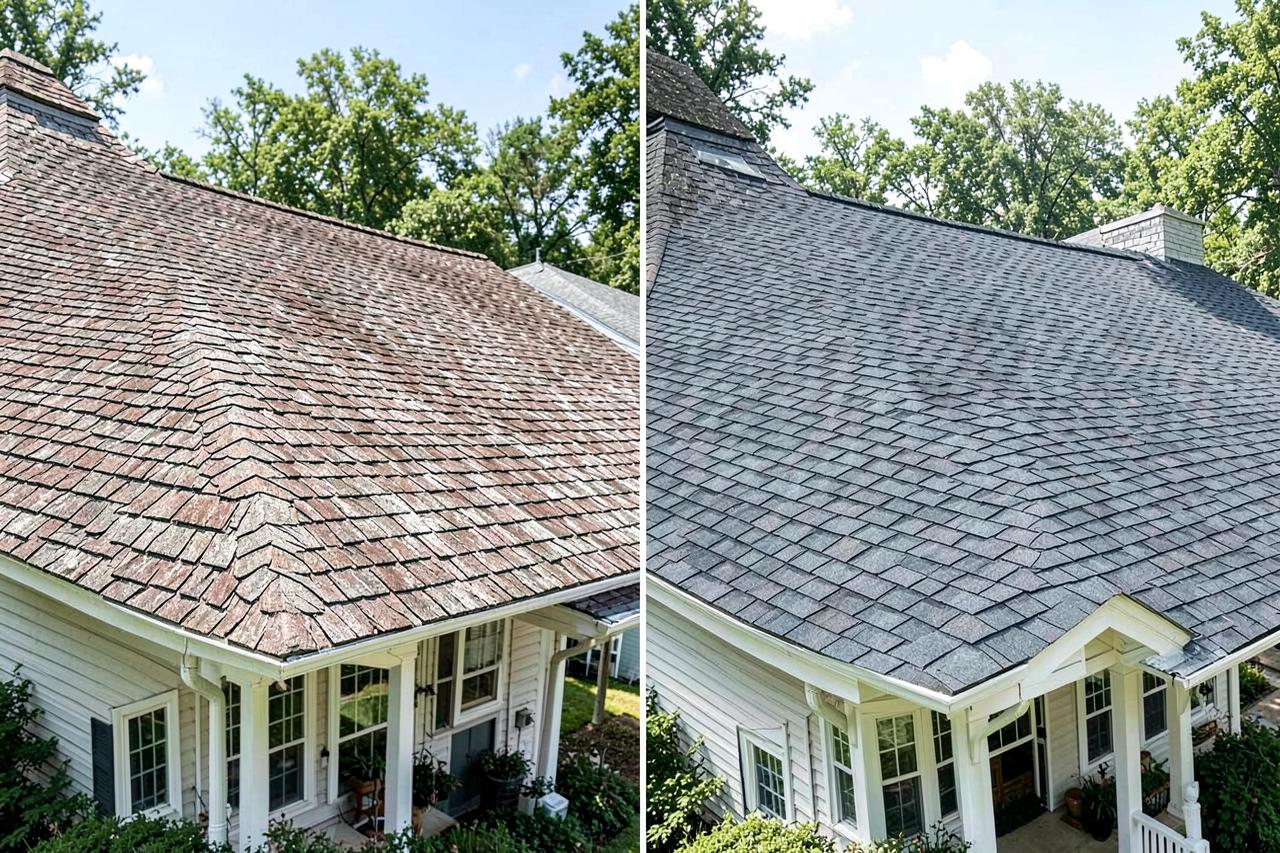
The difference between a repair and a replacement is not the size of the leak, it is the condition of the field. A 12-year-old roof with one bad pipe boot gets a repair. A 22-year-old roof losing granules on every slope gets an honest replacement number, with photos of what we found so you can check our work.
Widespread granule loss
Granules filling the gutters and bare patches on the shingles mean the UV layer is gone. Once the asphalt is exposed the shingles dry out and crack — patching buys months, not years.
Curling, cupping, or missing shingles
Shingles that no longer lie flat cannot shed water the way they were designed to. When it is happening across slopes and not just one corner, the field is at end of life.
Multiple leaks or recurring stains
One stain at one penetration is a flashing repair. Stains in different rooms, or a leak that comes back after repair, usually means the underlayment and field have failed together.
Age and sagging
A 20-plus year old three-tab or early architectural roof in NJ's freeze-thaw cycle is on borrowed time. A sagging ridge line or spongy feel underfoot points to the deck, and only tear-off finds it.
How the replacement runs
- Stage 1
Inspect and scope
Roof measured, pitch and layers verified, attic checked for ventilation and existing water damage. You get a line-item scope, not a single number on a card.
- Stage 2
Tear-off and deck repair
Old layers stripped to the deck with the property protected. Every soft or delaminated sheet photographed and replaced at the quoted unit price.
- Stage 3
Dry-in and detail
Ice-and-water at eaves and valleys, synthetic underlayment, new drip edge, and new flashing at every wall, chimney, and penetration the same day.
- Stage 4
Finish and close out
Field shingles, ridge vent, magnet sweep of the yard, final photos, permit close-out, and the manufacturer plus workmanship warranty in writing.
Roof replacement questions
- How do I know if my roof needs replacement instead of repair?
- Replacement is the right call when shingles are curling or losing granules across the whole field, leaks show up in several places, the roof is past 20 years, or the deck has soft spots in multiple areas. A single leak around one penetration on a 10-year-old roof is a repair. We inspect and tell you which one you actually have, in writing.
- Do you tear off the old roof or shingle over it?
- We tear off. An overlay traps wet or delaminated decking underneath, adds weight the framing may not need, voids most manufacturer warranties, and cuts the life of the new shingles. Tear-off is also the only time the deck, valley metal, and ice-and-water shield can actually be inspected and corrected.
- How long does a roof replacement take in New Jersey?
- A typical 20-to-30 square asphalt replacement runs one to three days: tear-off and deck inspection on day one, dry-in the same day so the house is never open overnight, then shingles, flashing, and ridge vent. Steep, cut-up roofs with dormers or multiple valleys take longer, and we give you the timeline before you sign.
- What is included in a roof replacement besides shingles?
- Ice-and-water shield at eaves and valleys, synthetic underlayment across the field, new drip edge, new step and counter flashing at walls and chimneys, pipe boots, ridge vent, and intake ventilation corrected if the attic is starved. Rotted decking is replaced at a per-sheet unit price written into the estimate before work starts.
- Do I need a permit for roof replacement in NJ?
- Most New Jersey municipalities require a construction permit for a full replacement, and some require a final inspection. We pull the permit, schedule the inspection, and close it out — that cost and responsibility is ours, not yours.
- What does roof replacement cost in New Jersey?
- It is priced per square after measurement. The variables are pitch, layers to remove, decking condition, and the system you choose. The inspection and written line-item estimate are free, and roofing work carries the SG10ROOF code for 10% off.