
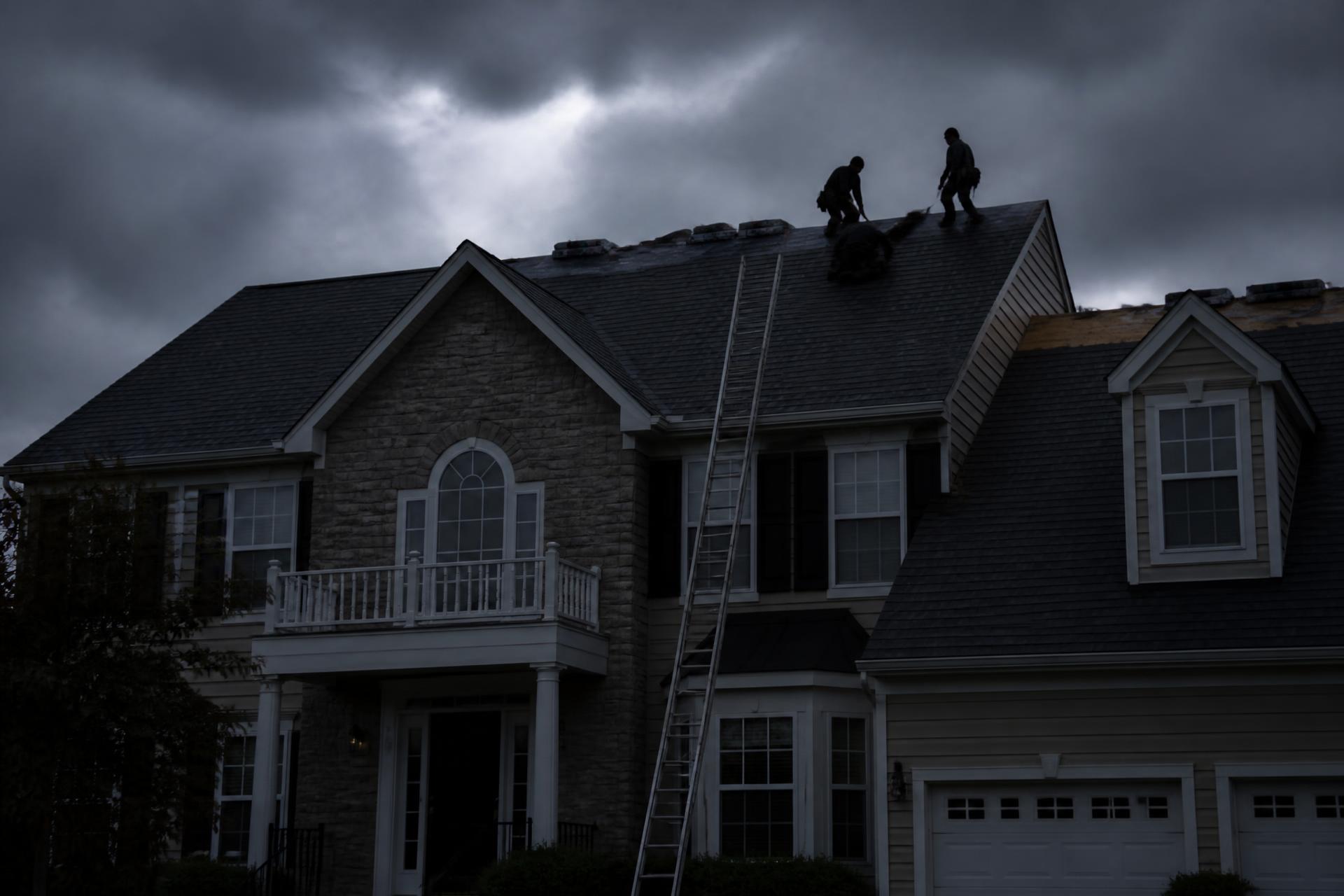
Roof open to the weather?
Emergency roof tarping in New Jersey, 24/7
Poly battened into solid framing so it holds through the next front, damage photographed for the claim, and the permanent repair quoted in writing. Inspection and estimate cost nothing.
(201) 403-0024Answered by the crew, day or night. NJ HIC# 13VH13549100
- 25+ years residential and commercial
- Family owned, licensed and insured
- Insurance claims handled start to finish
- Matches or beats any written quote
Request tarping
Send it now and we call you back. For an active leak, call.
What happens after you call
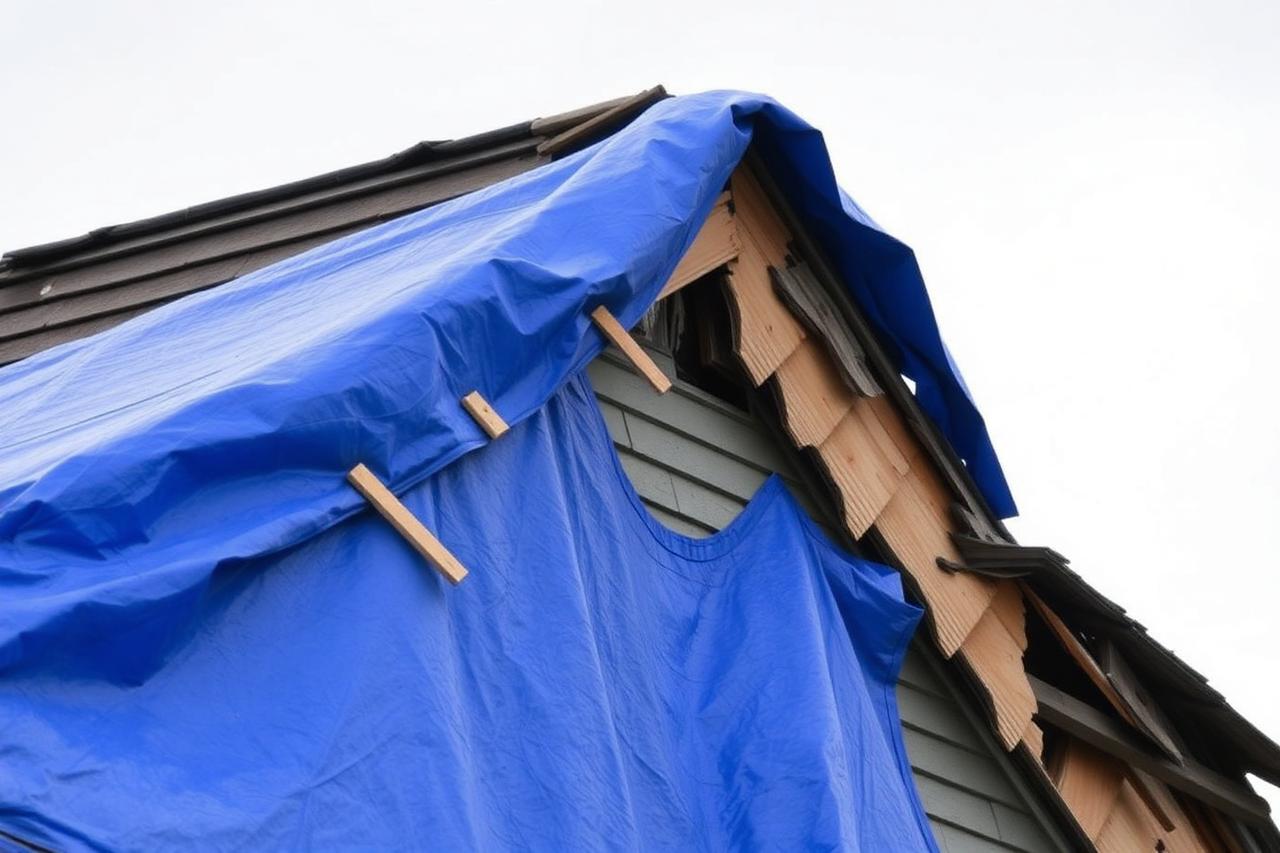
This is what a tarp that holds looks like: rolled over the high point, strips screwed into framing, edges pulled tight. It buys weeks of dry deck while the repair gets scheduled and the claim moves.
- Step 1
Call, any hour
You reach the crew. We ask what you are seeing, whether water is active, and whether the roof is open to sky, then give you an arrival window.
- Step 2
Tarp and contain
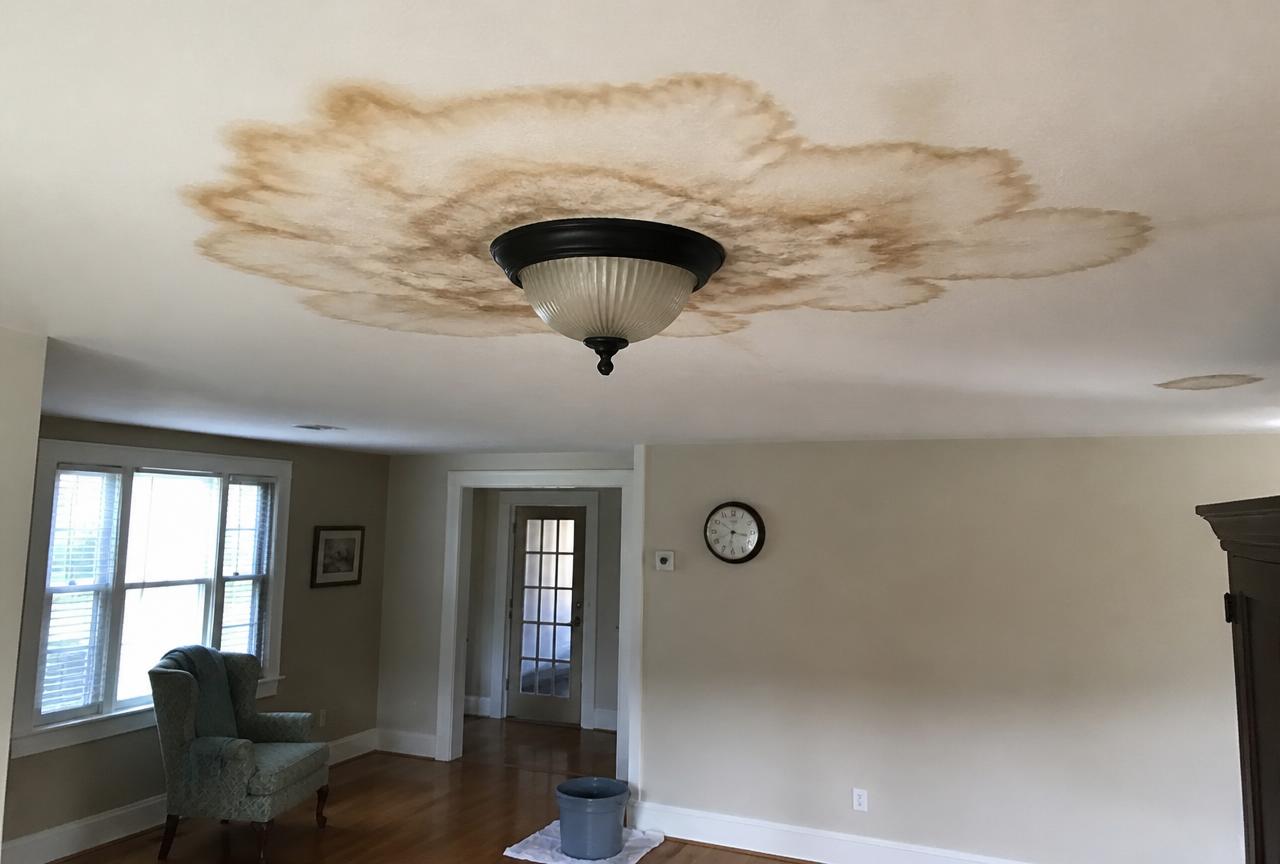
Poly battened over the opening into solid framing, and interior containment where the ceiling is already holding water.
- Step 3
Document for the claim
Photos of the opening, the deck, the interior damage, and any fallen limb or hail evidence, dated and packaged for the adjuster.
- Step 4
Quote the permanent fix
Written scope for the repair or replacement, with what is claim-eligible separated from what is wear, before you commit to anything.
What we tarp
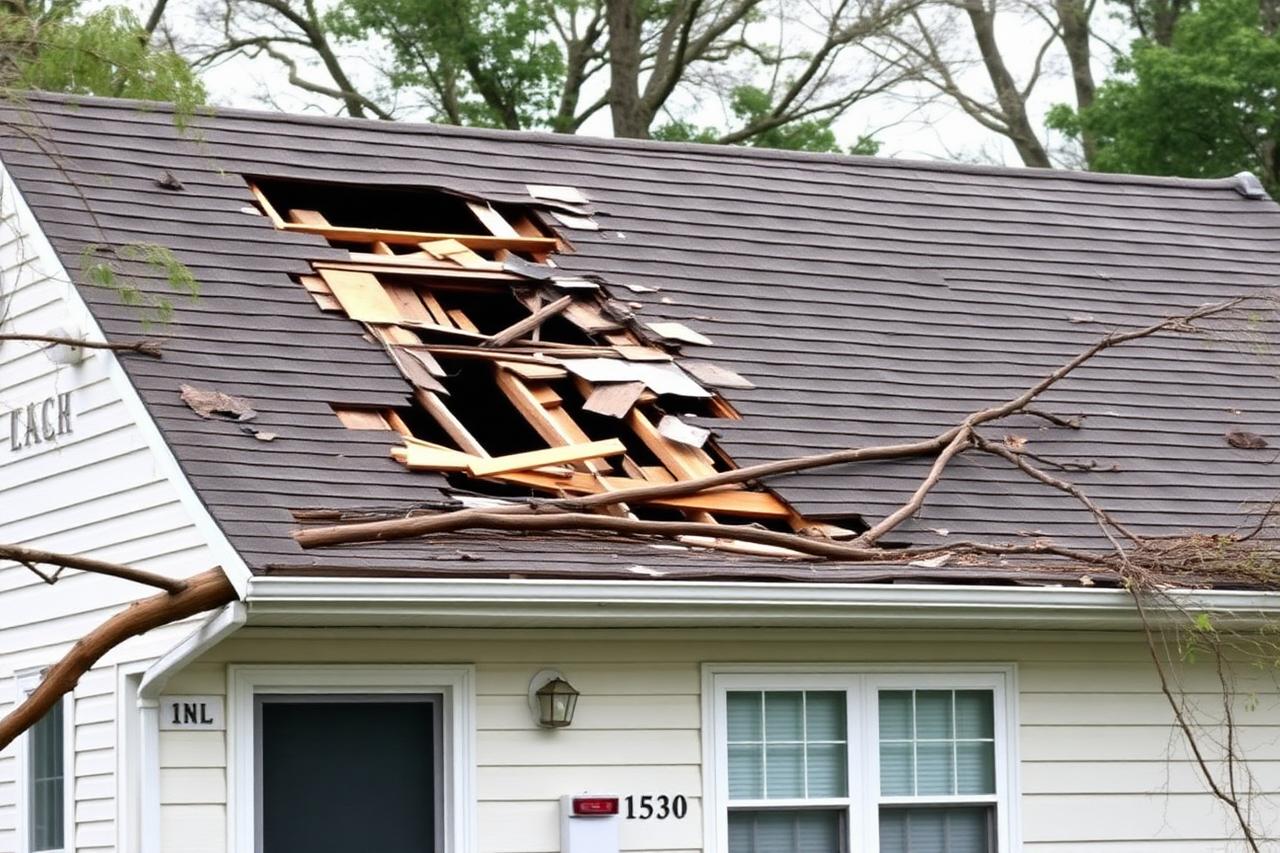
Tree or limb through the roof
Limb removed from the roof plane where it is safe, opening framed off, and the deck covered. Structural framing damage gets flagged in writing the same visit.
Wind-stripped shingle field
Nor'easter and summer downburst wind peels whole courses. Exposed underlayment fails in hours, so the field gets covered before it soaks the sheathing.
Flat-roof membrane tear
Split seams and punctures on low-slope additions pond immediately. Tarping a flat roof means addressing where the water sits, not just the tear.
Failed tarp from another contractor
Sandbagged or nailed-through tarps that let go in the next storm. We pull them and re-secure properly rather than adding fasteners to a leaking roof.
Tarping questions we get
- How fast can you tarp my roof?
- The line is answered 24 hours a day by the crew. For an open roof or an active leak we schedule same-day tarping across most of North and Central New Jersey, and first thing the next morning at the latest.
- Will you tarp in the rain or at night?
- Yes, when the roof is safe to walk. Lightning, ice, or wind above roughly 30 mph stops work — anyone who tells you otherwise is putting a crew on a roof they should not be on. In that case we prioritize interior containment and tarp as soon as it breaks.
- How is the tarp attached?
- Heavy-mil poly rolled over the ridge where possible and secured with furring strips screwed through the tarp into solid framing, with fasteners sealed. Weighted or sandbagged tarps blow off in the next front, which is the most common failure we get called to redo.
- How long does an emergency tarp last?
- A properly battened tarp holds 30 to 90 days depending on exposure and sun. It is a bridge to the repair or replacement, not a solution — UV breaks the poly down, so the permanent work should be scheduled while the tarp is up.
- Does insurance pay for emergency tarping?
- Emergency mitigation is generally covered under most NJ homeowner policies, and carriers expect you to prevent further damage. We photograph the damage before and after tarping, document the cause, and file and run the claim through completion.
- What does emergency tarping cost?
- It is priced per roof after we see the size of the opening and the access, and the inspection and written estimate are free. If the same roof goes on to a repair or replacement with us, roofing work carries the SG10ROOF code for 10% off.