Brick · Ocean County
Roof Repair Services in Brick, Ocean County, NJ
Storm Guard Roofing provides targeted, technical roof repair services across Brick Township, NJ. As a family-owned business with over 25 years of contracting experience, we address roof leaks, storm damage, and structural flashing failures without pushing full replacements when localized repairs are structurally sound. Brick Township presents a distinct mix of building stock: bay-side and inland subdivisions where wind off Barnegat Bay lifts ridge caps and post-2012 rebuild roofs sit next to 1970s originals. Whether your home is an elevated post-Sandy build in Shore Acres or an established split-level in Lake Riviera or Herbertsville, our team conducts thorough diagnostic inspections, executes code-compliant repairs, and manages the entire insurance claims process. Storm Guard Roofing is fully licensed and insured in New Jersey, providing 24/7 emergency tarping and dispatch at (201) 403-0024.
Brick Roof Exposure and Structural Vulnerabilities
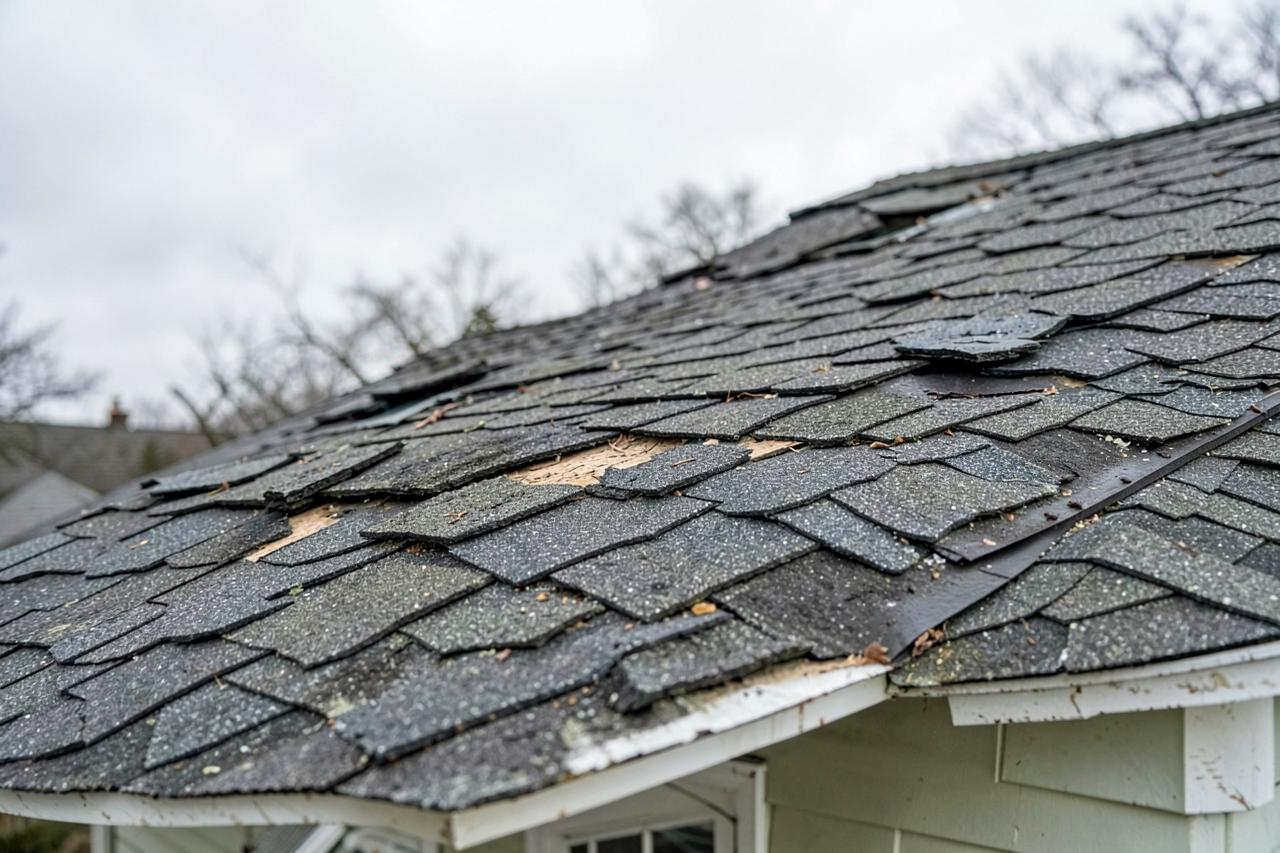
Roof systems in Brick experience persistent mechanical strain from coastal weather patterns. Homes situated along the Metedeconk River, Kettle Creek, and Barnegat Bay endure high-velocity wind gusts that create vacuum pressure on roof planes. This uplift force shears weak fasteners, lifts architectural shingle courses, and strips ridge caps. Inland neighborhoods face a different set of challenges, including heavy oak and pine canopy cover that traps moisture, accelerates granule loss, and fosters moss growth along north-facing slopes.
The local building stock amplifies these technical failure points. In bay-side and inland subdivisions where wind off Barnegat Bay lifts ridge caps and post-2012 rebuild roofs sit next to 1970s originals, roof age and construction techniques vary wildly from lot to lot. Older 1970s builds frequently feature low-slope additions, 3-tab asphalt shingles over organic felt paper, and aged plywood decking that sags under water retention. Conversely, modern elevated homes built after Superstorm Sandy often present complex dormer configurations, steep pitches, and intense wind exposures that stress step flashing and ridge ventilation systems.
- Sustained wind uplift peeling back shingle courses along eave line edges and ridge caps.
- Thermal expansion and contraction pulling step flashing away from siding and dormer walls.
- Granule erosion caused by standing pine needles, leaf clutter, and moisture retention.
- Degraded plywood deck panels under aging organic underlayment layers.
Diagnostic Leak Detection: Flashing, Valleys, and Penetrations
A roof leak inside a living room ceiling rarely originates directly above the water stain. Water travels along rafters, top plates, and underlayment seams before penetrating the interior drywall. Storm Guard Roofing uses physical diagnostic methods to trace leaks back to their primary entry point rather than applying temporary caulking over damaged areas.
The most frequent failure points in Brick roofs are penetrations and material transitions. Wall step flashing along dormers, chimney counter-flashing, and valley seams fail long before the main shingle field reaches the end of its lifespan. Salt air off the bay degrades rubber pipe boots, causing elastomeric gaskets to crack and allow water to stream down vent stacks directly into attic spaces during driving rain.
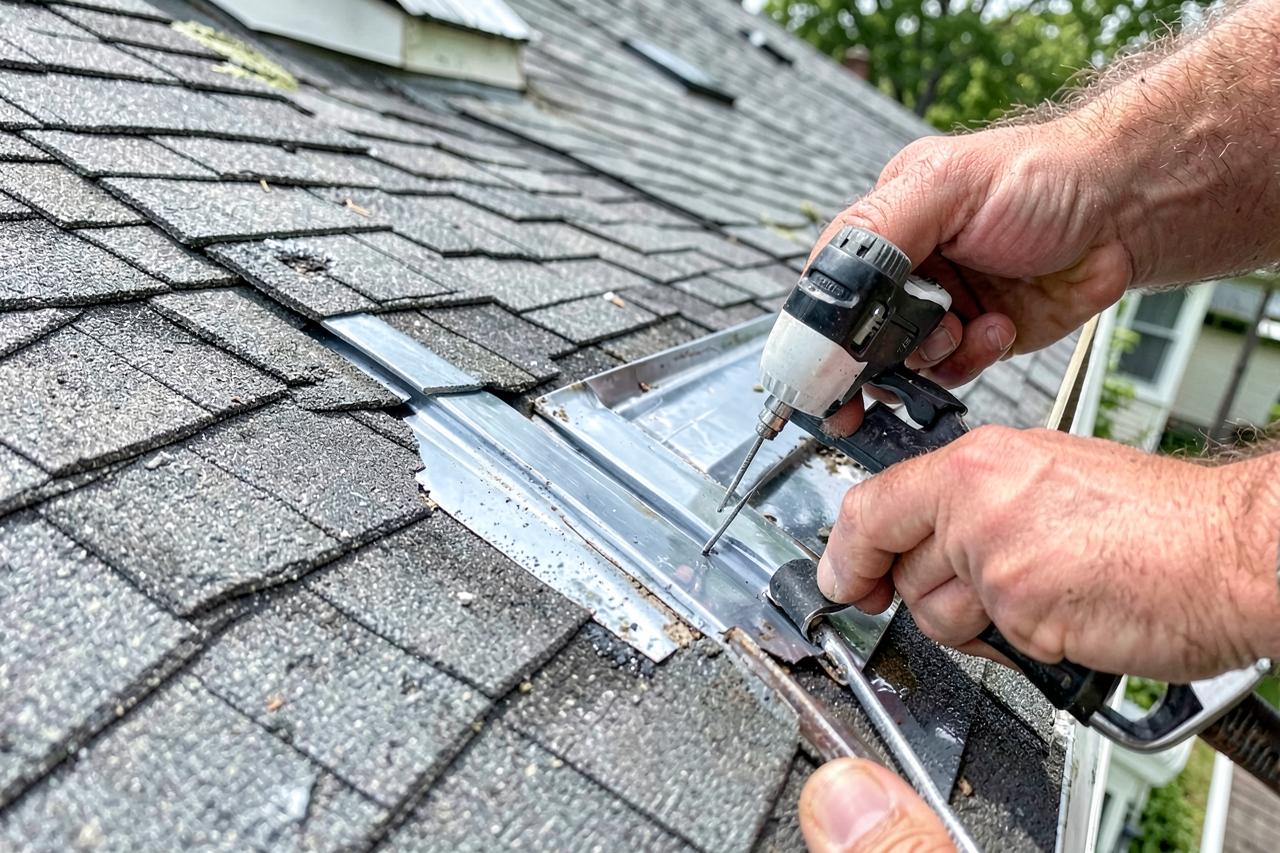
- Wall and dormer step flashing: Re-securing or replacing corroded aluminum and copper step flashing embedded behind vinyl J-channels.
- Valley transitions: Clearing debris and repairing cracked open metal valleys or torn woven shingle valleys.
- Plumbing stack boots: Replacing dry-rotted rubber collars with UV-resistant neoprene and lead boots.
- Chimney counter-flashing: Chasing out failed mortar joints and installing fresh counter-flashing sealed into brick masonry.
24/7 Emergency Tarping and Storm Damage Interventions
When coastal storms, nor'easters, or severe summer thunderstorms strike Ocean County, immediate water suppression is required to prevent secondary interior loss. Storm Guard Roofing maintains a 24/7 emergency response team capable of deploying emergency tarping protocols across Brick Township, including Cherry Quay, Mantoloking Shores, and Midstreams.
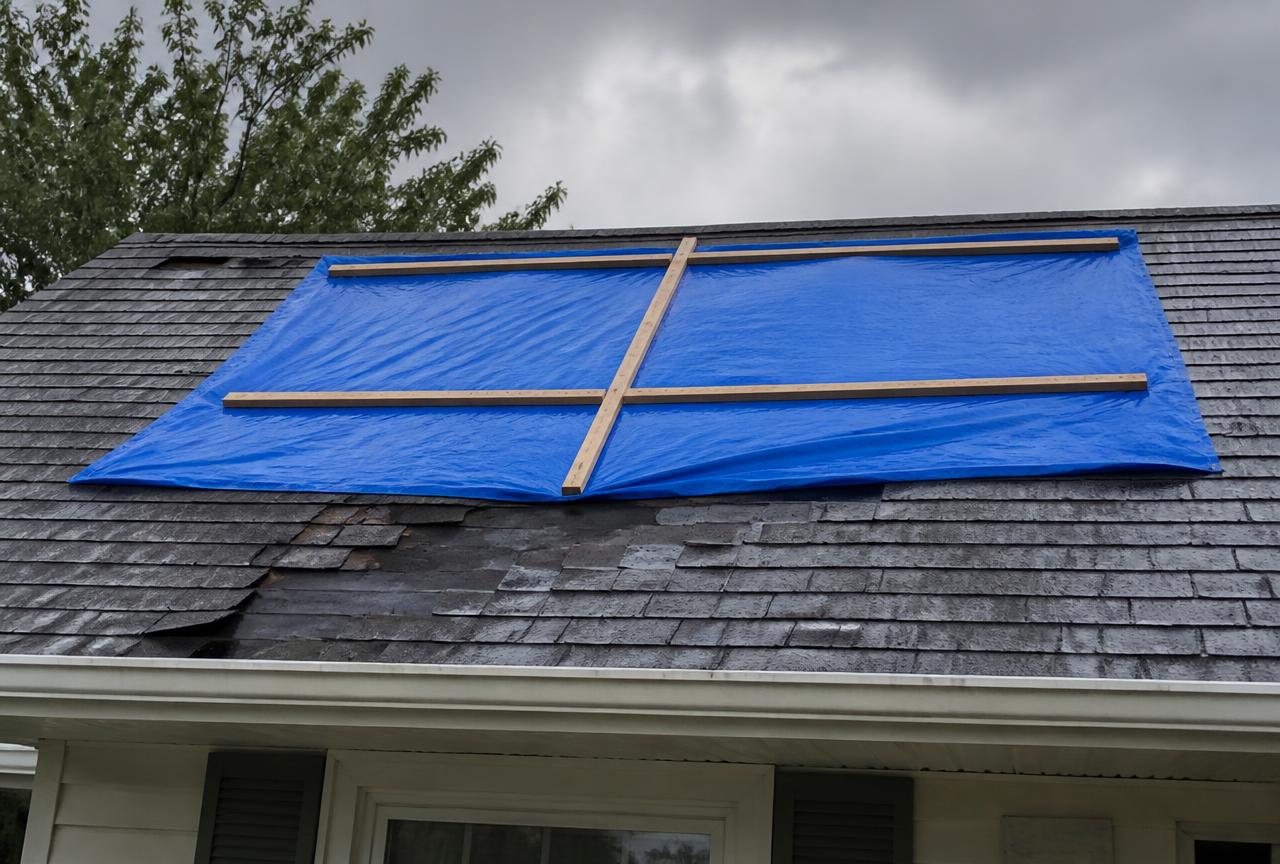
Our emergency tarping procedure involves securing heavy-duty, UV-treated polymer tarps using wood furring strips nailed directly into structural members beyond the damaged area. We do not sandbag or lay unsecured tarps that blow off during wind shifts. Once the structure is stabilized, we photo-document all wind displacement, missing shingles, and hail impacts to compile a scope of work for your insurance carrier. Our team works directly with insurance adjusters to negotiate accurate repair estimates based on Ocean County material and labor rates.
- Immediate 24/7 emergency stabilization to seal active ceiling drips and structural openings.
- Code-compliant temporary tarping anchored with furring strips to withstand sustained bay winds.
- Detailed photographic documentation of all physical damage for immediate claim filing.
- Direct coordination with insurance adjusters to approve full repair scopes.
Repair Economics: Repair vs. Replacement Cost Mechanics
Replacing an entire roof system on a Brick home requires a capital expenditure of tens of thousands of dollars. When a roof exhibits localized damage—such as a single wind-damaged slope, blown-off ridge capping, or a discrete flashing leak—a targeted repair is the financially rational choice. A technical repair preserves the remaining useful life of the sound roof sections while resolving the immediate point of failure.
A roof becomes a candidate for full replacement rather than repair only when the structural decking suffers widespread dry rot, or when shingle degradation exceeds 30 percent of the overall surface area. If the shingles retain adequate flexibility, granular coating, and nail-holding capability, Storm Guard Roofing executes isolated shingle replacements and flashing re-builds at a fraction of full replacement costs. We perform precise color and profile matching to ensure repairs integrate with existing shingle courses.
- Targeted spot repairs isolate costs to damaged slopes and penetration points.
- Preserves remaining 10 to 15 years of functional lifespan on main shingle fields.
- Eliminates unnecessary dump fees and labor overhead associated with complete tear-offs.
- Evaluates shingle flexibility and deck integrity prior to recommending any scope of work.
Brick Township Building Codes and Permitting Guidelines
Roof repairs in Brick Township must adhere to the New Jersey Uniform Construction Code (N.J.A.C. 5:23). Minor localized shingle repairs and spot flashing fixes generally do not require a full construction permit from the Brick Township Building Department located on Chambers Bridge Road. However, repairs involving structural rafter replacement, plywood deck panel replacement exceeding designated limits, or entire slope rebuilds require formal permitting and municipal inspections.
Storm Guard Roofing handles all permit applications, site inspections, and code verification for extensive repair jobs in Brick. We ensure all replacement materials meet or exceed local wind-resistance ratings required for Ocean County coastal zones, ensuring your roof withstands future gale-force winds.
- Strict adherence to NJ Uniform Construction Code guidelines for residential structures.
- Handling of all permit filings with the Brick Township Construction Official when required.
- Installation of fast-drying, high-tack underlayment materials rated for coastal wind zones.
- Full clean-up of job sites using magnetic sweepers to clear nails from driveways and lawns.
Brick questions we get asked
- Do I need a permit from Brick Township for a minor roof repair?
- Minor spot repairs involving individual shingles or small flashing adjustments do not require a permit in Brick Township. However, if the repair involves replacing structural plywood decking, rafters, or rebuilding large portions of a roof slope, a permit must be pulled through the Brick Township Building Department on Chambers Bridge Road.
- Why does wind off Barnegat Bay constantly lift the ridge caps on my Brick home?
- Homes along Barnegat Bay, Kettle Creek, and the Metedeconk River experience high wind uplift pressures. Ridge caps sit at the highest point of the roof, where wind velocity is greatest. If the original installer used short nails or failed to hit the designated nailing line, wind catches the underside of the cap shingle and tears it loose.
- How do you match replacement shingles on a 1970s house in Brick?
- We analyze the shingle profile, color blend, and manufacturer (such as GAF, CertainTeed, or Owens Corning). For older 1970s homes where original shingle lines may be discontinued, we utilize close-match architectural profiles or perform section swaps from low-visibility roof areas to maintain curb appeal.
- Can Storm Guard Roofing manage my insurance claim for storm damage in Brick?
- Yes. We document all storm damage with high-resolution photos, write an itemized scope of repair, and meet with your insurance adjuster on-site at your Brick property to ensure all wind, tree, or hail damage is covered under your policy terms.
More in Brick
Call (201) 403-0024 for a Brick inspection, or send the form.