Dover · Morris County
Roof Repair Services in Dover, New Jersey
Storm Guard Roofing provides targeted roof repair services in Dover, New Jersey, addressing localized structural and material failures before they force a full tear-off. Operating as a family-owned contractor for over 25 years, we are fully licensed and insured, running a 24/7 emergency response team at (201) 403-0024. Dover's residential neighborhoods feature older dense housing with steep roofs, rear additions, and aging chimney crowns. These specific architectural traits create predictable failure patterns, from water backing up behind flat-to-steep pitch transitions to mortar breakdown around brick chimneys. Rather than pushing replacement on systems that remain structurally sound, our focus is diagnosing point failures, replacing damaged underlayment or metal flashings, and restoring watertight protection. We also assist homeowners with insurance claims when severe weather impacts Morris County properties.
Pinpointing Water Intrusion in Dover Residential Architecture
Homes in neighborhoods around Blackwell Street, Prospect Hill, and Salem Street frequently feature steep main roof pitches built above low-slope rear kitchen or porch additions added decades later. These multi-pitch configurations present distinct mechanical vulnerabilities. Rain running off a high, steep pitch loses velocity when it hits a lower rear addition, allowing water to accumulate or back up under shingles if the transition flashing is degraded or incorrectly layered.
Additionally, aging chimney crowns on these older properties develop micro-cracks from temperature swings. Water enters these fissures, freezes during Morris County winters, and forces open larger gaps that let water drop straight into attic framing and ceiling drywall. Identifying the exact entry point requires systematic inspection of shingle courses, underlayment layers, and masonry junctions.
- Pitch Transition Failures: Water accumulation where steep primary roofs meet low-slope rear additions.
- Chimney Crown Cracks: Water penetration through deteriorating masonry crowns into framing timber.
- Deteriorated Pipe Boots: Neoprene boot seals around plumbing vents cracked by UV exposure.
- Step Flashing Separation: Loose or rusted step flashing along dormer sidewalls admitting wind-driven rain.
Flashing Deficiencies and Valley Failures
Valleys and wall intersections handle the highest volume of runoff on any roof system. In Dover, where winter cycles bring freezing temperatures, heavy snow, and ice, roof valleys endure significant stress. When ice blocks the gutter line, meltwater backs up beneath the valley lining. Older open metal valleys can corrode over time, while woven or closed-cut asphalt valleys crack along the center crease as shingles age and lose elasticity.
Wall and sidewall flashings represent another frequent point of failure. Step flashing must be interwoven with each shingle course and covered by counter-flashing embedded into masonry mortar joints. On older Dover homes, mortar joint decay allows counter-flashing to pull away from brickwork, creating an unsealed channel where water flows directly behind exterior wall cladding.
- Corrosion in Metal Valleys: Rust holes and seam separation on legacy galvanized steel valley pans.
- Mortar Joint Decay: Counter-flashing pulling loose from unpointed masonry chimney joints.
- Ice Dam Capillary Action: Meltwater forced upward under lower shingle courses behind ice blockages.
- Wall Intersection Rot: Saturated wall sheathing behind loose dormer step flashing.
Emergency Tarping and Wind/Hail Storm Damage
High wind gusts moving through the Rockaway River valley can lift compromised shingle tabs, strip off ridge caps, or drop tree branches onto residential structures. When storm damage exposes the wood roof deck, quick action prevents interior ceiling collapses and mold growth. Storm Guard Roofing maintains a 24/7 emergency dispatch at (201) 403-0024 to install heavy-duty, ballasted emergency tarps that seal compromised areas until permanent repairs occur.
Following immediate containment, we perform detailed damage assessments to support insurance recovery. We document missing shingles, torn underlayment, hail-dented metal vents, and cracked deck boards. Our team meets directly with insurance adjusters on-site in Dover, providing line-item scope reports that accurately reflect the cost of materials and labor required to restore the roof to code compliance.
- 24/7 Temporary Tarping: Rapid structural tarping to stop active leaks during severe weather events.
- Wind Uplift Repair: Shingle tab replacement and underlayment repair for wind-damaged roof slopes.
- Tree Impact Stabilization: Removal of debris, deck board replacement, and spot shingling.
- Insurance Claim Support: Comprehensive photo documentation and adjuster coordination for storm loss claims.
Repair vs. Replacement Financial Evaluation
Replacing an entire roof on a steep, multi-level Dover residence involves substantial labor and disposal costs, particularly when a complete tear-off down to the roof deck is required. If the overall field shingles retain flexibility and granule adhesion across most of the roof area, localized repairs offer a direct cost advantage that can extend the system's useful service life by several years.
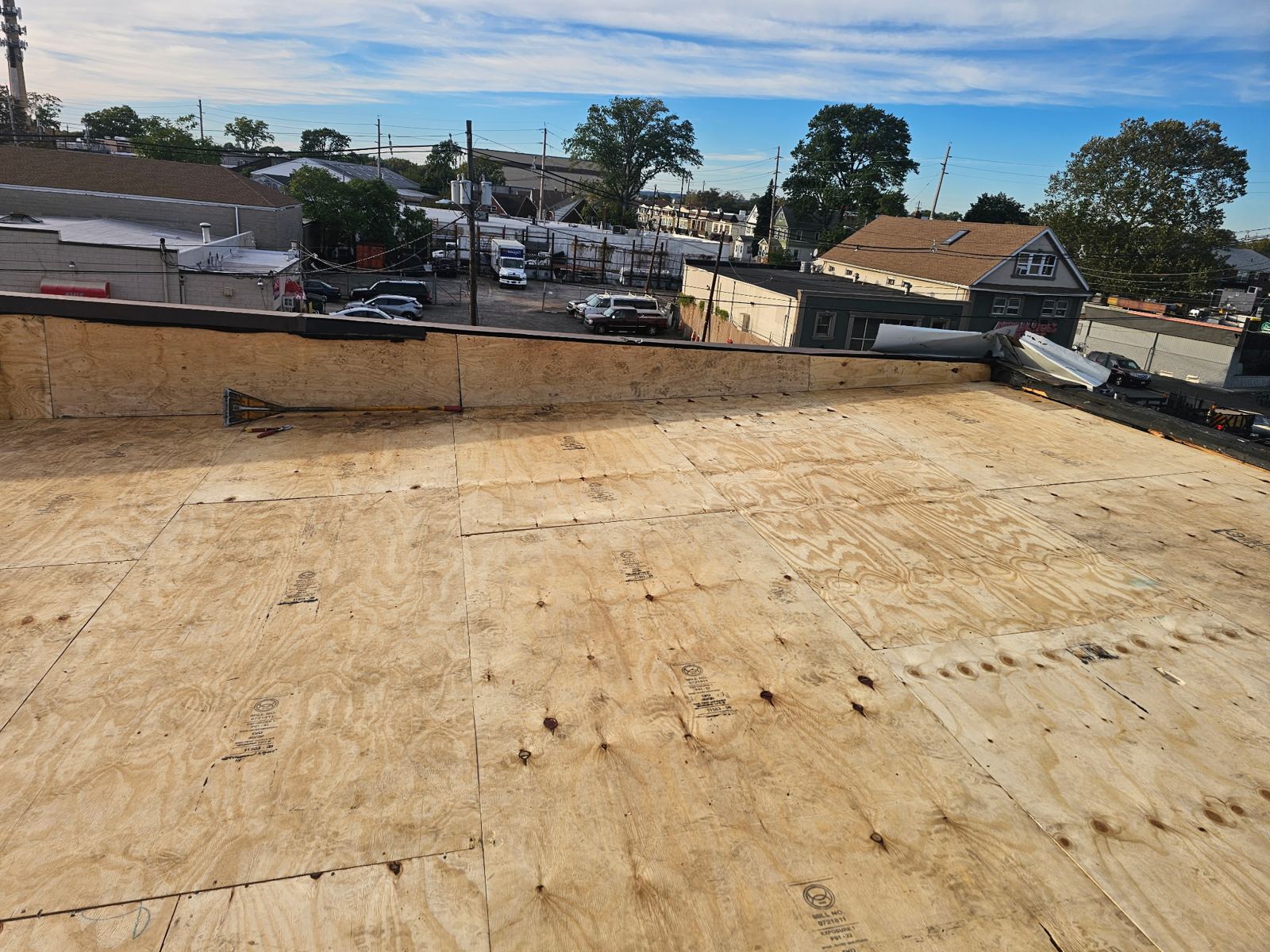
A spot repair is technically viable when leaks originate from localized failures such as a single rotted valley, isolated flashing fatigue, or cracked pipe boots. However, if the asphalt substrate has grown brittle throughout, or if widespread deck rot exists from long-neglected leaks, spot repairs become inefficient. We provide factual evaluations based on wood deck integrity, shingle elasticity, and overall structural condition so you can evaluate the economics of repair versus replacement.
- Target Spot Repairs: Fixing specific leak sources without disturbing functional sections of the roof.
- Deck Integrity Evaluation: Testing wood decking for soft spots or structural sag prior to repair execution.
- Labor Cost Control: Avoiding full tear-off expenses when damage is isolated to single slopes or valleys.
- Service Life Extension: Replacing worn flashings and seals to maximize remaining shingle lifespan.
Dover Building Regulations and Repair Compliance
Roof repairs in the Town of Dover must comply with the New Jersey Uniform Construction Code (NJ UCC). Minor maintenance and spot repairs replacing limited shingle areas generally do not require a full building permit, but structural repairs—such as replacing damaged rafters, large sections of deck plywood, or altering roof geometry—must be filed with the Town of Dover Building Department.
When executing repairs, current code mandates specific material standards, such as installing self-adhering ice and water shield membrane extending inside the interior wall line along eaves in freeze-prone zones. Storm Guard Roofing ensures all replacement materials, flashing details, and underlayments meet Morris County structural and weatherproofing requirements.
- Local Permitting Guidance: Navigating Town of Dover permit requirements for structural roof repairs.
- Code-Compliant Underlayment: Installing self-adhering ice and water membrane at vulnerable margins.
- Structural Decking Standards: Replacing rotted wood decking with code-approved exterior-grade CDX plywood.
- Fire and Wind Ratings: Utilizing Class A fire-rated and high-wind resistant replacement shingles.
Dover questions we get asked
- Do minor roof shingle repairs on a Dover residence require a permit from the Town of Dover?
- Minor repairs involving isolated shingle replacements or minor flashing fixes typically do not require a permit under the New Jersey Uniform Construction Code. However, structural repairs, deck board replacements over broad areas, or full re-roofing projects require a permit from the Town of Dover Building Department. Storm Guard Roofing handles all necessary municipal filings when permits are required.
- Why do rear kitchen additions on Dover homes leak more frequently than the main roof?
- Dover features many older homes with steep main roofs discharging onto lower-slope rear additions. The transition point experiences high water concentration, snow accumulation, and ice damming. If the transition joint lacks adequate self-adhering ice and water shield or custom pitch-transition flashing, meltwater forces its way beneath the shingles.
- What steps should I take if a severe storm damages my roof in Dover?
- Call Storm Guard Roofing immediately at (201) 403-0024 for 24/7 emergency response. We will install temporary tarping to prevent water damage inside your home. Next, we photograph all damage to shingles, decking, gutters, and trim, creating a complete documentation package for your insurance adjuster to ensure your claim covers all necessary repairs.
- How do I know if my Dover roof can be repaired or if it requires full replacement?
- If the leak is isolated to a specific area—such as a deteriorated chimney crown, damaged pipe boot, or single damaged valley—and the surrounding shingles are pliable with good granule retention, a spot repair is effective. If the shingles across the entire roof are brittle, curling, or losing granules, localized repairs may only provide temporary relief, making replacement the more practical option.
More in Dover
Call (201) 403-0024 for a Dover inspection, or send the form.