East Brunswick · Middlesex County
Roof Repair in East Brunswick, NJ: Diagnostic & Structural Repair
Storm Guard Roofing provides targeted roof repair services throughout East Brunswick and Middlesex County. As a family-owned contractor with over 25 years of field experience, our work focuses on precise leak diagnosis, structural repair, and emergency stabilization rather than pushing unnecessary roof replacements. We are fully licensed and insured in New Jersey, maintain a 24/7 emergency response team reached at (201) 403-0024, and handle homeowner insurance claims directly when weather events cause interior water intrusion. Much of East Brunswick's residential building stock consists of 1960s-80s colonials featuring original ridge venting and aging pipe-boot flashing. Over decades of Central Jersey freeze-thaw cycles, summer heat exposure, and wind events, these specific components degrade. Correcting leaks requires a systematic approach to identifying failures in underlayment, metal flashing, and shingle fields before interior drywall or timber framing suffers permanent damage.
Common Roof Leak Sources in East Brunswick Colonials
Subdivisions built between 1960 and 1989 across East Brunswick—such as those near Cranbury Road, Colonial Oaks, and Lawrence Brook—frequently present localized roof failures tied to aging materials. The original plastic or aluminum ridge vents installed on these two-story colonials loosen over time. As roof deck plywood expands and contracts, thermal movement backs nails out of the ridge cap, lifting the vent edge and allowing wind-driven rain to infiltrate the ridge seam directly into the attic.
A secondary vulnerability on these homes is aging pipe-boot flashing. The neoprene rubber collars fitted around 2-inch to 4-inch plumbing stack vents dry out, crack, and split under ultraviolet exposure after 10 to 15 years. Once the rubber seal fails, water tracks down the vent pipe, deteriorating surrounding attic insulation and leaving water stain rings on ceiling drywall below.
- Neoprene rubber boot splitting on plumbing stack vents
- Fastener back-out on aging aluminum and plastic ridge vents
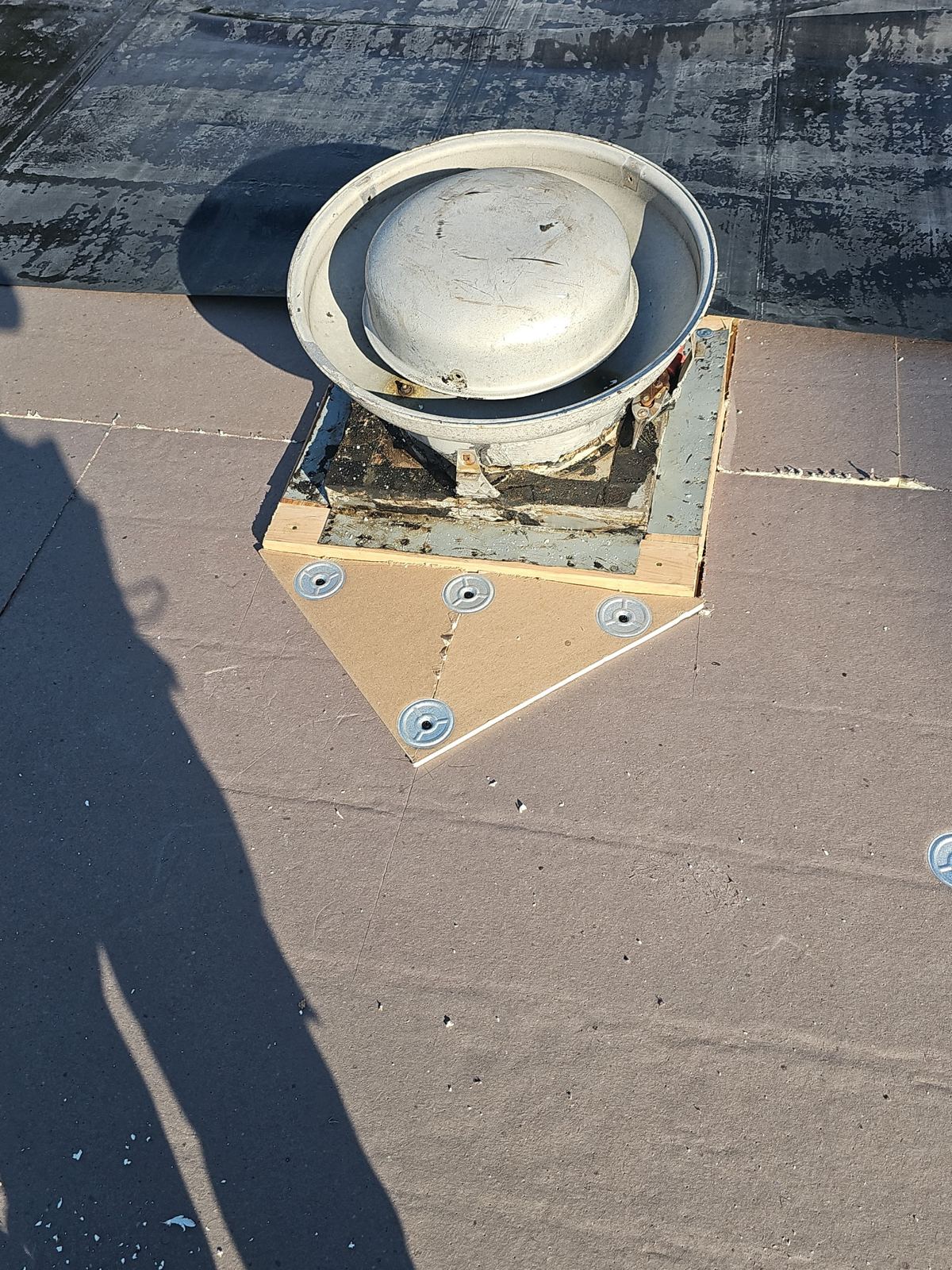
- Underlayment degradation around attic power ventilators and static roof louvers
Flashing and Valley Failure Diagnostics
Roof valleys and wall-to-roof intersections process the highest volume of water on a roof deck during heavy rainfall in Middlesex County. On older East Brunswick homes, woven or closed-cut asphalt valleys gradually lose their protective mineral granules due to continuous water friction. Once the underlying asphalt mat degrades, water breaches the felt underlayment and causes rot along the valley rafters.
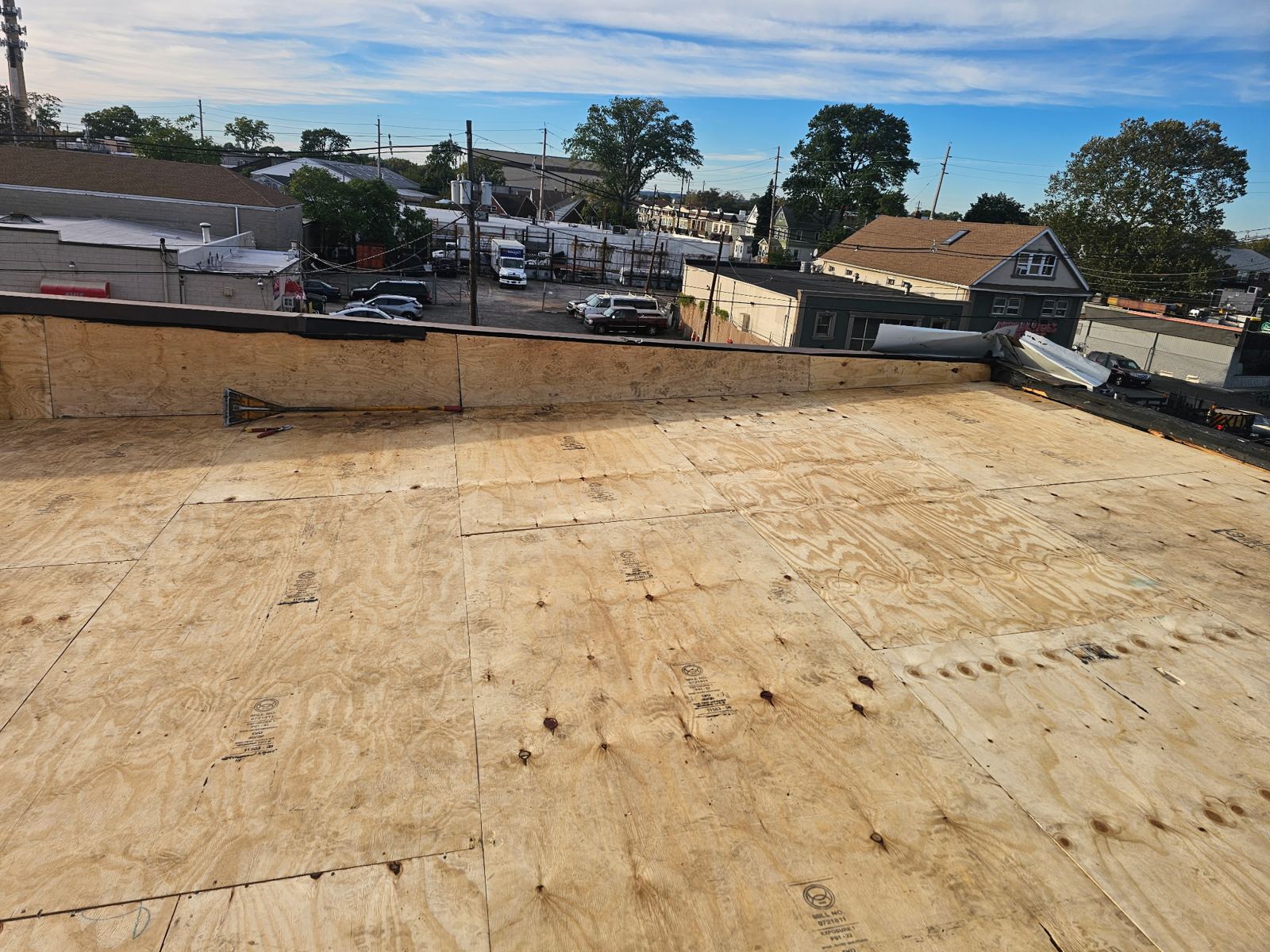
Step flashing along dormers and brick chimney sidewalls is another primary entry point for water. Proper step flashing requires individual metal angles woven into every shingle course and integrated behind wall cladding or counter-flashing. When mortar joints on 1960s brick chimneys crumble, rainwater penetrates behind the counter-flashing, running under the step flashing and onto the decking. Repairing these areas requires removing surrounding shingles, replacing damaged structural plywood, and installing heavy-gauge metal flashing over a self-adhering ice and water membrane.
- Woven and closed-cut valley asphalt mat erosion
- Step flashing separation along brick chimneys and dormer side walls
- Counter-flashing mortar joint breakdown allowing water behind wall cladding
24/7 Emergency Tarping and Storm Damage Repair
Severe thunderstorms along the Route 18 corridor and winter nor'easters bring high winds that detach asphalt shingles, bend flashing, or drop tree limbs onto roof decks in heavily wooded areas like Frost Woods. When water breaches a home, immediate containment is necessary to minimize structural damage. Storm Guard Roofing operates a 24/7 emergency dispatch service at (201) 403-0024 to execute quick temporary stabilization.
Technicians secure heavy-duty, UV-resistant tarps over exposed roof sections using wooden furring strips anchored into rafters. We do not nail tarps directly through intact shingle surfaces. Once the property is secured against ongoing rain, our team inspects the full roof deck, documents all uplifted shingles, punctured underlayment, and broken decking, and provides itemized reports to simplify insurance claim processing.
- Immediate 24/7 deployment for emergency tarping and temporary enclosure
- Furring strip mechanical anchoring to prevent wind flap without damaging sound shingles
- Itemized damage documentation and photographic evidence for insurance claim adjusters
Repair vs. Replacement: Structural and Financial Analysis
Homeowners are frequently advised to invest in full roof replacements when a targeted repair is the technically sound and cost-effective option. A repair is appropriate when the surrounding asphalt shingles retain granule coverage, remain flexible, and adhere tightly to the thermal sealant strip. If leak points are isolated to specific features—such as an aging valley, broken pipe boot, or damaged chimney saddle—replacing damaged materials in that area restores full weather resistance without disturbing functioning sections of the roof.
A full replacement becomes necessary only when core sampling reveals systemic decking rot, widespread shingle delamination, or when a roof already carries two layers of shingles. New Jersey building codes permit a maximum of two shingle layers. On a single-layer roof with isolated wind damage or flashing failure, performing a localized repair saves significant capital while keeping intact materials in active service.
- Core-sample deck moisture checks before recommending repair protocols
- Targeted replacement of damaged shingle fields without disturbing sound decking
- Preservation of remaining service life on intact roof slopes to manage homeowner costs
Middlesex County Building Code and Municipal Standards
Roof repairs in East Brunswick Township must comply with New Jersey Uniform Construction Code guidelines. While localized maintenance—such as replacing individual shingle courses or installing a new pipe boot collar—does not require formal municipal permits, structural deck repairs involving plywood replacement must follow strict installation specifications.
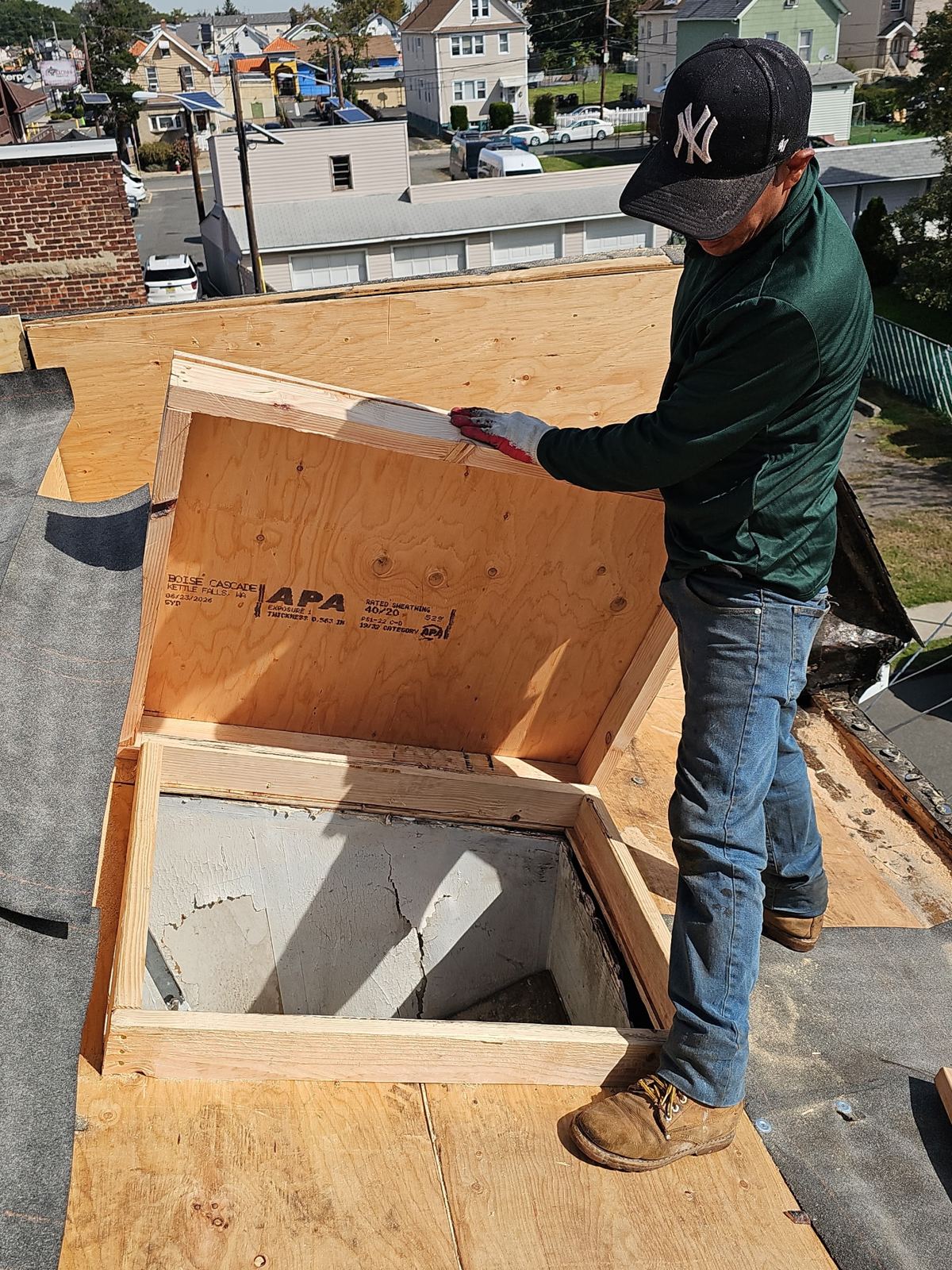
When replacing damaged roof sheathing, new plywood or OSB panels must match the thickness of the existing substrate—typically 1/2-inch or 5/8-inch on 1960s-80s colonials—to prevent uneven roof planes and premature shingle wear. Storm Guard Roofing ensures all replacement underlayment, ice barriers, and shingles match or exceed local wind-resistance ratings required for Middlesex County climate conditions.
- Substrate matching for 1/2-inch and 5/8-inch structural plywood decks
- Compliance with East Brunswick Township Construction Office guidelines
- Installation of high-wind rated replacement shingles and code-compliant flashing systems
East Brunswick questions we get asked
- Why do 1960s and 1970s homes in East Brunswick frequently leak around plumbing stacks?
- Most colonials built in East Brunswick during this era used standard neoprene rubber boot flashings over PVC or cast iron vent stacks. UV radiation and temperature fluctuations cause the rubber ring to dry out, split, and separate from the pipe after 10 to 15 years, allowing water to travel down the stack into attic insulation and ceiling drywall.
- Do I need an East Brunswick Township permit for localized roof repairs?
- Isolated roof repairs—such as swapping out pipe boots, replacing damaged shingle courses, or fixing step flashing around a chimney—are classified as routine maintenance and generally do not require a permit from the East Brunswick Township Construction Office. Structural deck replacements or complete re-roofing projects do require municipal permits.
- How do winter ice dams cause roof leaks near Farrington Lake and Lawrence Brook?
- Proximity to bodies of water and heavy tree cover creates localized humidity and snow accumulation. Uninsulated attic spaces in older colonials allow internal heat to escape into the roof deck, melting bottom layers of snow. This runoff flows down to cold eaves, refreezes into ice dams, and forces water upward beneath the lower courses of asphalt shingles.
- What is the procedure when Storm Guard Roofing assists with storm damage insurance claims?
- We dispatch technicians to secure the property with emergency tarping, complete a physical site inspection, document structural damage with high-resolution photography, and generate an itemized repair estimate using industry-standard pricing software. We then meet with your insurance adjuster on-site to review the scope of work.
More in East Brunswick
Call (201) 403-0024 for a East Brunswick inspection, or send the form.