Fairview · Bergen County
Roof Repair Services in Fairview, Bergen County, NJ
Storm Guard Roofing provides targeted roof repair services in Fairview, Bergen County, New Jersey. Operating as a family-owned, licensed, and insured roofing contractor for over 25 years, our teams resolve moisture intrusion, structural flashing failures, and storm damage. Fairview’s elevated geography along the Hudson Palisades ridge exposes residential and multi-family structures to high wind gusts, heavy downpours, and severe winter freeze-thaw cycles. Whether your property is located near Anderson Avenue, Bergenwood Avenue, or the Ridgefield border, a leaking roof requires precise diagnostic work to prevent wood deck rot and interior structural decay. We provide 24/7 emergency response for active leaks, secure temporary tarping, and assist homeowners through the entire insurance claims process. Contact Storm Guard Roofing directly at (201) 403-0024 to schedule a repair technician.
Leak Diagnostics for Fairview Building Stock and Flat Roof Systems
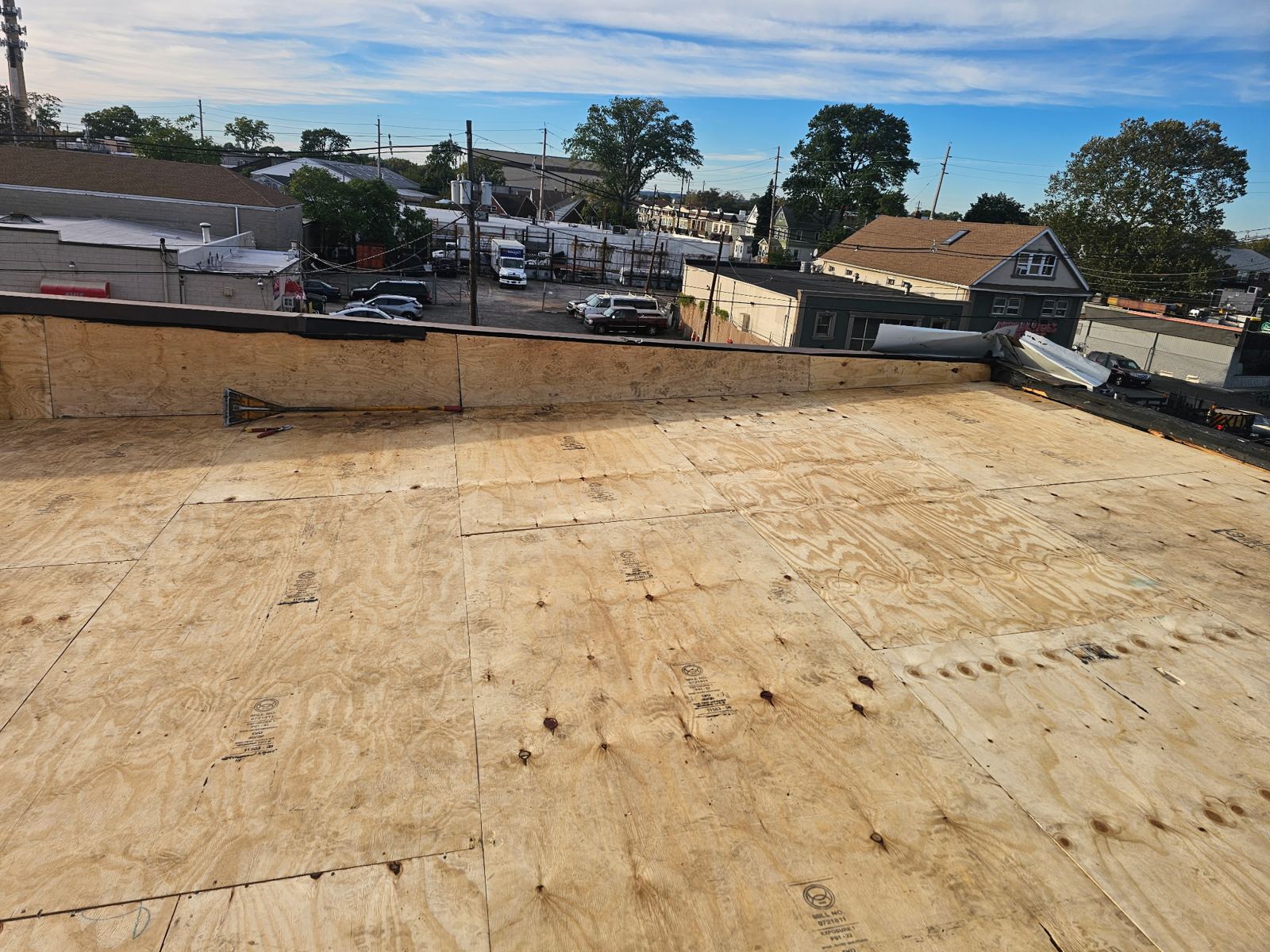
Fairview features a distinct architectural mix dominated by attached multi-family structures, row-style homes, and single-family dwellings. A significant portion of the local building stock consists of attached buildings with flat roofs, parapets, and drainage through interior leaders. Leak diagnostics on these structures require tracing water movement well beyond the visible stain on an interior ceiling. Water frequently enters through compromised parapet coping stone joints, travels horizontally along timber joists, and drips several feet away from the initial point of entry.
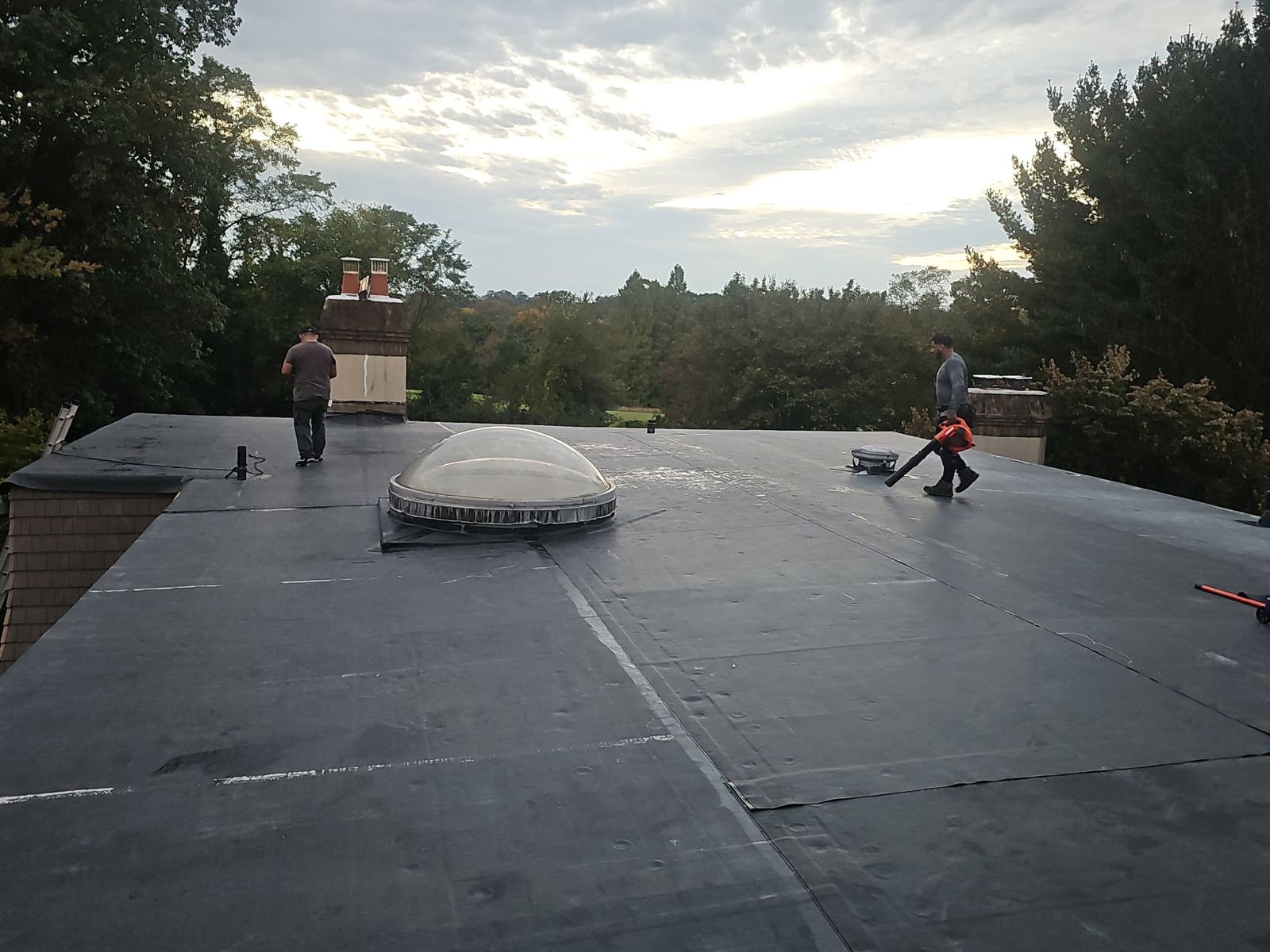
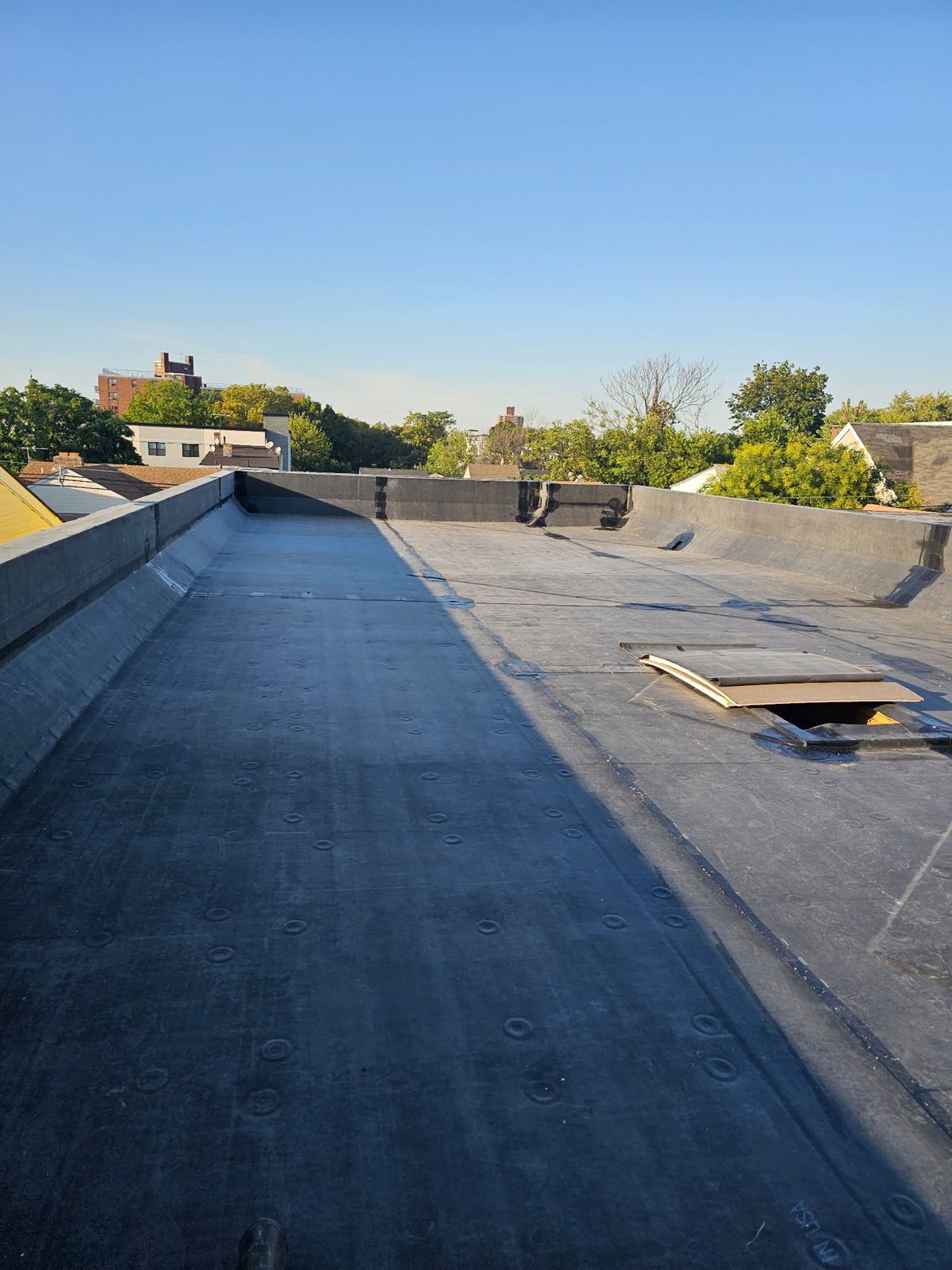
On modified bitumen, EPDM, or built-up flat roof assemblies common to Fairview attached housing, seam separation and edge flashing detachment represent primary points of moisture ingress. On pitched shingle roofs found throughout the borough, wind uplift strips granulates and dislodges shingles, exposing organic felt underlayment directly to rainfall.
- Failure of sealant joints along metal coping caps on brick parapet walls.
- Blocked interior leader drain bowls causing standing water ponding on flat membranes.
- Cracked or deteriorated rubber boots around plumbing vent pipes and electrical masts.
- Thermal expansion splits in modified bitumen cap sheets along parapet wall transitions.
Flashing, Parapet, and Valley Repair Technical Specifications
Wall step flashings, chimney counter-flashings, and roof valleys carry the highest volume of water run-off and experience rapid mechanical wear. In Fairview, older brick chimneys and shared parapet walls suffer from mortar joint deterioration caused by winter freeze-thaw cycles. When mortar breaks down, counter-flashing pulls away from vertical brickwork, allowing wind-driven rain to bypass the primary roofing membrane.
Repairing these failure points involves mechanical cut-outs of decayed mortar, installing new metal counter-flashing anchored into the masonry joints, and sealing with polyurethanes designed for exterior expansion. In open or closed valleys on pitched roofs, accumulated debris traps moisture and rots the shingle backing. Technicians replace damaged underlayment with self-adhering ice-and-water shield membranes before installing metal valley linings.
- Mechanical re-pointing of brick mortar joints before counter-flashing installation.
- Replacement of oxidized metal valley flashings with heavy-gauge galvanized steel or aluminum.
- Custom fabrication of apron and step flashings for sidewall transitions.
- Sealing wall-to-deck junctures on flat roofs using reinforced elastomeric liquid membranes.
Emergency Storm Damage Response and Tarping Protocols
Severe weather events, including coastal nor'easters and summer thunder squalls off the Hudson River, cause immediate structural impacts to Fairview roofs. Falling tree limbs, high wind gusts, and hail damage compromise roof envelopes without warning. Storm Guard Roofing maintains a 24/7 emergency response unit reached at (201) 403-0024 to mitigate active water leaks before secondary mold growth or structural drywall collapse occurs.
Emergency stabilization relies on mechanical tarp installation. We secure heavy-duty, UV-resistant tarps using wooden anchor battens fastened directly into structural rafters. Sandbags or temporary caulking are insufficient during high-wind conditions; our mechanical anchoring ensures the temporary seal remains intact until permanent repairs are executed. For insurance claims, we document all storm damage with photographic logs and detailed line-item repair estimates.
- 24/7 emergency response dispatch across Fairview and northern Bergen County.
- Heavy-duty tarping anchored with wood battens directly into structural rafters.
- Detailed photographic documentation of hail, wind, and debris impact points.
- Direct communication and line-item scope submission for insurance adjusters.
Repair vs. Replacement Financial and Structural Analysis
Homeowners in Fairview often evaluate whether to perform a targeted repair or commit to a complete roof replacement. A full replacement involves total tear-off of existing roofing materials, structural deck replacement, and installing complete underlayment and surface layers. If the underlying timber deck remains structurally sound and localized damage affects less than 25 percent of the total roof surface, an engineered repair is the most practical financial option.
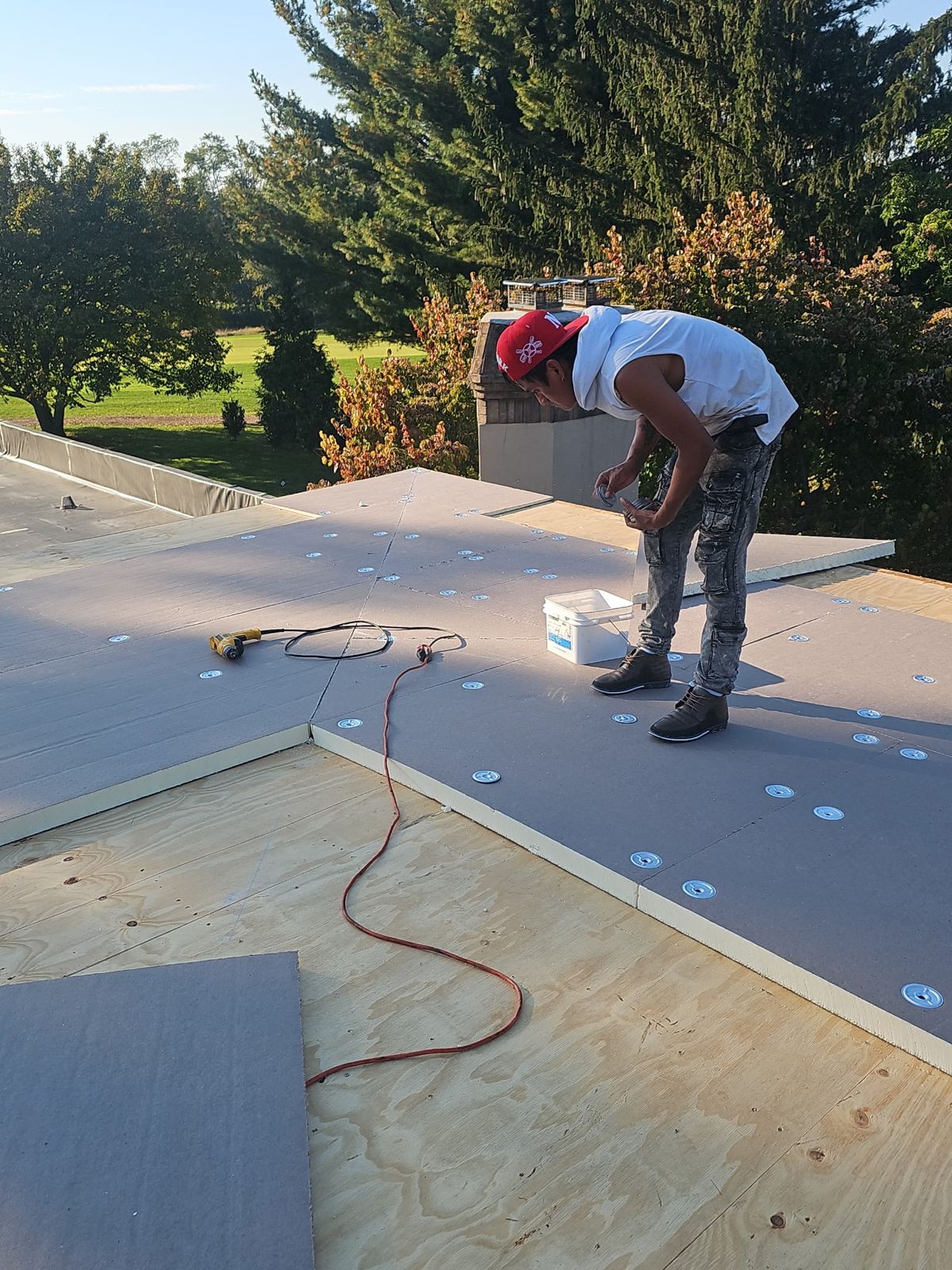
The main advantage of a targeted repair is preserving functional roofing material that retains operational service life. Replacing intact roof sections generates unnecessary landfill waste and labor costs. However, if flat roof membranes exhibit widespread thermal cracking, saturation of underlying insulation board, or systemic failure of interior leader sumps, full replacement becomes necessary. Storm Guard Roofing provides structural inspections to determine whether a repair will deliver lasting watertight performance.
- Cost efficiency: Spot repairs preserve intact roofing assemblies without full tear-off labor.
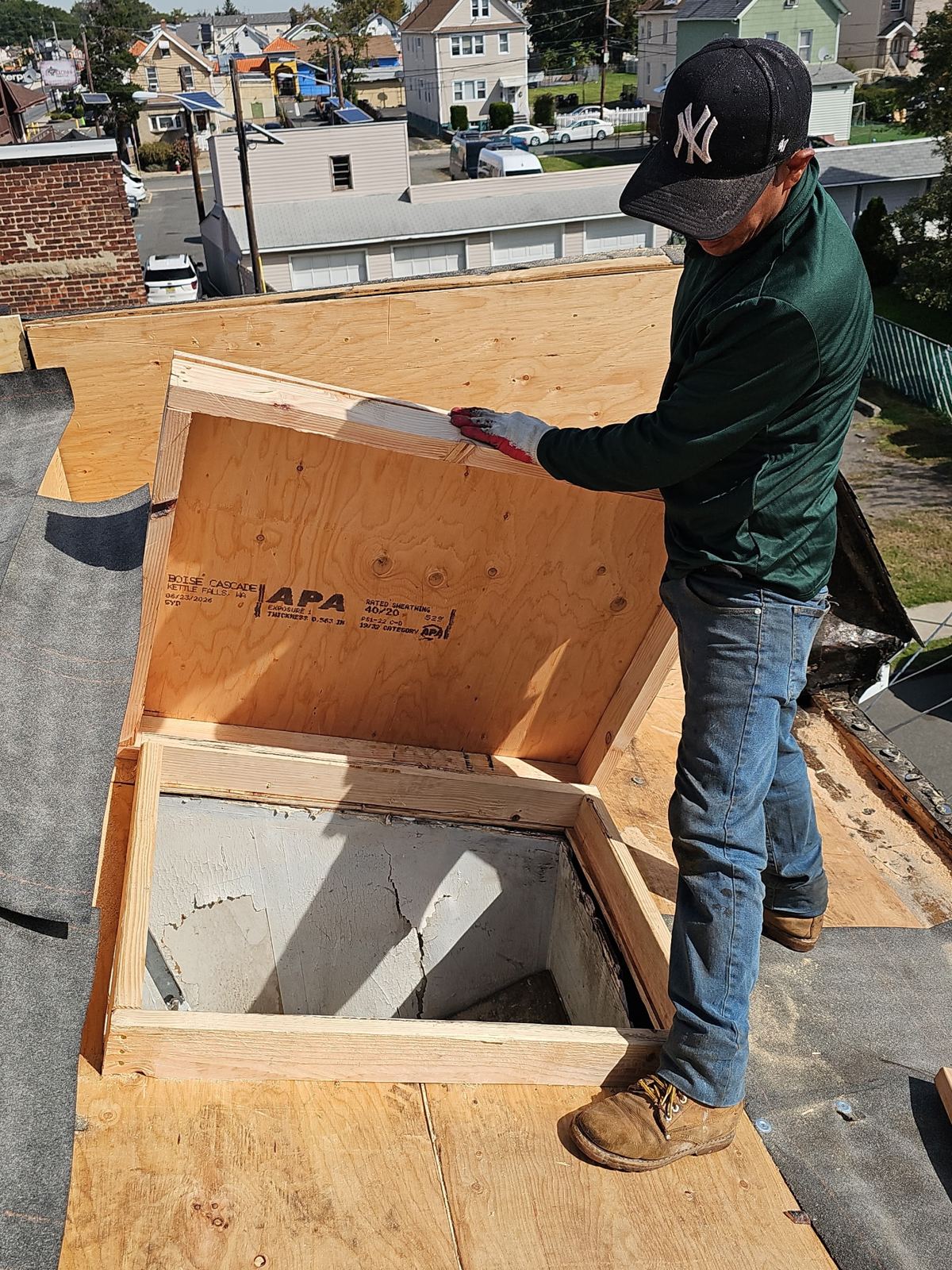
- Decking evaluation: Repair technicians inspect underlying timber planking for localized rot.
- Partial section renewal: Replacing failed valleys, wall flashings, or single slopes extends total roof life.
- Preventing unnecessary expense: Resolves isolated leaks without triggering full roof replacement mandates.
Fairview Municipal Permitting and Construction Compliance
Roof repairs in Fairview must comply with local building regulations enforced by the Fairview Building Department at Borough Hall on Broad Avenue. Under the New Jersey Uniform Construction Code (NJUCC), minor maintenance and localized repairs generally do not require full construction permits, allowing rapid turnarounds for emergency leak repairs. However, structural alterations, decking replacement, or work exceeding specific surface area limits require formal permit applications and municipal inspections.
Attached structures along commercial and residential corridors like Anderson Avenue must maintain fire code separations and proper exterior wall height ratios along parapet walls. When performing flat roof repairs on attached buildings, drainage paths toward interior leaders must remain unobstructed to comply with borough stormwater rules.
- Verification of NJUCC permit exemption limits for localized roof repairs.
- Compliance with Fairview municipal codes regarding stormwater discharge and interior leader connections.
- Execution of fire-rated membrane repairs on attached multi-family parapet walls.
- Adherence to Bergen County safety, job site containment, and waste disposal standards.
Fairview questions we get asked
- How do you fix flat roof leaks on attached Fairview multi-family homes with interior drain leaders?
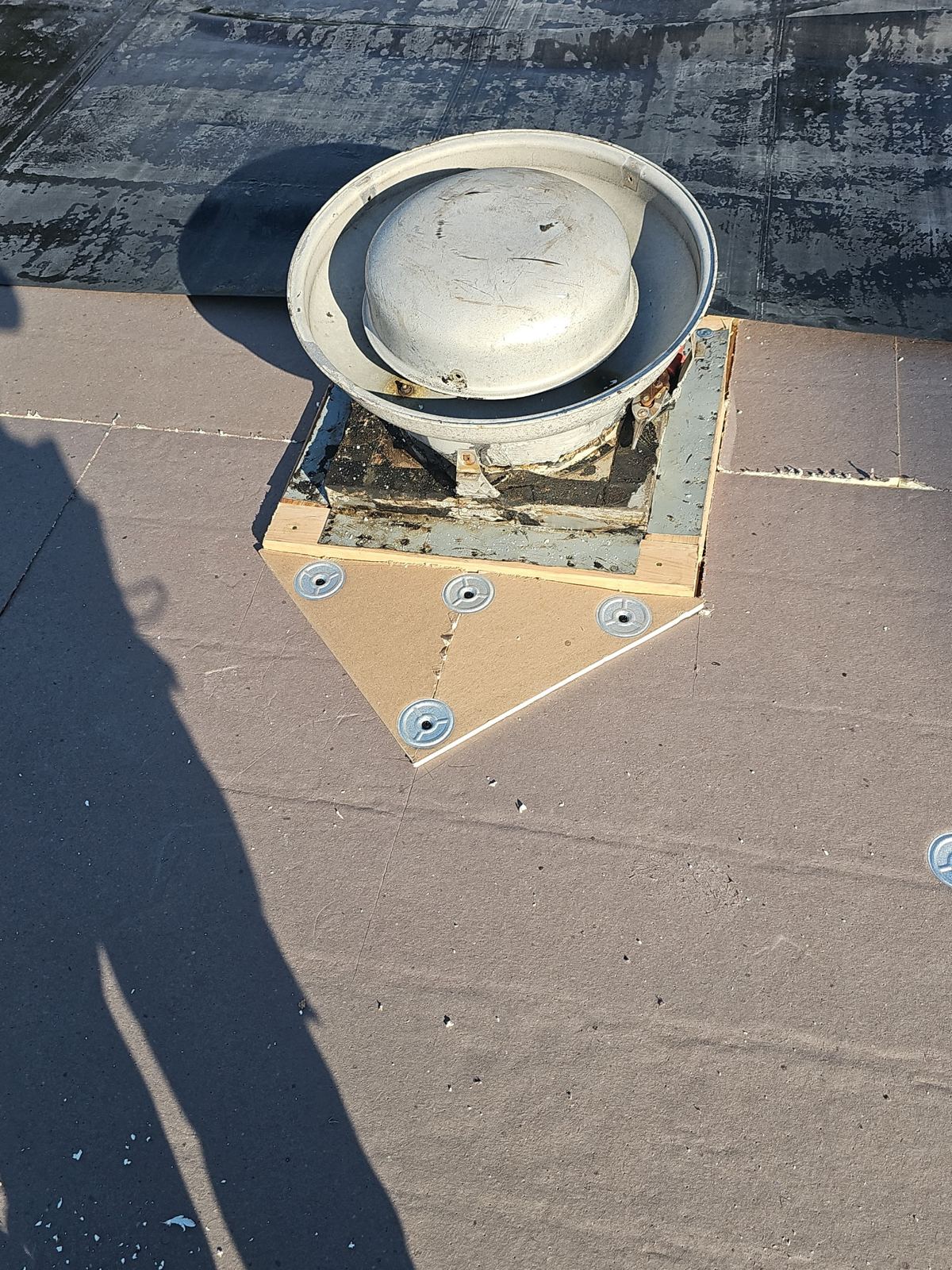
- Repairs begin with clearing debris from the interior drain bowl and strainer. We inspect the connection seal between the roofing membrane and the interior leader pipe for thermal separation. Failed membrane around the drain sump is cut back, saturated insulation deck boards are replaced, and a target patch of modified bitumen or EPDM membrane is heat-welded or mechanically sealed over the area.
- Does Fairview require a building permit for emergency roof repairs or temporary tarping?
- Emergency tarping and minor localized repairs performed to stop active water entry do not require a prior permit under the New Jersey Uniform Construction Code. If inspection reveals that structural deck timber must be replaced or repair areas exceed standard municipal limits, Storm Guard Roofing assists in filing the necessary permit documentation with the Fairview Building Department.
- How does insurance claim handling work for storm-damaged roofs in Fairview?
- After securing the roof with emergency tarping, our team performs a complete damage inspection, documenting wind-lifted shingles, hail impacts, or fallen limb damage with photos and structural assessments. We compile a line-item estimate matching industry insurance software standards and meet with your insurance adjuster on-site in Fairview to ensure all hidden flashing and substrate damage is included in the claim scope.
- How can I tell if my roof leak requires a spot repair or a complete replacement?
- If water intrusion originates from an isolated flashing defect, broken shingle cluster, or localized parapet seam, a targeted repair is appropriate. If the roofing membrane shows widespread cracking, multiple past patch failures, or if the underlying plywood decking is soft and rotted across large areas, replacement is advised. An inspection by Storm Guard Roofing at (201) 403-0024 provides a diagnostic assessment.
More in Fairview
Call (201) 403-0024 for a Fairview inspection, or send the form.