Hackensack · Bergen County
Roof Repair Services in Hackensack, NJ
Storm Guard Roofing provides targeted roof repair services across Hackensack, New Jersey, covering ZIP codes 07601 and 07602. Operating for over 25 years as a family-owned, licensed, and insured contractor, we dispatch crews 24 hours a day, 7 days a week to contain active leaks, secure storm damage, and restore structural integrity. Hackensack features a distinct building stock where low-rise commercial flat roofs and residential shingle homes share the same block—from Central Hackensack and Downtown to The Heights, Fairmount, and Summit Avenue. Whether fixing wind-torn shingles on an older colonial or sealing a leaking scupper on a commercial strip, our technicians isolate the failure point and perform targeted repairs. Call (201) 403-0024 for immediate response or emergency tarping services. We also assist with insurance claims handling from start to finish.
Diagnosing Common Roof Leak Sources in Hackensack
A roof leak rarely starts where water enters the living or working space. In Hackensack homes and commercial buildings, water enters through compromised outer layers, travels along rafters, plywood joints, or ceiling joists, and drips out at the lowest point of resistance. Identifying the precise origin requires systematic inspection of all upper-roof penetration points and material junctions.
In residential areas along Summit Avenue and Fairmount, wind-driven rain from northeastern storms hits roof valleys and wall intersections at force. Ice dams during northern New Jersey winter months force meltwater under lower shingle courses, cracking aged underlayment and penetrating the decking. On commercial structures in Downtown and Central Hackensack, thermal expansion causes field membrane pulling at terminations, leading to standing water infiltration.
- Degraded neoprene pipe boots around plumbing stacks where rubber dry-rots and cracks over time.
- Separated step flashing along dormer sidewalls, chimney brick, and stucco transitions.
- Ripped or missing asphalt shingles caused by straight-line wind gusts down major corridors.
- Open lap seams on flat membrane roofs near parapet walls and perimeter gravel stops.
Flashing, Valley, and Penetration Repairs
Flashing prevents water entry at angles, joints, and roof penetrations. When step flashing oxidizes, detaches, or loses sealant integrity, water runs directly into the wall cavity. Storm Guard Roofing repairs flashing failures by removing adjacent shingles, stripping back damaged underlayment, and installing new ice and water shield beneath custom-bent aluminum or copper step flashing.
Valleys experience the highest volume of water run-off on a sloped roof. Closed-cut valleys and woven valleys suffer shingle cracking along the centerline as shingles age and lose flexibility. When repairing valleys in Hackensack, we remove damaged courses, inspect the deck for rotted sheathing, replace soft wood with exterior-grade plywood, and install non-corrosive metal valley liners or heavy-duty mineral-surfaced cap sheets before re-shingling.
- Step flashing re-installation along dormers, chimneys, and high-wall transitions.
- Valley reconstruction using self-adhering waterproofing membrane and heavy-gauge metal flashing.
- Plumbing vent boot replacement with stainless steel or aluminum base collars.
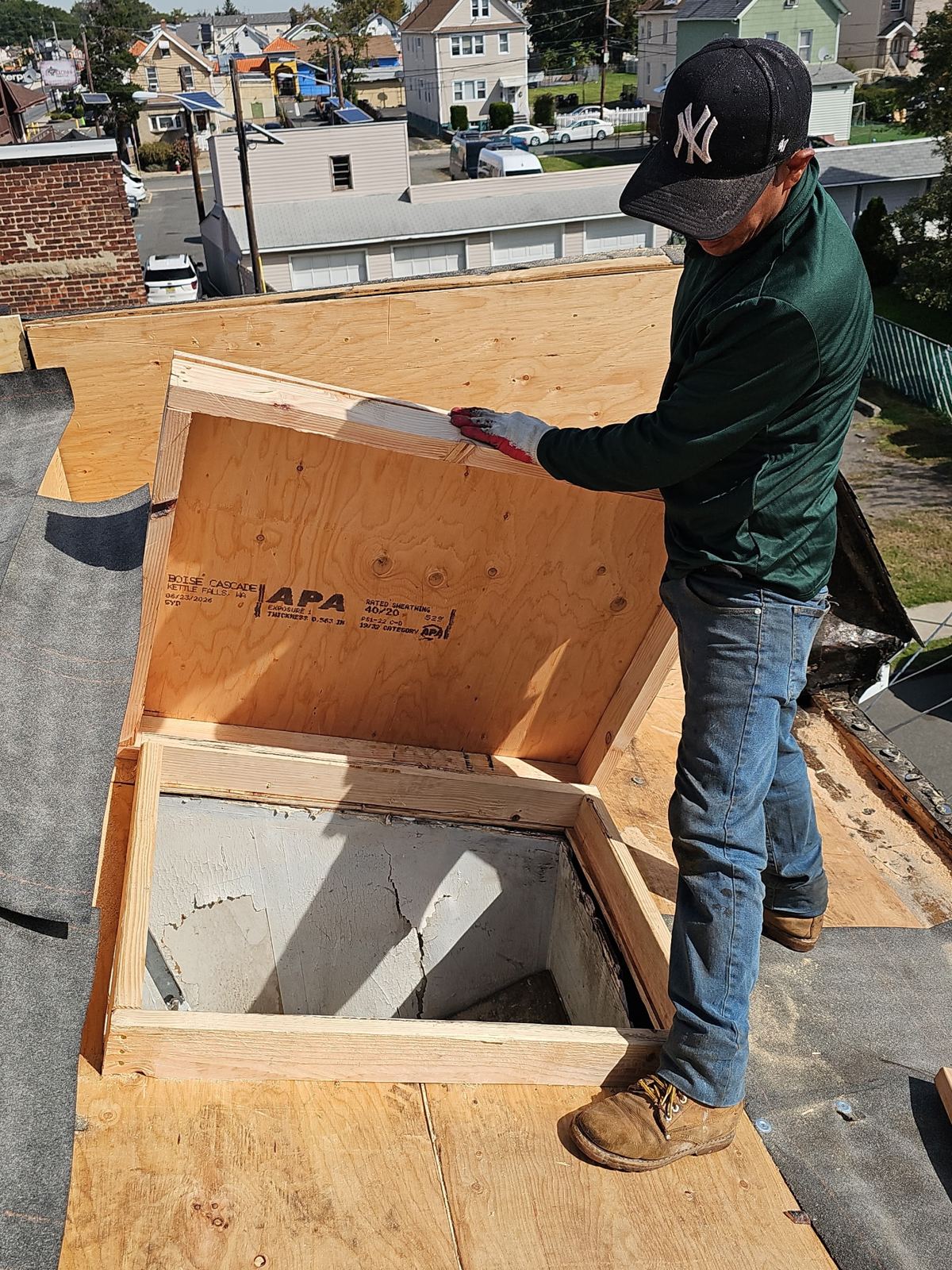
- Skylight curb rebuilds and perimeter counter-flashing installation.
Low-Rise Commercial Flat Roof Maintenance and Repair
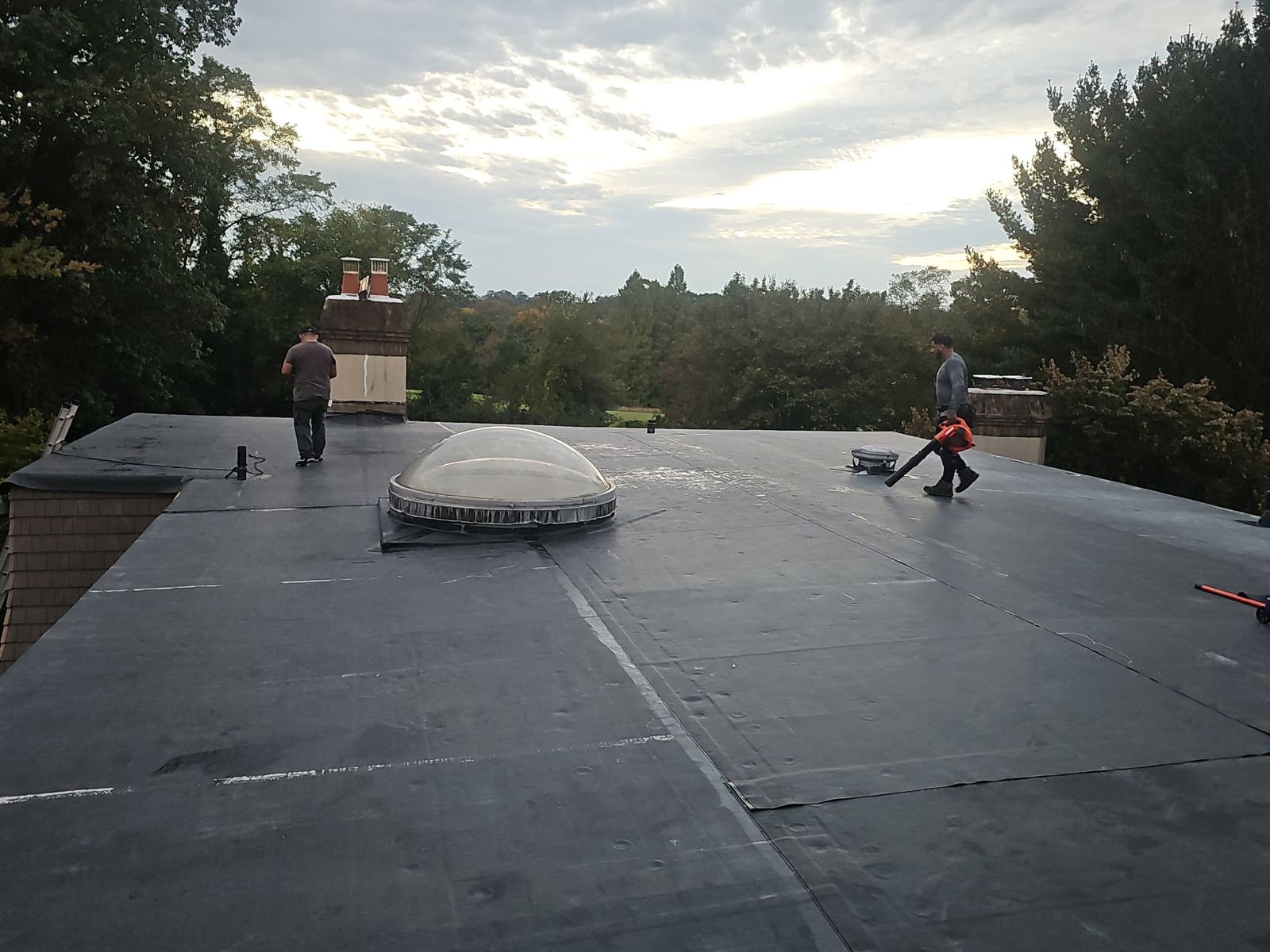
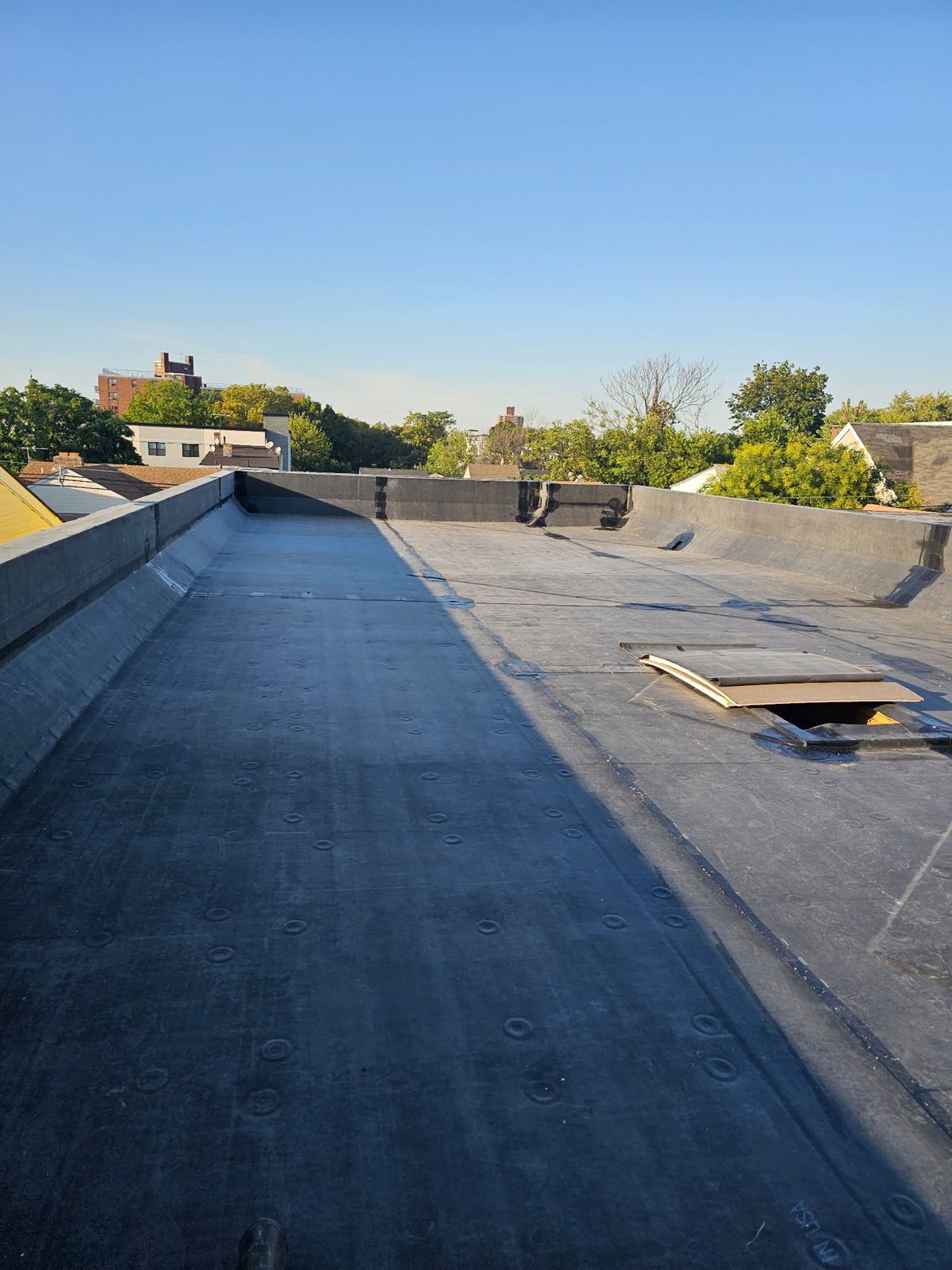
The urban structure of Central Hackensack and Downtown features mixed-use blocks where low-rise commercial buildings sit immediately adjacent to multi-family and single-family residences. Flat roofing systems on these commercial properties—including EPDM rubber, TPO, and modified bitumen—require specialized repair methods distinct from residential steep-slope roofs.
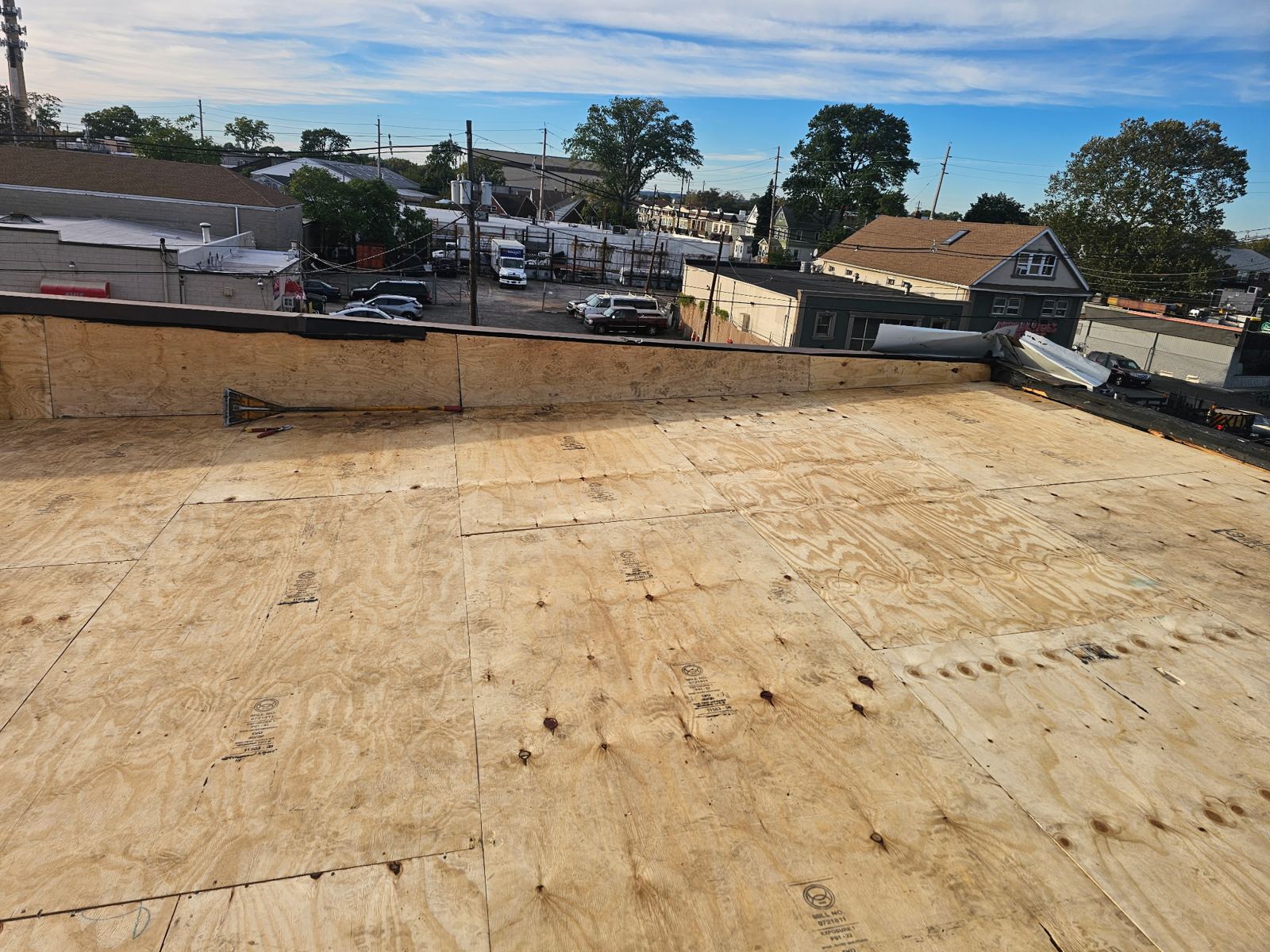
We repair localized failures on flat systems by inspecting penetrations, seams, and drainage points. Commercial roof leaks frequently originate at rooftop HVAC curbs where vibration loosens counter-flashing, or around gas line supports that have gouged the underlying membrane. Storm Guard Roofing also handles drain retrofits to eliminate standing water ponding. All commercial repairs are scheduled around your regular business hours to minimize disruption to tenants, customers, and operational routines.
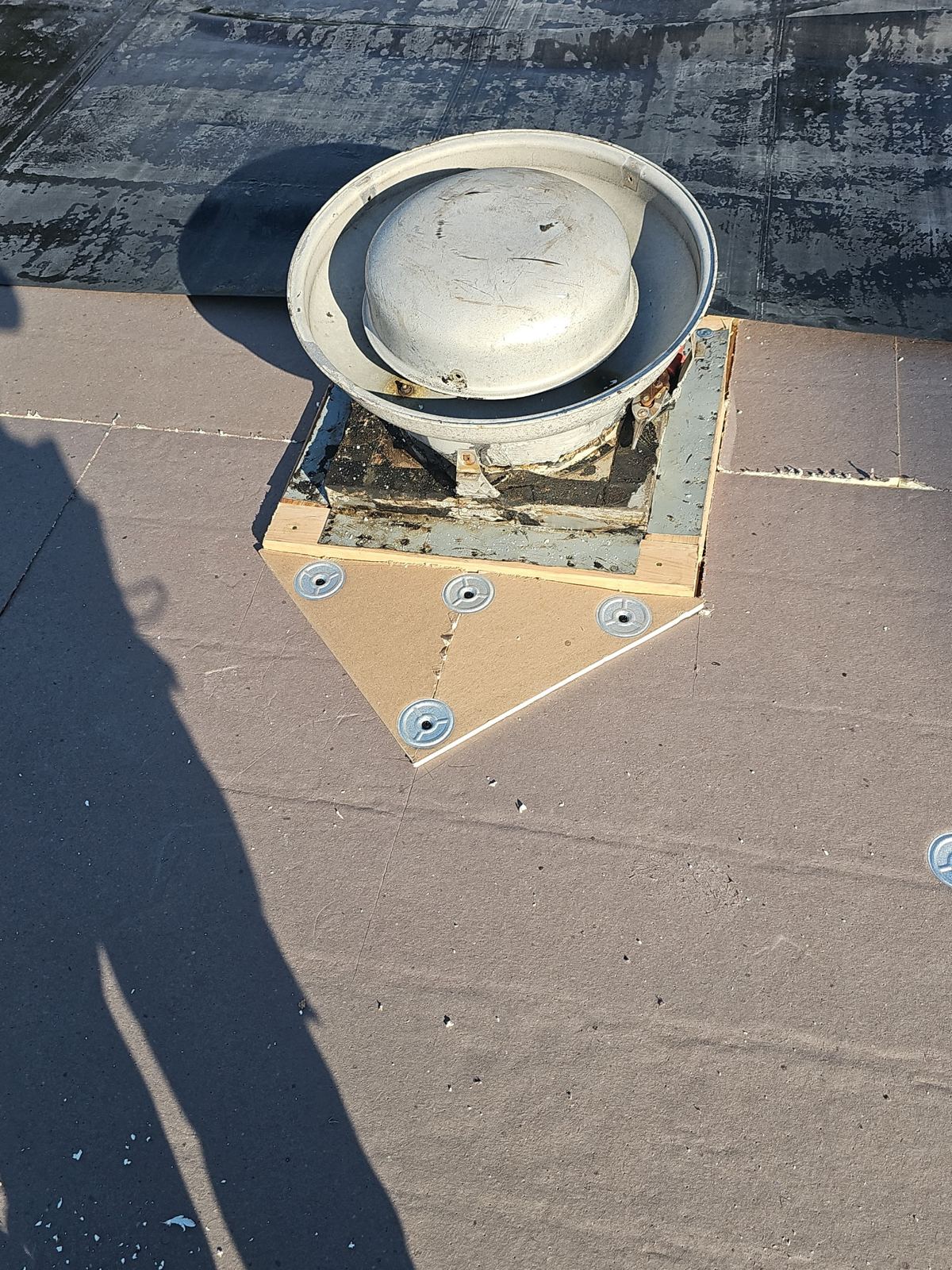
- Rooftop HVAC curb flashings, seam re-welding, and vibration collar sealing.
- Gas line support block resets using rubberized pipe stands to protect underlying membranes.
- Internal drain sleeve retrofits, strainer installation, and scupper box re-sealing.
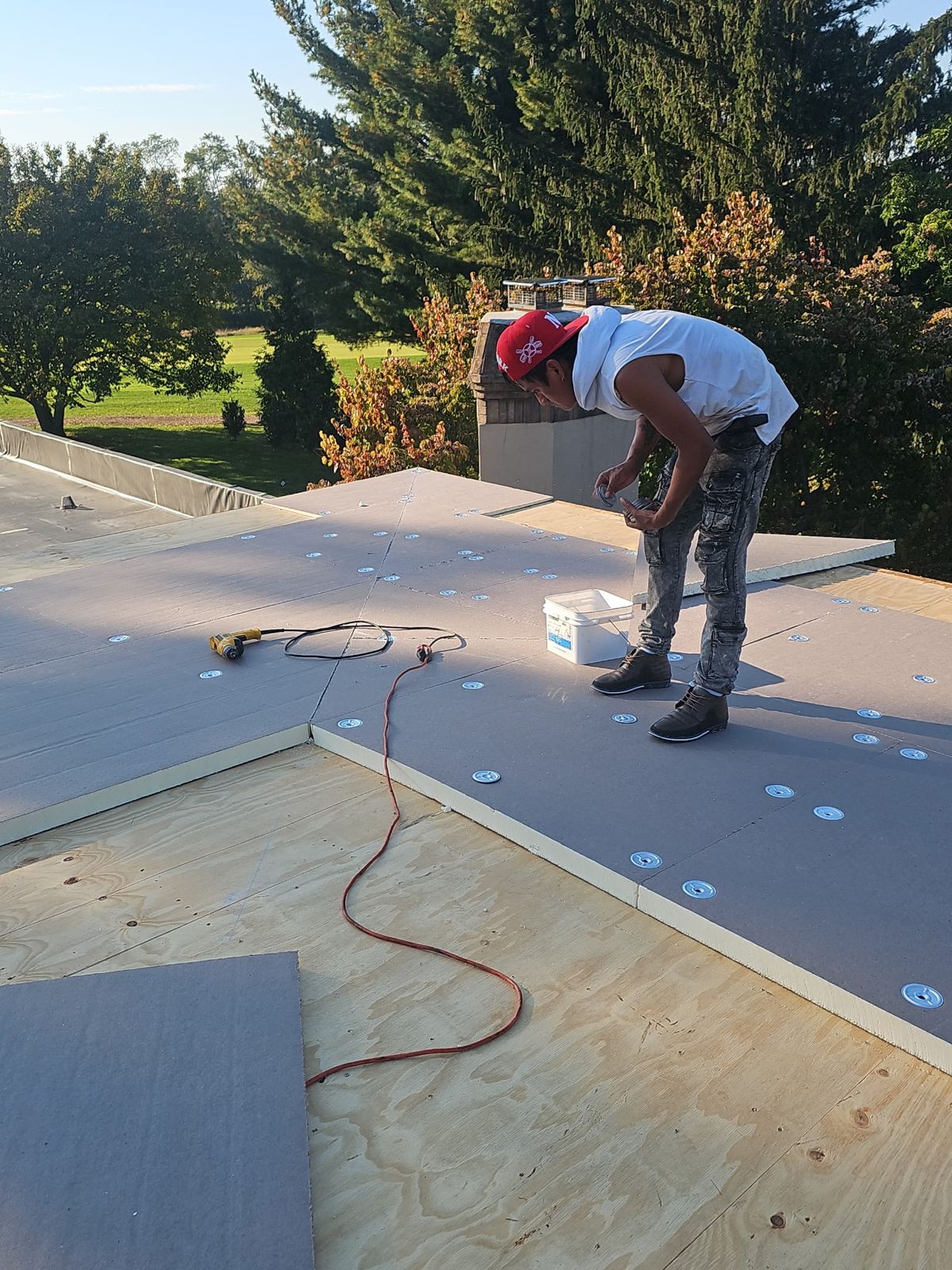
- Ponding water remediation via tapered insulation saddles and membrane patching.
Storm Damage, Emergency Tarping, and Insurance Claims
When severe weather strikes Bergen County, falling tree branches, hail, and high-wind events cause sudden damage to roofing systems. Water entering a building leads to rapid drywall failure, electrical hazards, and interior loss. Storm Guard Roofing maintains a 24/7 emergency response team dedicated to immediate stabilization through professional emergency tarping.
Emergency tarping stops active water entry, protecting the structure until weather permits full repairs. Beyond physical emergency measures, we manage the insurance claim process for property owners. We document damage with photographic evidence, provide detailed technical line-item estimates required by insurance adjusters, and meet adjusters on-site to ensure all storm damage is recognized.
Evaluating Repair vs. Replacement Costs
Homeowners often ask whether a roof leak warrants a localized repair or a full roof replacement. A repair is cost-effective when the surrounding roofing materials remain structurally sound, pliable, and within their operational lifespan. If damage is isolated to wind-blown shingles, a damaged pipe boot, or cracked flashing around a chimney, a targeted repair restores full integrity at a fraction of full replacement cost.
However, when a roof reaches the end of its functional life, localized repairs offer diminishing returns. A frequent structural issue found in older residential sections like The Heights and Fairmount is a converted attic with no ventilation path. In these structures, finished attic rooms cut off airflow from soffit vents to ridge vents, trapping heat and moisture. This condition bakes shingles from underneath, causing premature granule loss and deck rot. When we encounter unventilated converted attics, a spot repair will not prevent future failures; the entire system, including the intake and exhaust ventilation paths, must be corrected during a full replacement rather than shingling over compromised wood.
Hackensack questions we get asked
- Do I need a building permit from the City of Hackensack for roof repairs?
- Minor roof repairs in Hackensack, such as patching localized shingle damage, re-flashing a chimney, or replacing a vent boot, typically do not require a permit. However, if the repair involves replacing structural sheathing or re-roofing a substantial area, a permit from the Hackensack Building Department is required. Storm Guard Roofing manages all necessary permitting when structural work is involved.
- How quickly can Storm Guard Roofing dispatch a crew for an emergency leak in Hackensack?
- We offer 24/7 emergency response across Hackensack (07601, 07602) and surrounding Bergen County municipalities. For active interior leaks, our goal is to arrive on-site within hours to perform emergency tarping, stop water ingress, and secure the structure.
- How do you handle flat roof repairs on commercial buildings in Downtown Hackensack without interrupting business operations?
- We schedule commercial flat roof repairs around your business hours. Equipment staging, material transport, and high-noise work are planned early in the morning or off-peak hours to maintain clear access for customers, employees, and delivery vehicles along busy corridors.
- What causes recurring leaks around chimneys on older Summit Avenue homes?
- Leaks around older masonry chimneys are usually caused by cracked mortar, missing counter-flashing, or worn step flashing behind the brickwork. In addition, freeze-thaw cycles cause the chimney brick to absorb water, which then migrates behind the roof line. We fix this by installing new lead or copper counter-flashing cut directly into mortar joints, combined with an ice and water shield barrier.
More in Hackensack
Call (201) 403-0024 for a Hackensack inspection, or send the form.