Hasbrouck Heights · Bergen County
Roof Repair Services in Hasbrouck Heights, NJ
Hasbrouck Heights sits atop the Bergen County ridge overlooking the Hackensack River valley. This geographic position exposes residential structures to elevated wind speeds and driving rain coming across the open lowlands near Teterboro. The local housing stock consists heavily of 1920s through 1950s Cape Cods, Tudors, and Colonials featuring steep front slopes, multi-gable rooflines, and dormers. Storm Guard Roofing provides targeted roof repair services designed for these specific architectural styles and structural conditions. Operating as a family-owned, licensed, and insured contractor with over 25 years of experience in Bergen County, we focus on identifying and fixing roof leaks, failing flashing, and storm damage rather than defaulting to full roof replacements. Our crews provide 24/7 emergency leak response and manage insurance claims directly. Contact us at (201) 403-0024 for technical roof evaluations and spot repair services across Hasbrouck Heights.
Wind Exposure and Structural Vulnerabilities on the Hasbrouck Heights Ridge
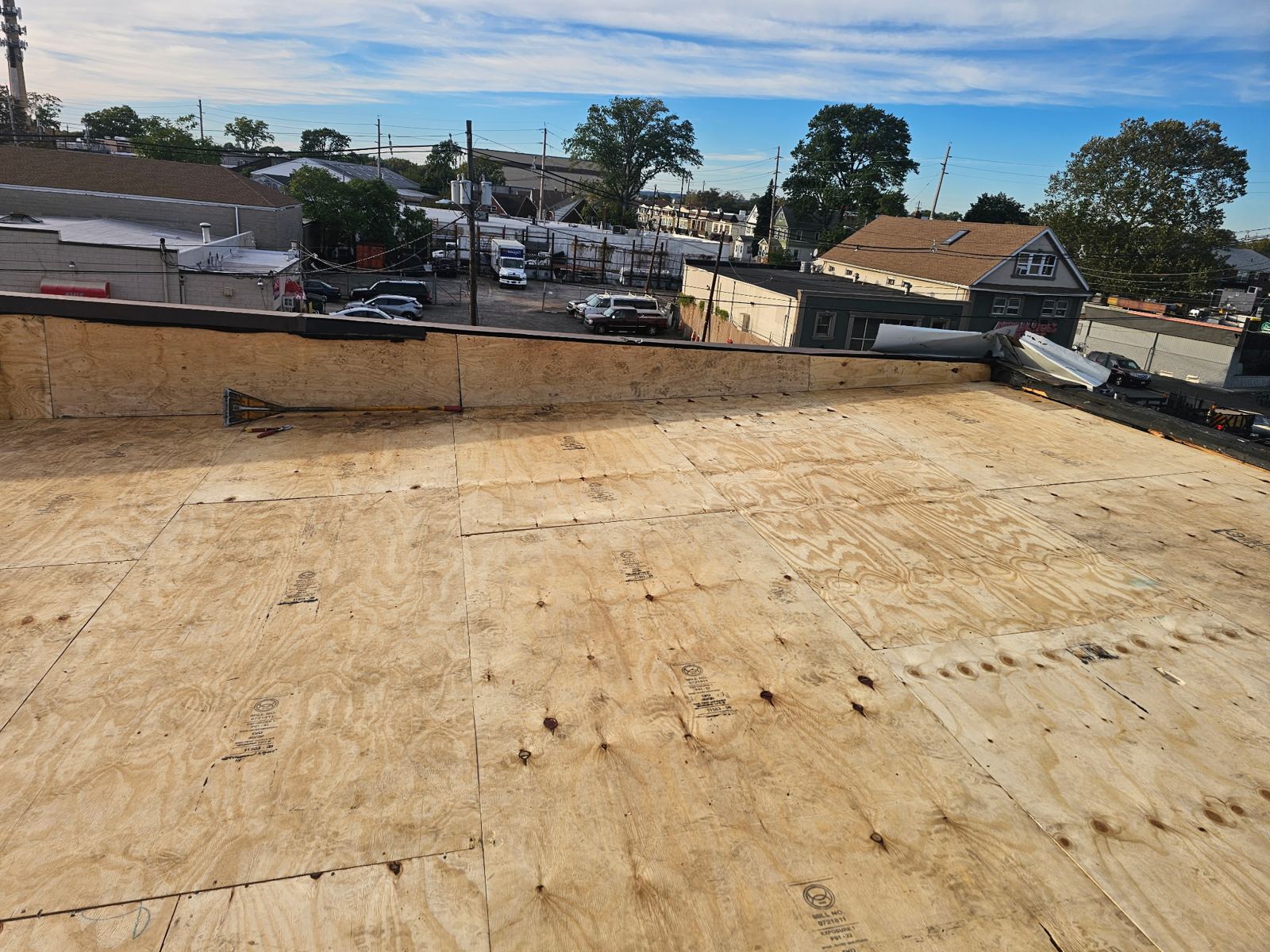
Homes positioned along the Hasbrouck Heights bluff top, including those near Boulevard and Terrace Avenue, encounter sustained wind shear that differs significantly from lower-elevation Bergen County municipalities. High wind gusts hit steep-pitched front roofs directly, causing localized uplift pressures along eaves, rakes, and dormer intersections. On older homes built between the 1920s and 1950s, original decking often consists of 1x6 tongue-and-groove or open-slat wood boards rather than modern plywood sheets. Wind uplift pulls fasteners out of these aging wood substrates, loosening shingles without tearing them off completely, which allows driving rain to penetrate the underlayment underneath.
Water intrusion on these steep slopes often travels horizontally along the rafter lines before entering the interior ceiling, making the leak source difficult to pinpoint without physical tracing. Our diagnostic process includes evaluating the underside of the deck inside the attic space to identify water staining patterns relative to exterior shingle displacement along the wind-exposed slopes.
- Wind-driven shingle delamination along ridge caps and rake edges
- Structural movement in aging 1x6 tongue-and-groove roof board decks
- Sub-surface moisture migration along steep-slope rafter assemblies
- Fastener backing-out due to thermal expansion on uninsulated wood decks
Flashing and Valley Failures on Multi-Dormer Roofs
Mid-century architectural styles in Hasbrouck Heights feature complex rooflines with multiple dormers, valley intersections, and masonry chimneys. Flashing failures are the primary cause of targeted leaks on these structures. Step flashing installed along dormer sidewalls degrades over time due to thermal movement, copper oxidation, or rusting galvanized steel. When step flashing separates from the sidewall or original mortar joint, water runs behind the exterior siding—whether cedar shingle, aluminum, or vinyl—and penetrates the wall framing before reaching the interior ceiling.
Valleys on older steep-slope roofs present another high-failure zone. Closed-cut or woven asphalt valleys accumulate debris, ice, and organic material along the valley centerline. Water backing up behind ice dams or debris breaks the seal between layered shingles, leading to substrate rot along the valley centerline. We execute targeted repairs by removing damaged shingle courses, replacing rotted deck boards, installing high-temperature self-adhering ice and water membrane, and fitting heavy-gauge metal valley linings without disturbing unaffected roof areas.
- Step flashing separation at dormer sidewalls and brick chimney intersections
- Mortar joint degradation around counter-flashing on vintage masonry chimneys
- Valley liner perforation caused by standing debris and ice build-up
- Wall-to-roof transition leaks behind wood siding and stucco finishes
24/7 Emergency Tarping, Storm Damage, and Insurance Claims
Severe weather events across Bergen County can tear shingles from steep slopes or drop tree branches onto residential structures. Storm Guard Roofing maintains a 24/7 emergency repair unit equipped for immediate deployment to Hasbrouck Heights. Our emergency tarping protocols involve securing heavy-duty reinforced tarpaulins using wooden furring strips anchored above the damaged zone. We do not nail tarps directly into functional shingles, preventing secondary damage to healthy roof sections during emergency response.
For roofs impacted by fallen limbs or severe wind events, we assist homeowners throughout the insurance claim process. We provide detailed, itemized damage assessments including photographic evidence of missing shingles, exposed decking, compromised underlayment, and step flashing displacement. We meet directly with insurance adjusters on-site to review the scope of structural repairs, ensuring that the claim estimate reflects local Bergen County labor and material requirements.
- Direct furring-strip tarping to protect structural framing without damaging sound shingles
- Emergency structural stabilization after fallen branch or tree impacts
- Comprehensive digital photo documentation of storm-induced wind and hail damage
- On-site representation during insurance adjuster inspections for repair scopes
Repair vs. Replacement Cost Analysis
Homeowners in Hasbrouck Heights often assume that a roof leak requires a complete roof replacement. However, if the existing asphalt shingles retain their flexibility, granule layer, and structural bond across 70 percent or more of the roof surface, targeted repair is a financially sound solution. A complete roof replacement on a steep-sloped 1930s Tudor or Colonial requires extensive labor for tear-off, hazardous material disposal, synthetic underlayment installation, and full re-flashing around complex dormer configurations.
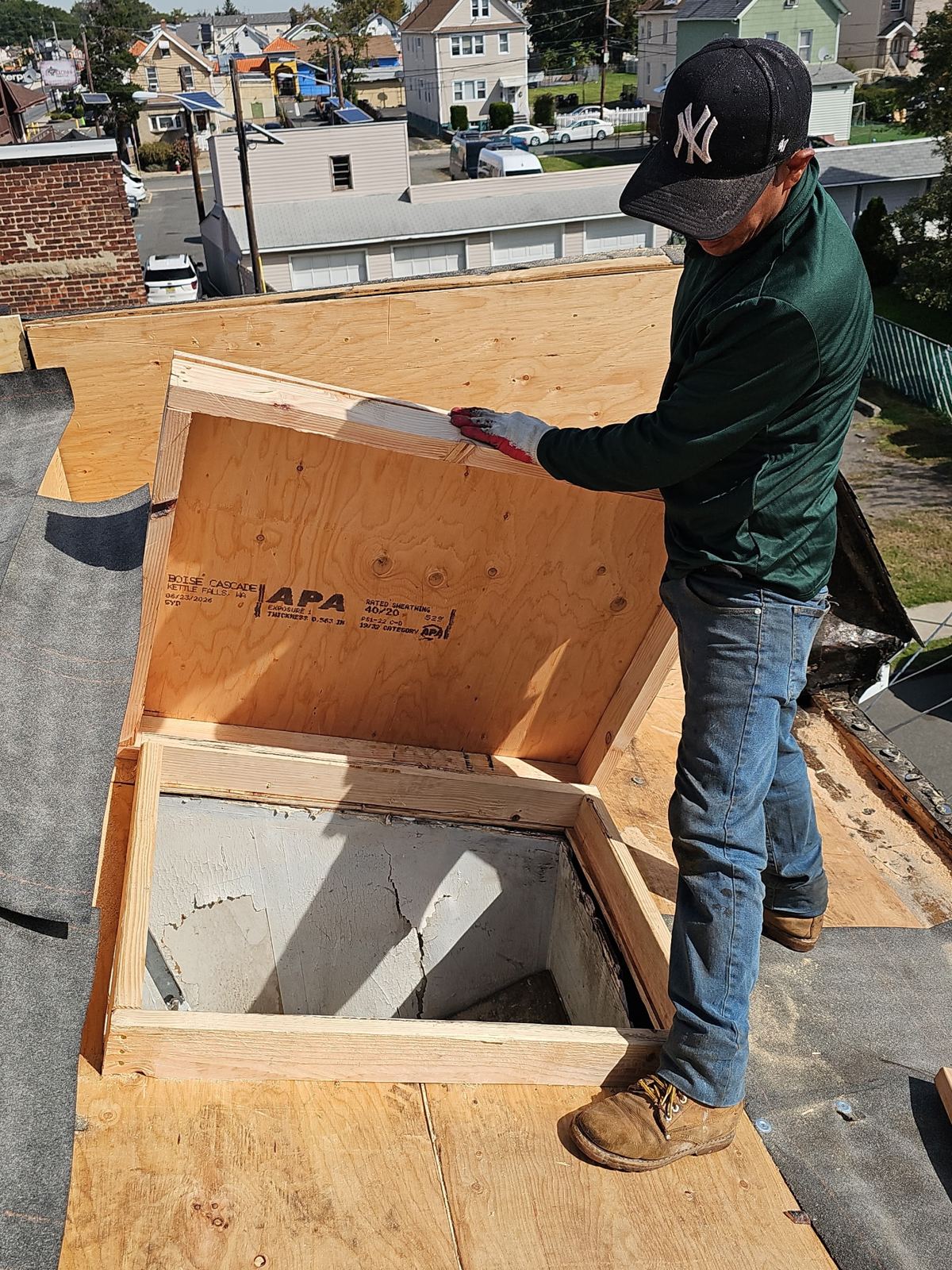
In contrast, a localized repair targets only the compromised flashing, damaged deck boards, or displaced shingle sections. Rebuilding a single dormer transition or replacing 50 square feet of wind-damaged shingles around a chimney costs a fraction of a full system tear-off. We evaluate granule loss, shingle adhesion, mat flexibility, and deck integrity to provide an accurate technical assessment, recommending full replacement only when the structural decking or entire shingle field has reached end-of-life condition.
- Cost-effective spot repairs for localized leak points vs. total tear-off expenses
- Preservation of functional roof sections on complex, multi-gable structures
- Detailed shingle integrity evaluation: granule retention, mat flexibility, and tab adhesion
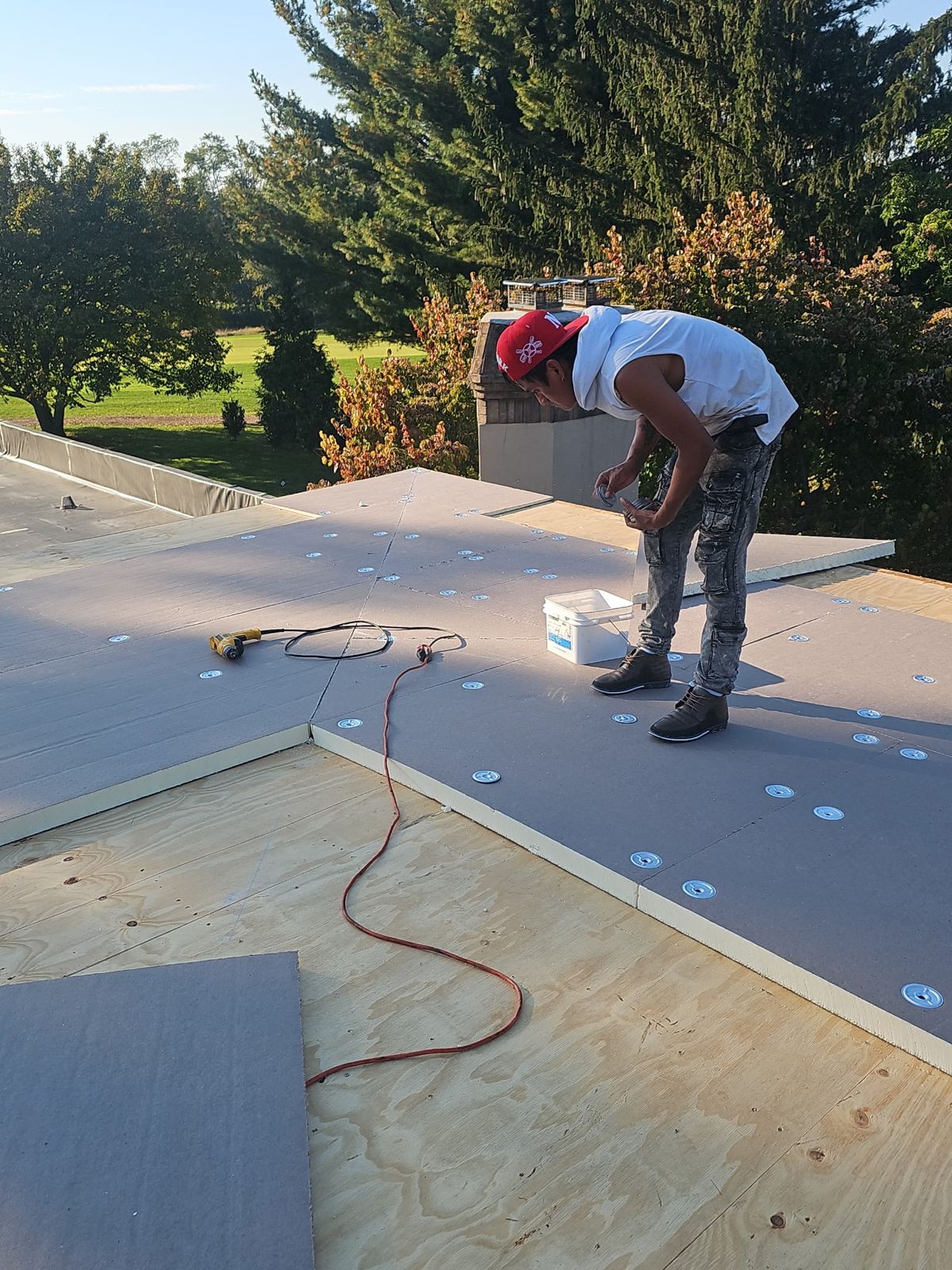
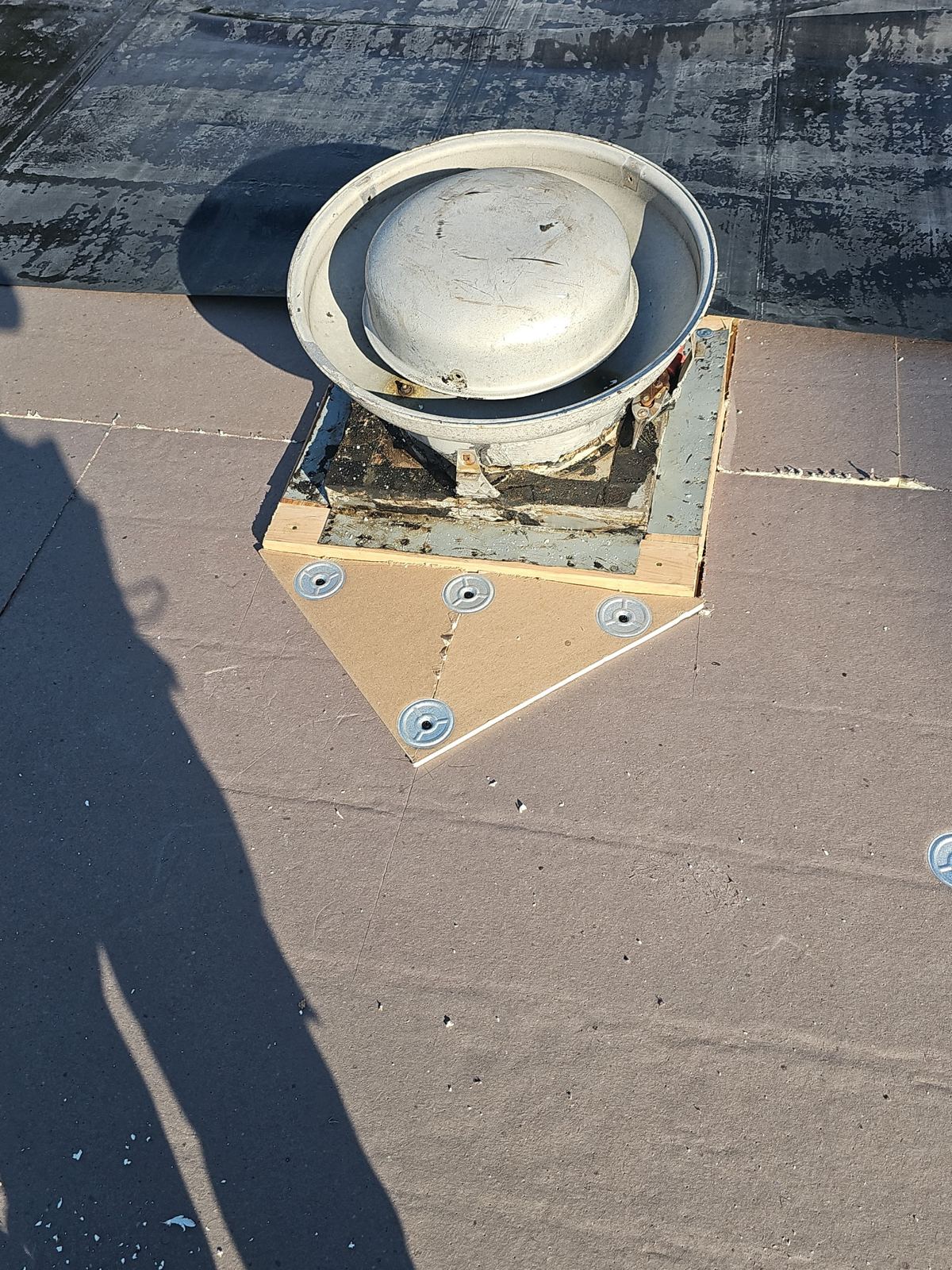
- Targeted underlayment and flashing replacement to extend existing roof service life
Local Permitting and Municipal Building Standards
The Borough of Hasbrouck Heights Construction Department enforces building regulations under the New Jersey Uniform Construction Code (NJ UCC). Minor roof repairs, such as replacing a small number of damaged shingles or re-sealing isolated flashing sections, typically do not require a full construction permit. However, when repairs involve replacing structural roof sheathings or larger continuous sections of roofing materials, municipal permits and inspections are mandated.
Storm Guard Roofing manages all necessary municipal documentation when structural deck repair is required in Hasbrouck Heights. We ensure all work complies with local ice-barrier requirements—applying self-adhering membrane along eaves and valley centerlines—and meets local wind resistance standards for steep-slope residential structures. Our field crews carry active state licensing and liability insurance documentation to meet local building department requirements.
- Compliance with Borough of Hasbrouck Heights Construction Office regulations
- Adherence to New Jersey Uniform Construction Code (NJ UCC) repair criteria
- Installation of self-adhering ice barriers per local weather zone requirements
- Full license and insurance documentation provided for municipal filing
Hasbrouck Heights questions we get asked
- Why are homes in Hasbrouck Heights more susceptible to wind-driven roof leaks?
- Hasbrouck Heights sits on an elevated bluff overlooking the Hackensack River valley. This topography creates higher wind uplift velocities than in low-lying adjacent towns. Combined with steep front slopes and dormers common on 1920s to 1950s homes, wind frequently lifts shingle edges and forces driving rain into flashing transitions.
- How do you fix a roof leak around a dormer without replacing the entire roof?
- We remove the siding or shingles directly adjacent to the dormer cheek, extract the compromised step flashing, and inspect the underlying wood deck. We then install a continuous strip of self-adhering ice and water membrane, integrate new step flashing with each shingle course, re-seal counter-flashing, and replace only the affected shingles.
- Does Storm Guard Roofing handle emergency tarping at night or during severe weather in Hasbrouck Heights?
- Yes. We operate a 24/7 emergency response team. We dispatch crews to install secure emergency tarps using non-destructive furring strip methods, preventing further interior water damage until weather conditions permit permanent structural repairs.
- Are minor roof repairs subject to permit requirements in Hasbrouck Heights?
- Under the New Jersey Uniform Construction Code, ordinary maintenance and minor patch repairs do not require a permit. However, if the repair involves replacing structural roof sheathing or re-roofing extensive sections, a permit from the Borough of Hasbrouck Heights Construction Department is required. We handle all determination and permit filings when needed.
More in Hasbrouck Heights
Call (201) 403-0024 for a Hasbrouck Heights inspection, or send the form.