Marlboro · Monmouth County
Roof Repair Services in Marlboro, NJ
Roof damage on Marlboro residential properties requires accurate structural diagnosis and targeted repairs. Marlboro Township features extensive residential developments dominated by large newer colonials with complex rooflines, multiple valleys, dormers, and long gutter runs. These architectural features create specific vulnerabilities under Monmouth County weather conditions, where driving rains, ice dams, and wind shear stress roof assemblies. Storm Guard Roofing provides specialized roof repair services throughout Marlboro, addressing active leaks, structural flashing failures, and severe weather damage. Operating as a family-owned business for over 25 years, our crew is fully licensed and insured in New Jersey. We maintain a 24/7 emergency response team for urgent storm damage and manage the entire insurance claims process directly with your carrier. For service inquiries or field inspections, call (201) 403-0024.
Common Leak Sources on Marlboro Architectural Shingle Roofs
In Marlboro's newer subdivisions, roof designs feature steep slopes, complex dormer configurations, and multiple plane intersections. Water intrusion rarely starts in the middle of a clear shingle field; instead, it originates at transition points where sealants degrade or flashing separates. During heavy rainstorms, water moving down steep upper pitches accumulates at lower roof junctions, searching for penetrations in the underlayment.
Pipe boot collars, step flashing along sidewalls, and chimney step flashing represent the primary failure points on these large colonials. Additionally, long gutter runs attached to expansive fascia lines can back up during high-volume downpours or winter ice formation, forcing water back up under the initial shingle courses.
- Neoprene pipe boot collars that crack due to thermal expansion and UV exposure.
- Step flashing transitions around multi-story dormers and masonry chimneys.
- Sidewall junctions where kick-out flashing was improperly integrated or omitted during original construction.
- Eave lines subject to winter ice dams along extended gutter runs.
Flashing and Valley Failures on Multi-Gable Rooflines
Valleys carry the highest concentration of water runoff on multi-gable colonials. In Marlboro homes, roof planes frequently direct massive volumes of rain into shared valley channels. When open metal valleys rust or closed-cut shingle valleys experience severe granule loss along the centerline, water bypasses the primary barrier and saturates the underlying roof deck.
Flashing failures along brick and stone veneer facades are equally problematic. As a home settles, mortar joints between counter-flashing can crack, allowing driven rain behind the metal. Replacing compromised valley liners and re-engaging step flashing into mortar joints stops water migration before structural plywood sheathing rots.
- Accelerated shingle granule erosion along high-velocity closed-cut valley centerlines.
- Corroded or improperly lapped metal valley flashing at roof slope junctions.
- Separated step flashing caused by natural frame settling and exterior trim movement.
- Underlayment deterioration beneath intersecting dormer valleys.
Emergency Storm Damage Repair and Tarping Protocols
Nor'easters, summer thunderstorms, and severe wind events in Monmouth County can strip shingles, crack roof decking, or drive wind-blown debris into structural roof planes. Storm Guard Roofing maintains a 24/7 emergency response unit to secure damaged roofs immediately. Emergency tarping halts active interior water leakage, protecting ceiling drywall, insulation, and electrical systems from progressive ruin.
Once the property is stabilized, our team documents all physical damage for the insurance claim. We provide itemized scope reports covering shingle impact marks, creased tabs, torn underlayment, and broken decking to ensure your carrier covers all necessary code-compliant repairs.
- Immediate deployment of heavy-duty synthetic tarps secured with wooden pressure battens.
- Safe clearing of heavy tree limbs and loose debris from the roof deck.
- Photographic documentation of wind uplift, creased shingle mats, and hail impacts.
- Direct technical representation during on-site inspections with insurance adjusters.
Technical Evaluation: Repair Versus Full Roof Replacement
Determining whether a roof requires localized repair or complete replacement depends on shingle mat age, deck structural integrity, and total square footage affected. On large Marlboro colonials with 4,000 to 6,000 square feet of roof area, replacing an entire surface due to an isolated valley or dormer leak is inefficient if the surrounding shingle field remains pliable and fully bonded.
However, if shingles show widespread granule loss, thermal splitting, or loss of adhesion across multiple slopes, spot repairs will not yield a long-term seal. We evaluate deck stiffness, underlayment condition, and shingle flexibility to provide an objective technical recommendation.
- Shingle Flexibility: Pliable shingles allow field repairs; brittle shingles break when lifted for flashing installation.
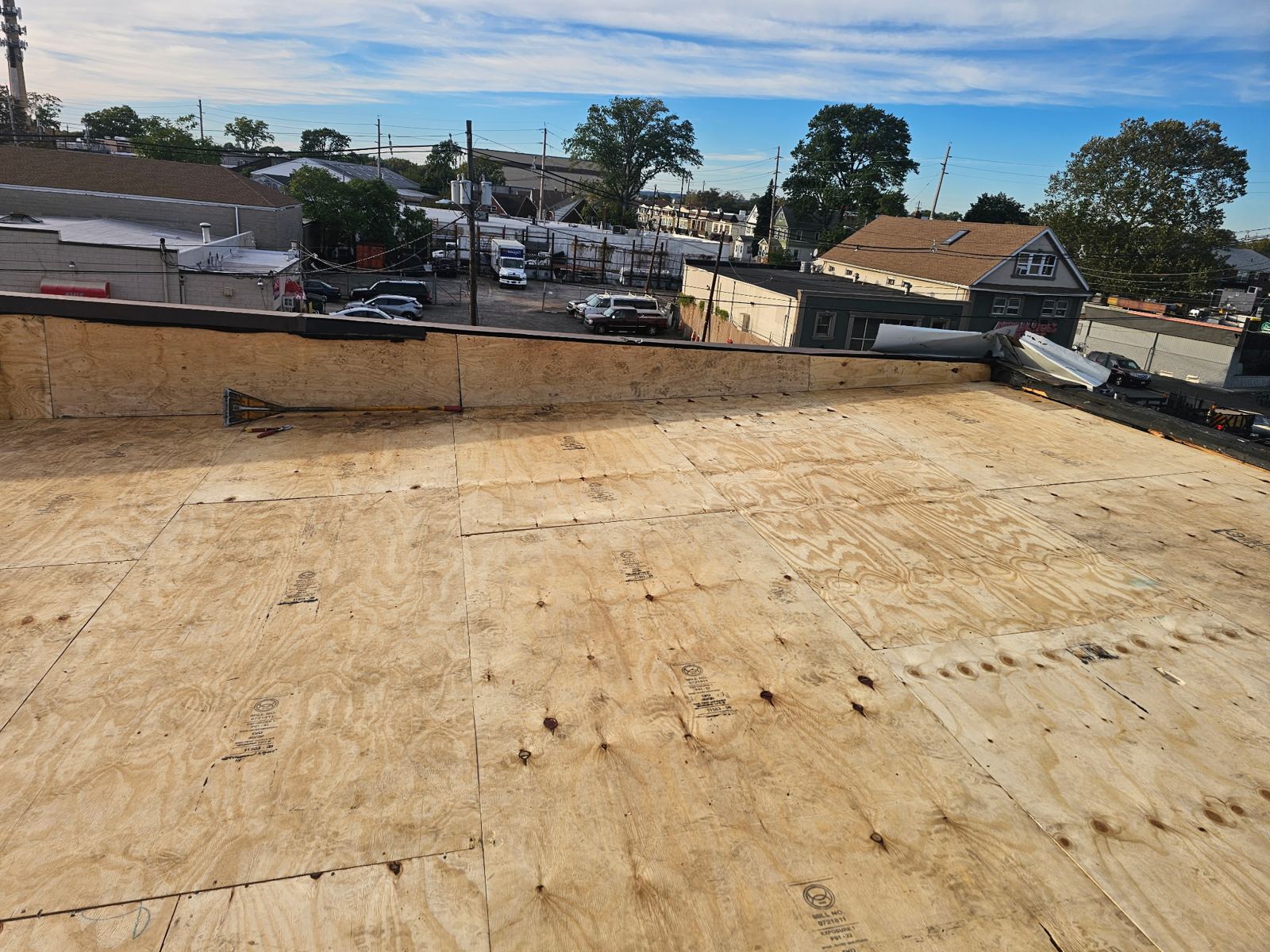
- Decking Condition: Soft or delaminated plywood sheathing must be replaced before installing new underlayment. purchase.
- Damage Area: Isolated water intrusion affecting under 25 percent of a single slope favors targeted repair.
- Adhesive Strip Integrity: Functional thermal seal strips on surrounding courses enable secure integration of new shingles.
Marlboro Township Building Codes and Compliance Standards
Roof repairs in Marlboro, NJ must adhere to the New Jersey Uniform Construction Code (NJ UCC) and local Township of Marlboro requirements. Minor maintenance and localized shingle repairs generally do not require full building permits, but structural deck replacement or extensive structural modifications require proper municipal documentation.
All repair work must meet modern weatherproofing standards. This includes installing self-adhering ice and water shield membranes along eaves and valleys to prevent moisture intrusion caused by severe weather patterns common to Central Jersey.
- Ice and water membrane application extending at least 24 inches inside the warm interior wall line.
- Use of hot-dipped galvanized or stainless steel fasteners driven to correct depth without over-penetrating mats.
- Strict compliance with Marlboro Township waste containment and disposal regulations during tear-offs.
- Proper installation of drip edge metal along eaves and rakes to direct water away from fascia boards.
Marlboro questions we get asked
- How do Marlboro Township building codes apply to emergency roof repairs?
- Emergency tarping and minor shingle repairs intended to prevent immediate interior water damage do not require advance permits from the Marlboro Township Construction Department. However, if structural repairs involve replacing multiple sheets of roof decking or altering framing, permits must be filed to ensure compliance with the New Jersey Uniform Construction Code.
- Why are large colonials in Marlboro particularly prone to valley leaks?
- Marlboro colonials feature complex, high-pitch rooflines with intersecting gables, dormers, and long gutter runs. High volumes of water from upper roof slopes concentrate into the valleys, generating strong hydraulic pressure that accelerates shingle granule wear and tests flashing seams.
- How does Storm Guard Roofing assist Marlboro homeowners with storm damage claims?
- We perform an detailed field inspection, document all wind uplift, broken seals, and hail damage with high-resolution photos, and generate an itemized repair estimate. We then meet directly with your insurance adjuster on-site in Marlboro to review the damage and confirm local code requirements.
- What is the typical response time for emergency roof tarping in Marlboro?
- Storm Guard Roofing operates a 24/7 emergency service. Our crews dispatch rapidly to Marlboro properties following severe storm events, arriving equipped with heavy-duty tarps, timber battens, and safety equipment to immediately cover active leaks.
More in Marlboro
Call (201) 403-0024 for a Marlboro inspection, or send the form.