New Milford · Bergen County
Targeted Roof Repair in New Milford, NJ
Storm Guard Roofing provides targeted roof repair services in New Milford, New Jersey. Operating for over 25 years as a family-owned, licensed, and insured contractor, we provide 24/7 emergency response for active leaks, storm damage, and structural roof defects. Call (201) 403-0024 for immediate dispatch or to schedule a diagnostic inspection. The residential building stock in New Milford consists largely of 1950s Capes and ranches. These structures present specific roofing vulnerabilities, particularly aging pipe-boot flashing and heavy tree debris accumulation from mature oak and maple canopies along neighborhoods near River Road and Berkley Street. Water intrusion in these homes rarely requires a complete tear-off. Isolated shingle uplift, valley rot, or flashing degradation can be corrected with direct technical repairs. We assist homeowners with insurance claims by providing photographic documentation and itemized scopes of work for storm-related damage. Our work restores roof performance without unnecessary full-replacement costs.
Diagnostics and Leak Tracing on 1950s Housing Stock
1950s Cape Cods and ranches in New Milford feature distinct framing configurations, including low-slope rear additions and steep main roof pitches. Over time, neoprene rubber collars on pipe vent boots degrade due to ultraviolet exposure, cracking open at the base of the stack. Water entering around a cracked pipe boot frequently travels along interior rafters before dripping through ceiling drywall, making leak origin tracing critical.
In addition, dense tree canopies across Bergen County drop leaves, twigs, and acorns into roof valleys and gutter runs. This organic matter traps moisture against asphalt shingles, accelerating granule loss and causing water to back up under shingle courses during prolonged rainstorms.
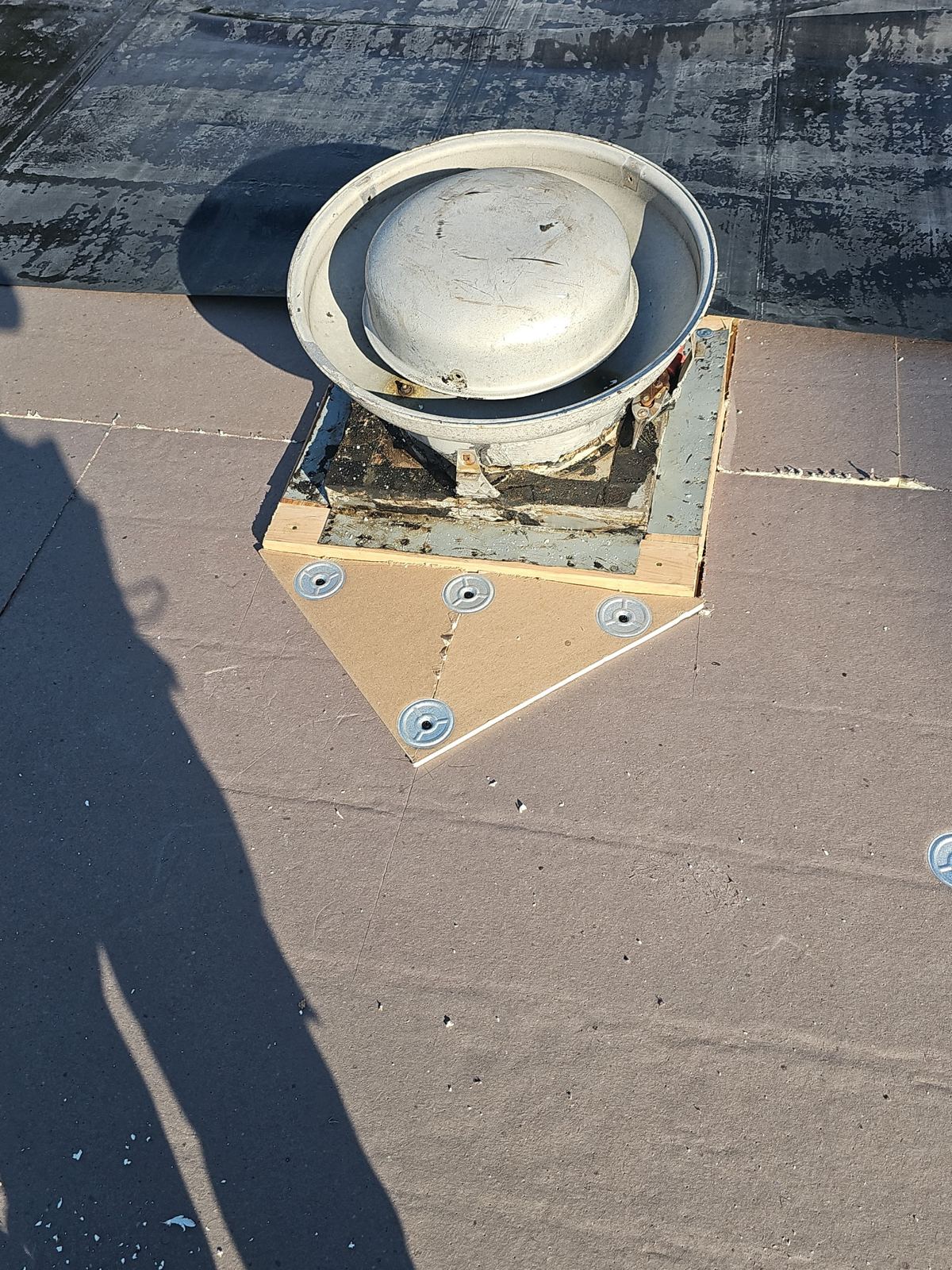
- Neoprene pipe-boot degradation and collar cracking
- Step flashing detachment along dormers and brick chimneys
- Debris dams in roof valleys causing reverse water flow
- Granule erosion leading to exposed asphalt matting
Flashing, Step Flashing, and Valley Failure Repairs
Flashing systems prevent water penetration at roof intersections. On New Milford homes built in the mid-20th century, original lead or aluminum chimney counter-flashing often separates from masonry mortar joints due to thermal expansion and foundation settling. When mortar crumbles, water runs behind the step flashing and rots the underlying wooden roof deck.
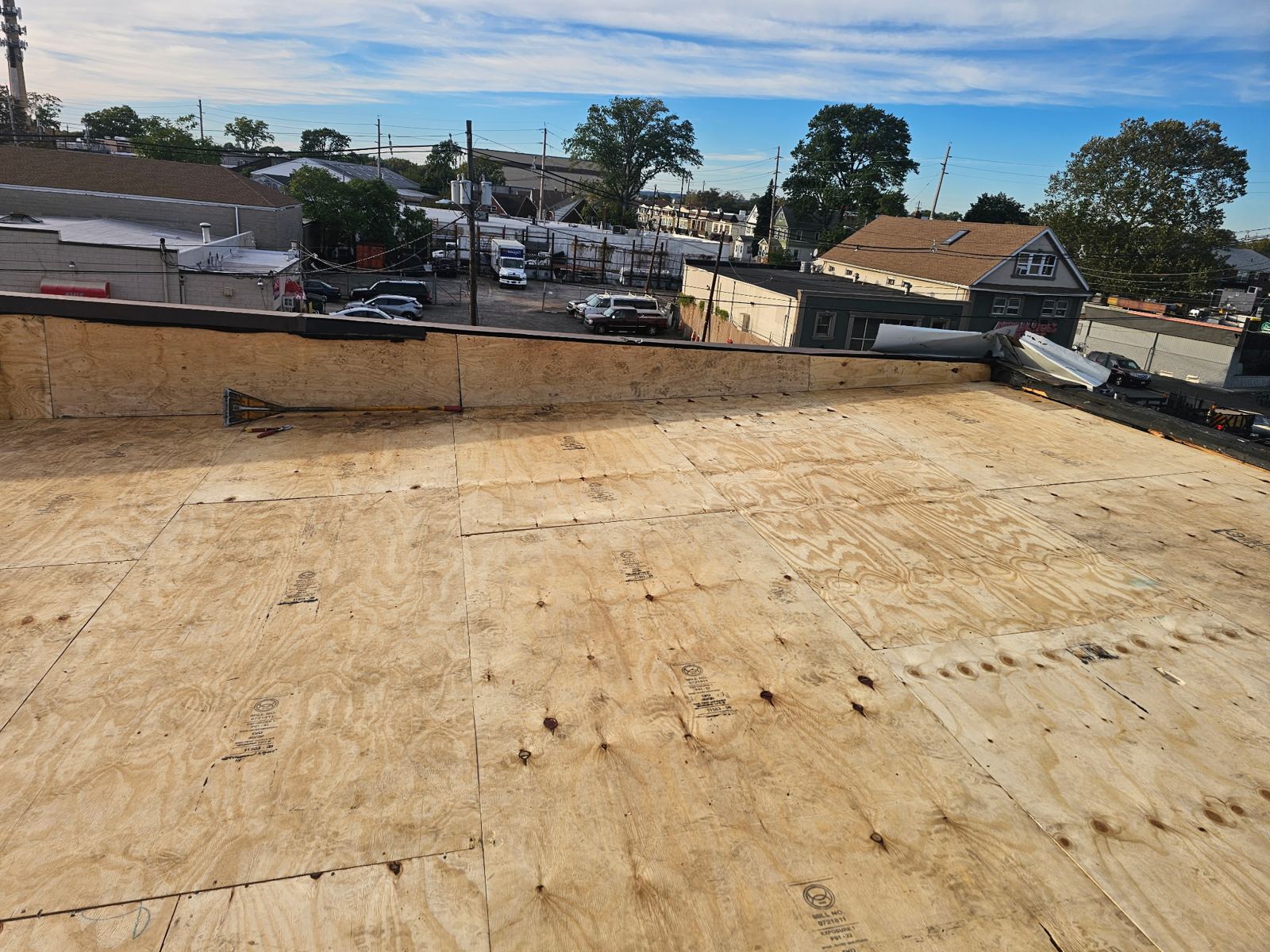
Repairing these junctions requires removing compromised shingles, cutting back decayed decking, and installing self-adhering ice and water membrane. We replace damaged step flashing with heavy-gauge aluminum or copper, re-securing counter-flashing into fresh mortar joints. Valley repairs involve clearing accumulated organic debris, removing rotted underlayment, and placing high-capacity valley metals to handle rain runoff.
- Raking out mortar joints and installing recessed counter-flashing
- Replacing corroded step flashing along sidewalls and dormers
- Installing self-adhered membrane in valleys and critical transitions
- Replacing soft or rotted wood decking beneath failed flashing points
Wind, Falling Branches, and Emergency Tarping
Severe weather events, including coastal Nor'easters and thunder gusts, push high winds along the Hackensack River valley. Older three-tab asphalt shingles common on New Milford ranches are vulnerable to wind uplift, which tears shingles away from their fastener lines and exposes bare decking to rain. Heavy tree limbs from overhanging canopies also snap during ice storms, damaging rafters and sheathing.
Storm Guard Roofing maintains a 24/7 emergency response unit to stabilize storm-damaged roofs immediately. We install heavy-duty, weather-resistant tarps secured with wooden furring strips to prevent interior damage until permanent repairs occur. We also provide insurance adjusters with detailed photographic evidence, line-item repair cost estimates, and wind-damage assessments.
- 24/7 emergency response for structural impacts and active leaks
- Secure emergency tarping to seal breached roof decks
- Complete line-item estimates for insurance claim filings
- Color-matched shingle replacement for wind-torn sections
Repair Versus Replacement Financial Analysis
Replacing a roof prematurely creates unnecessary expense. In New Milford, a complete roof tear-off involves municipal building permits, dumpster rental fees, and labor for full structural removal. When the underlying wood deck remains structurally sound and shingle granule loss is localized, targeted roof repairs solve active leaks at a fraction of full replacement costs.
Our technicians evaluate shingle pliability, deck firmness, and general material age before recommending work. If less than 25 percent of the roof surface exhibits physical damage and the remaining shingles retain their adhesive seal, localized repair is the financially practical choice. We isolate the structural failure, fix the flashing or underlying underlayment, and preserve the functioning portion of your existing roof.
- Direct repair costs run substantially lower than full roof replacement
- Preserves functional asphalt shingles with remaining service life
- Eliminates unnecessary municipal permit fees for simple maintenance
- Fixes immediate water penetration while protecting home interior value
New Milford Microclimate and Shingle Maintenance
Homes in New Milford face specific environmental stresses that accelerate roof wear. Shade from large trees combined with ambient humidity from nearby waterways creates ideal conditions for moss and algae growth on North-facing roof slopes. Moss roots under shingle edges, lifting them upward and creating entry points for wind-driven rain.
During winter freeze-thaw cycles, meltwater from snow accumulation refreezes at uninsulated eaves, forming ice dams that force water upward under shingle courses. Our repair technicians address these localized climate vulnerabilities by replacing damaged drip edges, adding ice-dam protection membrane, and mechanically removing moss to maintain proper water shedding across your roof deck.
- Ice dam mitigation through low-eave underlayment retrofits
- Repair of wind-lifted shingles along eave lines and gables
- Mechanical clearing of moss growth to restore shingle lay
- Refurbishing drip edges to prevent fascia board rot
New Milford questions we get asked
- Do I need a building permit from New Milford Borough for localized roof repairs?
- Minor roof repairs, such as replacing damaged pipe boots, fixing flashing, or swapping out damaged shingles, do not require a permit in New Milford. Full roof replacements or major structural rafter repairs require building permits from the Borough of New Milford Construction Department.
- Why do pipe boots fail so frequently on 1950s New Milford homes?
- Most 1950s Capes and ranches in New Milford feature vertical plumbing stack pipes through the rear roof slope. The rubber neoprene seals on standard pipe boots break down from sun exposure and temperature shifts after 10 to 12 years, cracking and causing direct water leaks into attic spaces.
- How does heavy tree canopy in Bergen County damage roof surfaces?
- Overhanging branches drop leaves and twigs into valleys and gutters, trapping water against shingles and rotting the underlying deck. Dropping debris also strips granules off shingles, exposing the asphalt layer to UV degradation.
- What emergency roof services are available during severe weather in New Milford?
- Storm Guard Roofing operates a 24/7 emergency service line at (201) 403-0024. We deploy crews to perform emergency tarping, board up tree-impact damage, and document structural damage for homeowner insurance claims.
More in New Milford
Call (201) 403-0024 for a New Milford inspection, or send the form.