Newton · Sussex County
Roof Repair Services in Newton, NJ
Newton and Sussex County present specific environmental stresses on residential roofing systems. Situated in northwestern New Jersey, Newton experiences higher snow loads, lower winter temperatures, and stronger wind exposure than eastern or coastal regions of the state. These localized weather conditions accelerate physical wear on shingle surfaces, valley metal, step flashing, and gutter assemblies. Storm Guard Roofing provides dedicated roof repair services throughout Newton (ZIP code 07860), including homes in Downtown Newton, along the Sparta Avenue side, in Woodside, and surrounding Merriam Avenue. With over 25 years of field experience, our family-owned company operates as a licensed and insured contractor equipped for 24/7 emergency leak response, structural tarping, and complex insurance claim documentation. Rather than pushing full roof replacements when structural components remain sound, our approach focuses on accurate leak diagnostics, mechanical fastener stabilization, and material-matched repairs tailored to northwestern New Jersey building stock. Contact us at (201) 403-0024 for immediate site evaluations.
Flashing Failures, Valley Leaks, and Water Intrusion Points
Water intrusion on residential roofs rarely begins in the center of an undamaged shingle field. Instead, leaks originate at joints, transitions, wall step flashings, chimney saddles, and valley lines where water accumulates. In Newton’s older housing stock near Downtown Newton and Merriam Avenue, step flashing behind siding often suffers from corrosion, nail head backing, or improper counter-flashing integration into masonry joints. When heavy rain or melting snow flows down these intersections, water bypasses worn sealants and migrates behind exterior cladding, damaging structural wall plates and interior drywall long before water drips through the ceiling.
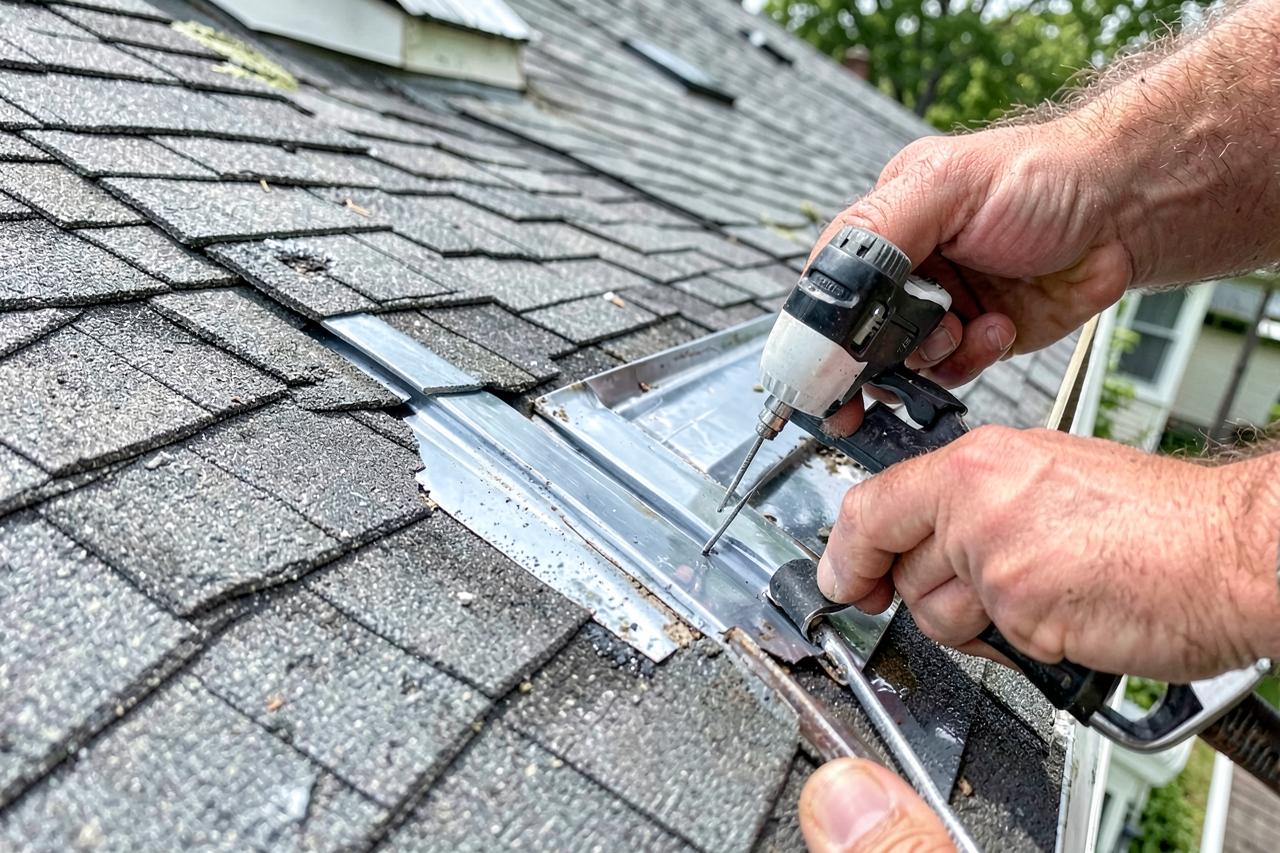
Open and closed-valley transitions represent another high-risk failure point under Sussex County climate stresses. Ice build-up inside valleys forces meltwater laterally under the shingle edges. If the underlying underlayment has degraded or was installed without self-adhering modified bitumen, freeze-thaw cycles strip away adhesion, exposing the bare deck. Our repair procedures inspect step flashing at side walls, dormers, and pipe boots, replacing cracked rubber neoprene boots with heavy-gauge lead or copper collars and integrating continuous self-adhering membrane directly to the bare deck before resetting color-matched shingles.
- Replacement of compromised step flashing and counter-flashing along sidewalls and brick chimneys.
- Valley reconstruction using self-adhering membranes and heavy-gauge metal flashing.
- Replacement of cracked pipe boots, ridge vent end caps, and plumbing stack seals.
- Fastener sealing and replacement of missing, lifted, or wind-damaged asphalt shingles.
Ice Dam Diagnostics, Ventilation, and Snow Retention Mechanics
Northwest New Jersey experiences heavy winter snow loads that exert excessive static weight on roof rafters and gutter lines. Ice dams form when attic heat escapes through poorly insulated or improperly ventilated ceilings, warming the underside of the roof deck. This heat melts the bottom layer of snow resting on the shingles; the water runs down to the cold eave, unheated overhang, or gutter line and freezes. As ice builds at the edge, it creates a dam that traps subsequent meltwater, forcing liquid water upward under the shingle laps and into the building envelope.
Correcting ice dam leaks requires a twofold repair strategy: sealing water entry points and balancing thermal conditions at the roof line. For homes in Woodside and along the Sparta Avenue side, we spec ice-and-water membrane well up the slope—extending past the interior warm wall line—to prevent lateral water migration. To keep the deck cold during winter, we verify and correct intake soffit vents and ridge ventilation to eliminate attic heat pockets. Furthermore, on steep-slope asphalt roofs or standing-seam metal roofs where snow slides in sheets, we add engineered snow retention systems above entry doorways, driveways, and long gutter runs to prevent snow slides from tearing off gutters and flashing.
- Installation of self-adhered ice-and-water membrane high up the roof slope beyond the interior wall line.
- Correction of soffit intake and ridge exhaust ventilation to lower attic temperatures and prevent deck heating.
- Installation of snow retention brackets and snow guards above entry doors and high-traffic paths.
- Reinforcement of low-eave shingle courses to withstand freeze-thaw expansion cycles.
Heavy Gutter Failure and Structural Support Upgrades
In 07860, standard gutter installations attached with spike-and-ferrule fasteners frequently fail under the combined weight of wet snow, slush, and ice. When a gutter sags or pulls away from the fascia board, meltwater drips behind the fascia, rotting the wood framing, roof rafter tails, and soffit panels. Over time, water leaks behind the fascia board, entering the top plate of exterior walls and causing structural degradation that costs significantly more to fix than a targeted roof repair.
Our gutter repair and reinforcement services address these mechanical stresses directly. We replace failing spikes with heavy-duty hidden hangers secured with stainless steel screws driven directly into the structural rafter tails rather than just the thin fascia board. We hang gutters with hidden hangers at tighter spacing than a standard install—placing hangers at tighter 12-to-18-inch intervals rather than standard 24-to-36-inch spacing—to support heavy snow loads and ice accumulation. On steep roofs where snow slides in heavy sheets, this structural anchoring keeps drainage systems intact during severe Sussex County winters and ensures meltwater stays directed away from the foundation.
- Removal of pulled spike-and-ferrule fasteners and rotted fascia backing boards.
- Installation of heavy-duty hidden hangers at 12-to-18-inch spacing for maximum snow load support.
- Realignment of gutter pitch to ensure complete meltwater drainage toward downspouts.
- Sealing end caps, miters, and downspout drops with heavy-grade industrial sealants.
Emergency Tarping, Storm Damage, and Insurance Claims Handling
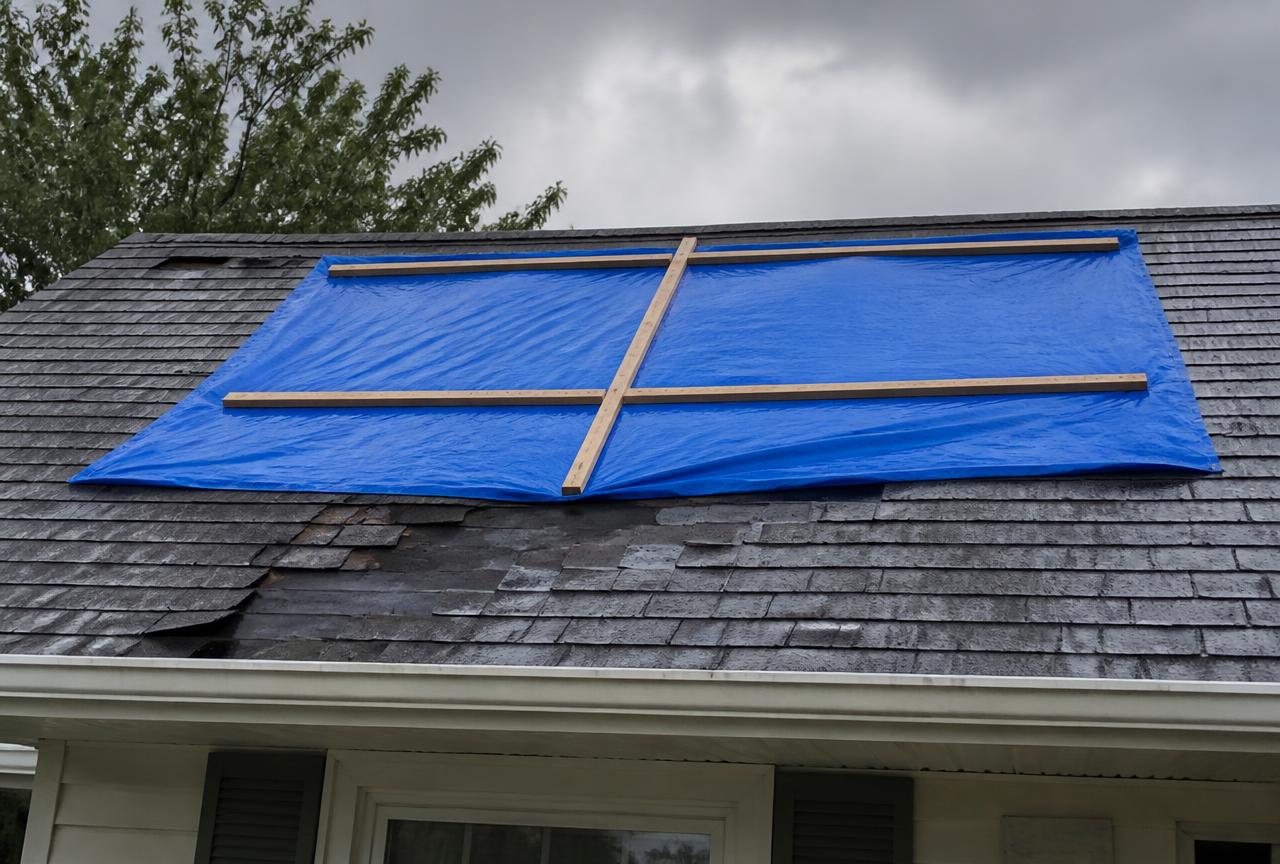
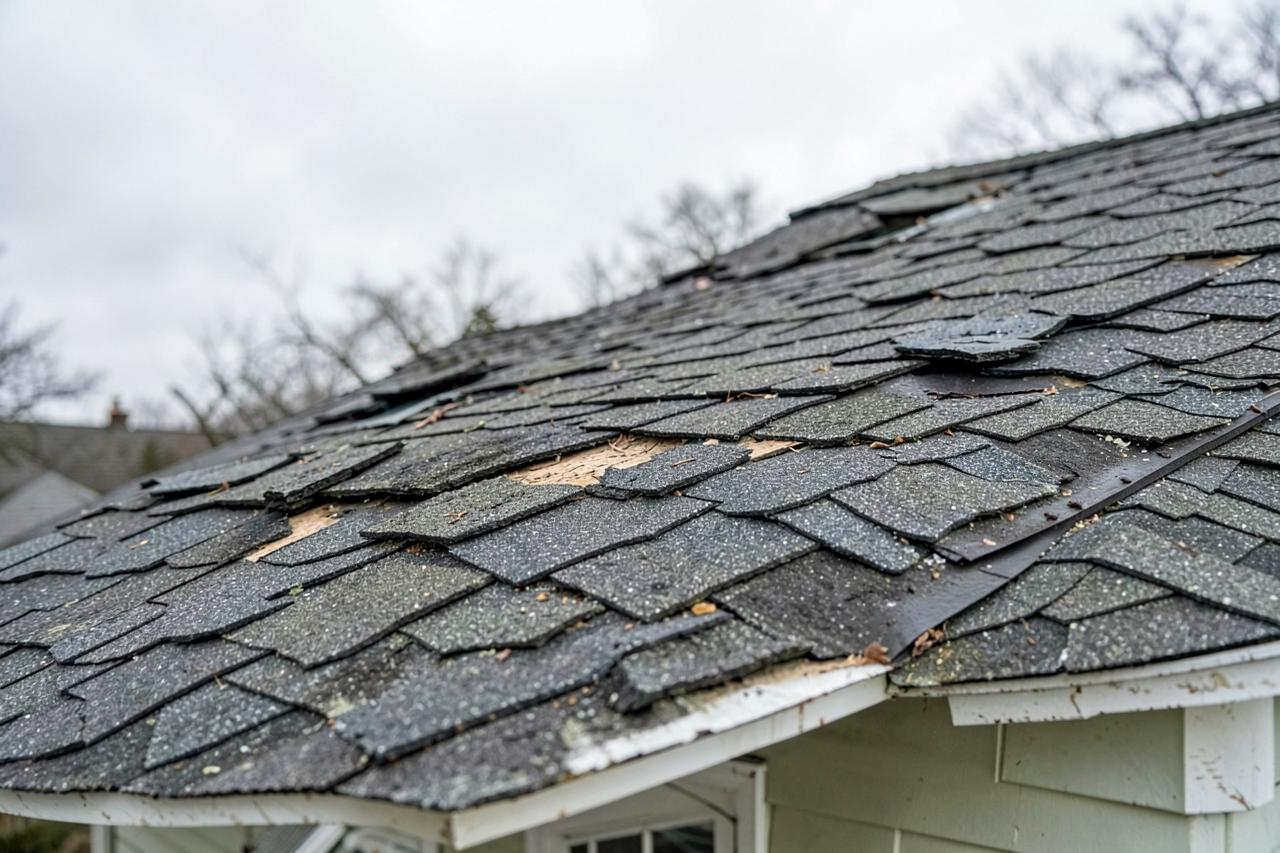
Microbursts, high winds, and winter blizzards in Sussex County cause immediate roof compromise by lifting shingle tabs, throwing tree limbs onto roof slopes, or tearing away ridge caps. Storm Guard Roofing maintains a 24/7 emergency response team to handle critical structural leaks in Newton. Our immediate priority during an active leak event is stabilizing the structure through emergency tarping. We secure heavy-duty reinforced tarps using wood furring strips nailed through temporary anchor points, preventing interior water exposure to electrical circuits, insulation, and ceiling drywall.
Following stabilization, we assist homeowners through the property insurance claim process. Dealing with insurance adjusters requires precise technical documentation showing storm-created openings rather than normal wear and tear. We perform thorough field inspections, photo-document uplifted shingles, limb impact points, and damaged flashing, and provide itemized repair estimates that conform to insurance industry standards. Our family-owned business handles communication with insurance representatives to verify that all necessary repairs—from underlayment replacement to structural fascia fixes—are fully covered under the claim scope.
- 24/7 emergency response for active water leaks, tree impacts, and wind displacement in Newton.
- Temporary structural tarping using mechanical furring strip anchors to stop active water entry.
- Comprehensive photo documentation and line-item repair quotes formatted for insurance adjusters.
- Technical claims handling to ensure scope covers concealed decking and structural rafter repairs.
Repair versus Replacement: Cost and Technical Feasibility
Homeowners in Newton often face the choice between an isolated roof repair and a full roof replacement. A localized repair is technically sound and cost-effective when the surrounding shingle matrix retains pliability, the wood deck beneath remains structurally rigid without widespread rot, and the damage is isolated to a specific zone—such as a torn valley, damaged chimney flashing, or localized wind loss. Performing a targeted repair on a 10-to-15-year-old roof can successfully extend its functional lifespan by 5 to 10 years at a fraction of full replacement costs.
Conversely, if the roof exhibits widespread shingle granule loss, organic mat decay, continuous deck sagging across multiple rafter bays, or brittle shingles that crack when lifted for flashing insertion, localized repairs may fail to create a durable seal. During our initial evaluation, we check shingle flexibility, deck integrity, and structural framing. If a repair can reliably seal the leak and pass local weather stress without compromising adjacent materials, we execute a targeted fix. If the system has reached full physical exhaustion, we present clear evidence outlining why replacement is required, protecting you from wasting funds on temporary fixes on an unviable structure.
- Feasibility assessment based on shingle flexibility, asphalt granule retention, and deck firmness.
- Targeted repair solutions that preserve remaining roof lifespan without forcing full replacement.
- Clear cost evaluations comparing localized structural fixes against total system tear-off costs.
- Verification of local building code compliance and Sussex County wind load requirements.
Newton questions we get asked
- Why do ice dams form so frequently on homes near Downtown Newton and how are they repaired?
- Ice dams occur in Newton due to severe winter temperatures combined with interior attic heat escaping through uninsulated ceilings. Heat melts snow on the upper roof, which freezes upon reaching cold eaves. We repair these failure points by installing self-adhered ice-and-water membrane well up the slope past the exterior wall line, correcting soffit intake and ridge ventilation so the deck stays cold, and hanging gutters with hidden hangers at tighter spacing than standard installs.
- Can Storm Guard Roofing repair a localized roof leak in Newton without replacing the whole roof?
- Yes. If the surrounding shingles retain flexibility and the plywood deck underneath is structurally sound, localized leaks caused by damaged flashing, pipe boots, or missing shingles can be permanently repaired. We replace compromised underlayment and flashings in the affected area, matching existing materials without requiring a full roof tear-off.
- Do roof repairs in Newton require municipal building permits from the local construction office?
- In New Jersey, minor roof repairs—such as replacing a small section of damaged shingles or re-flashing a chimney—typically do not require a permit. However, extensive structural repairs involving rafter reinforcement or total deck re-sheeting must comply with Town of Newton building codes. We verify all permit requirements for ZIP code 07860 prior to starting major structural repairs.
- How quickly can Storm Guard Roofing respond to an emergency leak in Newton ZIP code 07860?
- We offer 24/7 emergency response for Newton residents. When active leaks occur from storm damage or ice dams, our team dispatches immediately to install heavy-duty, mechanically anchored emergency tarps to stop interior water damage before executing permanent repairs. Call (201) 403-0024 for immediate dispatch.
More in Newton
Call (201) 403-0024 for a Newton inspection, or send the form.