Storm Guard Roofing
Call

Parsippany · Morris County

Roof Repair Services in Parsippany, NJ

Storm Guard Roofing provides targeted roof repair services throughout Parsippany, Morris County, New Jersey. With over 25 years of family-owned operation, our licensed and insured technicians diagnose, isolate, and repair structural and shingle failures. Local residential properties face severe thermal shifts, winter windstorms, and heavy moisture loads from dense tree cover. We provide 24/7 emergency response to install heavy-duty temporary tarping and stabilize active leaks before water causes structural decay. Our team also manages insurance claims directly with carriers, supplying photo evidence and line-item scope reports. Whether you have damaged asphalt shingles in Mount Tabor (07878), valley leakage in Troy Hills (07054), or failing flashing in Powder Mill (07950) and Rainbow Lakes (07034), we execute localized structural repairs that preserve your existing roof without forcing a replacement. Call (201) 403-0024 to schedule a damage evaluation or request immediate emergency dispatch.

Diagnostic Leak Detection in Parsippany Neighborhoods

Parsippany features diverse housing styles, including split-levels, colonials, and ranches built on wooded lots. Heavy tree canopy creates persistent maintenance hazards: organic debris collects in roof valleys, behind chimney masonry, and within gutter channels. Leaves and pine needles retain surface moisture, breaking down shingle granules and causing underlying felt backing to rot prematurely. During winter, interior heat escaping into uninsulated attics causes ice dams along low-slope eaves. As melting snow hits cold, unheated eaves, ice ridges force meltwater backward beneath shingle overlaps and into ceiling joists.

Skylights are another primary point of water entry in older homes throughout Lake Hiawatha (07034) and Lake Parsippany (07054). Older skylights installed over two decades ago lose seal compression due to seasonal temperature swings, cracking factory sealants and letting water enter along the curb frame. Leakage often presents as drywall staining near skylight shafts during heavy wind-driven rains or winter thaw periods.

  • Valley blockage from organic debris in heavily wooded areas like Powder Mill and Rainbow Lakes.
  • Ice dam water backing up under eave shingles during Northern New Jersey freeze-thaw cycles.
  • Cracked sealants and curb seal failure on legacy skylights older than 20 years.
  • Surface shingle erosion caused by damp leaf accumulation under tree canopy shade.

Flashing Failures, Valleys, and Wall Step Intersections

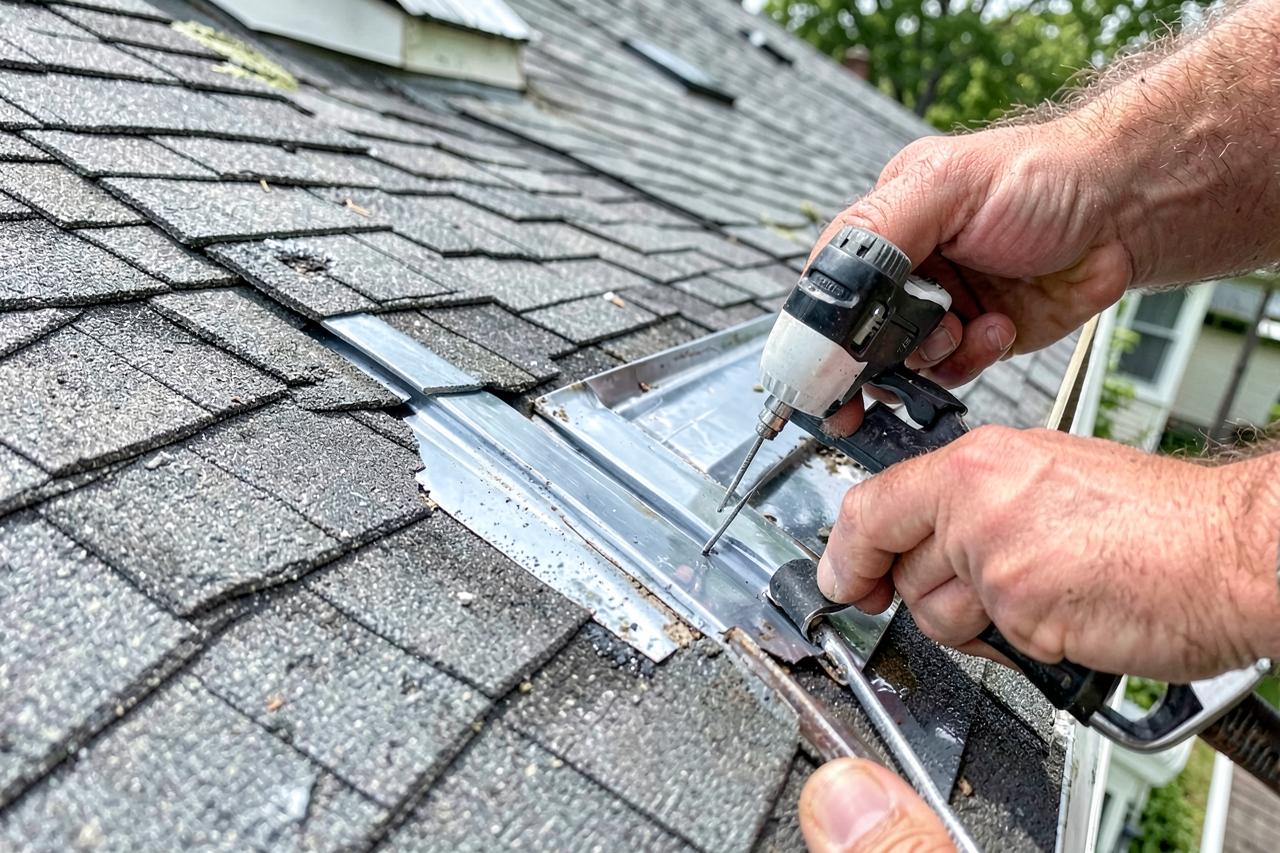
Water rarely enters directly below an interior ceiling stain; it travels down rafters, wall framing, and sheathings before dropping. In multi-level floor plans in Mount Tabor and Troy Hills, sidewall step flashing, dormers, and chimney base assemblies are frequent leak locations. Step flashing pieces woven between shingle courses can corrode, shift under wind loads, or pull away from wooden framing when fasteners loosen. Deteriorated counter-flashing along brick chimneys allows rainwater to bypass metal flashing entirely and flow directly down the chimney masonry.

Valley repairs require mechanical teardown rather than applying topical surface caulk. Open metal or woven shingle valleys collect fallen needles and organic matter in ZIP code 07950. Blocked drainage forces water laterally underneath shingle edges. Our repair process includes removing affected shingle courses, inspecting plywood sheathings for rot, installing high-temperature self-adhering membranes, and integrating new step flashing pieces into existing roof courses.

  • Corroded or displaced step flashing along dormers and vertical sidewall junctions.
  • Deteriorated mortar lines and loose counter-flashing around brick chimney bases.
  • Lateral water backup caused by debris choked in open and closed shingle valleys.
  • Rotting plywood sheathings underneath long-term unaddressed flashing leaks.

Emergency Storm Damage and Insurance Claim Handling

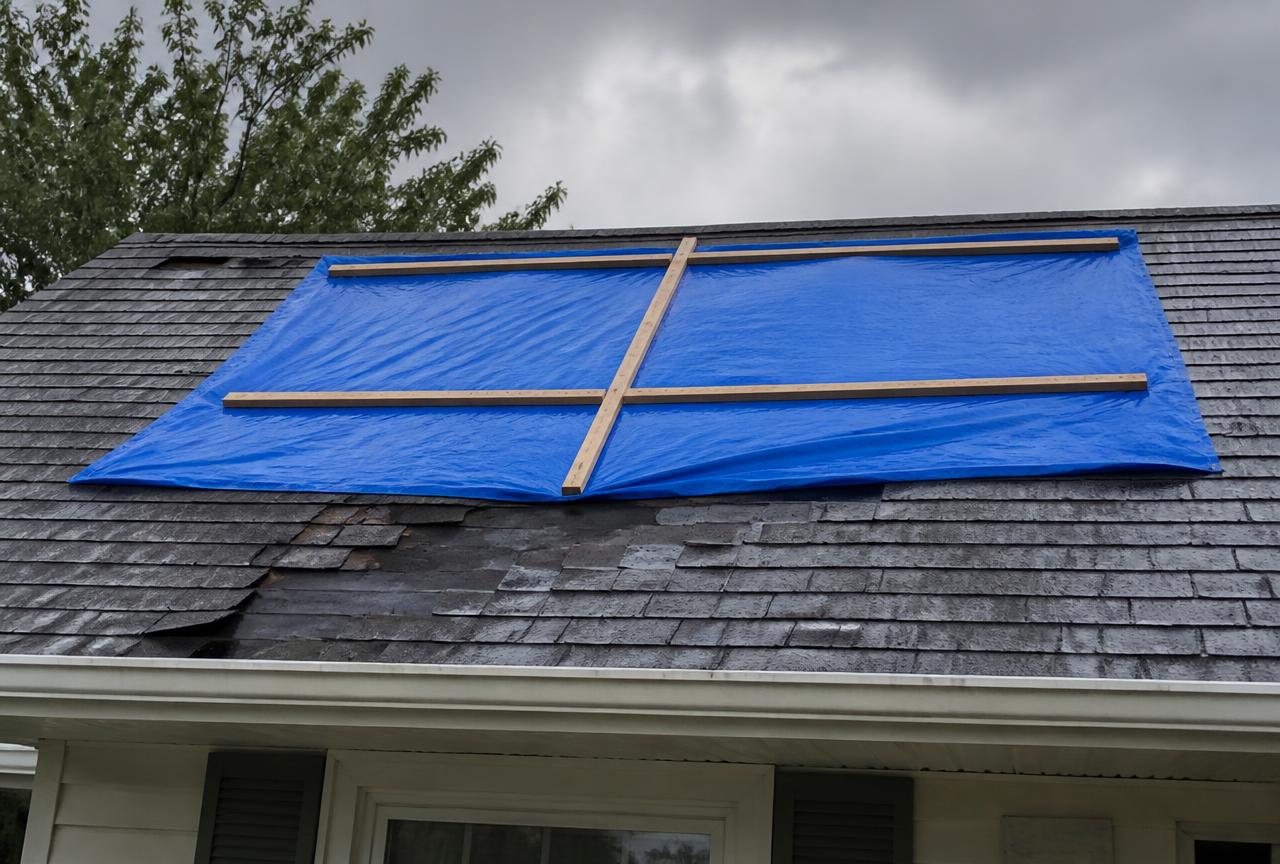
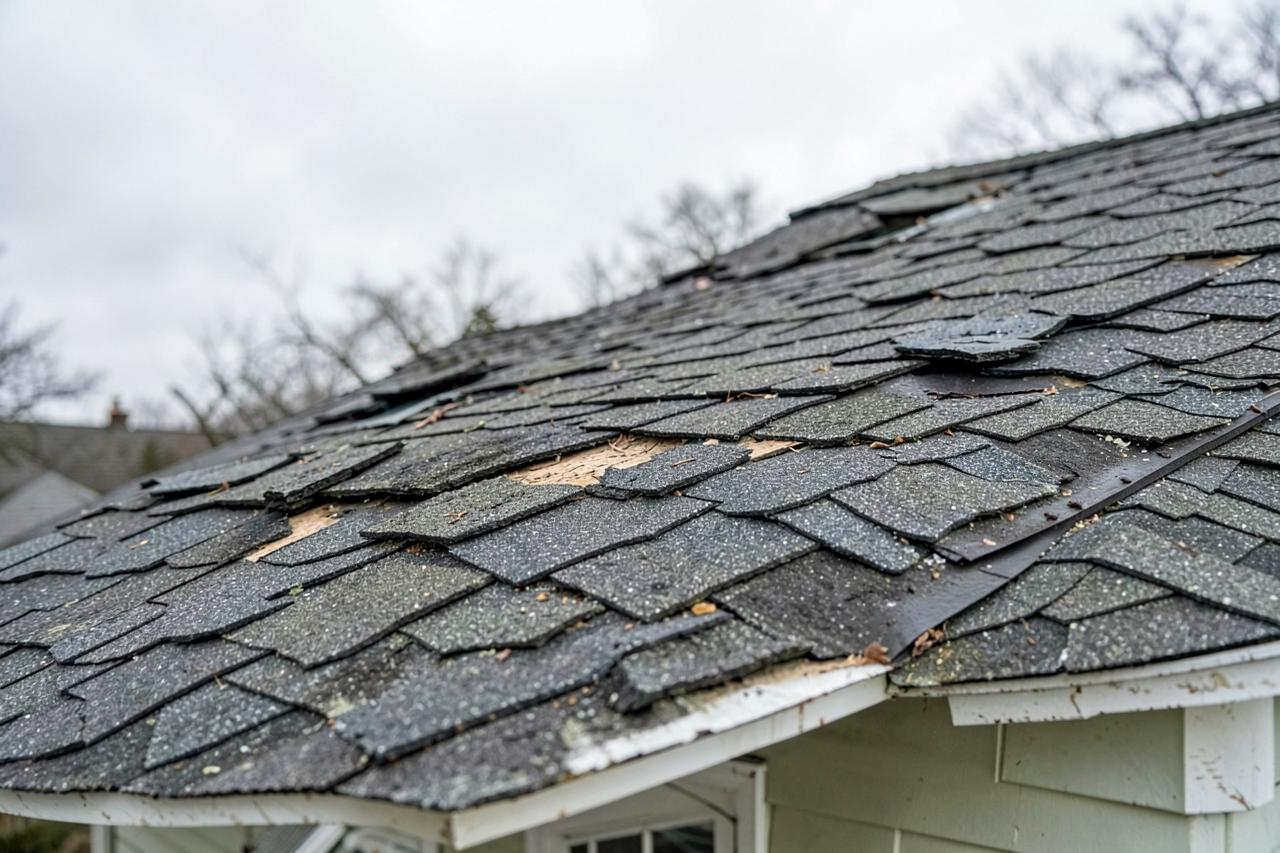
Severe weather events, high wind gusts, and nor'easters bring down tree limbs across Morris County homes. Heavy branches puncture roof decking, while strong winds break the thermal seals on shingle tabs, tearing them off at the nail line. Storm Guard Roofing operates a 24/7 emergency response unit. We respond immediately to secure punctured or exposed roof decks with heavy UV-stabilized tarping fastened down with wooden furring strips to prevent interior damage.

Following stabilization, our inspectors perform a complete technical analysis. We document damage with photographs, moisture meters, and structural checks to generate accurate scope documentation. We work directly with insurance adjusters during the insurance claims process, attending on-site inspections to verify that all structural components, underlayment layers, and accessory flashing units damaged by storm events are properly accounted for.

  • 24/7 emergency dispatch for tarp stabilization after branch impacts or blow-offs.
  • Detailed photo and technical documentation for complete insurance claim filings.
  • On-site representation during insurance adjuster inspections in Parsippany.
  • Precision replacement of torn shingles, damaged underlayment, and broken roof decking.

Repair vs. Replacement Cost Logic and Technical Standards

Determining whether a roof requires targeted repair or full replacement depends on structural deck condition, overall shingle age, and failure distribution. If a roof is under 15 years old and structural decking remains sound, targeted repairs save thousands of dollars compared to complete tear-offs. Fixing localized flashing failures, replacing blown-off shingles, or renewing cracked pipe boot collars restores weather-tight integrity while preserving remaining shingle life.

When system-wide age causes widespread mat degradation, spot repairs become inefficient. At replacement we run ice-and-water membrane well past the interior wall line, correct intake ventilation at the soffit, and rebuild or replace skylights instead of resealing them — a curb-mounted unit older than 20 years generally will not stay dry no matter how it is flashed. We provide objective structural evaluations so Parsippany property owners can select the most cost-effective solution.

  • Roof systems under 15 years with localized damage favor targeted repair.
  • Widespread granule loss and brittle shingle mats indicate complete system fatigue.
  • Decking structural integrity tests determine if underlying plywood supports spot repairs.
  • Clear financial analysis comparing immediate repair costs against full system replacement.

Parsippany Permitting, Attic Ventilation, and Regional Climate Exposure

Roofing work in Parsippany-Troy Hills must account for regional building codes and extreme weather cycles. Severe winter temperatures require functional ice barriers and balanced attic ventilation. Across ZIP codes 07054, 07034, 07950, and 07878, inadequate intake airflow at the soffit combined with blocked ridge exhaust leads to attic heat retention, accelerating ice dam formation and shortening shingle life span.

Storm Guard Roofing complies with the New Jersey Uniform Construction Code (NJ UCC) and local Parsippany-Troy Hills building policies. When repairs involve replacing structural decking panels or modifying roof framing, we obtain required building permits from the township. Our 25+ years of local experience ensures every repair withstands regional wind pressures, winter ice loads, and microclimates near local lakes.

  • Full compliance with New Jersey Uniform Construction Code and local Parsippany permits.
  • Attic intake and exhaust airflow evaluations to lower ice dam risk.
  • Flashing and underlayment installations tuned for high-moisture lake environments.
  • Fastener and shingle installation matched to local Morris County wind exposure loads.

Parsippany questions we get asked

Do I need a building permit from the Township of Parsippany-Troy Hills for a minor roof repair?
Minor repairs, such as replacing a small section of damaged shingles or re-flashing a pipe boot, typically do not require a building permit in Parsippany-Troy Hills. However, repairs involving structural decking replacement or major section re-roofing require permits through the municipal construction official. Storm Guard Roofing manages all necessary permitting when structural decking repairs are involved.
Why do older curb-mounted skylights in Parsippany homes leak during winter thaws?
Older curb-mounted skylights experience frame warping and sealant degradation after 20 years of climate exposure. During winter thaws, snow melts off the glass and collects against the upper curb. If sealants are cracked or flashings are degraded, water pools behind the unit and backs up into ceiling joints. Resealing an old curb unit rarely holds long-term; replacing the skylight and flashing assembly provides a lasting solution.
How does heavy tree canopy cover in Powder Mill and Rainbow Lakes accelerate roof damage?
Homes in wooded neighborhoods like Powder Mill (07950) and Rainbow Lakes (07034) suffer from continuous shade and dropped leaves. Trapped organic debris holds moisture directly against shingle surfaces, causing granule loss and rotting the felt backing beneath. Over time, moss and lichen take root, lifting shingle edges and creating leak paths during heavy rains.
How does Storm Guard Roofing assist with insurance claims for storm-damaged roofs in Parsippany?
We respond 24/7 to install emergency tarps and stop active water entry. We then perform a complete structural assessment, photograph all damage, and create a line-item estimate matching industry standard software. We meet directly with your insurance adjuster on-site at your Parsippany property to walk through all wind damage, branch punctures, and collateral roof component failures.

More in Parsippany

Call (201) 403-0024 for a Parsippany inspection, or send the form.

Or call (201) 403-0024. Emergency line answered 24/7.