Ridgefield Park · Bergen County
Roof Repair Services in Ridgefield Park, New Jersey
Storm Guard Roofing provides specialized roof repair services for residential properties in Ridgefield Park, New Jersey. With over 25 years of local experience, our family-owned, licensed, and insured business focuses on diagnosing and repairing water intrusion issues rather than pushing unnecessary roof replacements. Ridgefield Park features distinct architectural housing stock, consisting primarily of village-scale older homes with dormers, valleys, and rear low-slope additions. These roof designs require precise structural knowledge to troubleshoot correctly. Whether your roof sustained wind damage during a storm, developed a chimney flashing leak, or requires immediate emergency tarping to stop structural damage, our crew provides 24/7 emergency response. We handle all insurance claims directly with your carrier to simplify the restoration process. For immediate repair service or a technical inspection, contact us at (201) 403-0024.
Identifying Leak Sources in Ridgefield Park Homes
Ridgefield Park sits between the Hackensack River and Overpeck Creek, exposing local roofs to sustained atmospheric moisture, river winds, and severe winter ice dams. The area's village-scale older homes present structural complexities that are particularly vulnerable to localized water penetration if maintenance is neglected.
Most interior ceiling stains stem from specific failure points rather than general shingle wear. Dormer cheek walls, roof intersections, and rear low-slope additions are the most frequent entry points for water. When warm air rises into uninsulated attic spaces during New Jersey winters, snow melts on the upper slope and freezes at the unheated eaves, forming ice dams that push water upward under shingle courses.
- Wall step flashing separating dormers from the main roof slope where sealant has dried and separated
- Degraded pipe boots and vent collar flashings allowing water to run down plumbing stacks directly into interior ceilings
- Improperly integrated tie-ins where pitched shingle roofs meet rear low-slope porch or kitchen additions
- Worn valley linings where heavy rainfall runoff cuts through aging asphalt underlayment
Flashing and Valley Failure Repairs
Flashing failures account for the majority of residential roof leaks in Bergen County. Dormers and chimneys require step flashing layered between each shingle course, overlaid with counter-flashing embedded into masonry mortar joints. In older Ridgefield Park residences, original lead or galvanized steel flashing degrades over time, corroding at nail penetrations or pulling away from shifting brickwork.
Valley repairs demand equal technical precision. Open valleys lined with metal or closed-cut valleys lined with woven shingles handle the highest volume of water runoff on a roof. When leaves, debris, or ice back up in these channels, water migrates laterally beneath the shingles. Our repair process involves removing affected shingle courses, inspecting the wooden decking for rot, installing self-adhered ice and water shield membrane along the entire valley or wall junction, and integrating new heavy-gauge aluminum or copper flashing.
- Replacing corroded chimney counter-flashing and re-pointing deteriorated mortar joints
- Installing high-temp ice and water underlayment around skylights, wall intersections, and dormer corners
- Rebuilding open metal valley channels to clear debris blockages and manage heavy water volume
- Replacing failed neoprene pipe boots with lead or copper flashing sleeves
Emergency Tarping and Storm Damage Restoration
Severe weather off the Hackensack River basin regularly brings microburst winds, heavy snow loads, and hail that dislodge shingles or push fallen tree branches onto roofs. Storm Guard Roofing maintains a 24/7 emergency response team to seal open roof penetrations immediately, preventing water from destroying drywall, electrical systems, and floor joists.
Emergency tarping must withstand active weather until permanent repairs occur. We anchor heavy-duty woven polyethylene tarps using wooden lath strips fastened into structural rafters, creating a watertight seal that prevents wind uplift. Once the structure is secured, we perform an inspection to document all storm damage.
We assist homeowners throughout the insurance claims process. Our staff provides itemized repair estimates using standard field pricing databases, submits photo evidence directly to insurance adjusters, and coordinates field meetings with carrier representatives to verify the full scope of required work.
- Rapid 24/7 deployment for active roof leaks, tree impact damage, and wind blow-offs
- Professional tarp containment using secured wooden anchor strips and reinforced weather barriers
- Detailed photographic documentation and moisture metering for insurance claim submittals
- Complete line-item estimate preparation matching insurance carrier audit standards
Evaluating Repair Costs Versus Full Replacement
Homeowners often face pressure from contractors to replace entire roofs when a localized repair is structurally and economically sufficient. If the underlying roof deck is sound and the surrounding shingles retain their granule coating, isolated repairs yield equal weather resistance at a fraction of the cost of a complete tear-off.
A targeted repair is practical when damage is localized to less than 20% of the total roof surface, such as a failed pipe boot, damaged chimney flashing, or blown-off shingles from a single storm event. However, if asphalt shingles are past their engineered lifespan—exhibiting widespread curling, severe granule loss in gutters, and brittle field conditions—attempting spot repairs can crack adjacent shingles during installation. In those cases, we provide objective data showing when repair costs cease to be cost-effective.
- Repairs are cost-effective when leaking is confined to isolated penetrations, dormers, or low-slope tie-ins
- Targeted fixes avoid thousands of dollars in premature replacement costs on roofs under 15 years old
- Decking inspections confirm structural integrity before committing to localized shingle replacement
- Clear written assessments outline whether a repair or a full replacement offers the lower lifetime cost
Ridgefield Park Building Regulations and Code Compliance
Work performed on Ridgefield Park properties must adhere to New Jersey Uniform Construction Code standards and local municipal regulations enforced by the Ridgefield Park Building Department. While minor maintenance and emergency repairs do not always require a permit, structural timber repairs and substantial roof section replacements must strictly comply with local framing and ice barrier codes.
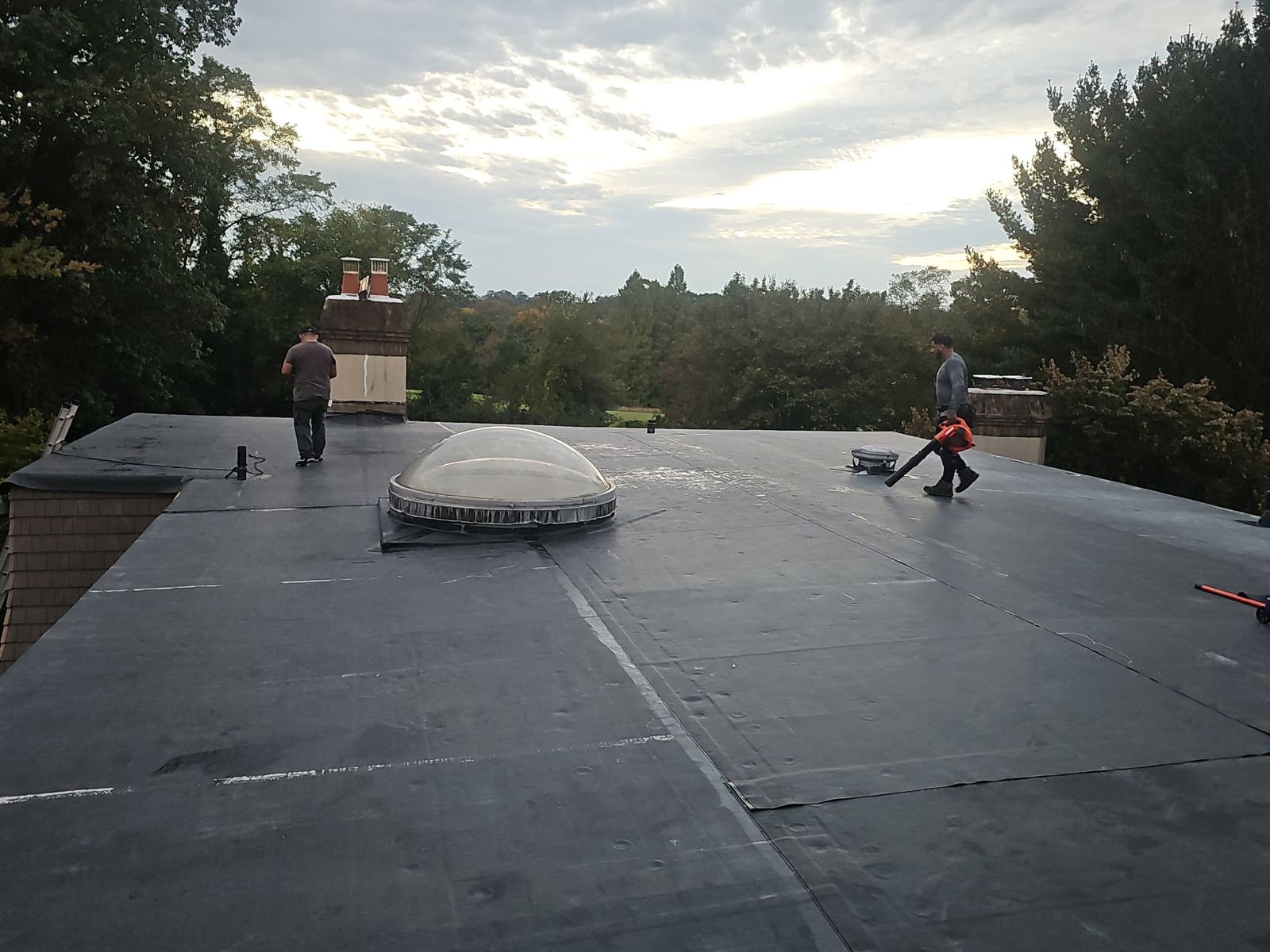
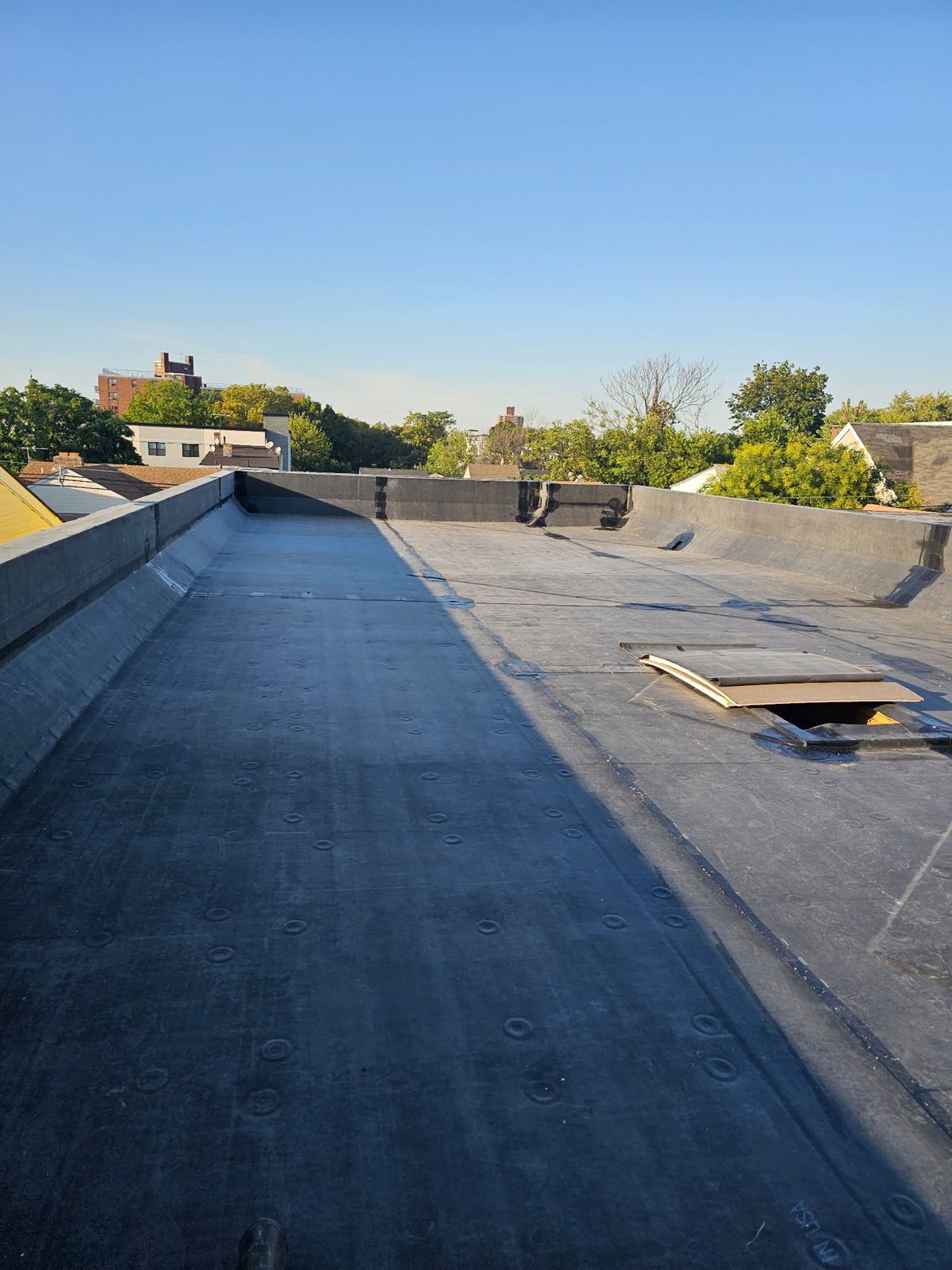
Older village-scale homes often feature rear low-slope additions—such as enclosed porches or kitchen extensions—covered in modified bitumen or EPDM membrane attached to steep-sloped asphalt shingle roofs. Water frequently pooling at this transition point requires specialized self-adhering membranes extending at least 24 inches up the steep slope behind the shingles. Our technicians execute these transitions to local code, ensuring long-term structural protection against driven rain and snow melt.
- Compliance with Ridgefield Park municipal building code requirements for minor and major repairs
- Installation of ice and water shield extending 24 inches inside the warm wall line per New Jersey code
- Proper installation of low-slope membrane materials on rear porch and kitchen additions
- Complete site cleanup, including magnetic sweeping for nails across driveways and lawns
Ridgefield Park questions we get asked
- Do minor roof repairs in Ridgefield Park require a municipal building permit?
- Under the New Jersey Uniform Construction Code, minor roof repairs involving small patches or localized shingle replacement do not require a permit. However, replacing structural decking or re-roofing large sections requires filing with the Ridgefield Park Building Department. We verify permit requirements prior to starting work.
- How do you stop leaks where a steep roof meets a rear low-slope addition?
- Leaks at pitch transitions occur when water backs up under shingles at the flat roof seam. We remove shingles up to 3 feet above the transition, install continuous self-adhered ice and water membrane over the seam, and overlay a dedicated single-ply membrane before re-shingling the upper slope.
- Will my homeowner's insurance cover roof repair after a wind storm?
- If the leak or structural damage resulted from a sudden storm event like wind uplift or fallen tree branches, standard home insurance policies generally cover repairs. Storm Guard Roofing documents the damage, provides itemized repair estimates, and handles claims communication directly with your adjuster.
- How quickly can Storm Guard Roofing stabilize an active ceiling leak in Ridgefield Park?
- We maintain a 24/7 emergency response service accessible at (201) 403-0024. For active leaks, our team dispatches to perform emergency tarping and temporary containment, stopping interior water damage while permanent repairs are planned.
More in Ridgefield Park
Call (201) 403-0024 for a Ridgefield Park inspection, or send the form.