Secaucus · Hudson County
Targeted Roof Repair Services in Secaucus, NJ
Secaucus presents specific structural challenges for residential and commercial roofing systems. Situated within the Meadowlands basin along the Hackensack River, properties throughout the town experience high wind exposure, elevated humidity, and sudden freeze-thaw cycles. The local building stock consists primarily of Meadowlands wind exposure with low-slope commercial roofs and post-war residential blocks, including two-story Cape Cods, ranches, and split-levels in neighborhoods like the North End, Clarendon, and Centre Avenue. Storm Guard Roofing provides technical, targeted roof repair services designed for these localized conditions. As a family-owned contractor licensed and insured in New Jersey with over 25 years of field experience, we specialize in diagnosing active water intrusion, replacing compromised flashing, repairing wind-damaged shingles, and sealing low-slope membrane defects. We offer 24/7 emergency response and handle insurance claims directly for storm damage. Call (201) 403-0024 for immediate dispatch or to arrange a comprehensive roof repair inspection.
Diagnosing Common Leak Sources in Secaucus Roofs
Water intrusion rarely originates directly above the spot where a stain appears on your interior ceiling. Water travels along roof rafters, sheathing joints, and electrical conduits before dropping into living spaces. In Secaucus homes, structural settlement combined with temperature swings causes sealing materials to contract, crack, and fail at critical junction points. Our diagnostic process traces water migration back to its origin rather than applying surface-level sealants over active leaks.
Flashing failures represent the single most common cause of roof leaks in post-war residential structures. Step flashing along sidewalls, chimney apron flashing, and valley transitions are subjected to continuous thermal movement. When flashing rusts through, pulls away from masonry, or loses its seal, water flows directly behind the wall cladding and under the underlayment, rotting structural sheathing over time.
- Wall and Chimney Step Flashing: Replacing corroded or improperly bent aluminum and copper counter-flashing along brick chimneys and dormers.
- Plumbing Stack Boots: Swapping out cracked neoprene and PVC pipe boots that have degraded under sun exposure and temperature shifts.
- Valleys and Transitions: Repairing open and closed-cut metal valleys where debris accumulation and ice dams back water up under asphalt shingles.
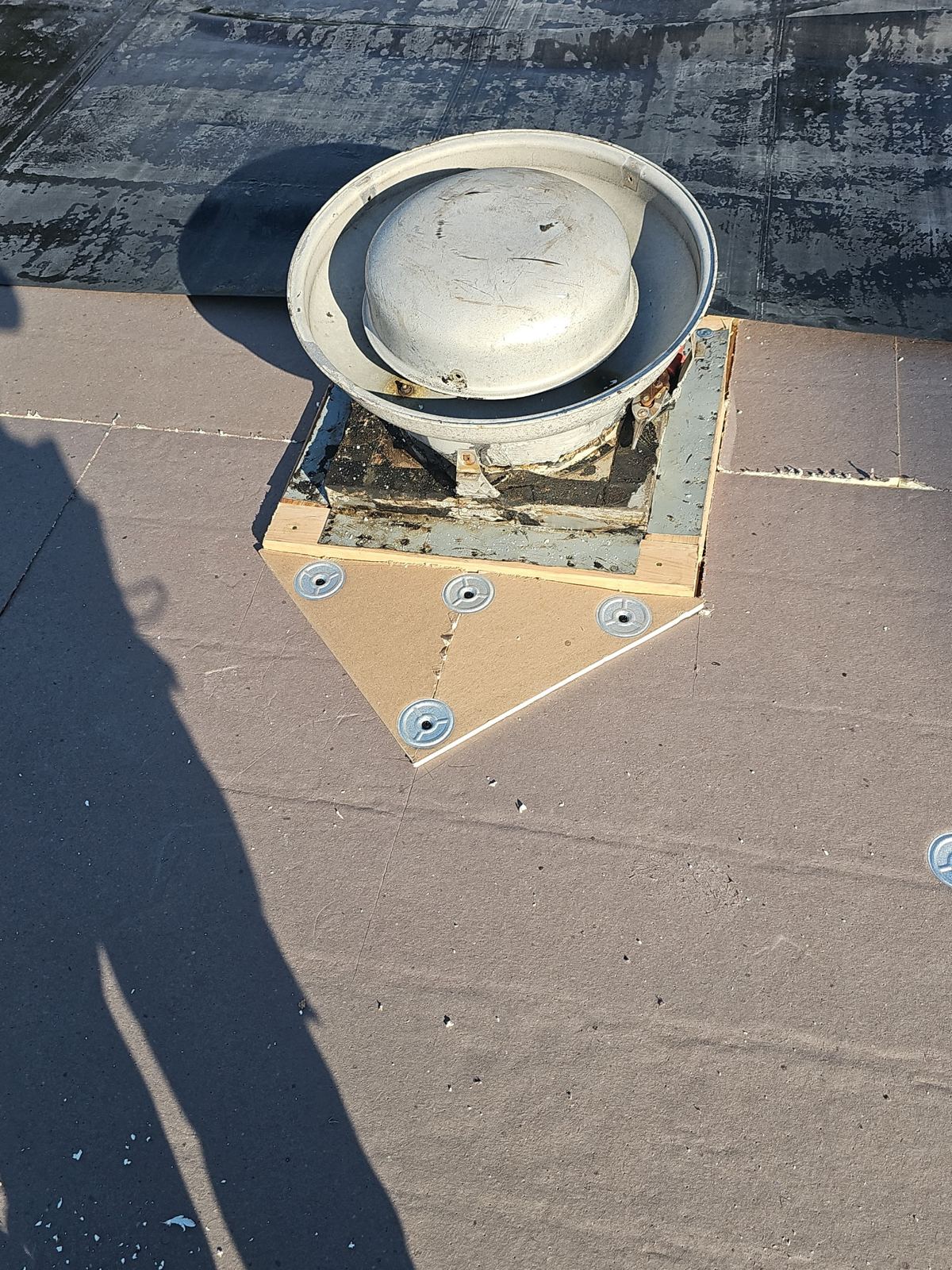
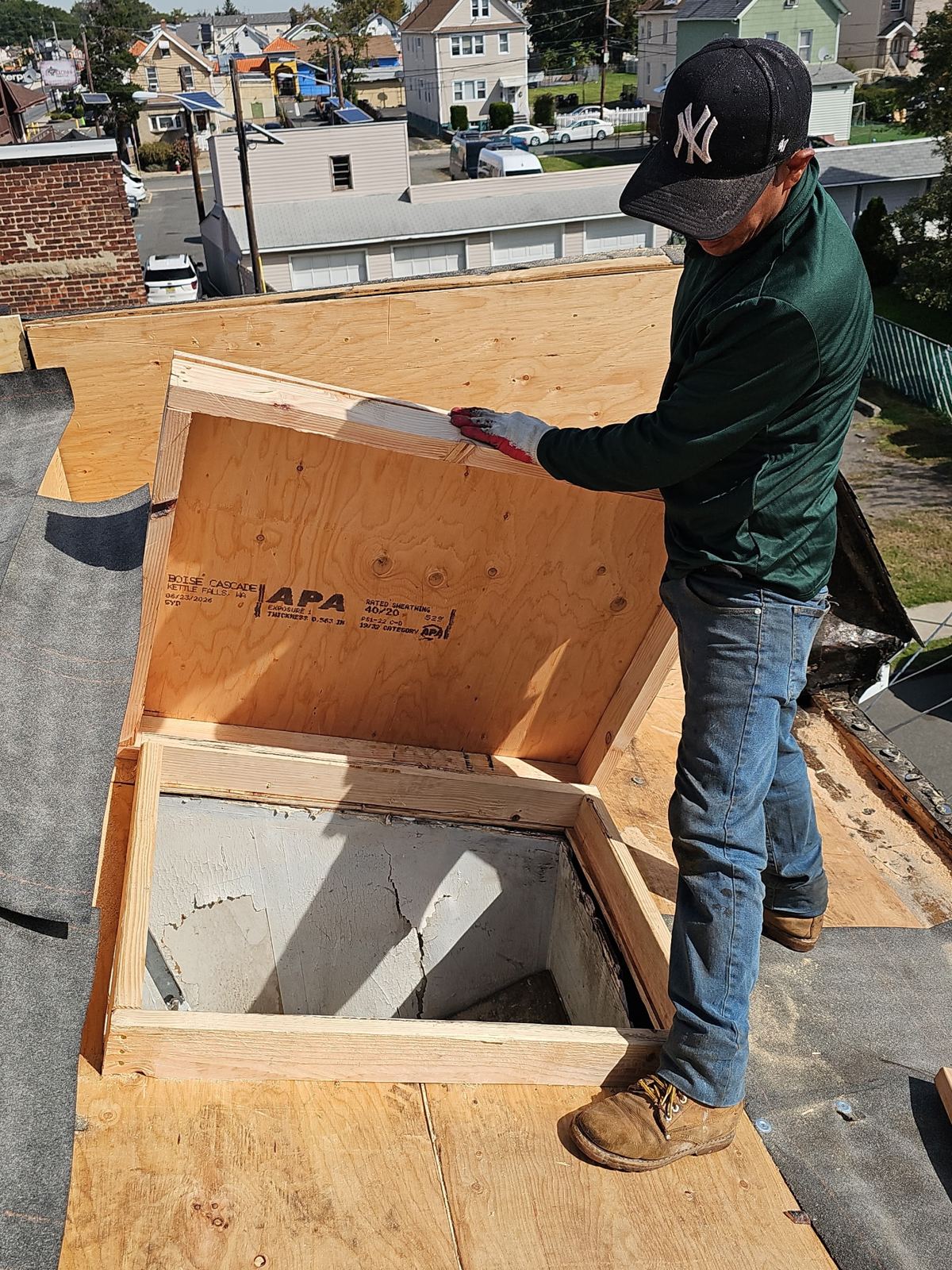
- Roof Penetrations: Resealing and re-flashing attic fan vents, skylight curbs, and exhaust hoods.
Meadowlands Wind Exposure and Storm Damage Repairs
The geography of Secaucus leaves roofs vulnerable to severe atmospheric conditions. Strong wind gusts blowing across open marshland build velocity before hitting structures in Clarendon, the North End, and commercial zones along County Avenue. Wind uplift forces detach aging asphalt shingles, break glue strips, and pull membrane edges away from perimeter parapets on flat commercial roofs.
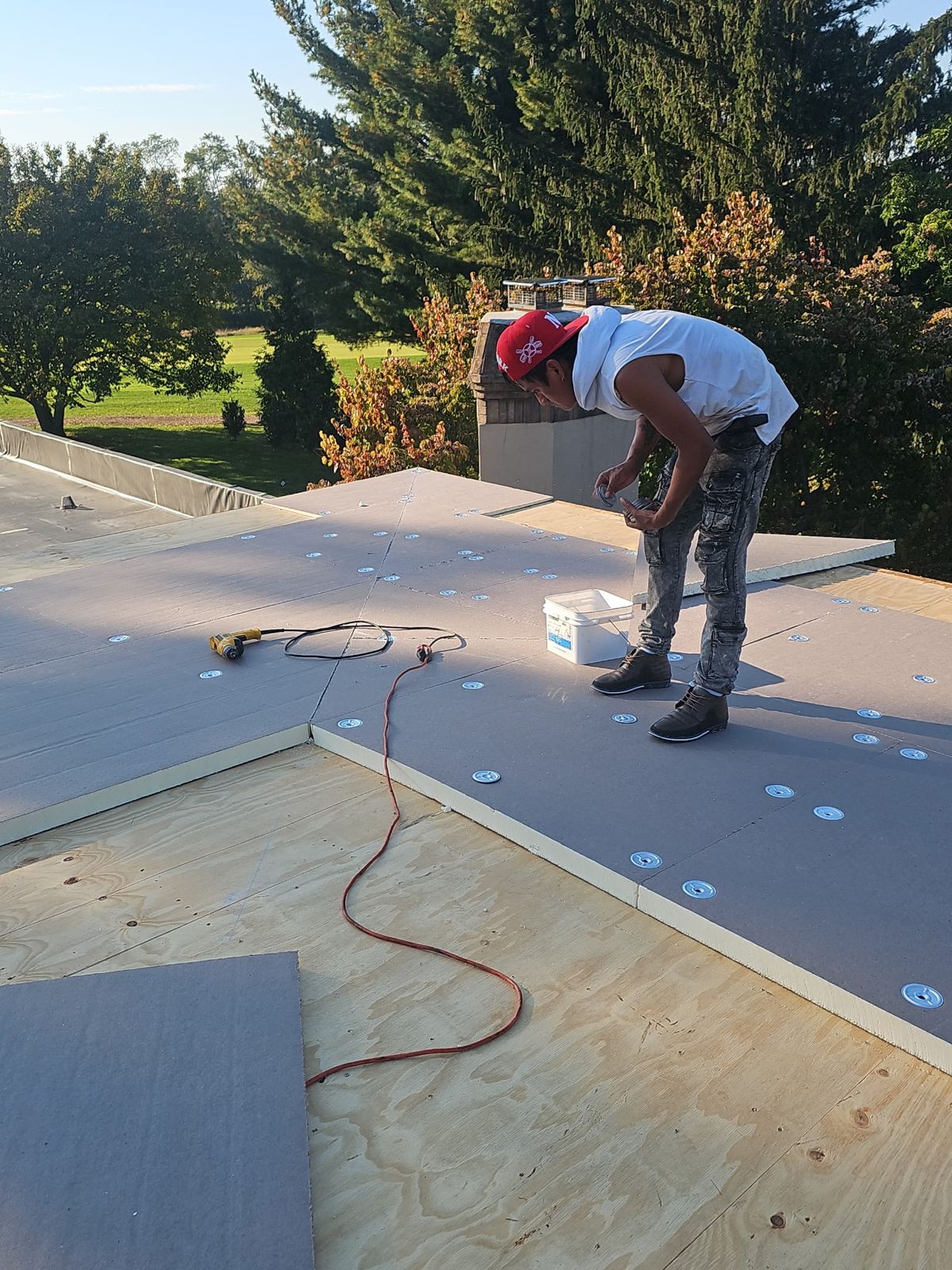
When wind unseats a shingle, it breaks the factory thermal seal strip. Even if the shingle remains attached, wind-driven rain can blow underneath the tab, penetrating the underlayment and soaking the plywood decking. Low-slope commercial buildings experience edge-metal lift and membrane tears along seams, leading to rapid water saturation of substrate insulation boards.
- Asphalt Shingle Tab Replacement: Inserting color-matched architectural or 3-tab shingles, securing them with mechanical fasteners and asphaltic cement.
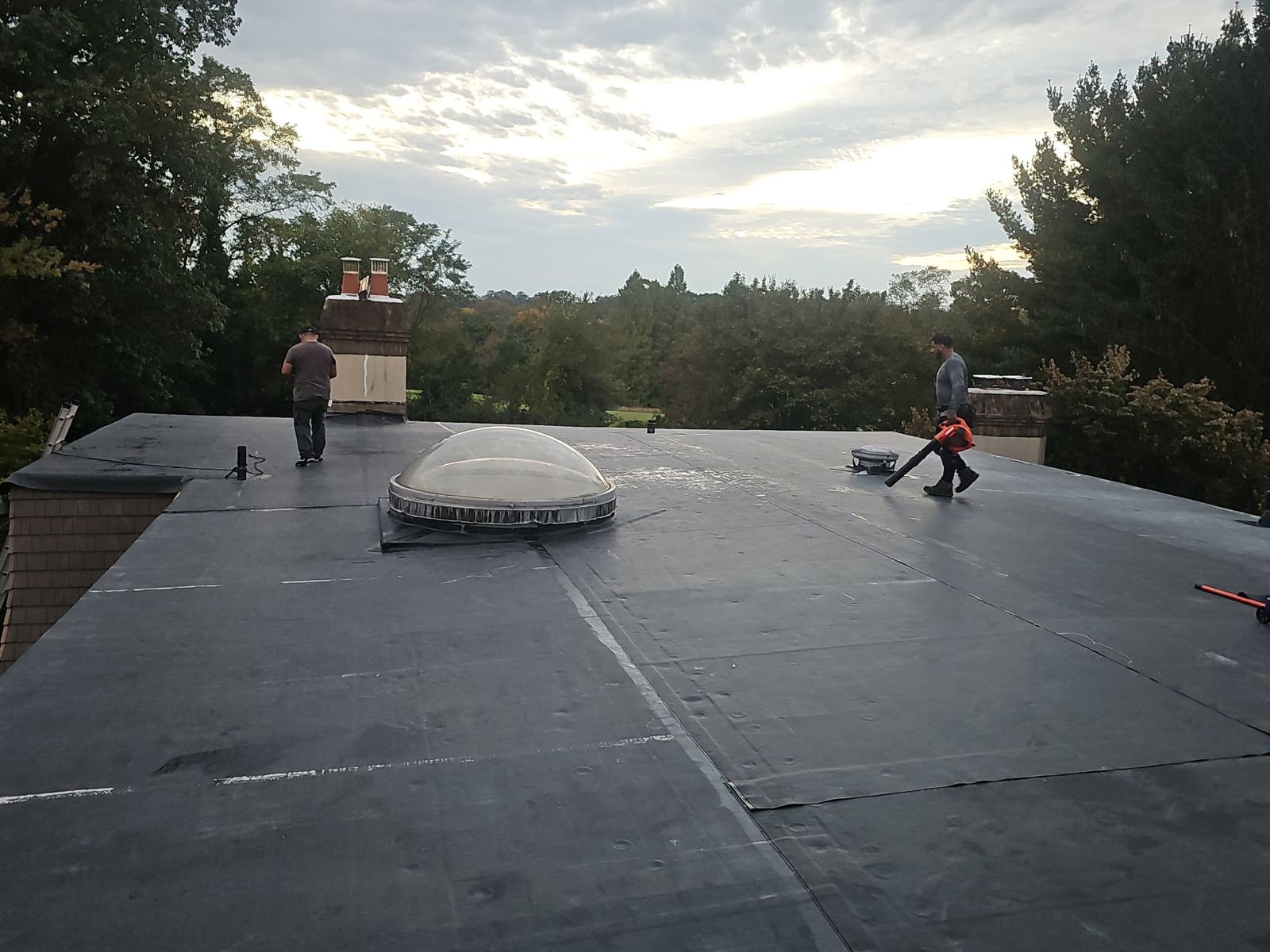
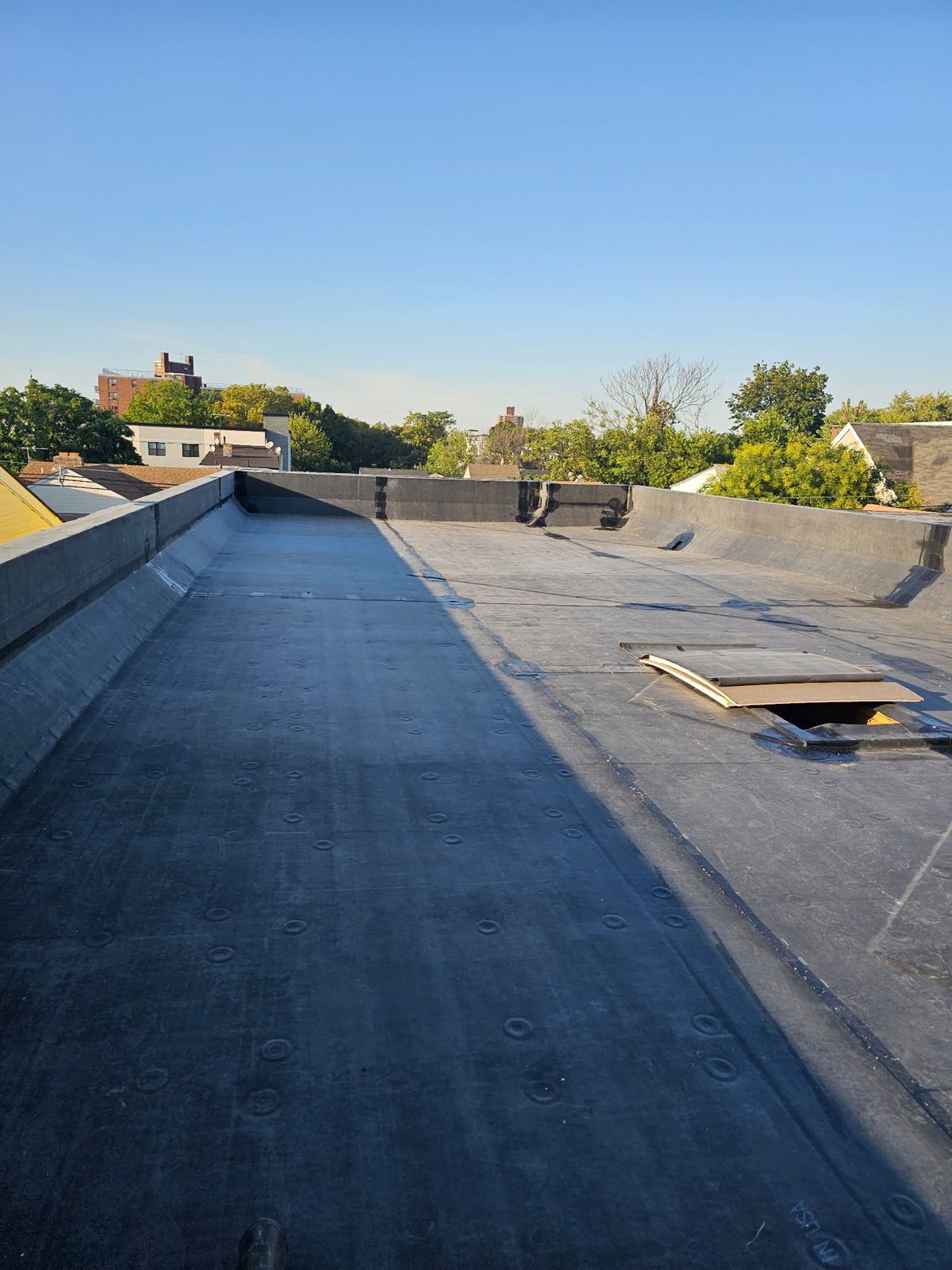
- Low-Slope Membrane Patching: Hot-air welding TPO patches or applying cold-adhesive EPDM repairs over punctures, tears, and open seams on commercial roofs.
- Soffit and Fascia Repair: Re-securing loose fascia boards and vented soffit panels detached by wind uplift along roof eaves.
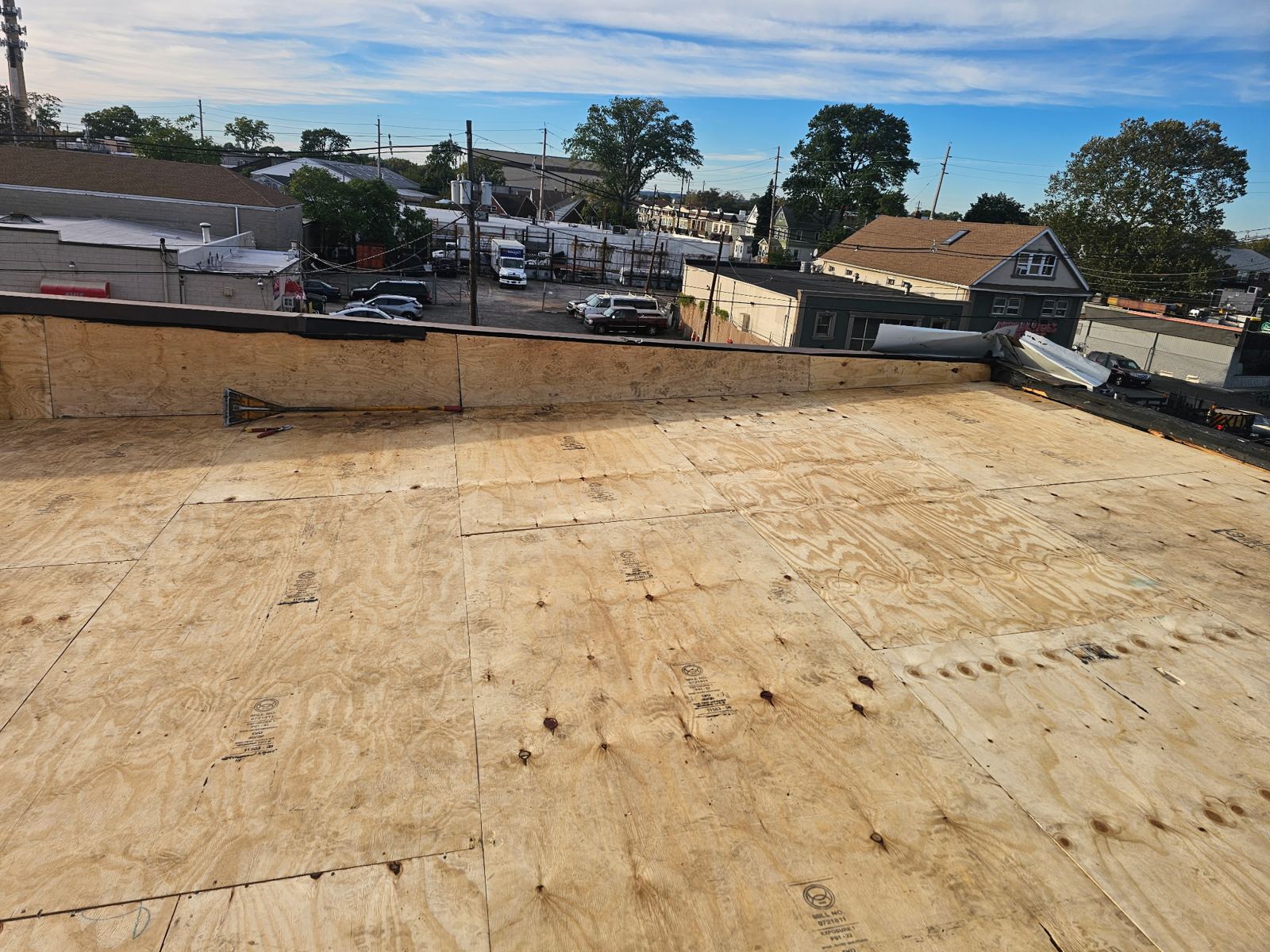
- Structural Deck Inspection: Identifying wet, delaminated, or rotted plywood sheathing beneath damaged roofing materials and splicing in new exterior-grade CDX plywood.
24/7 Emergency Tarping and Securing Storm-Damaged Roofs
When severe weather causes sudden structural exposure, fast physical stabilization is necessary to halt water damage to interior ceilings, walls, and electrical systems. Storm Guard Roofing maintains a 24/7 emergency response team reached at (201) 403-0024 for immediate stabilization across Secaucus and Hudson County.
Emergency tarping is not simply throwing a tarp over a ridge. Correct tarping requires anchoring heavy-duty woven poly tarps using dimensional lumber lath nailed securely into solid structural framing—not just into thin roof sheathing. This prevents high winds from ripping the temporary cover off before permanent repairs can take place.
- 24/7 Rapid Response: Emergency dispatch available day or night for storm, tree impact, or heavy leak events.
- Mechanical Tarp Anchoring: Securing heavy-duty tarps with wood lath strips to withstand Meadowlands wind gusts without damaging sound roof areas.
- Water Extraction prep: Diverting active incoming water away from sensitive building entry points and living spaces.
- Complete Insurance Documentation: Capturing high-resolution photos, roof measurements, and detailed damage logs for insurance submittals.
Insurance Claims Processing for Secaucus Homeowners
Navigating an insurance claim for wind, hail, or fallen limb damage requires accurate scope documentation that aligns with insurance adjuster standards. As part of our repair services, Storm Guard Roofing assists homeowners throughout the entire claims process, providing clear technical evidence of storm-related distress versus wear-and-tear degradation.
We meet insurance adjusters on-site at your Secaucus property to review the damage scope together. By providing itemized repair estimates generated using standard line-item pricing software, we help ensure your carrier approves the necessary line items to restore your roof to local code compliance.
- On-Site Adjuster Meetings: Walking the roof with your insurance representative to identify clear storm damage indicators.
- Line-Item Scope Preparation: Providing written estimates detailing labor, materials, waste factors, and code requirements.
- Supplement Filing: Submitting technical documentation if hidden structural decay or additional code upgrades are discovered during the repair process.
- Direct Billing Options: Working with your insurance company to streamline payment workflows and minimize out-of-pocket delays.
Repair versus Replacement: Technical and Financial Logic
Replacing an entire roof is unnecessary when structural damage is localized and the surrounding roofing materials retain their functional service life. A complete tear-off and replacement costs significantly more than a targeted repair. If your roof is less than 15 to 20 years old and the underlying sheathing remains dry and structurally sound, an isolated technical repair is the correct approach.
We evaluate repair viability based on measurable metrics: the percentage of affected surface area, the condition of the shingle asphalt matrix, and the flexibility of surrounding materials. If less than 25% of the roof plane is damaged and replacement shingles can be tied into the existing field without cracking adjacent materials, we execute a localized repair.
- Granule Loss Assessment: Checking whether field shingles still retain enough protective ceramic granules to justify repairing adjacent sections.
- Decking Integrity Test: Probing plywood sheathing from the exterior and inside the attic space to confirm there is no structural rot or sag.
- Cost Analysis: Providing an itemized repair quote so you can compare a targeted fix against the cost of a full roof replacement.
- Material Compatibility: Sourcing matching manufacturer profiles and shingle exposure lengths to ensure a functional tie-in.
Building Code Compliance and Permits in Secaucus
Roof repairs in Secaucus must comply with the New Jersey Uniform Construction Code (NJ UCC). Minor repairs involving isolated shingle replacement or spot sealing generally do not require a full building permit. However, when repairs involve replacing structural sheathing, altering roof pitch, or restoring large surface areas, permits must be secured through the Secaucus Construction Bureau located at Town Hall.
Our team manages all necessary municipal filings for large-scale structural repairs. We ensure that work adheres to Hudson County wind-load standards, ice dam protection regulations along the eaves, and proper attic ventilation ratios to prevent future condensation buildup.
- Permit Acquisition: Handling applications with the Secaucus Construction Bureau when structural sheathing or extensive framing repairs are required.
- Ice & Water Shield Compliance: Installing self-adhered membrane underlayment along eaves and valleys as mandated by NJ building codes during section rebuilding.
- Nailing Pattern Standards: Utilizing full six-nail fastening patterns on replacement shingles to meet local high-wind exposure codes.
- Inspection Coordination: Scheduling mandatory municipal building inspections upon project completion when permits are pulled.
Secaucus questions we get asked
- How does Meadowlands wind exposure affect roof repair needs in Secaucus?
- Secaucus sits in an open basin along the Hackensack River, leaving roofs vulnerable to direct wind gusts. These winds lift asphalt shingle tabs, breaking their thermal seals and exposing underlayment to wind-driven rain. On commercial low-slope buildings, wind exposure can pull at perimeter flashings and open membrane seams. Repairs require heavy-duty mechanical fastening and commercial-grade adhesives calibrated for higher wind resistance.
- Do minor roof repairs in Secaucus require a permit from the town?
- Under the New Jersey Uniform Construction Code, minor maintenance and spot repairs—such as replacing a few damaged shingles, flashing patches, or changing a pipe boot—typically do not require a permit from the Secaucus Construction Bureau. However, if the repair involves replacing structural plywood decking or altering framing, a building permit is required. We determine permit requirements during our initial assessment.
- Can Storm Guard Roofing handle my insurance claim for storm damage in Secaucus?
- Yes. Storm Guard Roofing documents storm damage with photographs, moisture readings, and line-item scope reports. We meet your insurance adjuster at your property to review wind or physical storm damage, ensuring all necessary repairs are included in the claim scope. We handle direct claim documentation to simplify the process for homeowners.
- How quickly can you respond to an active roof leak in the North End or Harmon Cove?
- We provide 24/7 emergency roof repair response across Secaucus, including the North End, Clarendon, Centre Avenue, and Harmon Cove areas. Call (201) 403-0024 for immediate dispatch. Our emergency crew can arrive quickly to apply structural tarping and seal active water entry points to prevent interior building damage.
More in Secaucus
Call (201) 403-0024 for a Secaucus inspection, or send the form.