Tenafly · Bergen County
Roof Repair Services in Tenafly, NJ
Tenafly homes present distinct structural challenges due to their architectural styles and age. From classic slate and clay tile installations on the East Hill to hand-split cedar shakes and multi-gable asphalt shingle systems near Downtown and West Hudson Avenue, maintaining roof integrity requires specialized repair practices. Storm Guard Roofing provides dedicated roof repair services throughout Tenafly and Bergen County. As a family-owned contractor with over 25 years of experience, we are licensed and insured in New Jersey. We specialize strictly in targeted roof repairs, leak diagnosis, and structural preservation, providing 24/7 emergency response and insurance claim support. When heavy rain, winter snow loads, or high winds breach your roof system, call (201) 403-0024 for immediate dispatch and technical assessment.
Common Roof Leakage Mechanisms in Tenafly Housing Stock
Tenafly features larger, older homes characterized by steep roof pitches, complex rooflines, and tall chimney stacks. These structural features, combined with North Jersey weather—including severe freeze-thaw cycles, ice damming, and wind-driven rain from the Palisades—place heavy stress on roofing assemblies. Over time, natural slate tiles delaminate, cedar shakes split along grain lines, and clay tiles crack under thermal movement. Asphalt shingles on older properties experience granular loss, thermal splitting, and seal strip failure, allowing moisture to migrate beneath the underlayment.
Water intrusion rarely occurs directly above visible indoor damage. Moisture frequently travels along rafter bays, horizontal lath boards, or structural tongue-and-groove decking before dripping onto ceiling plaster or drywall. Identifying the exact entry point requires evaluating upper slopes, ridge caps, flashings, and underlayment conditions rather than relying solely on interior water marks.
- Slate spalling, broken head-laps, and missing copper slate hooks on historic roofs.
- Splitting, curling, and rot in aging cedar shake and shingle installations.
- Cracked or displaced clay roof tiles caused by freeze-thaw moisture expansion.
- Granule loss, seal strip detachment, and wind uplift on asphalt shingle systems.
Flashing and Valley Failures Near Chimneys and Dormers
On Tenafly's larger historic homes, tall chimney stacks and deep roof valleys represent the most frequent points of structural leakage. Chimney flashings consist of multiple metal components, including base flashing, step flashing woven into shingle courses, and counter-flashing embedded directly into mortar joints. Over decades, mortar joints crumble, sealants break down, and metal pans rust or separate from the masonry, creating direct pathways for water behind interior walls.
Roof valleys handle massive runoff during heavy downpours. Open copper valleys can experience metal fatigue or seam separation, while closed-cut asphalt valleys trap organic debris from Tenafly's mature oak trees, causing ice back-ups in winter. We repair damaged valley metals, replace rotted valley underlayments, and re-flash sidewalls and dormers without disassembling sound sections of your roof.
- Mortar joint degradation and counter-flashing separation on tall brick and stone chimneys.
- Step-flashing corrosion around sidewalls, dormers, and skylight curbs.
- Open valley seam failure and copper pan puncture from fallen branches.
- Ice dam accumulation in valley convergence zones leading to underlayment saturation.
Emergency Tarping and Storm Damage Response
Severe weather along the Bergen County ridge regularly produces microbursts, heavy thunderstorms, and winter blizzards. Mature tree canopies throughout Tenafly present a constant risk of falling branches during high wind events. When structural timber or roofing materials are punctured or ripped away, immediate containment is critical to prevent secondary interior water damage, timber rot, and mold growth.
Storm Guard Roofing operates a 24/7 emergency response team reached directly at (201) 403-0024. Our emergency protocol includes securing professional-grade, UV-resistant tarps mechanically fastened with wood battens over damaged rafters, dormers, or ridge sections. Following stabilization, we document structural damage, material degradation, and loss history required by insurance adjusters to streamline insurance claims.
- 24/7 rapid deployment for tree impact, severe blow-offs, and structural punctures.
- Secure emergency tarping installation using exterior timber battens to withstand wind load.
- Detailed photographic documentation and moisture readings for insurance files.
- Complete insurance claim coordination with carrier adjusters from start to finish.
Repair Economics: Evaluating Spot Repairs Versus Full Replacement
Homeowners in Tenafly often face a choice between spot repairing a leak or financing a complete roof replacement. For slate, clay tile, and heavy cedar shake systems, total replacement is rarely necessary for localized leaks. Because slate and tile have lifespans reaching 75 to 100 years, individual cracked tiles, damaged copper flashing, or deteriorated underlayment strips can be surgically repaired at a fraction of full tear-off costs.
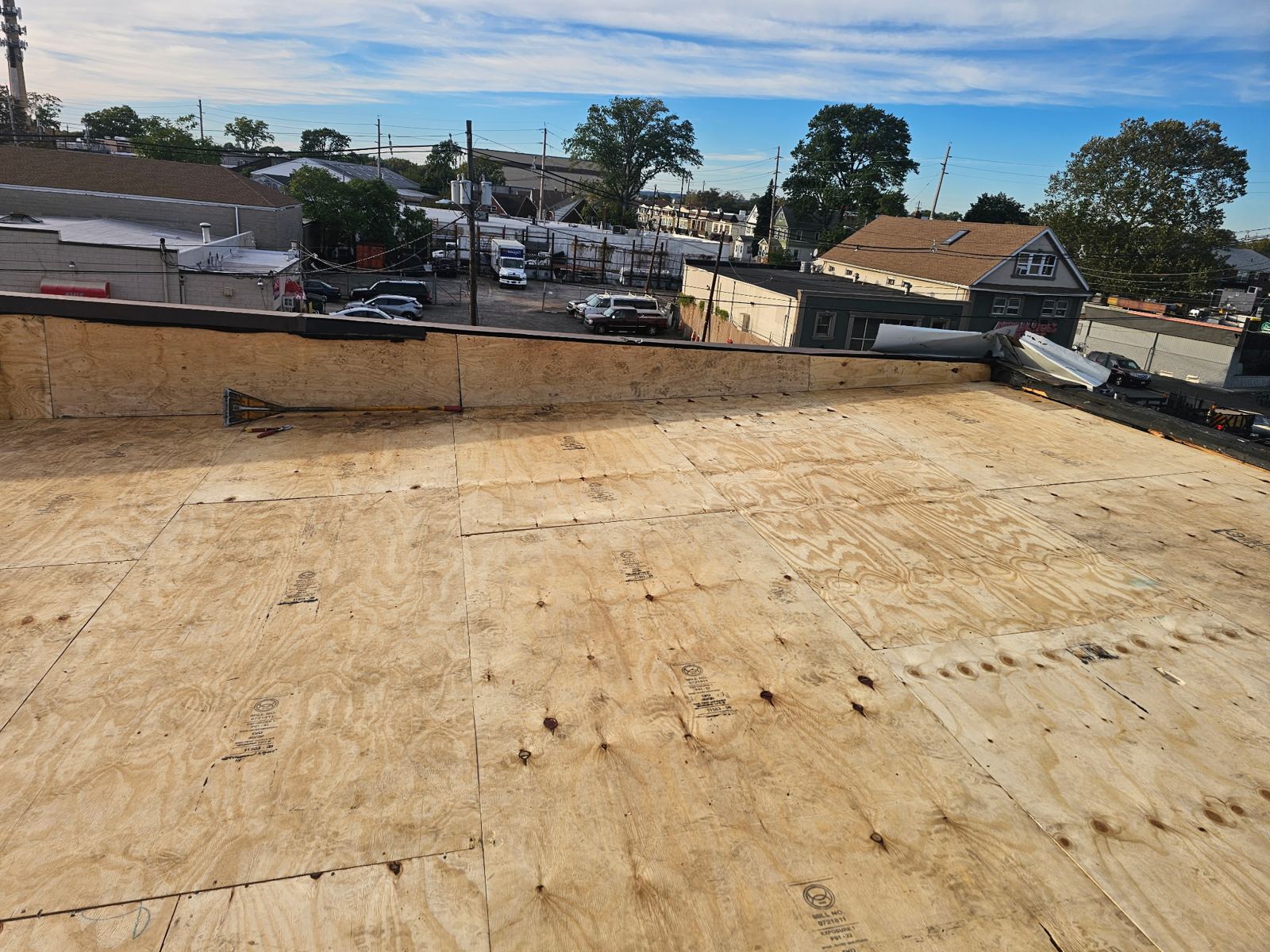
For asphalt shingle roofs, evaluating overall shingle flexibility, granular loss, and deck condition dictates the approach. If the underlying plywood decking is sound, the shingles retain granular protection, and damage is confined to a single slope, chimney area, or pipe boot, a targeted repair restores water-tight integrity while preserving capital. Storm Guard Roofing provides objective technical evaluations to prevent unnecessary full replacements.
- Individual slate and tile replacement utilizing slate rippers and copper hooks.
- Targeted cedar shake replacement matching existing exposure and thickness profiles.
- Localized asphalt shingle section replacement and pipe boot membrane renewal.
- Decking integrity inspection to confirm structural soundness prior to executing repairs.
Tenafly Building Codes, Historic Standards, and Permits
Roof repairs in Tenafly must adhere to local municipal codes enforced by the Borough of Tenafly Building Department. While isolated shingle replacements do not always require permits, repairs involving structural sheath replacement, valley re-framing, or modified flashings must comply with current New Jersey Uniform Construction Code (NJ UCC) requirements.
Properties near Old Tenafly and local historic zones require strict adherence to architectural preservation standards. Replacing original slate, tile, or lead-coated copper flashings demands precise material matching to maintain structural weight limits and historic authenticity. Storm Guard Roofing executes technical repairs that meet both municipal code enforcement and high historic preservation standards.
- Compliance with Borough of Tenafly Building Department permitting regulations.
- Ice and water shield installation exceeding building code min-depths at eaves and valleys.
- Historic material matching for slate grades, clay tile profiles, and copper weight specifications.
- Structural weight verification for heavy slate and tile roofing repairs.
Tenafly questions we get asked
- How do Bergen County winter freeze-thaw cycles damage slate and tile roofs in Tenafly?
- Water infiltrates microscopic fissures in slate tiles or clay body structures during rain or snowmelt. When temperatures drop below freezing, trapped water expands by approximately 9 percent, causing slate to spall, delaminate, or snap away from its copper fastener. Storm Guard Roofing replaces damaged individual slates and tiles using specialized slate rippers without disturbing adjacent sound units.
- Is a permit required from the Borough of Tenafly for roof repairs?
- Minor spot repairs involving isolated shingle replacements, pipe boot swaps, or small flashing re-seals generally do not require a permit. However, if repairs require replacing structural roof sheathing boards, altering rafters, or re-roofing large contiguous sections, permits from the Borough of Tenafly Building Department are mandatory. Storm Guard Roofing handles all necessary municipal documentation and inspections.
- Can a leaking chimney flashing on an older East Hill home be repaired without replacing the roof?
- Yes. Chimney leaks are usually caused by deteriorated counter-flashing, cracked mortar joints, or worn step-flashing rather than total roof failure. We carefully remove surrounding shingles or slate, grind out old mortar joints, install new lead or copper step and counter-flashing, and seal the masonry connection, restoring water-tight protection while leaving the surrounding roof intact.
- What step-by-step process does Storm Guard Roofing follow for emergency storm repairs?
- Upon receiving your call at (201) 403-0024, our team deploys to assess safety risks and perform immediate emergency tarping to stop active water entry. We then perform a structural damage inspection, record photographic evidence, generate a formal technical repair estimate, and work directly with your insurance carrier adjuster to ensure all scope items are covered under your claim.
More in Tenafly
Call (201) 403-0024 for a Tenafly inspection, or send the form.