Union · Union County
Roof Repair Services in Union, New Jersey
Storm Guard Roofing provides specialized roof repair services across Union, New Jersey. Operating as a family-owned, licensed, and insured contractor with over 25 years of local experience, our crews resolve active leaks, structural water entry, and wind damage. Union features a high concentration of 1950s capes and colonials built with short eaves, undersized attic ventilation, and aging sectional gutters past their service life. These structural characteristics create specific vulnerabilities during heavy rainstorms, freeze-thaw cycles, and winter ice accumulation. When water penetrates your roof assembly, targeted diagnostic repair prevents structural decay without forcing unnecessary full-system replacements. We maintain a 24/7 emergency response team reached at (201) 403-0024, direct insurance claims handling, and technical crews equipped for precise, code-compliant fixes across Union County.
Common Water Intrusion Points in Union Housing Stock
Residential construction across Union—particularly in established neighborhoods near Connecticut Farms, Five Points, and Vauxhall—consists largely of 1950s capes and two-story colonials. These homes were engineered with narrow eave overhangs, typically extending only 4 to 8 inches from the exterior wall plane. When heavy downpours hit Union County, wind-driven rain easily bypasses short eaves and forces water back up under the initial shingle courses if underlayment is degraded or improperly installed.
Compounding this issue, many of these homes retain undersized attic ventilation configurations, such as isolated gable vents without continuous ridge and soffit venting systems. Poor attic airflow allows internal heat to rise into the roof deck during winter, melting snow cover that subsequently freezes at the cold eave line. This creates ice dams that push water upward beneath the shingles, saturating insulation and interior ceiling drywall. Additionally, original sectional gutters past their service life overflow, spilling water directly onto fascia boards, rafter tails, and masonry wall tops.
- Short eave overhangs exposing rafter tails and wall framing to wind-blown downpours.
- Inadequate attic ventilation causing rapid freeze-thaw cycles and severe winter ice damming.
- Sectional gutters past service life leaking water into soffits and foundation perimeters.
- Shingle displacement along wind-exposed roof ridges near open corridors like Route 22.
Flashing, Step Transition, and Valley Failure Repairs
Flashing assemblies serve as the primary mechanical barrier at roof penetrations and vertical wall intersections. On Union’s 1950s colonials, step flashing along side dormers and counter flashing embedded into brick chimneys are primary failure points. Over decades of thermal expansion and contraction, brick mortar joints loosen, allowing water to pass behind counter flashing. Step flashing elements made of raw aluminum or thin galvanized steel corrode, rust, or separate from dormer sidewalls, diverting water behind the building cladding.
Open and closed-cut valley transitions also suffer high rates of failure. Valleys collect high volumes of runoff from upper roof pitches. When original organic felt underlayment beneath valley shingles breaks down, heavy runoff infiltrates the roof sheathing. Our repair methodology involves removing compromised shingles along valley lines, installing ice and water shield membrane directly over the plywood deck, and fitting heavy-gauge aluminum or copper valley liners matched to local roof pitches.
- Re-pointing loosened chimney mortar and installing lead or aluminum counter flashing.
- Replacing corroded sidewall and dormer step flashing with code-compliant metal profiles.
- Rebuilding failed roof valleys using self-adhering ice and water protection membranes.
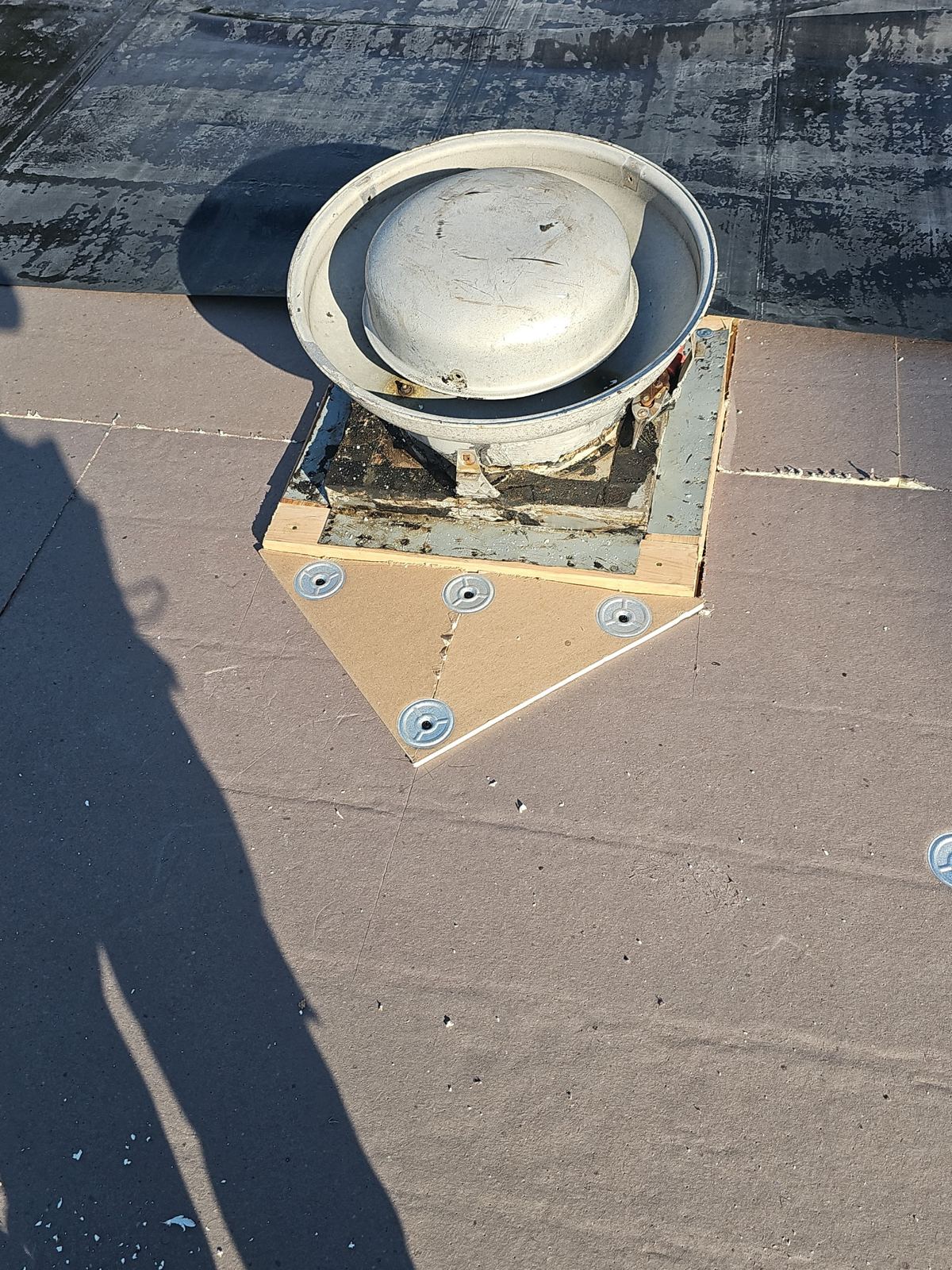
- Resealing and flashing pipe boots, attic fan housings, and plumbing stacks.
Emergency Tarping and Storm Damage Mitigation
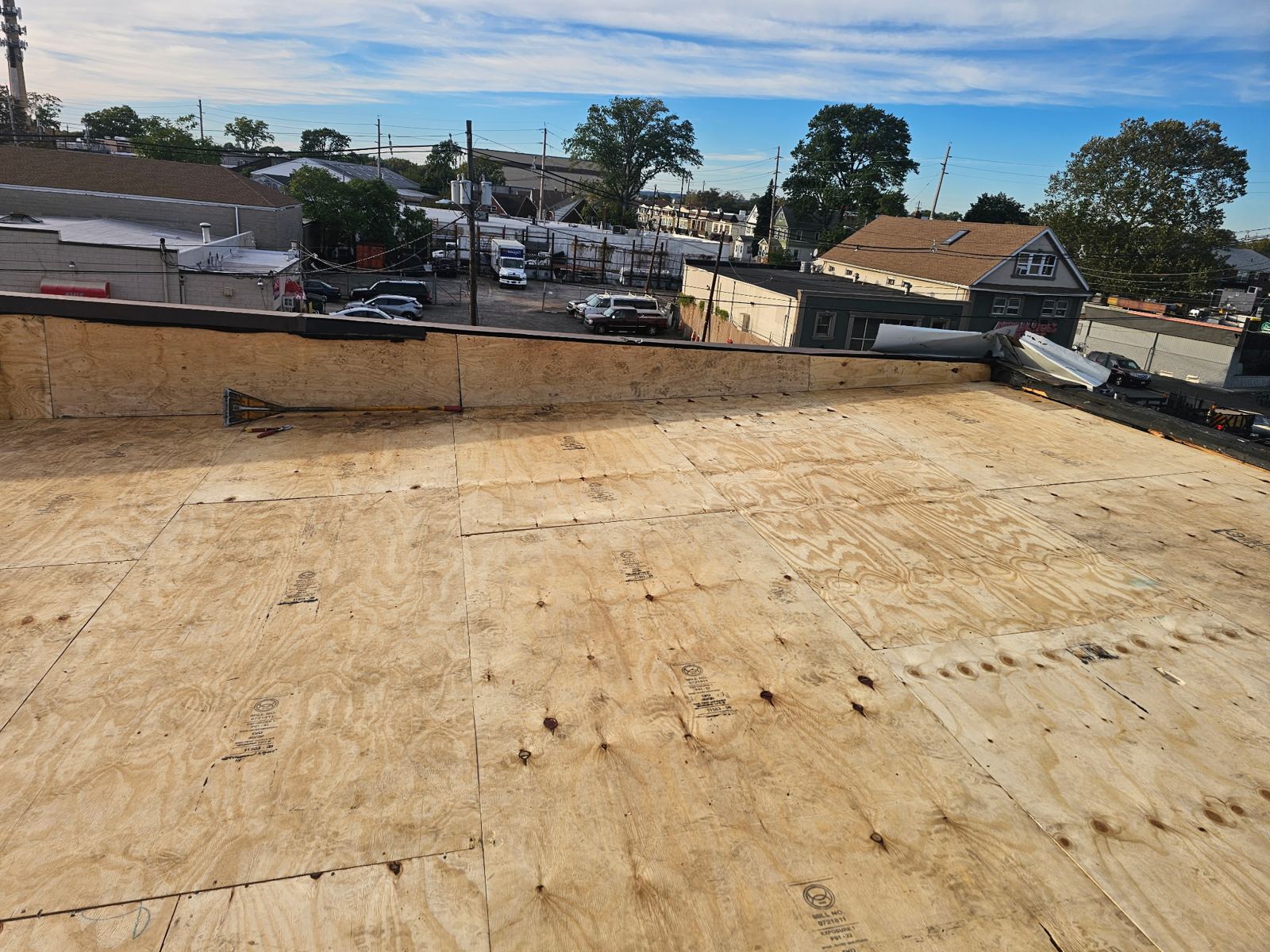
Severe weather events along the Northeastern New Jersey corridor generate severe wind gusts and hail capable of lifting aged asphalt shingles, snapping tabs, and stripping protective mineral granules. When shingles pull away, exposed nail heads leak, and underlying plywood decking rapidly absorbs moisture. Storm Guard Roofing provides 24/7 emergency response dispatch across Union to stabilize damaged roof structures immediately.
Our emergency response includes heavy-duty tarping using weighted or mechanically fastened wood battens to seal exposed decking without causing additional structural damage. Once the building envelope is stabilized, we document all structural damage, perform core testing on surrounding shingles to check adhesion, and manage the insurance claims process directly with your adjuster. We provide itemized line-item estimates formatted in Xactimate software to align with insurance carrier standard pricing models.
- 24/7 emergency dispatch available at (201) 403-0024 for immediate site stabilization.
- Mechanical tarp installation anchored to non-damaged roof framing members.
- Comprehensive storm damage assessments covering wind uplift, impact, and hidden deck saturation.
- Direct processing of insurance claims with detailed technical reports and photo documentation.
Evaluating Repair Economics Versus Roof Replacement
A common challenge for Union homeowners is determining whether an active leak requires a targeted repair or a complete roof tear-off. If the majority of the asphalt shingle matrix retains structural flexibility, granule adhesion, and deck integrity, a spot repair is the correct technical choice. Replacing broken shingles, renewing flashing, and clearing internal moisture pockets preserves the remaining service life of the roof deck at a fraction of full replacement costs.
According to the Township of Union Uniform Construction Code (UCC), homeowners are permitted to perform spot repairs and localized shingle replacements without triggering mandatory full-roof permit requirements, provided the repair area remains under specified area limits. If an existing roof already has two layers of shingles installed—a common finding on older homes near Salem Road and Morris Avenue—local code prohibits adding a third layer. In these cases, localized repairs focus strictly on damaged outer layers or localized sections down to the sheathing without violating municipal codes.
- Preserving underlying plywood decking by eliminating leaks before wood rot develops.
- Targeted repairs performed in full compliance with Township of Union UCC building standards.
- Cost-effective restoration of localized storm damage without incurring whole-roof tear-off expenses.
- Evaluation of underlying shingle layers to ensure code compliance during localized repairs.
Systematic Diagnostic Procedures and Leak Tracking
Water rarely enters a home directly below the point where interior ceiling stains appear. Gravity and internal roof framing force water to travel down rafters, top plates, and electrical conduits before dripping through drywall. Storm Guard Roofing utilizes systematic water tracking protocols to trace leaks back to their exact point of origin on the exterior roof plane.
In Union's 1950s capes, water entering near a ridge often travels along the steep rafter pitch, bypassing undersized insulation, before pooling at the lower eave line. During our inspection, we evaluate the condition of adjacent structural components, including the soffits, fascia, and sectional gutters past service life. When deteriorated sectional gutters allow standing water to back up under the drip edge, we repair the drip edge installation and adjust fascia board backing to restore correct water shedding into the drainage system.
- Tracing internal drywall ceiling damage up-slope to exterior penetration points.
- Inspecting drip edge alignment and underlying fascia integrity along eaves.
- Evaluating undersized attic ventilation performance to prevent secondary condensation leaks.
- Core testing structural sheathing for hidden rot, soft spots, and mold development.
Union questions we get asked
- Do I need a permit from the Township of Union for a minor roof leak repair?
- Under the Township of Union Uniform Construction Code (UCC), localized repairs such as replacing a small section of shingles, sealing a flashing, or replacing a pipe boot generally do not require a building permit. Permits are typically triggered during major structural alterations or full roof replacements. Storm Guard Roofing manages all code compliance details for Union homeowners.
- Why do 1950s Cape Cod style homes in Union frequently leak around the dormers?
- Union’s 1950s capes feature low-sloped dormers that meet steep main roof pitches. These sidewalls rely on step flashing tucked beneath outer wall coverings. Over time, building settling and thermal movement loosen these metal flashing strips, while short eaves expose the dormer walls to wind-driven rain. Water trickles down behind the flashing, leaking into ceiling spaces.
- How does Storm Guard Roofing handle storm damage insurance claims for Union residents?
- We perform an initial on-site physical inspection to document wind uplift, missing shingles, and internal water damage. We generate a detailed technical scope of work with photo evidence, upload the file directly to your insurance adjuster, and meet the adjuster on-site at your Union home to ensure all structural repair line items are covered.
- What should I do if a tree branch punctures my roof during a storm in Union?
- Call Storm Guard Roofing immediately at (201) 403-0024 for 24/7 emergency dispatch. Our crew will secure the area, remove minor debris, and install heavy-duty emergency tarping secured with wooden battens to prevent further water entry while permanent structural repairs and insurance approvals are coordinated.
More in Union
Call (201) 403-0024 for a Union inspection, or send the form.