Verona · Essex County
Targeted Roof Repair Services in Verona, New Jersey
Storm Guard Roofing provides specialized roof repair for residential properties throughout Verona, New Jersey. Operating for over 25 years as a family-owned, licensed, and insured contractor, our technicians locate and resolve structural roof leaks, membrane failures, and exterior moisture entry points. We provide 24/7 emergency response for severe weather impacts and process insurance claims directly with carriers from initial inspection to final approval. Verona's architectural landscape presents distinct maintenance requirements, notably steep-pitched hillside colonials, historical slate underlayments, and deteriorating masonry chimney crowns. When water breaches your roofing system, accurate diagnostic work prevents structural framing decay and interior property damage. Call (201) 403-0024 to schedule a roof repair assessment or request immediate emergency tarping.
Primary Roof Leak Sources in Verona Residential Structures
Verona properties—particularly the hillside colonials along Claridge Drive, Fairview Avenue, and the residential streets surrounding Verona Park—experience distinct environmental pressures due to elevation changes and wind exposure. The steep pitch characteristic of these colonials accelerates runoff into roof intersections, where material fatigue creates paths for water entry over time.
A frequent source of hidden leakage in older local homes involves deteriorating chimney crowns. Many of these structures utilize brick chimneys for heating systems or wood-burning fireplaces. Multi-season freeze-thaw cycles cause concrete caps to crack, allowing rainfall to saturate internal masonry, degrade underlying plywood decking, and breach adjacent lead counter-flashing.
- Deteriorated Mortar Caps: Micro-fissures in chimney crowns admit water into internal wall cavities during sustained precipitation.
- Slate-to-Shingle Retrofit Issues: Historical slate roofs converted to asphalt shingles often retain aged flashing underlayments that fail prematurely.
- Plumbing Stack Boot Cracking: Neoprene boot seals surrounding plumbing vent pipes degrade under UV exposure, allowing water to track down pipes.
- Eave Ice Dam Backups: Melted snow trapped behind ice dams forces water upward beneath shingle courses beyond eave protection membranes.
Diagnosing Flashing, Valley, and Masonry Intersections
Water follows gravity down the steep slopes of Verona homes, concentrating in roof valleys and against vertical wall step-flashings. If these transitions lack proper sealing or utilize oxidized metals, water migrates beneath shingles and enters wall framing.
Open metal valleys and closed-cut valleys on older roofs often fail due to metal fatigue or center-line shingle cracking. On hillside properties subjected to high wind, driven rain forces water laterally under step flashing along dormers and sidewalls. Resolving these issues requires lifting damaged shingles, evaluating the underlying membrane, and installing solid copper or aluminum step flashing securely integrated into the building substrate.
- Step Flashing Separation: Vertical wall junctions lose their seal as wall sheathing settles or wood siding shifts over time.
- Open Metal Valley Rust: Older galvanized steel valley pans corrode, allowing high-volume water flows to penetrate rafter bays.
- Counter-Flashing Mortar Deterioration: Masonry joints securing chimney counter-flashing weather away, unseating metal seals.
- Slate Ridge Cap Separation: Historical slate roofs lose copper fasteners or ridge mortar, exposing peak framing to downpours.
Severe Weather Damage and Emergency Structural Tarping
Wind events across the First Watchung Mountain ridge produce strong gusts throughout Verona, loosening asphalt shingle tabs and breaking tree limbs over residential roofs. Storm Guard Roofing maintains a 24/7 emergency response service to seal open roof penetrations, preventing secondary water damage to interior ceilings and electrical systems.
Our emergency crews execute physical containment using heavy-duty, UV-resistant tarps fastened with wooden furring strips anchored into rafter framing. This mechanical attachment prevents wind uplift until insurance adjusters inspect the site.
We document all storm damage with photographic evidence, moisture readings, and line-item scope reports. Storm Guard Roofing works directly with your insurance company, providing standardized estimates to help process your claim efficiently.
- Immediate Emergency Tarping: Rapid dispatch to secure exposed decking, missing shingle sections, or limb impact points.
- Insurance Claim Support: Comprehensive photo logs and carrier-compliant line-item estimates submitted directly to adjusters.
- Creased Shingle Remediation: Identifying wind-lifted shingle tabs with broken thermal seals that compromise wind resistance.
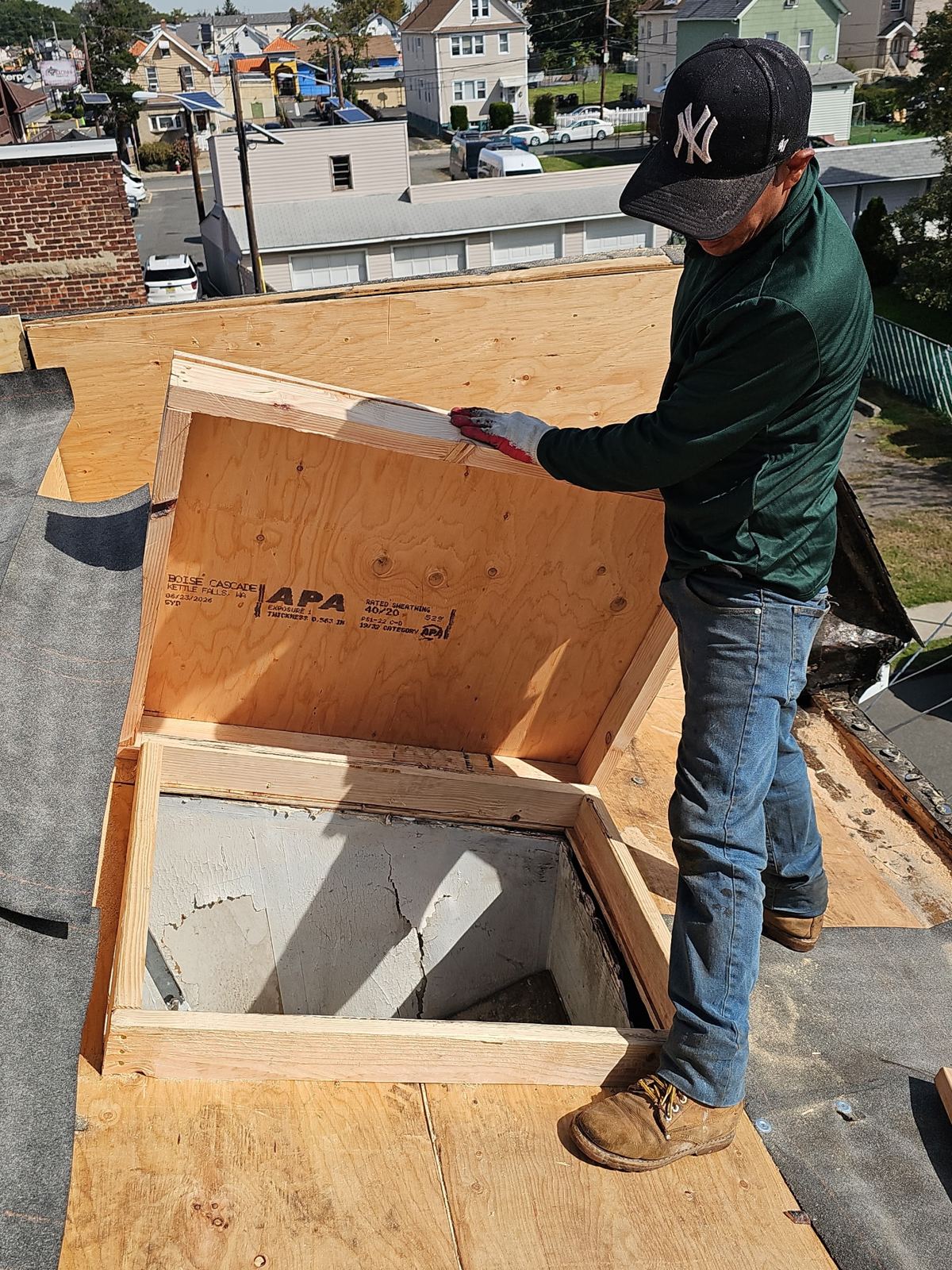
- Decking and Structural Repair: Removing fallen debris, assessing rafter integrity, and replacing damaged plywood sheathing.
Evaluating Roof Repair Feasibility Relative to Replacement
Determining whether to perform a localized repair or invest in a total replacement relies on clear technical metrics. When underlying wood sheathing remains structural and water intrusion is limited to isolated flashing, valley, or chimney failures across less than 25 percent of the roof surface, a targeted repair is the correct technical choice.
However, if shingles across all facets exhibit advanced granule loss, widespread curling, or thermal splitting, localized patching becomes ineffective. For properties with slate history, load calculations and underlayment conditions dictate repair viability. If historic slate was previously covered with shingles without proper decking installation, localized repairs must address the underlying support structure.
- Granule Loss Assessment: Widespread asphalt exposure indicates material end-of-life, making spot repairs impractical.
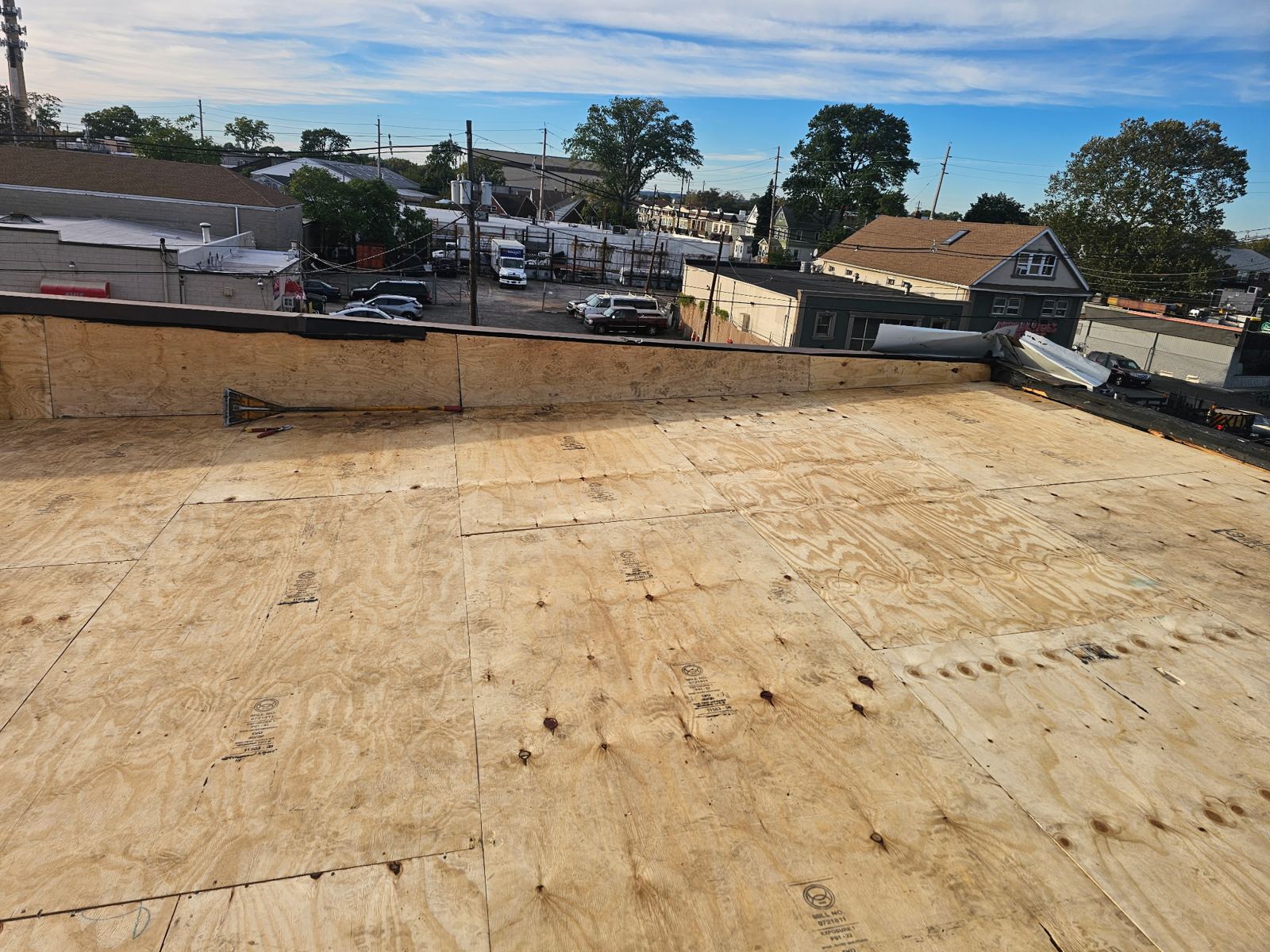
- Substrate Integrity Checks: Soft or rotted plywood sheathing requires localized sheet replacement during repair execution.
- Cost-Benefit Thresholds: If repair scope exceeds 30 to 40 percent of total roof replacement cost, replacement provides better long-term value.
- Building Code Layer Limits: New Jersey building codes restrict residential roofs to two layers, mandating complete tear-offs when limits are reached.
Verona Building Code Standards and Regional Exposure Mechanics
Roof repair work in the Township of Verona must comply with the New Jersey Uniform Construction Code (NJUCC). Minor localized shingle repairs generally do not require permits, but structural work involving sheathing replacement or full-facet repairs requires approval from the Verona Building Department on Bloomfield Avenue.
Hillside colonials with steep slopes (pitches exceeding 8:12) require specific safety rigging and staging. Additionally, local freeze-thaw cycles necessitate high-performance ice and water shields along eaves during repairs, extending at least 24 inches inside the interior wall line to prevent future ice dam leaks.
- Verona Permit Coordination: Managing documentation for structural deck repairs with the local construction official.
- High-Pitch Safety Compliance: Utilizing dedicated harness systems and scaffolding on steep colonial rooflines.
- Ice Barrier Installation: Applying code-compliant self-adhering membranes along eaves and valleys during repair work.
- Flashing Material Selection: Installing heavy-gauge aluminum or 16-ounce copper flashing for extended corrosion resistance.
Verona questions we get asked
- Why do hillside colonials in Verona develop leaks near the chimney?
- Hillside colonials in Verona experience high wind and freeze-thaw cycles. Brick chimneys develop cracks in their concrete tops (crowns) and experience lead counter-flashing degradation. Water enters through top crown fissures, flows down interior brickwork, and bypasses perimeter roof flashing.
- Do I need a permit from the Township of Verona for a roof repair?
- Minor shingle replacements and spot flashing repairs do not require a permit from the Verona Building Department. However, if the repair requires replacing structural plywood sheathing, rafter repairs, or replacing an entire roof section, a permit must be filed under the New Jersey Uniform Construction Code.
- How does Storm Guard Roofing handle storm damage insurance claims in Verona?
- We deploy 24/7 to install emergency tarps over damaged sections. We photograph all structural impacts, missing shingles, and interior leaks, then prepare an itemized estimate using industry-standard software to review directly with your insurance adjuster.
- Can an older Verona home with a slate history undergo localized shingle repair?
- Yes. Whether your roof currently retains original slate tiles or has an asphalt shingle overlay on historical slate lath, our mechanics replace individual tiles or secure new shingles without compromising the underlying historic roof deck.
More in Verona
Call (201) 403-0024 for a Verona inspection, or send the form.