Long Branch · Monmouth County
Roof Replacement Contractors in Long Branch, NJ
Storm Guard Roofing provides complete structural roof replacements across Long Branch, New Jersey, serving properties from Elberon and North Long Branch to the oceanfront homes along Ocean Avenue and Pier Village. For over 25 years, our family-owned company has delivered code-compliant roof installations engineered to withstand Monmouth County's harsh coastal weather. Oceanfront wind and salt exposure create severe environmental demands on local roofing systems, where metal flashing, ridge caps, and fascia corrode first. As a licensed and insured contractor, Storm Guard Roofing handles complete system tear-offs, structural decking replacements, attic ventilation re-engineering, and insurance claim documentation for storm-damaged properties. We operate a 24/7 emergency response service to stabilize damaged structures and protect home interiors. Call (201) 403-0024 to schedule an on-site structural roof evaluation.
Full Tear-Off vs. Overlay in Coastal New Jersey
Installing a second layer of shingles over an existing roof—known as an overlay—is poorly suited for Long Branch homes. Ocean winds put immense uplift pressure on roof decks. Laying new asphalt shingles over damaged, curling, or saturated underlayment traps moisture underneath, concealing deck rot in plywood sheathing and accelerating structural decay. Furthermore, the New Jersey Uniform Construction Code limits total roof layers, and layering adds unnecessary dead load to older framing found in historic Long Branch victorians and mid-century residences.
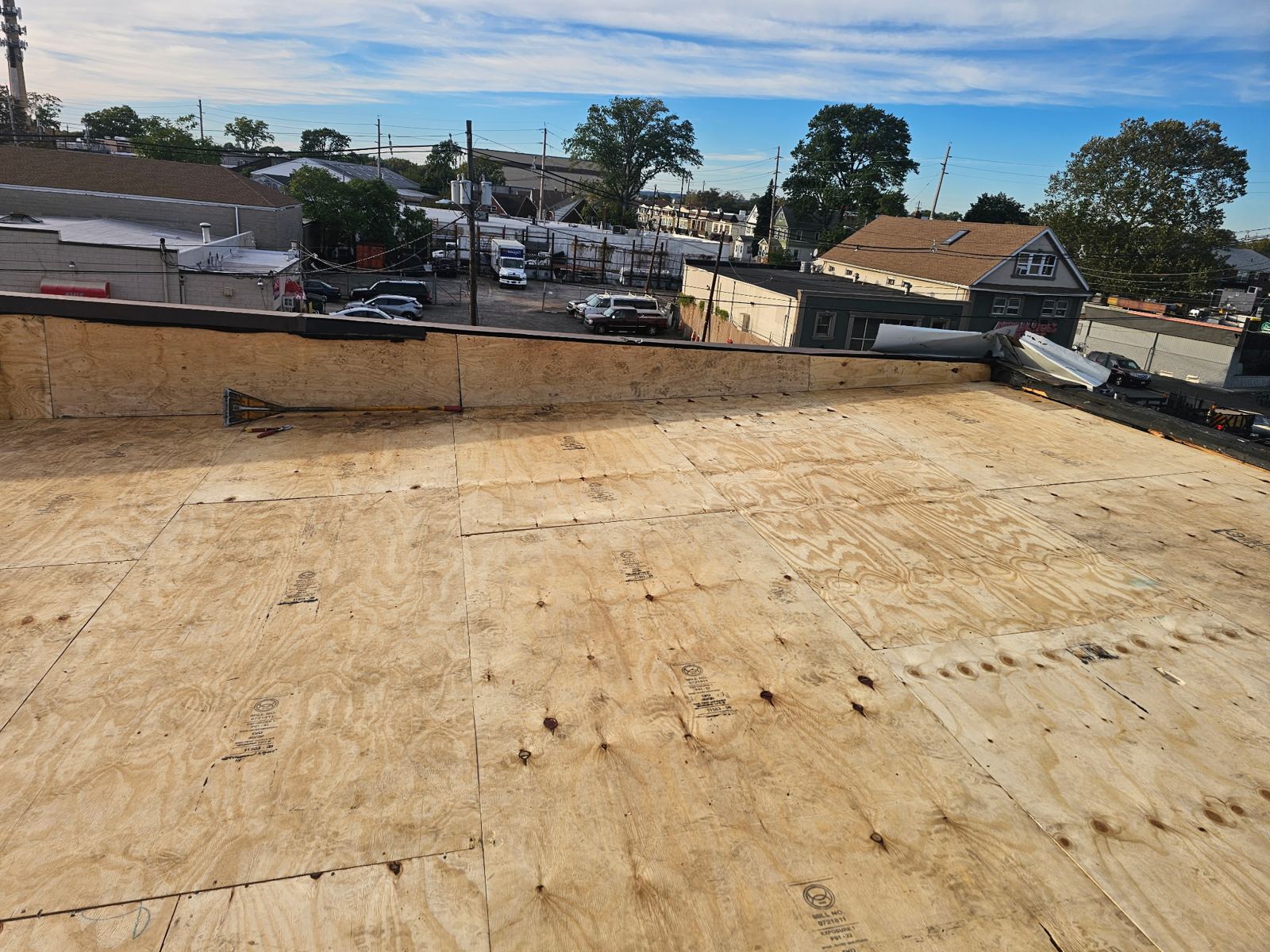
A full tear-off down to the structural decking is the baseline standard for long-term weatherproofing in Monmouth County. Removing old materials allows technicians to inspect every square foot of plywood or tongue-and-groove sheathing, identify hidden water intrusion around chimneys and dormers, and install self-adhering ice and water shield membranes directly onto the clean deck.
- Complete removal of degraded shingles, underlayment, and corroded fasteners.
- Direct inspection of underlying roof sheathing for rot, mold, or structural deflection.
- Application of high-temperature ice and water protection along drip edges, valleys, and wall intersections.
- Compliance with Monmouth County structural load and wind-resistance building standards.
Decking Repairs and Coastal Ventilation Systems
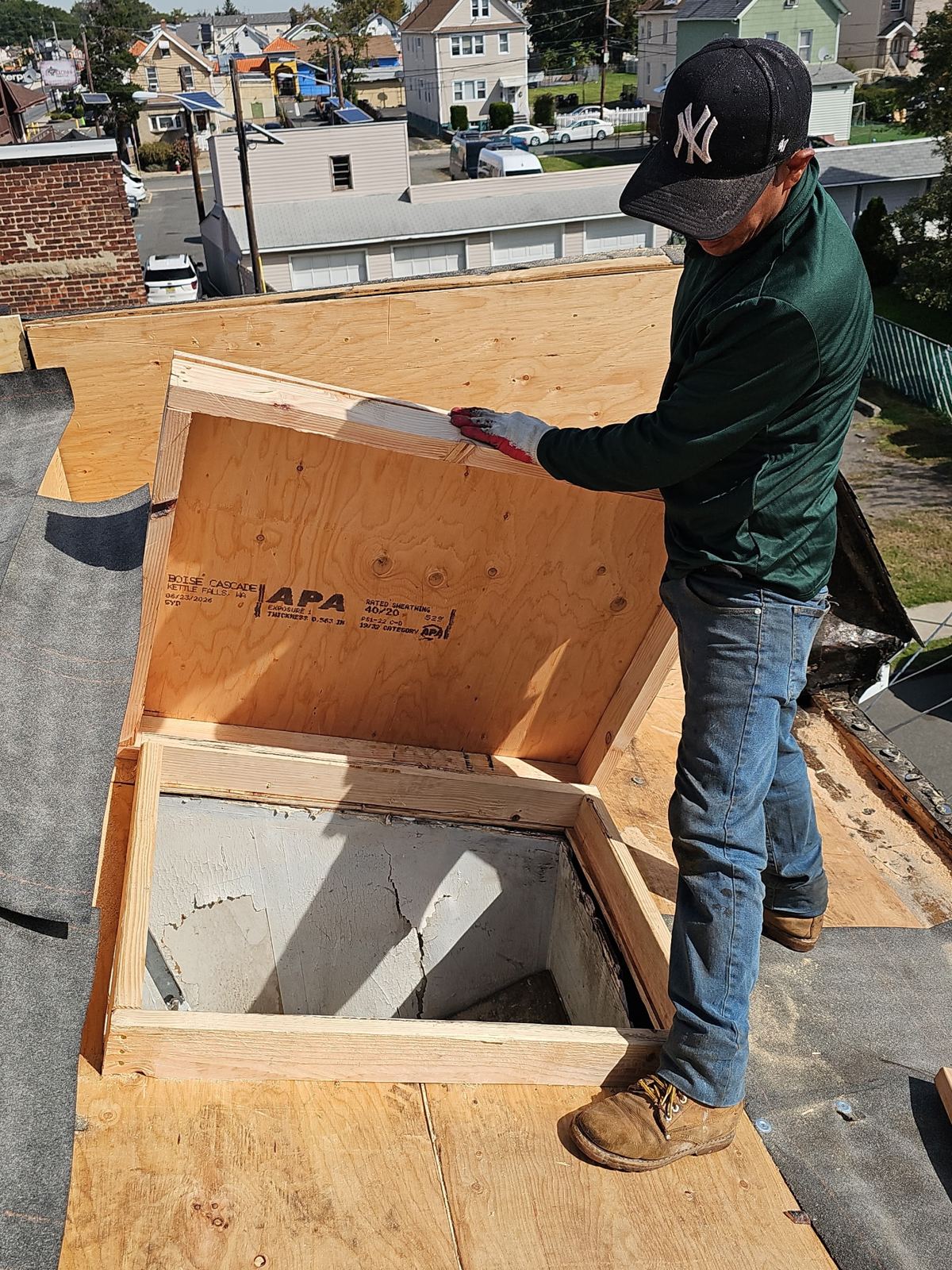
Salt-laden air combined with high summer humidity in Long Branch accelerates wood decay when attic ventilation is inadequate. During a roof replacement, damaged deck boards must be repaired or replaced with exterior-grade CDX plywood or OSB to establish a flat, rigid substrate capable of holding mechanical fasteners under severe wind loads.
Ventilation upgrades are calculated based on the net free vent area required by building code. Proper intake at the soffits paired with continuous ridge vents prevents hot, humid air from baking shingles from below during summer and reduces ice dam formation along gutter lines during coastal winters.
- Replacement of compromised sheathing using code-compliant 1/2-inch or 5/8-inch exterior plywood.
- Installation of high-wind rated ridge vents designed to prevent wind-blown rain and snow infiltration.
- Retrofitting soffit baffles to maintain unimpeded airflow from intake to exhaust.
- Balancing attic thermal levels to lower shingle surface temperatures and prevent premature aging.
Material Specifications: Architectural Shingles and Low-Slope Systems
Selecting roofing components for Long Branch requires materials tested for wind resistance and salt air exposure. Architectural asphalt shingles rated for Class 110 mph or 130 mph wind uplift (ASTM D3161 Class F and ASTM D7158 Class H) are standard for pitched residential roofs. Heavyweight fiberglass-asphalt composition resists blow-offs during Atlantic nor'easters.
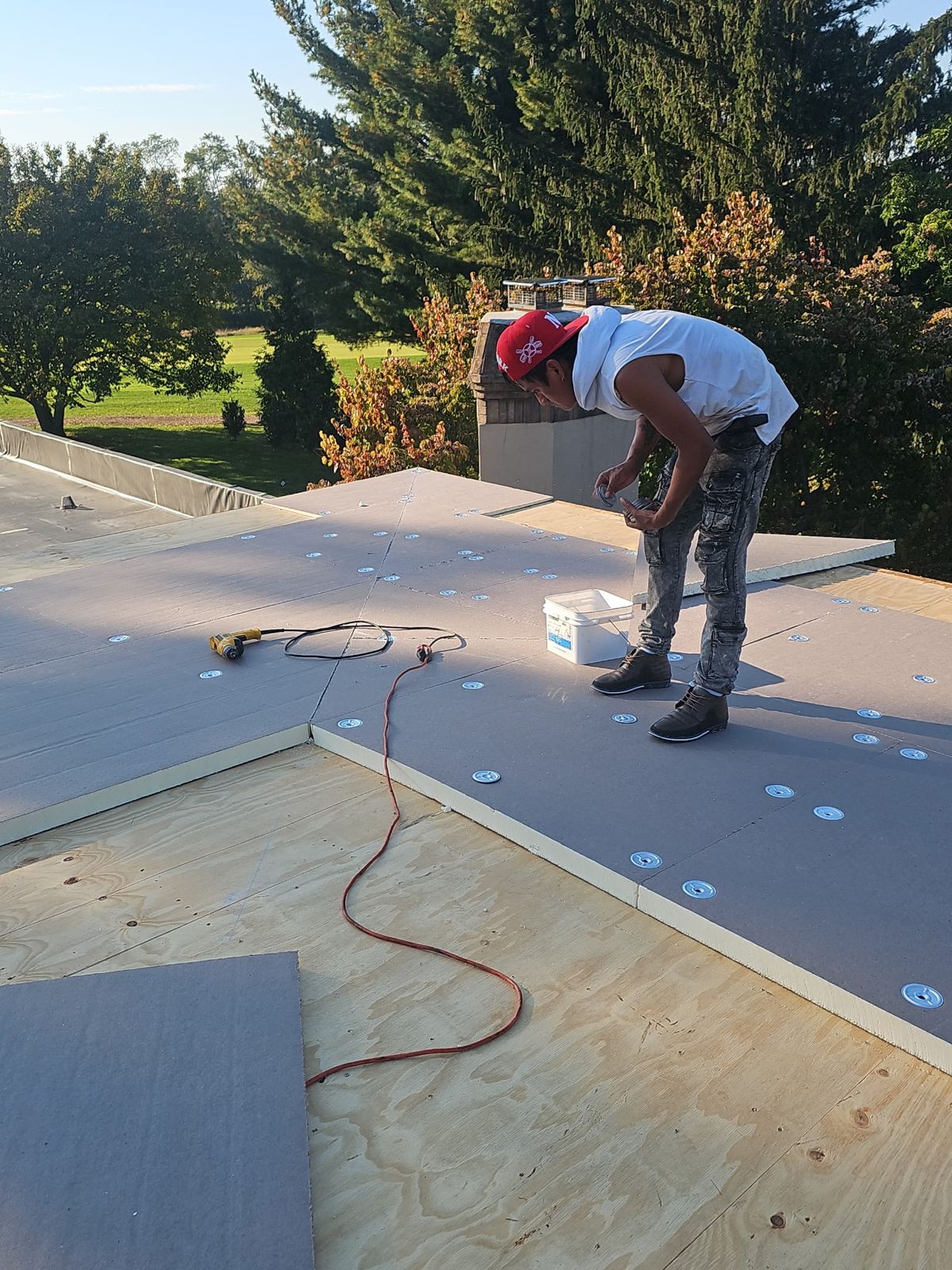
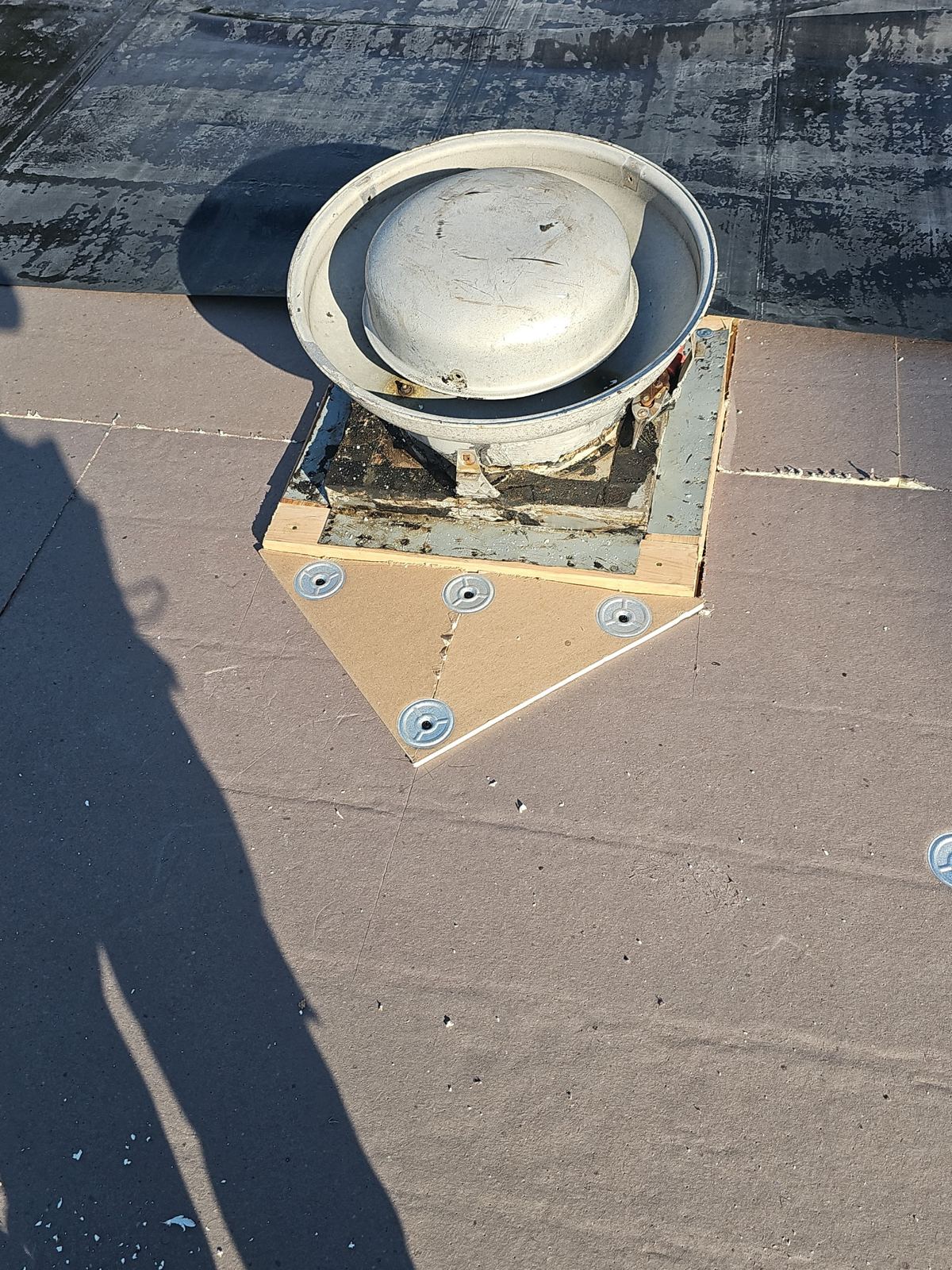
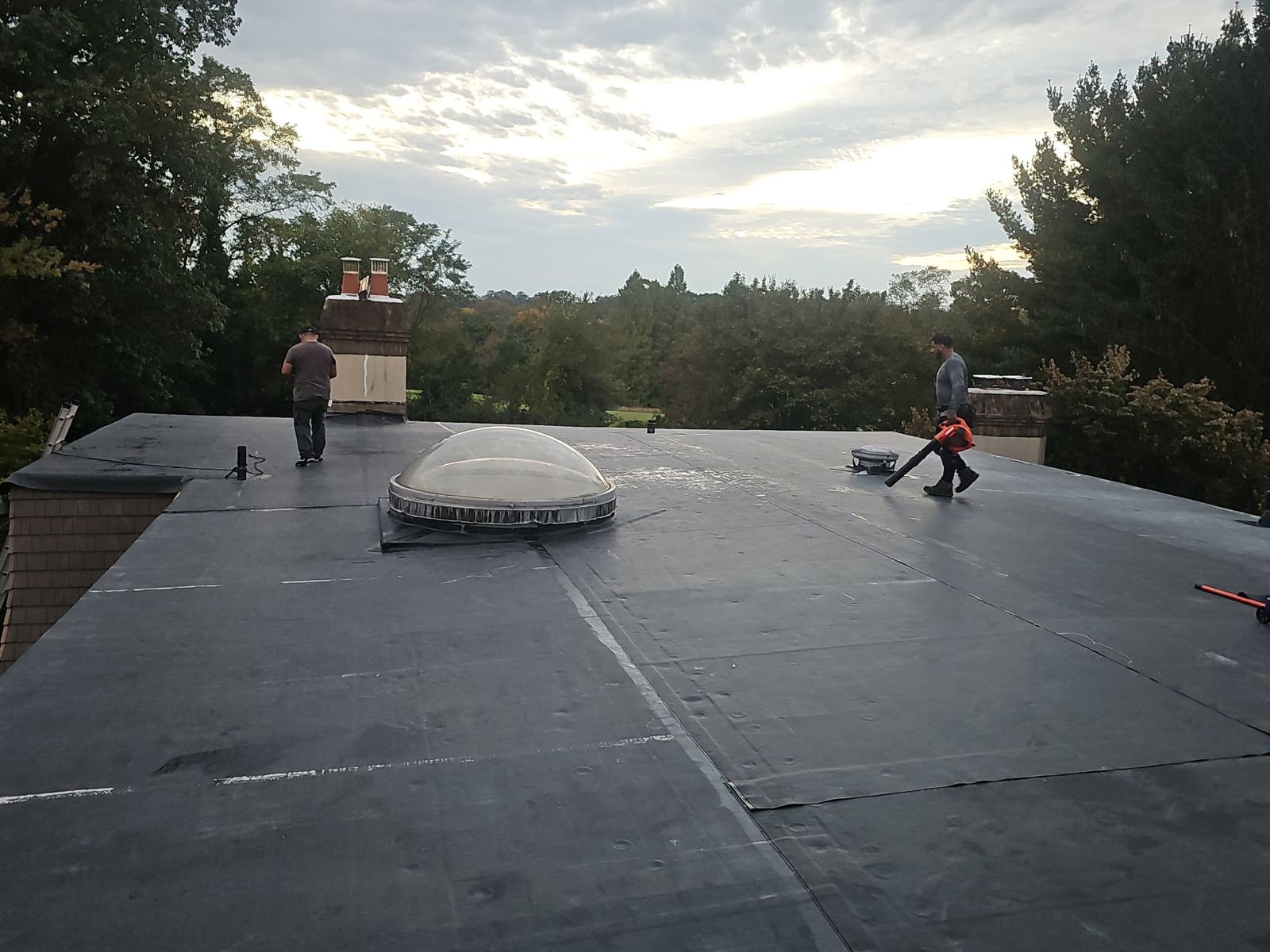
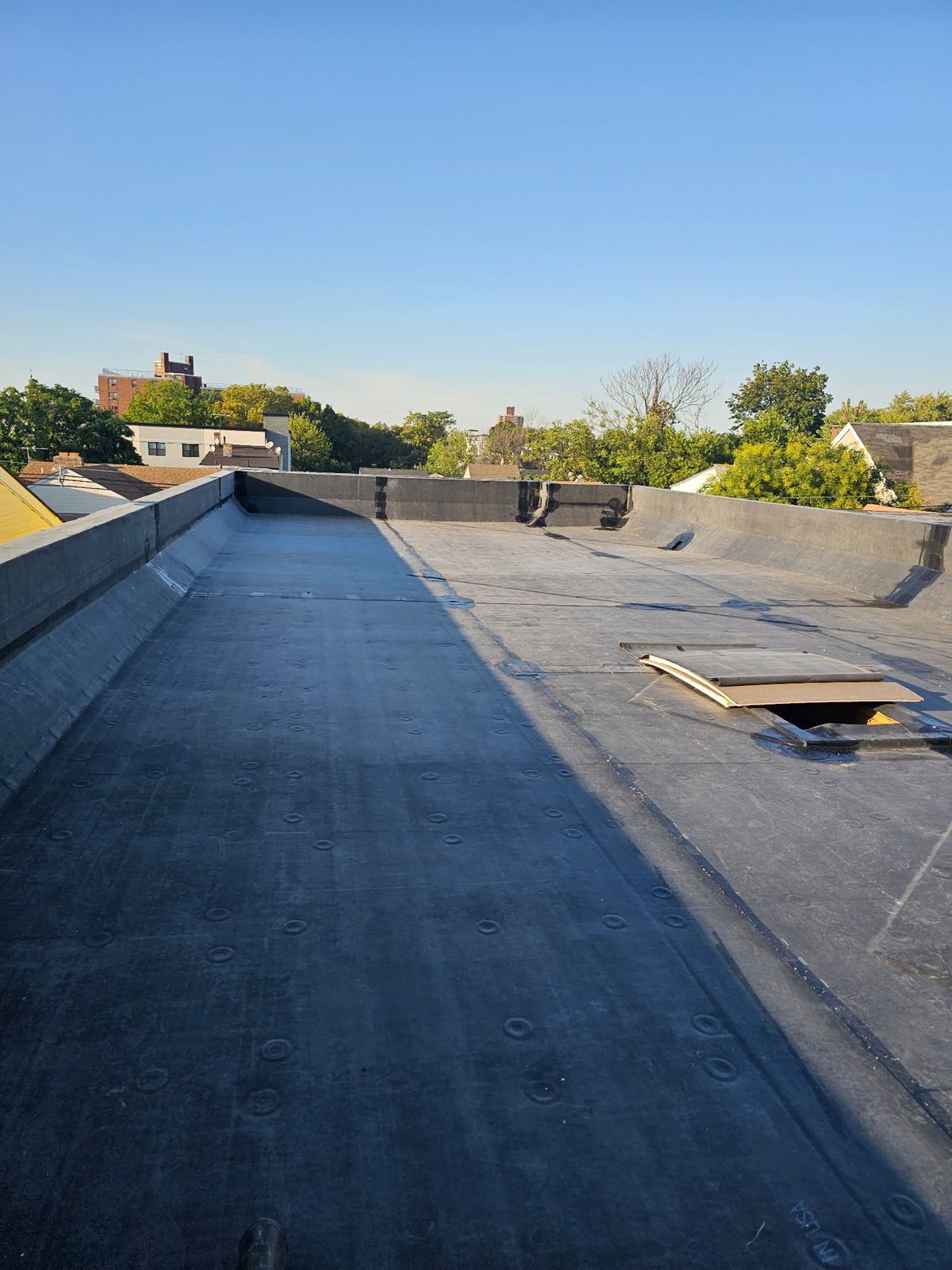
For flat or low-slope sections common on Long Branch porches, additions, and coastal multi-family structures, traditional shingles cannot maintain water tightness. In these areas, we install multi-ply Modified Bitumen or single-ply TPO (Thermoplastic Polyolefin) membranes. These systems utilize heat-welded or cold-applied adhesive seams to create an impermeable barrier against standing water and salt fog.
- Class H wind-rated architectural shingles engineered for coastal wind gusts.
- Algae-resistant granules to prevent dark streaking caused by airborne marine micro-organisms.
- Reinforced TPO and Modified Bitumen systems for flat roofs, balconies, and low-pitch additions.
- Stainless steel or hot-dipped galvanized ring-shank nails to prevent fastener failure from rust.
Managing Salt Air Corrosion on Metal Components
In Long Branch, the primary failure point on aging roofs is not always the shingle material itself, but the metal components. Oceanfront wind and salt exposure cause standard metal flashing, ridge caps, and fascia to corrode first. Salt deposits pit untreated metal, rusting step flashing inside wall joints and creating leak paths behind aluminum trim.
During a complete replacement, all perimeter metals, counter-flashing, rake edges, and drip edges are upgraded to marine-grade materials. Heavy-gauge aluminum with factory-applied coatings, stainless steel, or thick copper flashing assemblies are integrated into the underlayment system to withstand salt air without oxidizing or separating from the framing.
- Marine-grade aluminum and copper flashings installed at sidewalls, dormers, and chimneys.
- Corrosion-resistant drip edge installation to seal the perimeter against wind-driven ocean spray.
- Heavy-duty fascia wrap to protect underlying structural wood framing from decay.
- High-wind polymer ridge caps designed to resist salt corrosion, cracking, and uplift.
Project Execution, Site Protection, and Code Compliance
A standard residential roof replacement in Long Branch takes between 1 to 3 days, depending on square footage, roof pitch, and structural decking repairs. Storm Guard Roofing manages property disruption by deploying tarps to shield landscaping, siding, and outdoor living areas around Pier Village or inland residential neighborhoods. Debris is cleared continuously using roll-off containers and magnetic sweepers to remove fasteners from driveways and lawns.
We coordinate directly with the Long Branch Building Department to pull all required building permits before work begins. As licensed contractors with 25+ years of experience, we prepare technical submittals, schedule municipal inspections, and assist property owners with insurance claim documentation when replacing roofs damaged by storm events.
- Property protection using tarps, plywood covers for HVAC units, and magnetic nail sweeps.
- Procurement of building permits from the City of Long Branch Construction Official.
- Detailed documentation and photographic evidence for insurance claim processing.
- Scheduling municipal code inspections to verify complete building compliance.
Long Branch questions we get asked
- How does salt air along the Long Branch coastline affect when I need a roof replacement?
- Salt spray accelerates the breakdown of metal fasteners, flashing, and ridge caps long before asphalt shingles reach the end of their design life. When metal components corrode, water penetrates under the shingles and rots the wood deck. Annual inspections help determine if metal corrosion requires a complete system replacement.
- Do I need a building permit for a full roof replacement in Long Branch, NJ?
- Yes. The City of Long Branch requires a building permit for complete roof replacements. Storm Guard Roofing handles the permit application, submits technical material specifications to the local code official, and coordinates the required building inspections.
- Should I choose shingles or a flat membrane system for my Long Branch home?
- Sloped roofs with a pitch of 2:12 or greater use high-wind rated architectural asphalt shingles. Roof sections with pitches under 2:12—such as flat porch roofs, sunrooms, or modern oceanfront decks—require single-ply TPO or modified bitumen membrane systems to prevent water pooling.
- How does Storm Guard Roofing assist with insurance claims for wind or storm damage?
- We perform structural inspections, document wind uplift and moisture penetration, generate detailed replacement scopes matching industry standards, and meet directly with your insurance adjuster on-site in Long Branch to ensure all damaged decking, flashing, and roofing materials are accounted for.
More in Long Branch
Call (201) 403-0024 for a Long Branch inspection, or send the form.