Ocean City · Cape May County
Full Roof Replacement Services in Ocean City, NJ
Storm Guard Roofing provides complete tear-off and roof replacement services for homeowners and property owners in Ocean City, Cape May County, New Jersey. Operating as a family-owned, licensed, and insured contractor with over 25 years of field experience, our team handles structural decking repairs, system installations, and insurance claims. We maintain 24/7 emergency response for urgent storm damage situations across the island. Ocean City structures face continuous coastal weather exposure. Barrier-island salt air and wind dictate how materials age, causing flat roofs, metal trim, and fasteners to corrode first long before main shingle surfaces completely fail. A proper roof replacement restores structural stability and weather protection against heavy wind and driving rain. Call (201) 403-0024 to schedule an evaluation or discuss project requirements.
Ocean City Tear-Off Strategy Versus Roof Overlaying
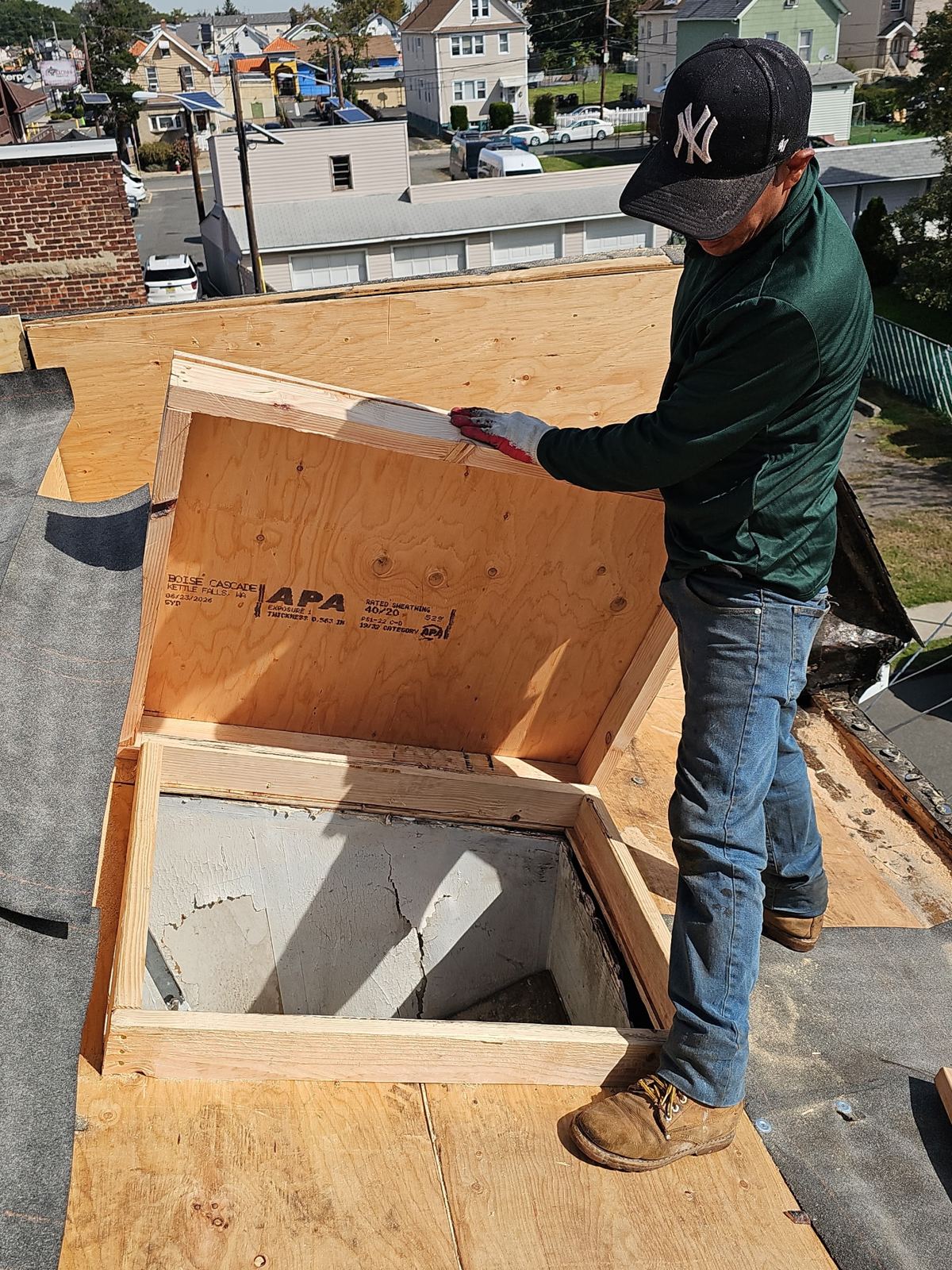
Executing a complete tear-off is essential for long-term weatherproofing on a barrier island. Installing new asphalt shingles directly over an existing assembly traps salt-laden moisture, conceals rotted wooden decking, and adds unnecessary weight to framing members. In Ocean City, barrier-island salt air and wind act directly on exposed metal flashings and eaves. Flat roofs, metal trim, and fasteners corrode first, often rusting beneath top shingle layers without showing early signs of damage from the ground. Removing all old materials down to the structural sheathing uncovers hidden rot and enables necessary substrate repairs.
A complete teardown allows roofers to inspect every sheet of plywood decking, reinforce rafter connections, and install high-performance synthetic underlayments directly on solid wood. Attempting an overlay prevents ice and water protection membranes from adhering to the substrate, leaving vulnerable valleys and roof perimeters exposed to wind-driven coastal rains.
- Removal of all old shingle layers, degraded underlayment, and rusted flashings down to bare wood.
- Detection of hidden deck decay caused by trapped coastal fog and elevated humidity.
- Direct adhesion of self-sealing ice and water underlayment across critical roof transitions.
Decking Sheathing Repairs and Structural Upgrades in Ocean City
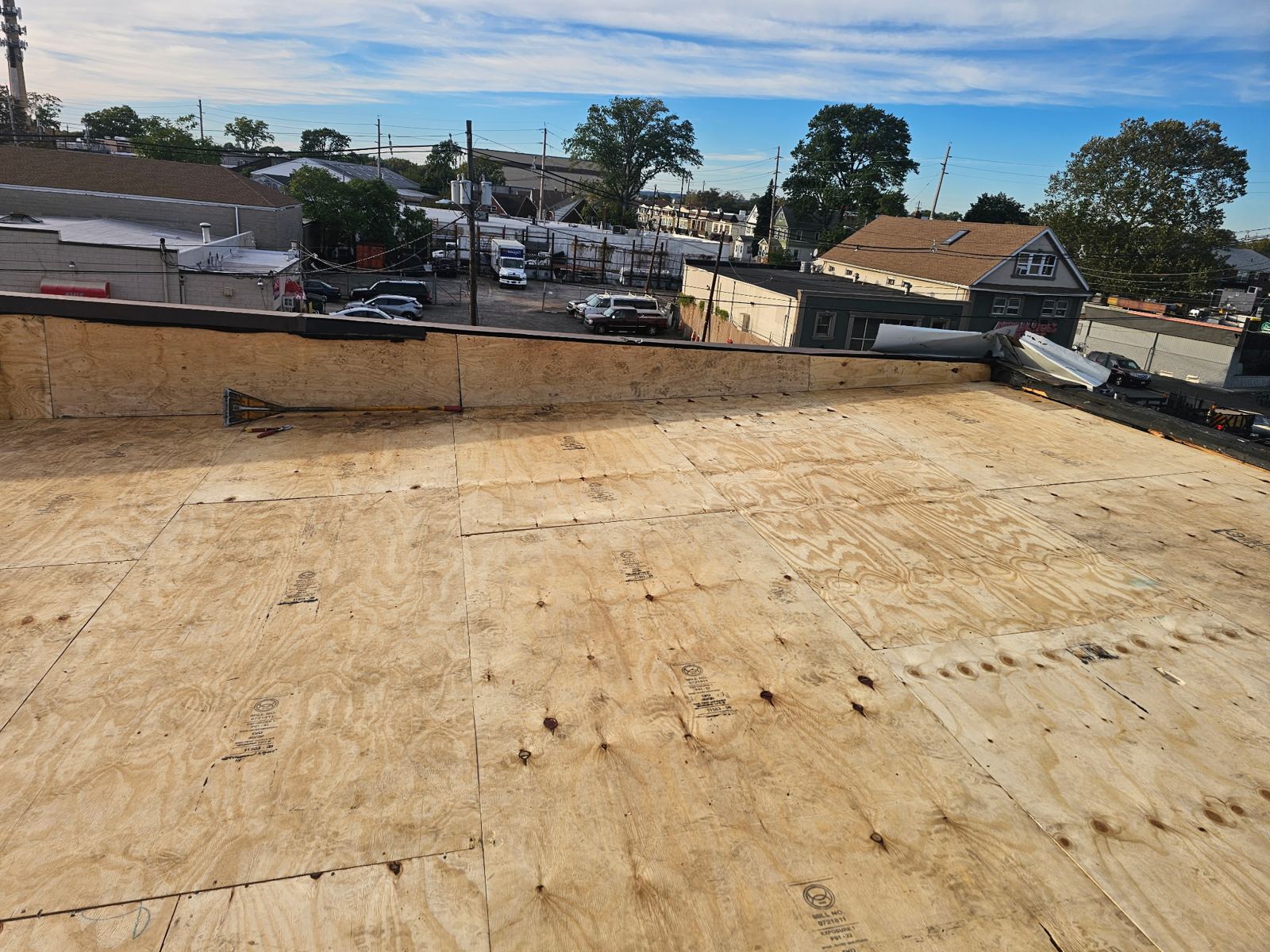
Wooden roof decking forms the foundation for any new covering system. In Ocean City, ocean humidity and leaking trim allow salt spray to penetrate under shingles, degrading CDX plywood and tongue-and-groove boards over time. During a roof replacement, damaged or delaminated sheets of plywood must be cut out and replaced with matching panel thickness to ensure a uniform substrate. Soft or flexible decking panels compromise fastener retention, making shingles far more susceptible to wind uplift during storm events.
Proper re-fastening of sound decking to structural roof rafters takes place before installing new underlayment. Ring-shank nails or specialized screws are used to secure sheathing edges against heavy wind pressures common to coastal Cape May County. Reinforcing the deck structure prevents panel movement and provides a smooth surface for synthetic underlayment application.
- Replacement of water-softened, rotted, or delaminated plywood sheathing panels.
- Application of ring-shank fasteners along perimeter framing to raise uplift resistance.
- Leveling of uneven decking joints to avoid ridging beneath fresh shingle courses.
Attic Ventilation and Thermal Control for Barrier-Island Homes
Balanced attic ventilation plays a key role in managing moisture and regulating deck temperatures in coastal New Jersey structures. Intense sunlight combined with high coastal humidity creates severe heat buildup inside unvented attic spaces. Excessive heat bakes shingle underbellies, causing premature shingle degradation and cupping. Moisture rising from living quarters condenses against the underside of cool roof decks, accelerating wood rot and mold development.
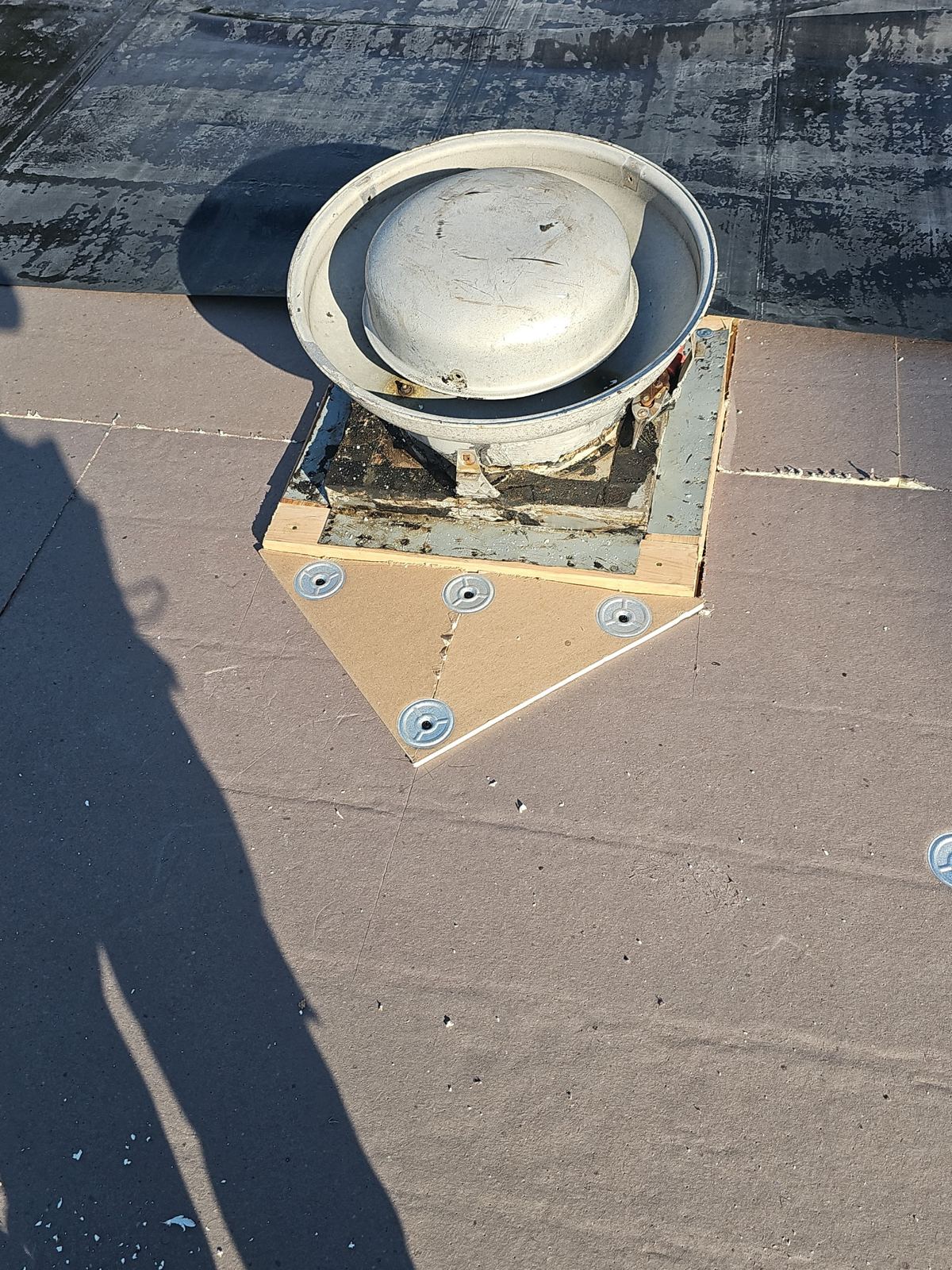
During a roof replacement, ventilation calculations establish the precise balance between continuous ridge exhaust vents and eave soffit intake vents. Installing low-profile continuous ridge vents allows hot air and water vapor to escape continuously along the roof ridge. Baffles positioned between rafters prevent insulation from blocking eave airflow, maintaining consistent ventilation that complies with manufacturer guidelines.
- Installation of continuous ridge vents rated for high wind and wind-driven rain resistance.
- Placement of rafter intake baffles to keep soffit airflow channels clear of attic insulation.
- Moisture control measures engineered to prevent structural condensation inside humid coastal homes.
Shingle and Low-Slope Material Selections for Ocean City Roofs
Selecting roofing materials for a coastal property requires balancing wind ratings, UV resistance, and corrosion protection. Because barrier-island salt air and wind cause flat roofs, metal trim, and fasteners to corrode first, standard galvanized fasteners and light gauge trim deteriorate rapidly. Stainless steel nails, heavy-gauge coated aluminum drip edges, and custom-formed flashing details are critical components for high-exposure environments.
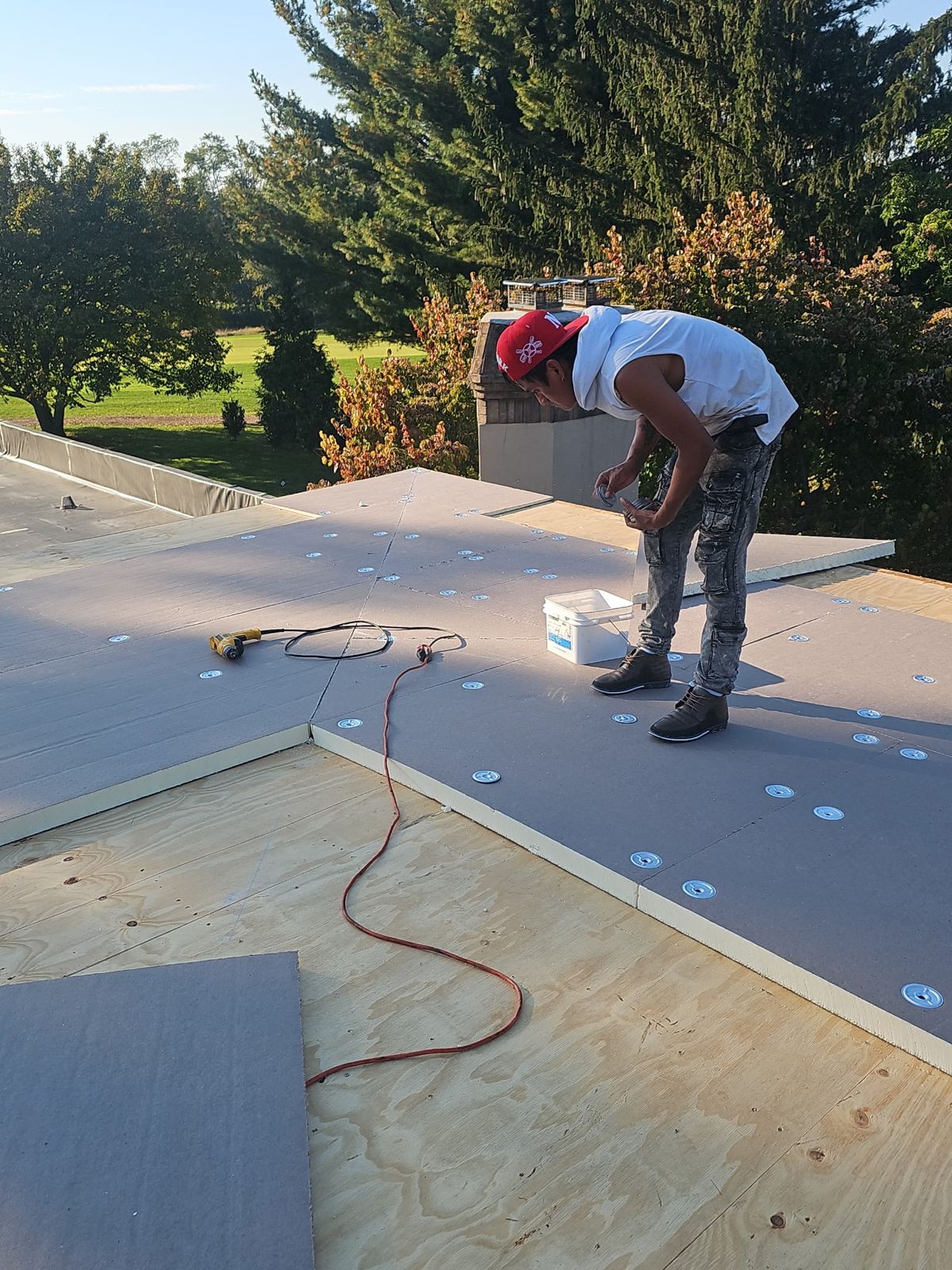
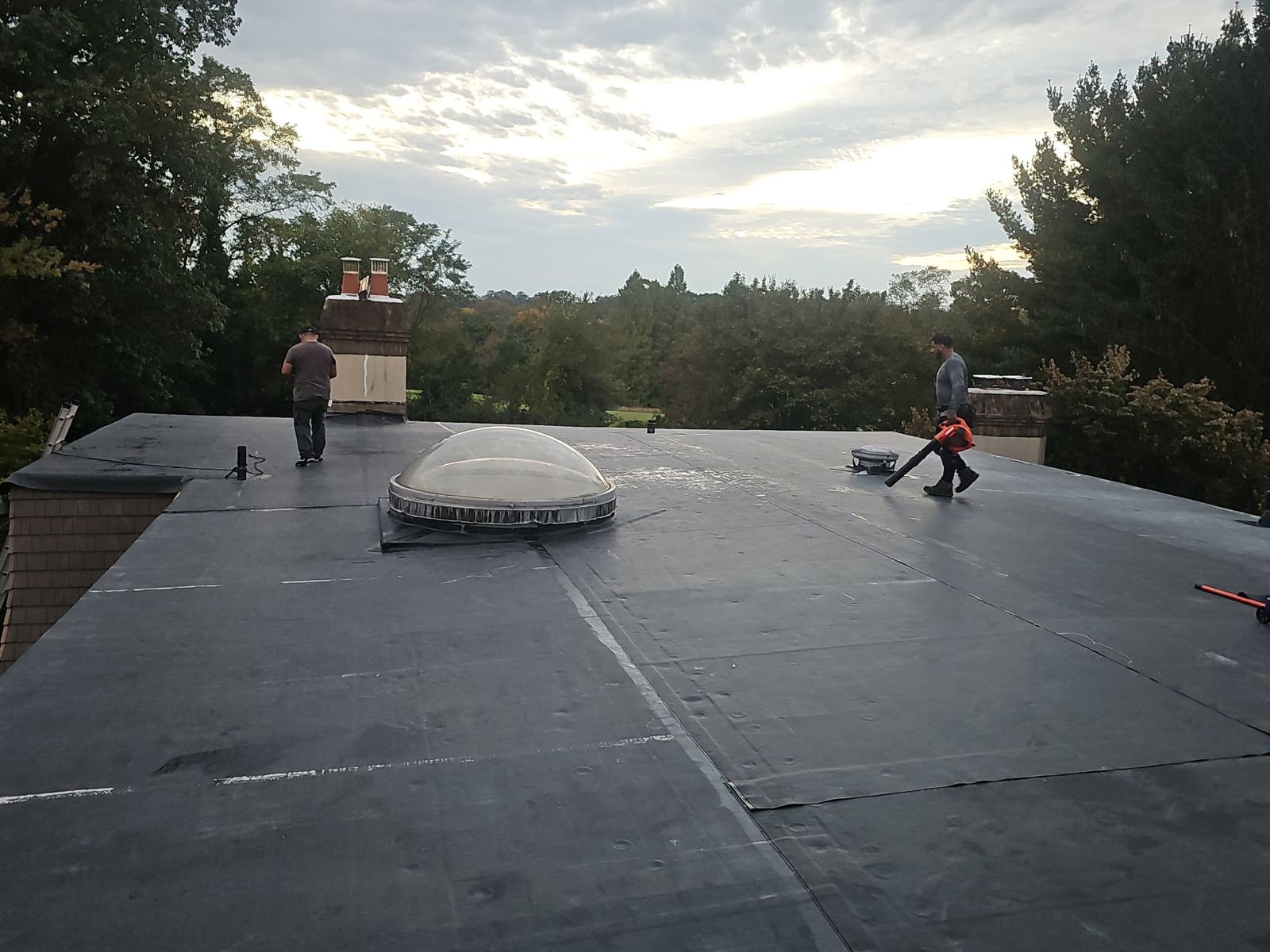
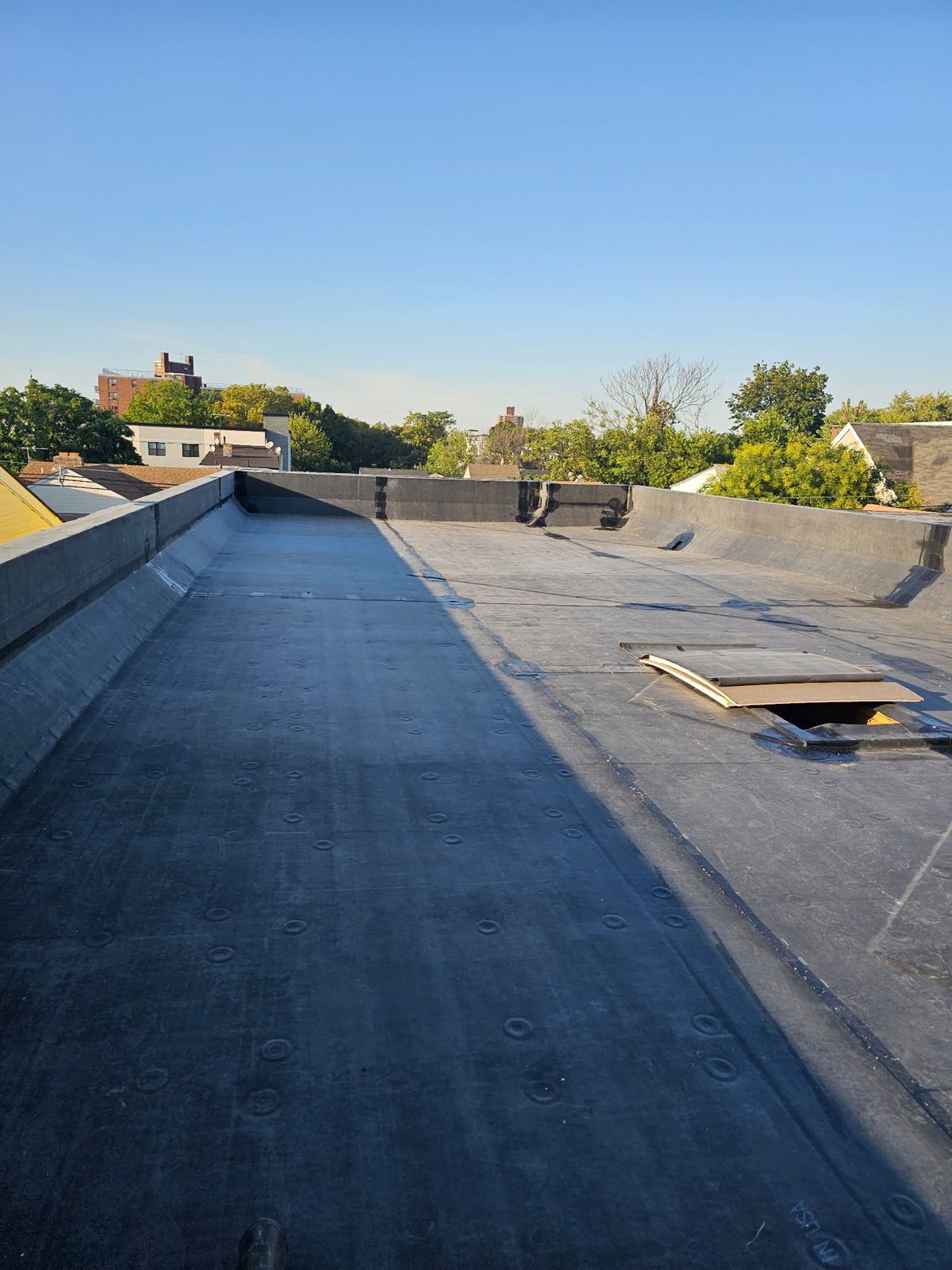
Architectural asphalt shingles engineered for elevated wind speeds provide reliable protection on sloped roofs. For low-slope additions, porches, and flat roofs common on Ocean City properties, single-ply membranes such as EPDM or TPO, alongside self-adhered modified bitumen systems, replace standard shingles. These low-slope membranes create watertight, heat-welded or chemically bonded barriers that resist standing water and severe wind loads.
- Architectural asphalt shingles featuring high wind ratings and heavy-duty sealant strips.
- Single-ply EPDM, TPO, or modified bitumen membrane systems for low-slope and flat roof areas.
- Stainless steel fasteners and corrosion-resistant coated metals tailored to coastal air.
Project Timeline, Property Protection, and Disruption Management
A full roof replacement generates significant debris and requires structured jobsite management to protect landscaping, driveways, and adjacent homes. Most residential projects in Ocean City finish within one to two days, depending on structural repair needs and roof complexity. Crews set up heavy tarps and protective plywood panels around building foundations, safeguarding decks, siding, and windows before tear-off operations begin.
Torn-off materials drop directly into contained dumpsters positioned to avoid cluttering narrow coastal driveways. Following the installation of decking repairs, underlayment, drip edges, low-slope membranes, and shingles, magnetic sweepers run across the lawn and driveway to collect dropped nails and metal scraps. A final walking inspection ensures flashing details, ridge caps, and roof terminations meet technical standards.
- Plywood boards and heavy tarps positioned around perimeters to protect siding and decks.
- Old materials moved directly from the roof into jobsite dumpsters.
- Magnetic sweeping across driveways, walkways, and yards to remove metal fasteners.
Ocean City questions we get asked
- Why is a full tear-off required instead of an overlay for an Ocean City roof replacement?
- Overlaying new shingles over an existing layer covers up structural wood rot and rusted fasteners. In coastal environments like Ocean City, barrier-island salt air and wind cause flat roofs, metal trim, and fasteners to corrode first. A complete tear-off exposes the underlying wood deck, allowing technical repairs to rotted plywood, replacement of corroded flashings, and direct adhesion of waterproof ice and water membranes.
- How do barrier-island salt air and wind influence material selection in Ocean City?
- Salt air accelerates metal oxidation while sea winds generate severe uplift forces along roof perimeters. Standard galvanized nails and light metal trims rust prematurely under constant salt spray. A long-lasting roof replacement in Ocean City uses stainless steel fasteners, heavy coated aluminum trim, synthetic underlayments, and shingles engineered for high wind resistance.
- What solutions are used for low-slope and flat roof sections in Ocean City?
- Sloped asphalt shingles cannot shed water properly on low-slope surfaces, leading to leaks at overlap joints. Low-slope and flat roofs in Ocean City utilize single-ply membranes like EPDM or TPO, or multi-ply modified bitumen systems. These membrane systems are fully adhered or heat-welded to create continuous waterproof seals capable of standing up to pooled water and wind-driven rain.
- How are storm damage insurance claims handled during the replacement process?
- Storm Guard Roofing coordinates directly with insurance adjusters to evaluate storm damage, including wind uplift, missing shingles, and water intrusion. With over 25 years of experience, our team provides detailed line-item repair scopes, damage documentation, and material specifications to assist property owners through every stage of the insurance claim process.
More in Ocean City
Call (201) 403-0024 for a Ocean City inspection, or send the form.