Warren Township · Somerset County
Roof Replacement Services in Warren Township, NJ
Replacing a residential roof in Warren Township requires careful technical evaluation due to the region's specific geography and architectural variety. Properties located along the Second Watchung Mountain ridge, Mount Bethel, and Washington Valley often feature wooded hilltop lots with steep pitches, long valleys, and difficult staging. These environmental conditions expose roofs to persistent shade, heavy leaf buildup, high winds, and severe winter ice damming. Storm Guard Roofing provides dedicated roof replacement services designed specifically for these structural and environmental challenges. With over 25 years of experience, our family-owned company is fully licensed and insured in New Jersey. We handle complete roof tear-offs, structural decking repairs, custom intake and exhaust ventilation upgrades, and specialized steep-slope material installations. We also provide 24/7 emergency response for severe storm damage and manage the entire insurance claims process from initial inspection through municipal permit sign-off. Property owners can reach our project team directly at (201) 403-0024.
Tear-Off vs. Overlay: Structural Integrity on Warren Township Properties
A complete tear-off is the standard requirement for long-term structural integrity on Warren Township homes. While New Jersey building code allows a maximum of two roof layers in certain residential applications, applying new shingles over existing materials creates significant technical liabilities. In wooded hilltop areas where moisture retention and heavy leaf accumulation are common, overlaying covers structural decay, rotten decking, and failed underlayment without resolving the root cause of water intrusion. Overlays also double the dead load on roof rafters, which increases risk during heavy Somerset County winter snowfalls.
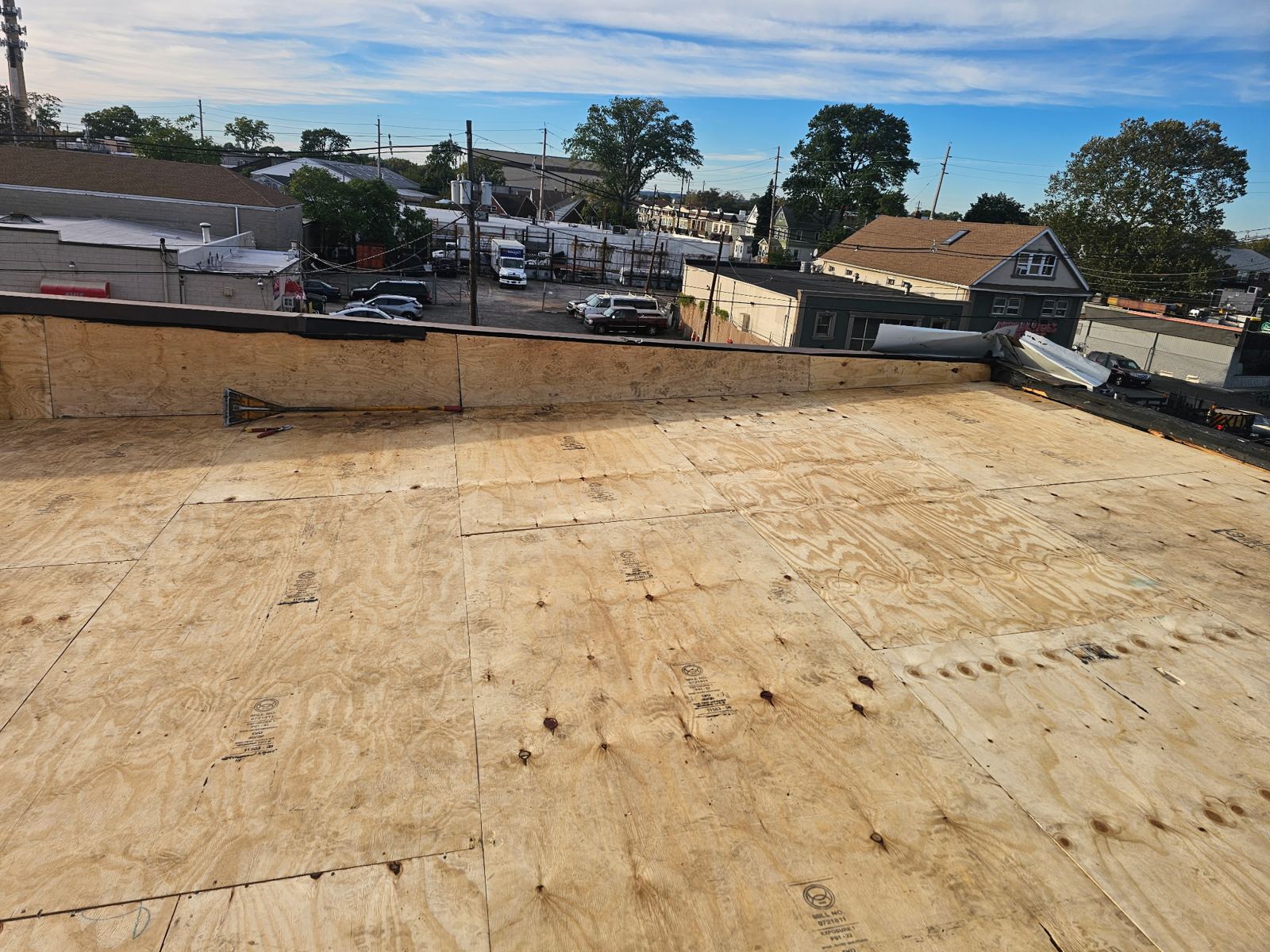
A complete tear-off exposes the raw plywood or tongue-and-groove decking, allowing for a comprehensive inspection of the entire sub-structure. Stripping the roof to the sheathing is the only method that permits the installation of self-adhered ice and water shield membranes directly onto the wood substrate along eaves, valleys, sidewalls, and chimney flashing zones.
- Identifies hidden dry rot, water staining, and structural sagging across steep rafter runs.
- Ensures compliance with New Jersey Uniform Construction Code structural load requirements.
- Enables proper installation of leak-barrier membranes in critical freeze-thaw zones.
- Creates a flat, stable surface necessary for full manufacturer wind-resistance ratings.
Decking Inspection, Repair, and Ventilation Engineering
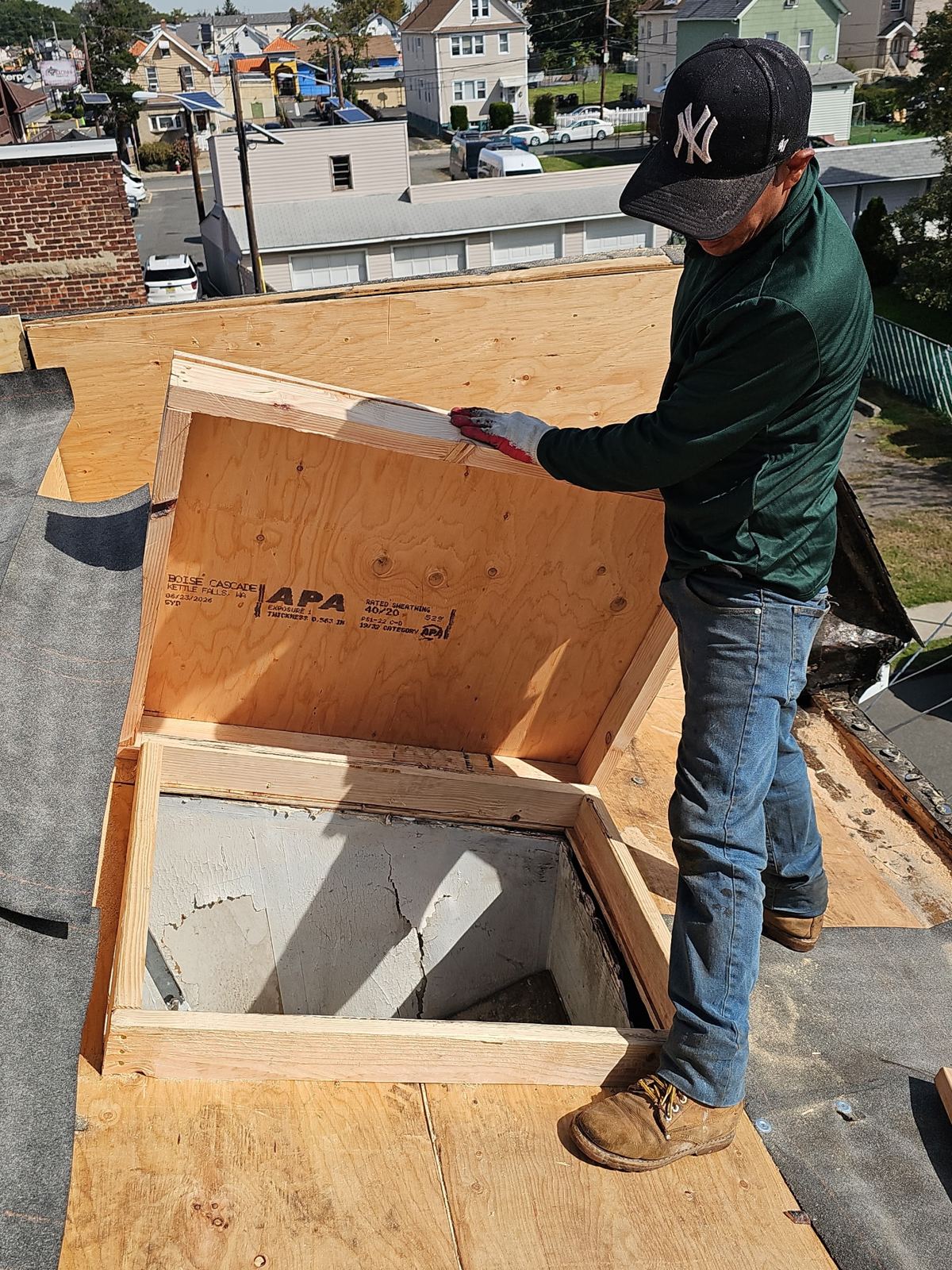
The dense tree canopies surrounding many Warren Township homes reduce sunlight exposure, trapping moisture against roof surfaces and accelerating deck rot. During every replacement project, existing sheathing is evaluated for delamination, soft spots, and fastener pull-out resistance. Compromised CDX plywood or oriented strand board (OSB) panels are cut out and replaced with matching thickness sheathing to maintain structural continuity across the roof deck.
Proper attic ventilation is equally critical to prevent premature shingle deterioration and interior moisture buildup. Many older homes along Mountain Boulevard or King George Road lack adequate balanced ventilation systems. Without proper balance between soffit intake and ridge exhaust, heat and humidity accumulate in the attic cavity, causing shingle blistering in summer and destructive ice dams in winter. We calculate net free ventilating area (NFVA) based on attic square footage to design balanced intake and exhaust airflow systems.
- Replacement of rotted or water-damaged sheathing with code-compliant exterior-grade plywood.
- Installation of continuous ridge vents combined with vented soffits for balanced airflow.
- Sizing of net free vent area following 1:150 or 1:300 structural ventilation ratios.
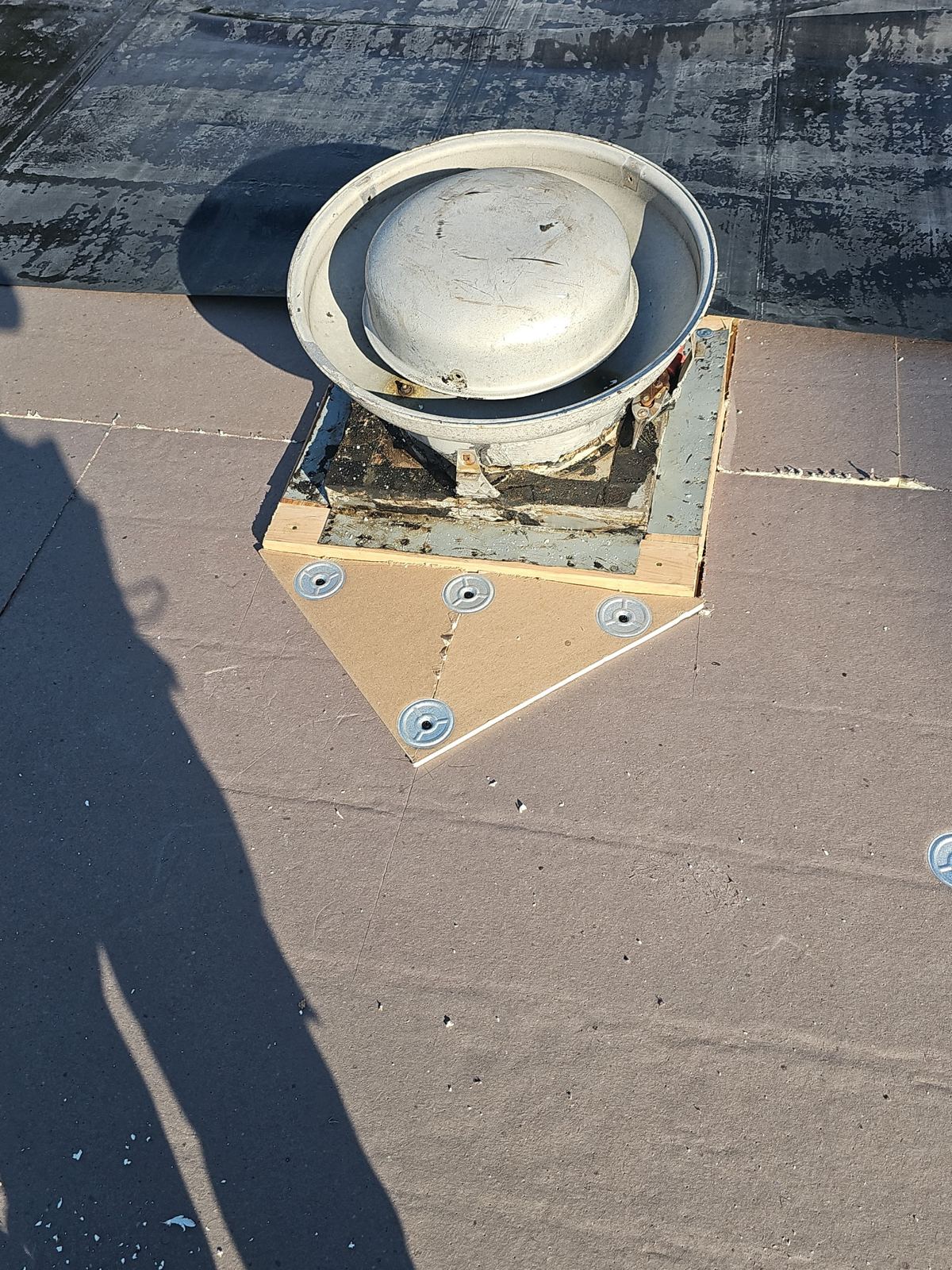
- Application of high-temperature underlayments around chimneys, pipe boots, and skylights.
Material Selection: Steep-Pitched Shingles and Low-Slope Systems
Warren Township residential architecture ranges from custom modern estates to traditional colonials and cape cods. These homes frequently feature high-pitched roof lines combined with low-slope rear additions, porch roofs, or dead valleys where water collects. Selecting the correct material for each slope transition is vital for long-term leak prevention.
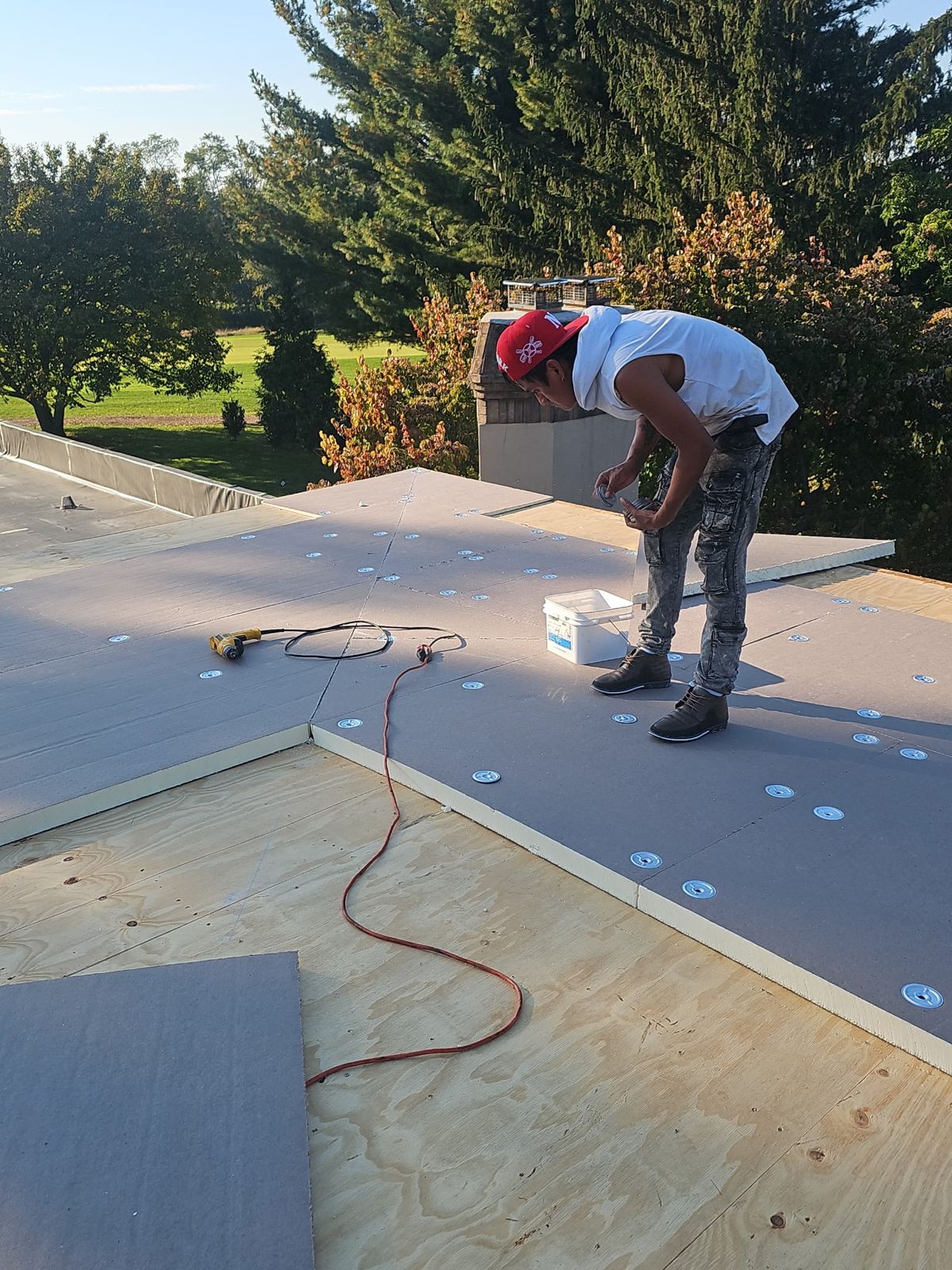
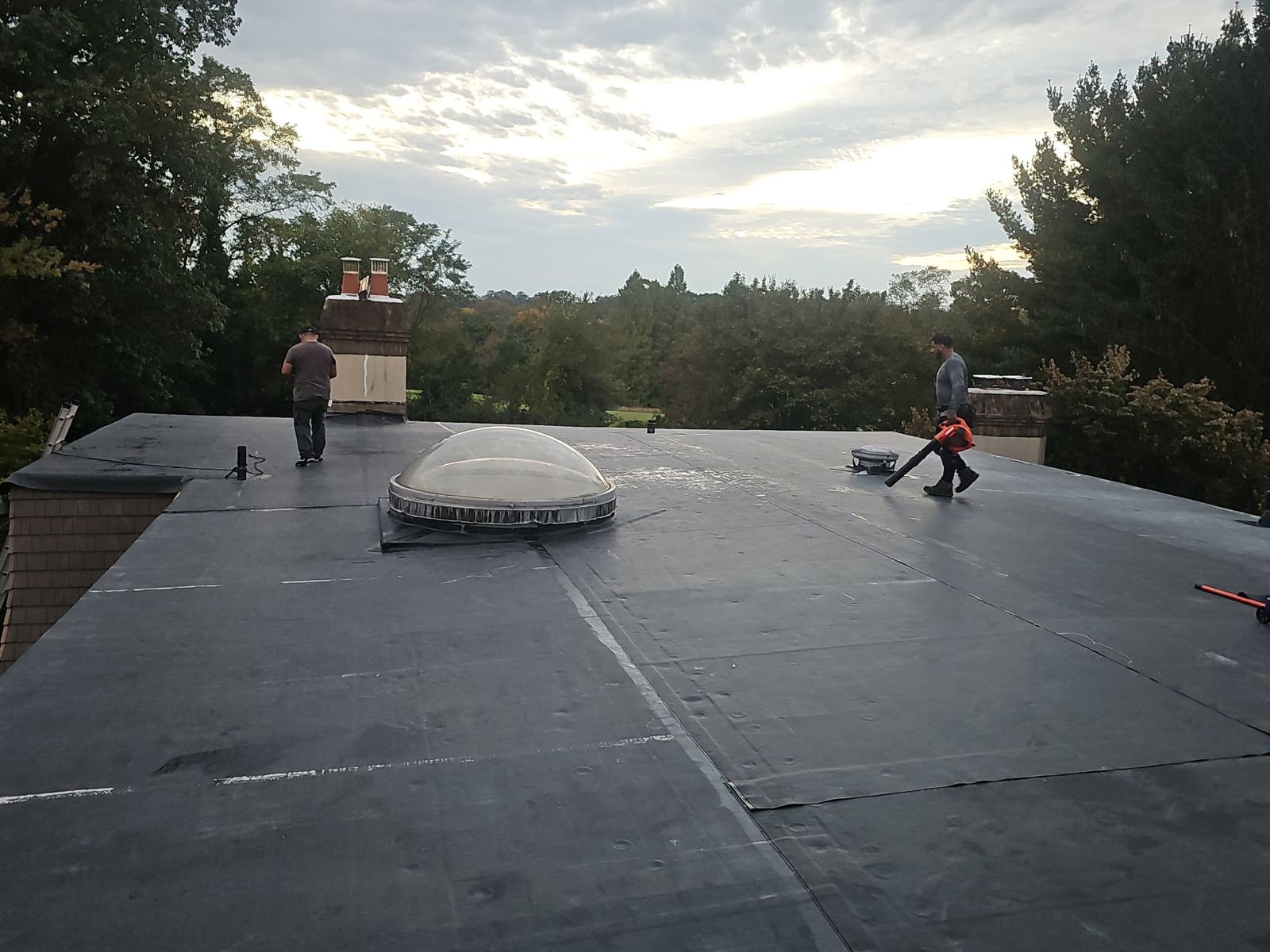
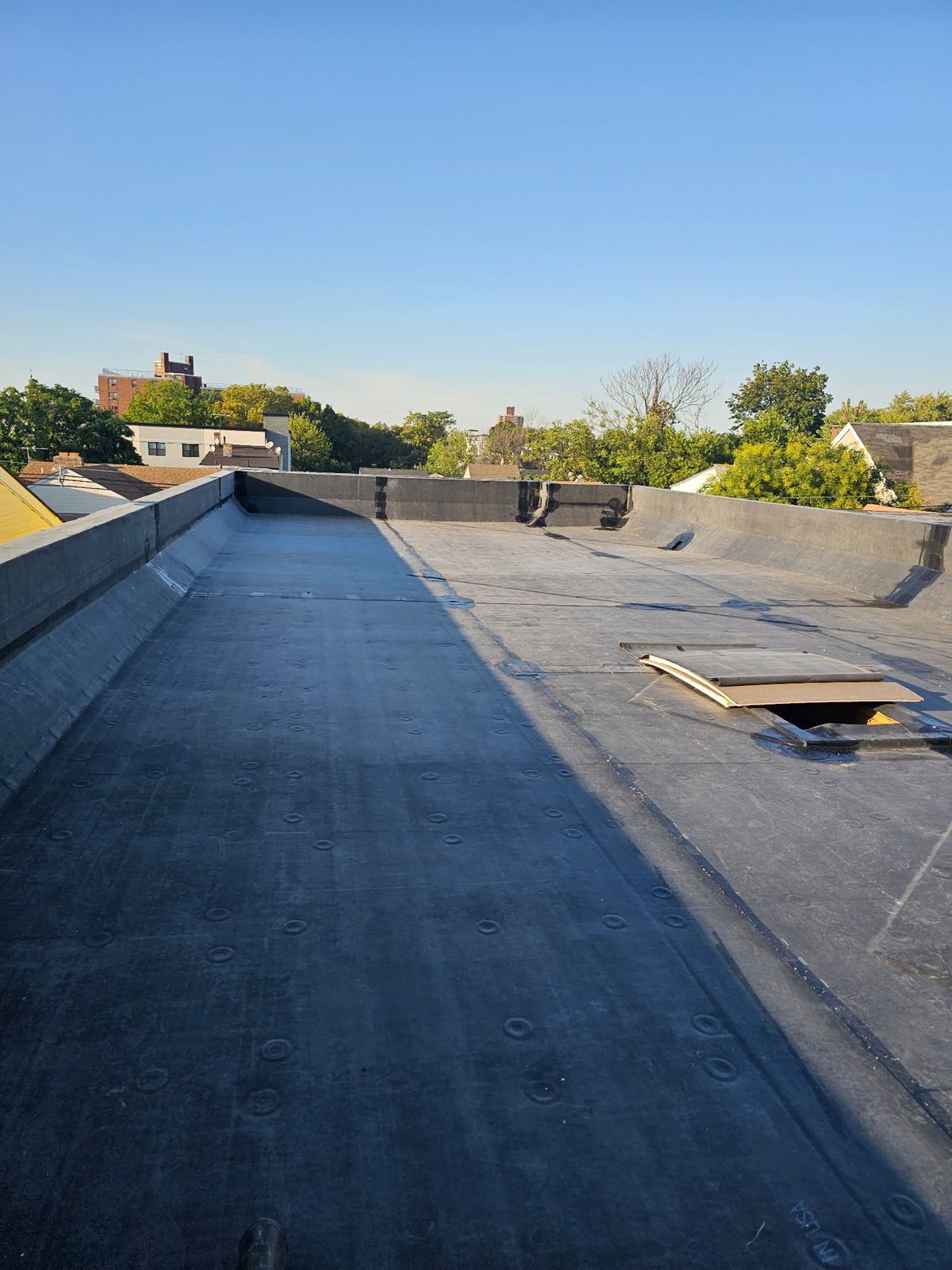
For steep-sloped roofs, heavy-duty architectural asphalt shingles engineered for elevated wind resistance are installed using six-nail mechanical fastening patterns. In valleys where runoff volume is high, metal valley flashing or double-layer ice barrier membrane assemblies are integrated into the shingle field. For roof sections with pitches under 2:12, shingle application is prohibited by building codes. On these low-slope areas, multi-ply modified bitumen or single-ply EPDM and TPO membrane systems are heat-welded or mechanically attached to establish a watertight seal.
- Heavyweight architectural asphalt shingles rated for wind exposure up to 130 mph.
- Open or closed valleys reinforced with heavy-gauge metal flashing and self-adhered ice barriers.
- Single-ply EPDM or TPO membrane systems for low-slope roof transitions and dormer wells.
- Custom-bent lead, copper, or aluminum step flashing for chimney and step-wall intersections.
Staging, Access, and Site Protection on Difficult Lots
Managing a roof replacement on Warren Township's wooded hilltop lots with steep pitches, long valleys, and difficult staging requires specific logistical planning. Narrow, winding driveways, steep elevation changes, and proximity to dense foliage make standard material delivery and waste disposal challenging. Imprecise staging can lead to driveway cracking, lawn damage, or destruction of surrounding landscape features.
Before tear-off begins, perimeter protection protocols are established. Rigging, catch nets, and heavy-duty tarps shield exterior walls, flower beds, and custom decking from falling debris. Specialized equipment, including compact material lifts and rubber-tired trash trailers, is deployed to navigate restricted driveways and uneven terrain. Debris is managed continuously throughout the tear-off phase, and magnetic sweepers are used across all gravel, grass, and paved areas to collect stray fasteners.
- Use of light-footprint trash trailers to protect concrete and asphalt driveways.
- Erection of plywood shielding and catch nets over delicate landscaping and glass enclosures.
- Specialized staging protocols for steep-pitch access along high eave lines.
- Magnetic ground sweeping performed multiple times daily to clear nails and metallic debris.
Timeline, Permitting, and Insurance Claim Processing
A standard residential roof replacement in Warren Township is typically completed within one to three days, depending on square footage, pitch severity, and the extent of structural sheathing repairs required. Storm Guard Roofing coordinates the full permitting procedure with the Warren Township Construction Department in accordance with local building codes. Work is scheduled to minimize disruption to your household while ensuring all site safety guidelines are strictly enforced.
When replacements are necessitated by severe weather—such as hail strikes, falling tree limbs, or high-wind uplift—our team manages the complete insurance claims process. We conduct comprehensive physical inspections, document structural loss with photographic evidence, provide detailed line-item estimates using industry-standard pricing software, and meet directly with insurance adjusters on site. For emergency situations following major storms, our 24/7 response crew secures the structure with emergency tarping before permanent restoration begins.
- Management of municipal permit submission and final inspection scheduling in Warren Township.
- Full line-item claim documentation and adjuster meetings for storm damage restoration.
- 24/7 emergency response for active leaks, tree strikes, and wind blow-offs.
- Structured daily work site cleanup and comprehensive final walkthrough inspections.
Warren Township questions we get asked
- Do I need a building permit for a roof replacement in Warren Township?
- Yes, Warren Township requires a building permit for complete residential roof replacements. Storm Guard Roofing prepares and submits the necessary permit applications to the Warren Township Construction Department, ensures all work complies with the New Jersey Uniform Construction Code, and schedules the required municipal post-installation inspection upon completion.
- How do steep pitches and wooded hilltop lots affect the cost and timeline of a roof replacement?
- Steep pitches, long valleys, and wooded hilltop lots require specialized safety rigging, custom staging, and modified waste management procedures. While these factors add labor time compared to an easily accessible suburban lot, thorough planning ensures most Warren Township residential replacements are completed safely within one to three business days.
- Why is a complete tear-off preferred over an overlay on Warren Township homes?
- A complete tear-off is necessary to inspect the underlying roof deck for rotted sheathing and moisture damage caused by tree shade and ice dams. It also allows for the direct installation of self-adhering ice and water shield membranes along eaves and valleys, which cannot be properly applied during an overlay.
- How does Storm Guard Roofing handle insurance claims for storm-damaged roofs in Warren Township?
- We conduct a thorough inspection to document wind, hail, or tree damage, prepare an itemized repair estimate, and submit the documentation directly to your insurance carrier. Our team meets with the insurance adjuster on site at your Warren Township property to review the scope of work and ensure all necessary replacement components are covered under your policy.
More in Warren Township
Call (201) 403-0024 for a Warren Township inspection, or send the form.