Wayne · Passaic County
Roof Replacement Services in Wayne, Passaic County, NJ
Storm Guard Roofing provides residential roof replacement services across Wayne, New Jersey, and Passaic County. As a family-owned contractor with over 25 years of local field experience, we execute complete roof tear-offs, structural deck restorations, and code-compliant ventilation installations. Our company is fully licensed and insured in New Jersey, handles storm damage insurance claims, and operates a 24/7 emergency response service for acute weather damage. Contact our team at (201) 403-0024 to schedule a site evaluation. Residential properties throughout Wayne—including homes in Packanack Lake, Pines Lake, the Preakness section, and residential corridors along Valley Road and Berdan Avenue—face distinct environmental stress. Many homes sit on heavily wooded lots near the Passaic River, where high humidity, leaf drop, and shade accelerate shingle degradation. These conditions regularly lead to ice-dam-prone eaves during freezing weather cycles and cause aging skylights that leak at the curb to damage interior ceilings. A full replacement clears away compromised layers to install a modern weatherproofing system engineered for North Jersey winters.
Tear-Off vs. Overlay: Engineering for Longevity
Installing new shingles over an existing layer, known as a roof overlay, introduces long-term structural and moisture risks. While building codes in New Jersey permit two layers of asphalt shingles under specific weight limitations, an overlay conceals underlying structural rot, delaminated plywood sheathing, and existing water intrusion paths. Adding a second layer increases the dead load on the roof rafters by 250 to 400 pounds per square (100 square feet). This extra weight puts unnecessary strain on older framing, particularly during heavy Passaic County snowstorms.
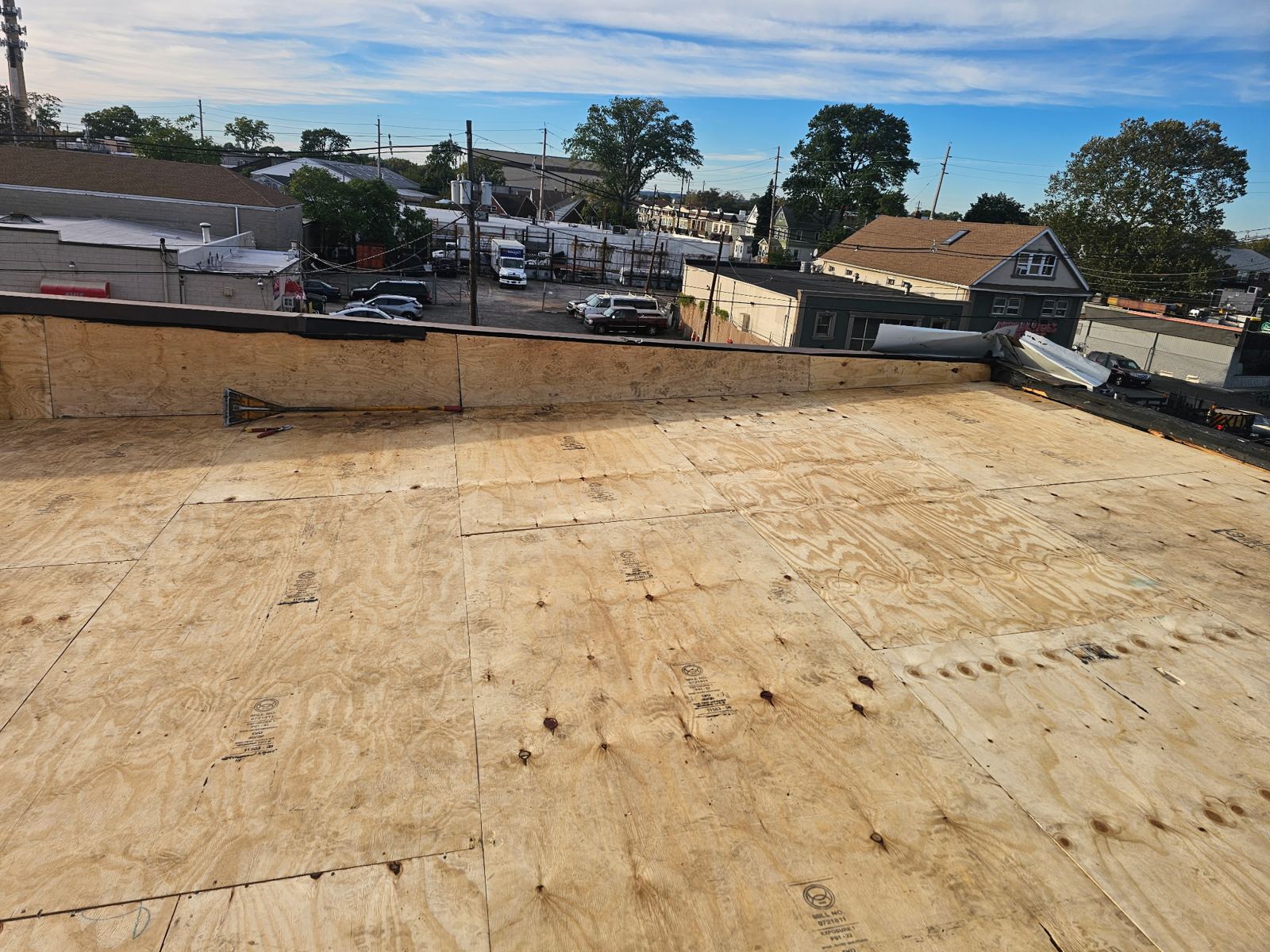
A complete tear-off strips the roof down to the bare wooden deck. This allows us to inspect every square foot of sheathing, secure loose nails, and replace rotted boards before installing new materials. Crucially, a tear-off enables the direct application of self-adhering ice and water shield to the bare wood along eave lines and valleys. Installing an overlay prevents this critical barrier from bonding directly to the deck, leaving the home exposed to water backup from ice dams.
- Eliminates extra weight strain on roof rafters and support trusses during heavy snow loads.
- Exposes water-damaged, soft, or delaminated sheathing for structural repair prior to shingle installation.
- Allows ice and water shield membranes to bond directly to the clean wooden decking as required by building codes.
- Preserves full manufacturer wind and weather warranties by applying shingles over a flat, smooth substrate.
Decking Inspections and Attic Ventilation System Upgrades
The structural integrity of a roof replacement depends on the condition of the underlying wooden deck. Homes situated on wooded lots near the Passaic River retain elevated levels of ambient humidity and moisture. Trapped attic moisture combined with dense tree shade causes CDX plywood or wood plank decking to absorb water, leading to ply separation, wood rot, and fungal decay. During the tear-off process, any compromised decking is cut back to the center of adjacent rafters and replaced with exterior-grade CDX plywood or OSB panels matching the original structural thickness.
Proper attic ventilation is equally vital to prevent premature shingle failure and structural deterioration. Inadequate airflow traps summer heat, baking the underside of shingles, while winter condensation fosters mold growth on roof sheathing. We calculate the Net Free Area (NFA) required for your attic space—aiming for a balanced 1:150 ratio between intake and exhaust. We upgrade under-eave soffit vents for intake and install continuous ridge vents or smart vents along peak lines to maintain continuous thermal air circulation.
- Replacement of rotted or delaminated CDX plywood and tongue-and-groove structural sheathing.
- Re-nailing of existing sound decking with ring-shank nails to meet current wind uplift resistance standards.
- Calculation of attic square footage to balance soffit intake vents with continuous ridge exhaust vents.
- Prevention of winter attic condensation that saturates insulation and damages structural roof framing.
Shingle and Low-Slope Material Selections
Selecting appropriate roofing materials requires matching the physical structure of the roof with local weather patterns. For sloped roof sections, heavy-grade fiberglass asphalt architectural shingles provide multi-layered durability and wind uplift resistance up to 130 mph. These dimensional shingles utilize copper-lined granules that inhibit blue-green algae growth—a critical feature for Wayne homes shaded by mature tree canopies near bodies of water like Pines Lake or the Passaic River.
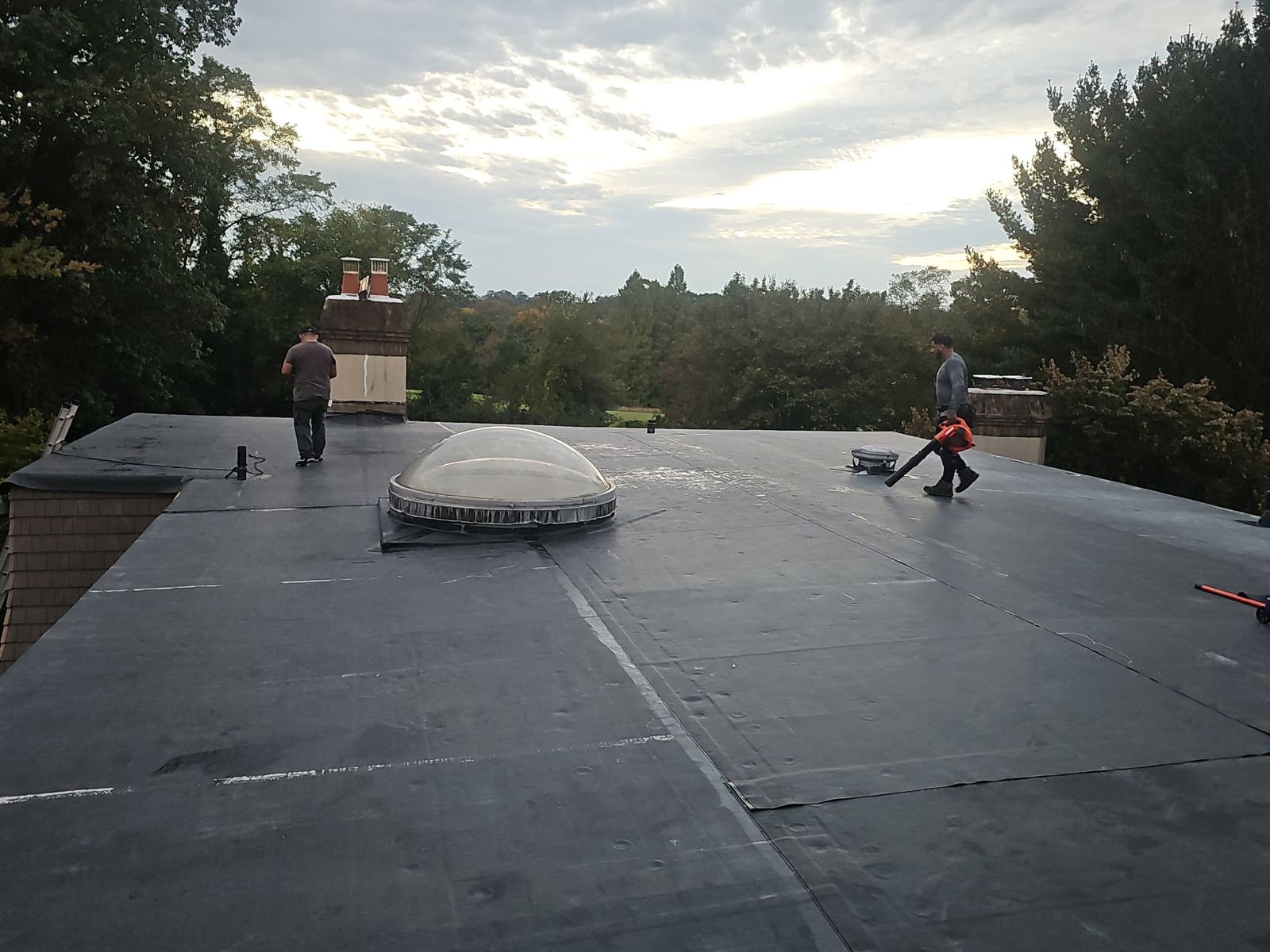
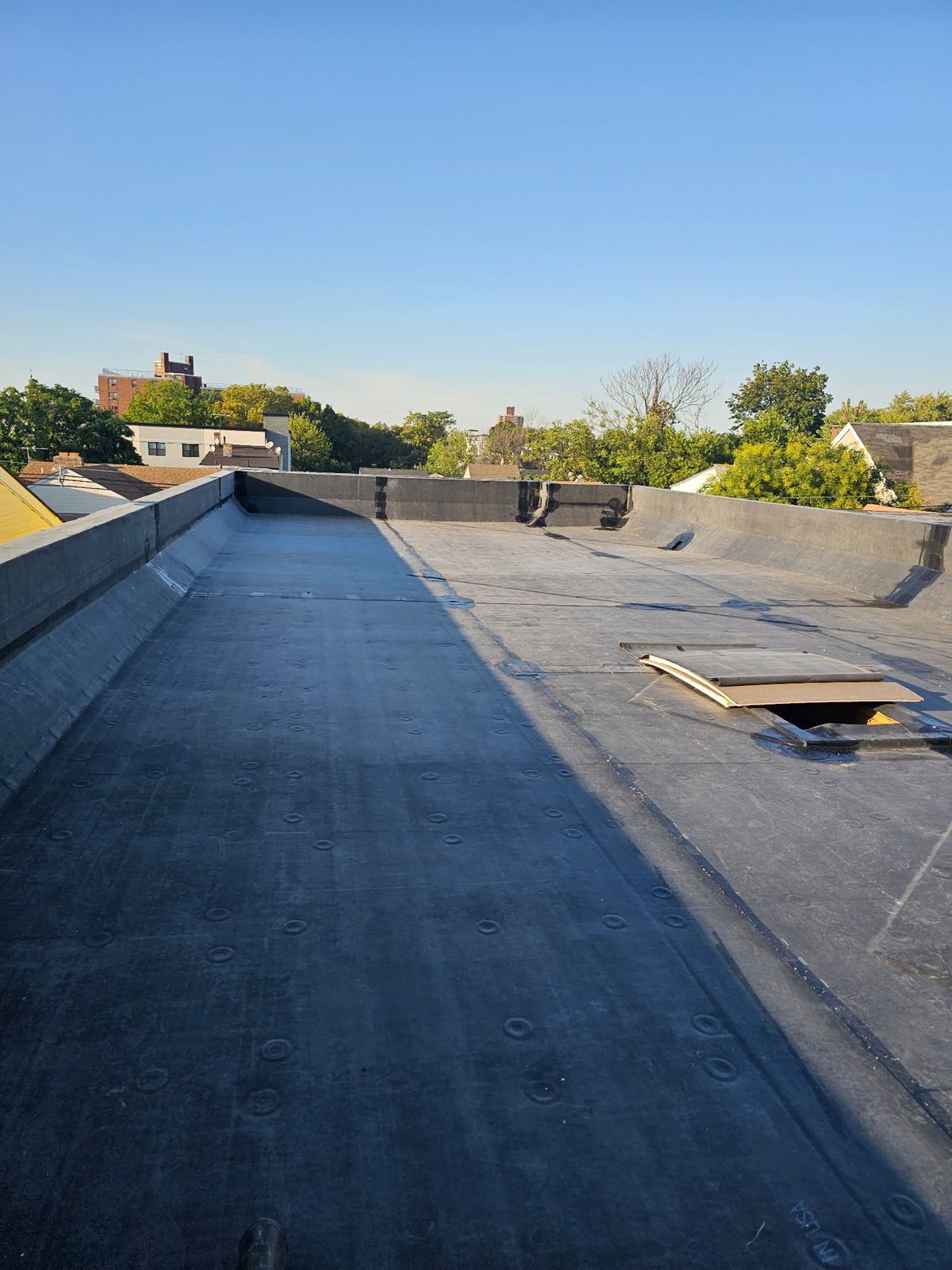
Many residential structures in Wayne feature low-slope transitions, such as porch extensions, rear sunrooms, or dormers with slopes under a 4:12 pitch. Standard asphalt shingles installed on low slopes permit water to drive underneath the laps during heavy wind-driven rain. For these areas, we install dual-layer self-adhered SBS modified bitumen systems or 60-mil EPDM single-ply rubber membranes. These continuous membrane systems feature fully sealed, heat-welded or chemically fused seams that prevent standing water or wind-driven rain from entering the building structure.
- Architectural asphalt shingles rated for Class A fire resistance and high wind uplift protection.
- Algae-resistant mineral granule coatings engineered for high-humidity, heavily shaded residential lots.
- Dual-layer SBS modified bitumen membrane systems applied to roof sections with pitches below 4:12.
- EPDM single-ply rubber systems for custom flat roof dormers, residential additions, and porch transitions.
Ice Dam Protection and Skylight Flashing Modifications
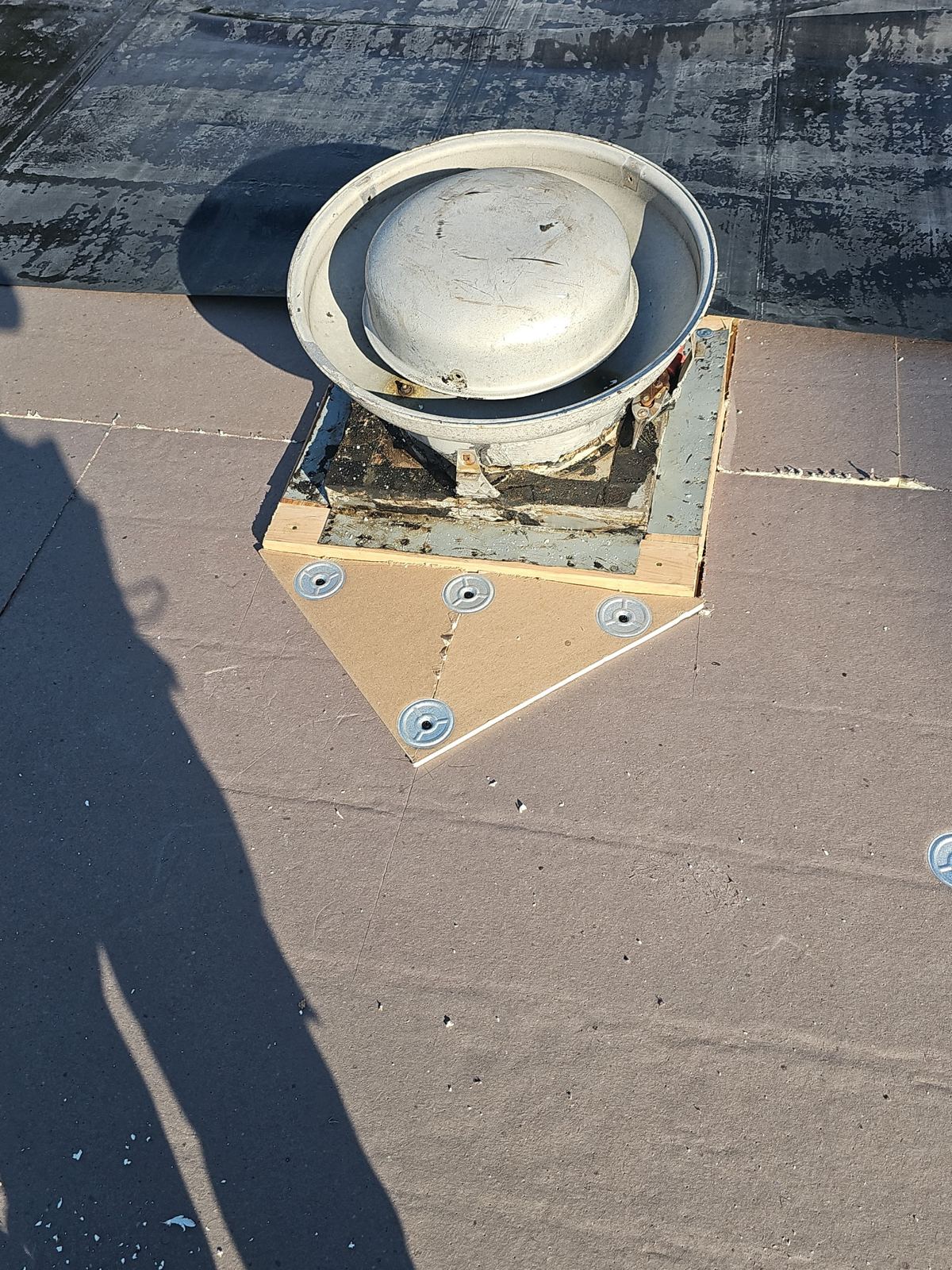
Northern New Jersey winters subject Wayne roofs to freeze-thaw cycles that generate ice dams. Melted snow running down a roof slope refreezes upon reaching unheated eaves and gutters, creating an ice ridge that forces backed-up water underneath shingles. To counteract this, we install high-temperature, polymer-modified self-adhering ice and water shield along all eaves, extending at least 24 inches inside the interior warm wall line. Additional membrane coverage is applied to valleys, rakes, roof-to-wall intersections, and around plumbing vent pipes.
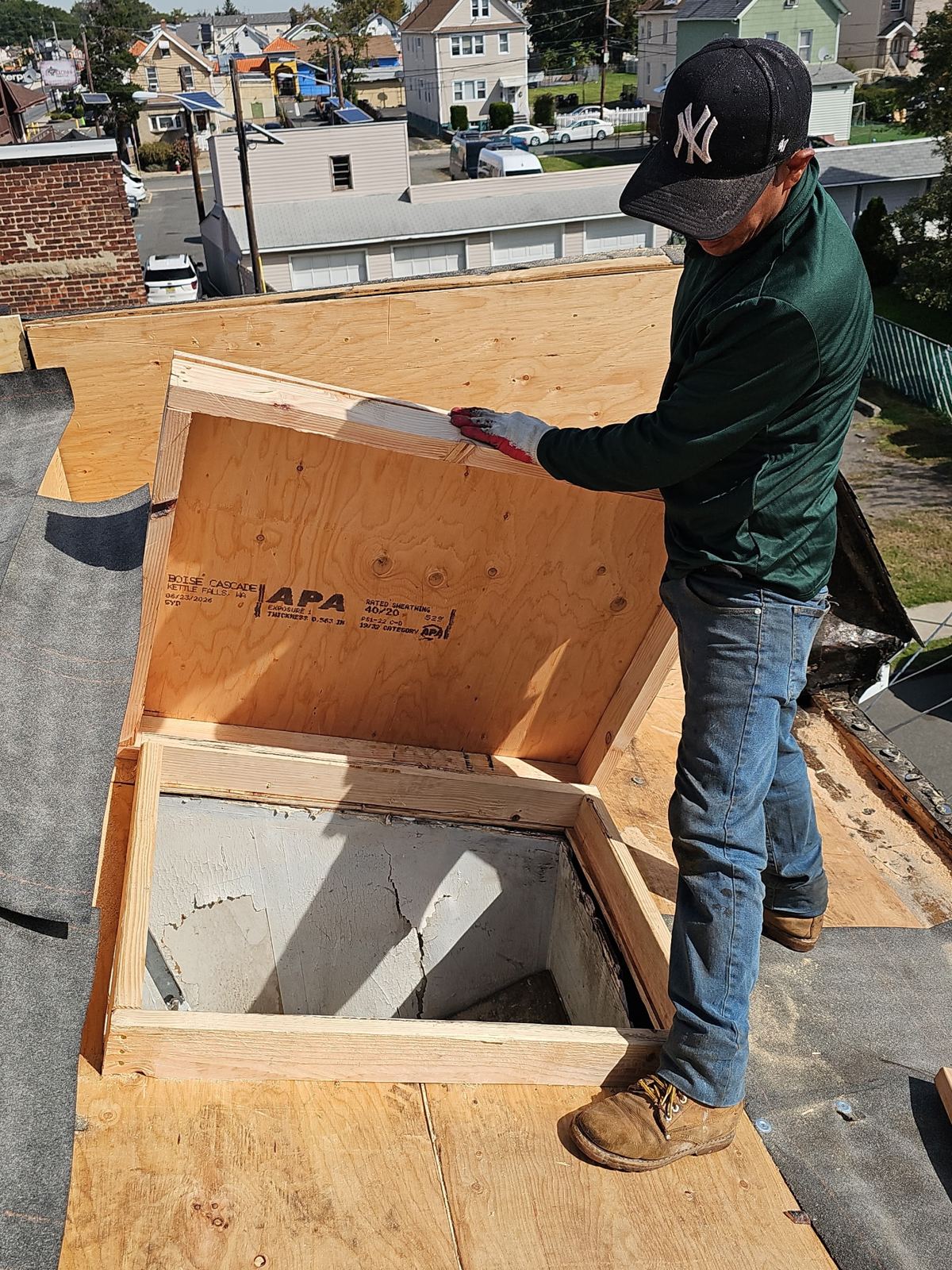
Skylights mounted on curbs are frequent failure points in older roofs, often causing active interior leaks. Constant shade and water runoff from overhanging tree branches degrade aging rubber gaskets, dry-rotted step flashing, and deteriorated wooden curbs. During a roof replacement, we strip the old step flashing, inspect the wooden curb framing, apply self-adhered membrane completely up the exterior walls of the curb, and install new factory-engineered aluminum flashing kits integrated into the shingle field.
- Rubberized asphalt ice and water membranes installed along eaves, valleys, sidewalls, and chimney bases.
- Protection extending at least two feet inward past the interior warm wall to stop ice dam water backups.
- Complete removal of degraded step flashing around skylight curbs and chimney masonry intersections.
- Installation of factory-formed skylight flashing kits with custom corner welds to prevent curb leaks.
Project Timeline, Site Protection, and Wayne Permit Protocols
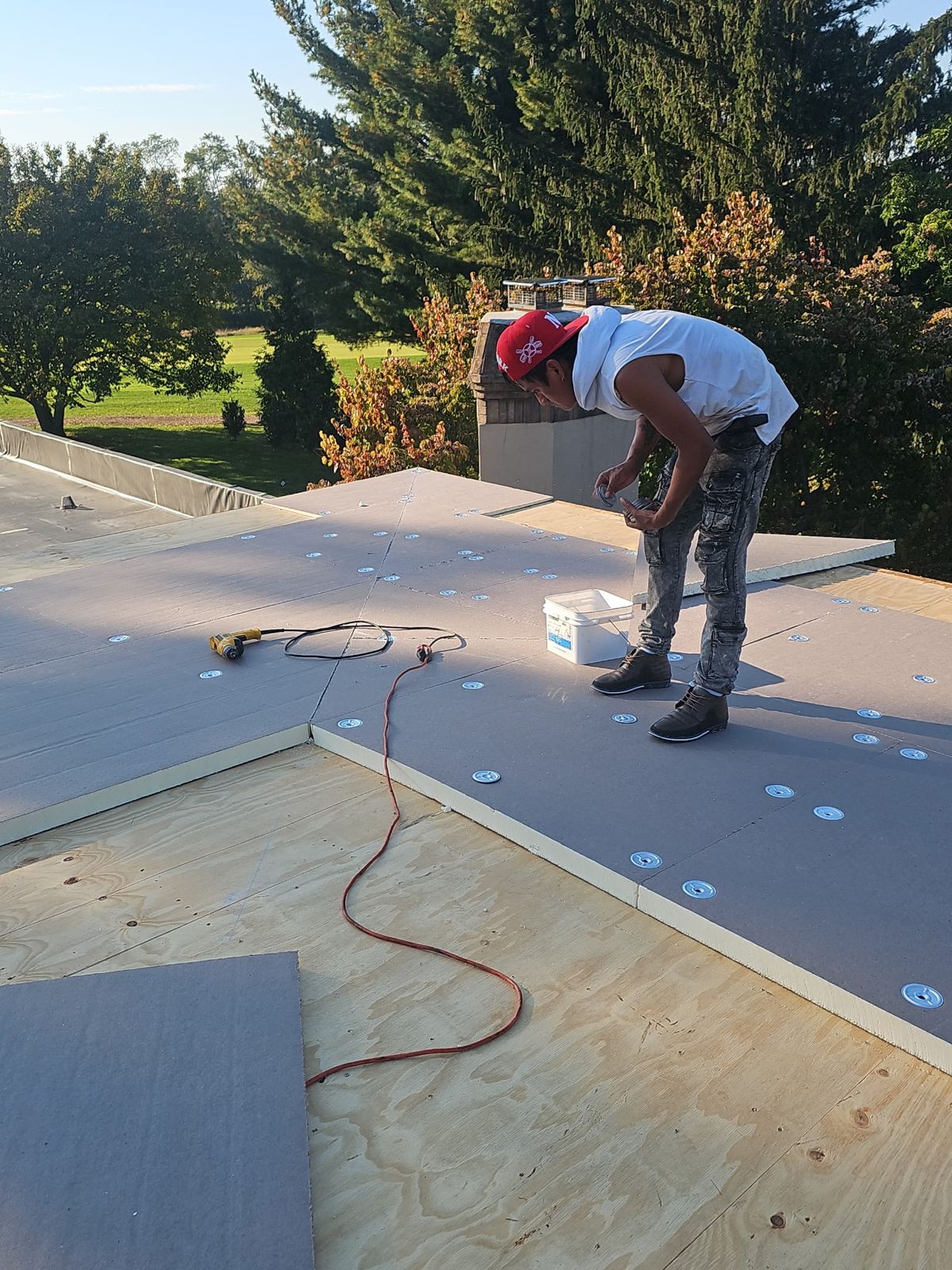
A standard residential roof replacement in Wayne is typically completed in one to two business days, depending on roof square footage, pitch, and structural decking repairs. Before work begins, our crew establishes site protection parameters. We cover exterior siding, air conditioning units, flower beds, and shrubbery with heavy-duty tarps. Plywood sheets are laid over driveway surfaces to protect pavers and asphalt from heavy equipment and dumpster placement.
Storm Guard Roofing secures all required building permits from the Wayne Township Building Department prior to initiating work. Our team handles the application, permit filing, and scheduling of required municipal inspections. Throughout the replacement process, continuous magnetic sweeps are conducted around the property perimeter to collect stray roofing nails and metal debris. Upon completion, all discarded materials are hauled offsite, leaving your driveway and yard clear and safe.
- One to two day average execution time for standard single-family home roof replacements.
- Full physical protection of landscaping, siding, decks, and driveway surfaces during tear-off.
- Coordination and management of Wayne Township building permits and municipal building inspections.
- Multiple rolling magnetic sweeps performed across lawn and driveway areas to gather all metal fasteners.
Wayne questions we get asked
- Do I need a building permit for a roof replacement in Wayne, NJ?
- Yes. Wayne Township requires a building permit for full roof replacements. Storm Guard Roofing prepares all paperwork, submits the permit application to the local municipal building department, pays required fees, and coordinates the final township inspection upon project completion.
- How do wooded lots near the Passaic River affect roof material selection?
- Properties near the Passaic River experience higher ambient humidity and prolonged shade. We recommend architectural shingles treated with copper granules to prevent algae staining, paired with enhanced intake and exhaust ventilation to prevent attic moisture accumulation.
- How do you handle skylights that leak at the curb during a roof replacement?
- During replacement, we strip the old roofing down to the curb, inspect and replace any rotted wooden curb framing, wrap the curb with self-adhering ice and water shield, and install a custom or factory-matched flashing kit that integrates with the new shingle system.
- Will Storm Guard Roofing assist with storm damage insurance claims in Wayne?
- Yes. If your roof replacement is triggered by wind, hail, or fallen tree limbs, we provide detailed technical assessments, itemized scope documentation, and meet directly with your insurance adjuster to help process your claim.
More in Wayne
Call (201) 403-0024 for a Wayne inspection, or send the form.