Bound Brook · Somerset County
Bound Brook Roofing Inspections, Repairs, and Replacements
Storm Guard Roofing has served New Jersey homeowners for over 25 years as a family owned, licensed, and insured business. We provide complete residential roofing services, storm damage restoration, and 24/7 emergency response across Somerset County. You can reach our office directly at (201) 403-0024. Bound Brook features distinct residential architecture that requires specific technical expertise. Much of the local building stock consists of flood-history borough housing characterized by steep main roof pitches, attached porch roofs, and rear flat sections. Each structural component demands precise installation methods to maintain water tightness during severe weather. Working with a qualified roofing contractor ensures that every plane, valley, transition, and low-slope assembly on your home meets current New Jersey construction standards.
Roofing Inspection Requirements for Bound Brook Properties
A thorough evaluation of a house in Bound Brook must account for the mixed geometry typical of the borough housing stock. Steep roof slopes require careful inspection of shingle adhesion, underlayment condition, and flashings around chimneys and sidewalls. Water draining from a steep main roof often cascades directly onto lower porch roofs or transitions into rear flat sections. These transition points represent primary risk areas for water intrusion if flashings are incorrectly installed or degraded.
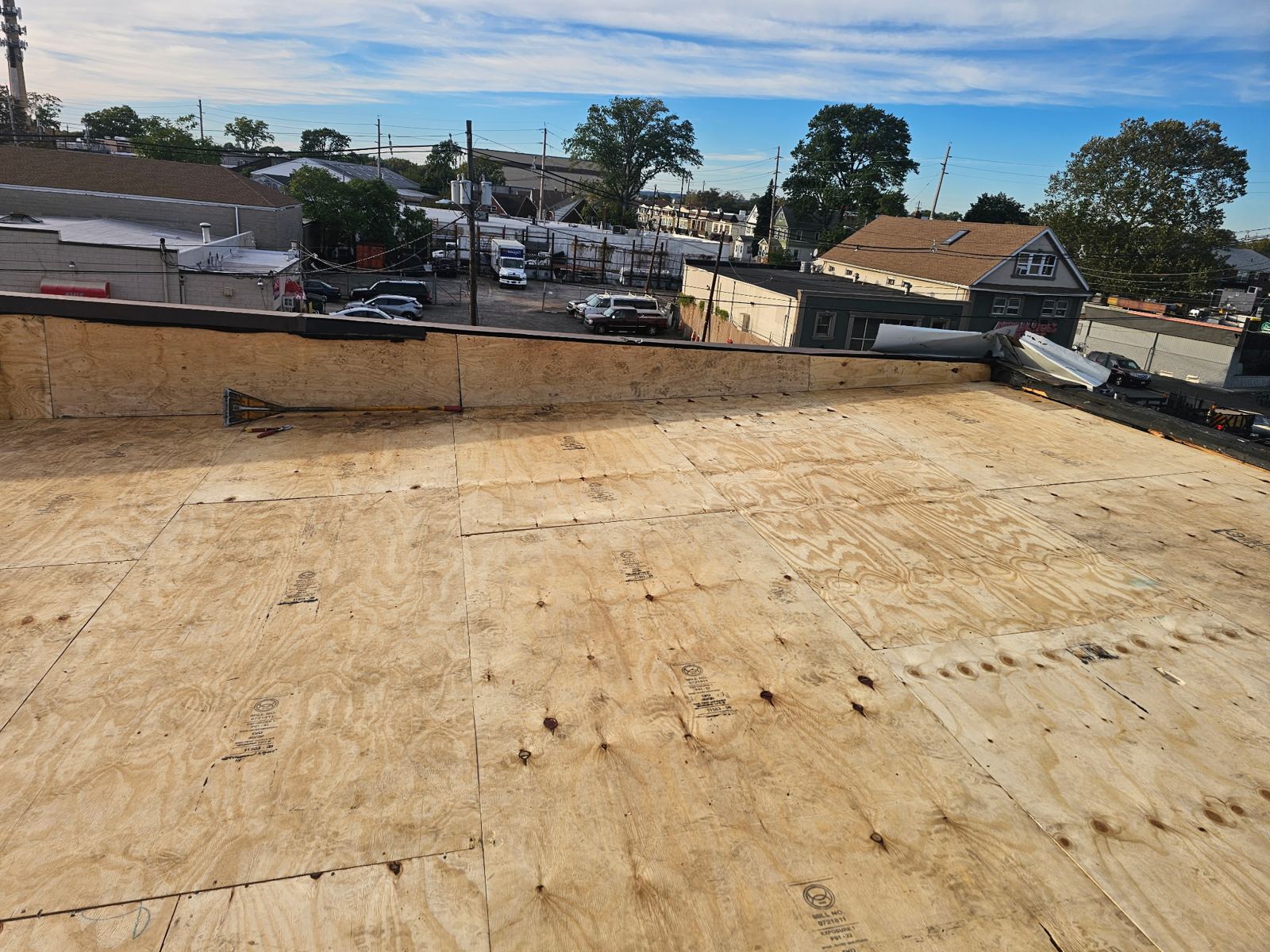
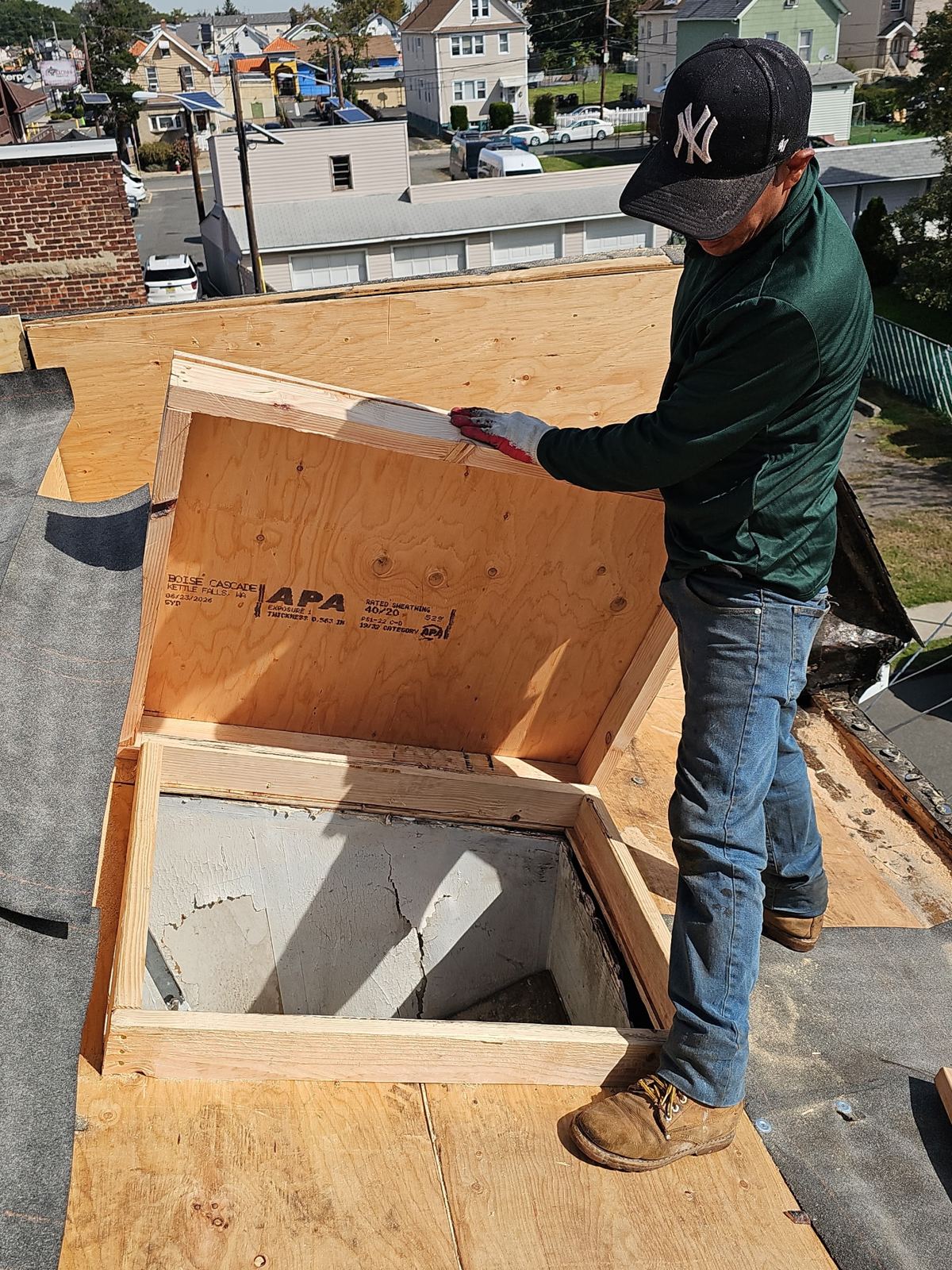
During an inspection, a roofing contractor evaluates the structural decking beneath all roof surfaces. In older borough homes, plywood or tongue-and-groove planking can suffer from hidden rot caused by historical water penetration or inadequate attic ventilation. We inspect the underside of the deck where accessible, verify ridge vents and soffit intake paths, and measure the remaining service life of existing materials. Flat roof sections at the rear of these structures are checked for ponding water, seam separation, membrane blistering, and core moisture absorption.
- Detailed physical check of steep slopes, porch roofs, and rear flat transitions
- Assessment of flashing integrity around chimneys, sidewalls, and valleys
- Inspection of attic ventilation efficiency and structural roof decking condition
- Evaluation of flat membrane seams, edge details, and drainage pathways
Material Options for Steep Main Roofs and Rear Flat Sections
Selecting the correct roofing materials depends entirely on slope and roof design. Steep main roofs and porch roofs on Bound Brook homes are generally fitted with architectural asphalt shingles. These materials carry wind resistance ratings engineered to withstand northeastern storm conditions. Heavy-duty synthetic underlayments are installed beneath the shingles, accompanied by self-adhering ice and water shield membranes along the eaves, valleys, and around roof penetrations to prevent water backing up.
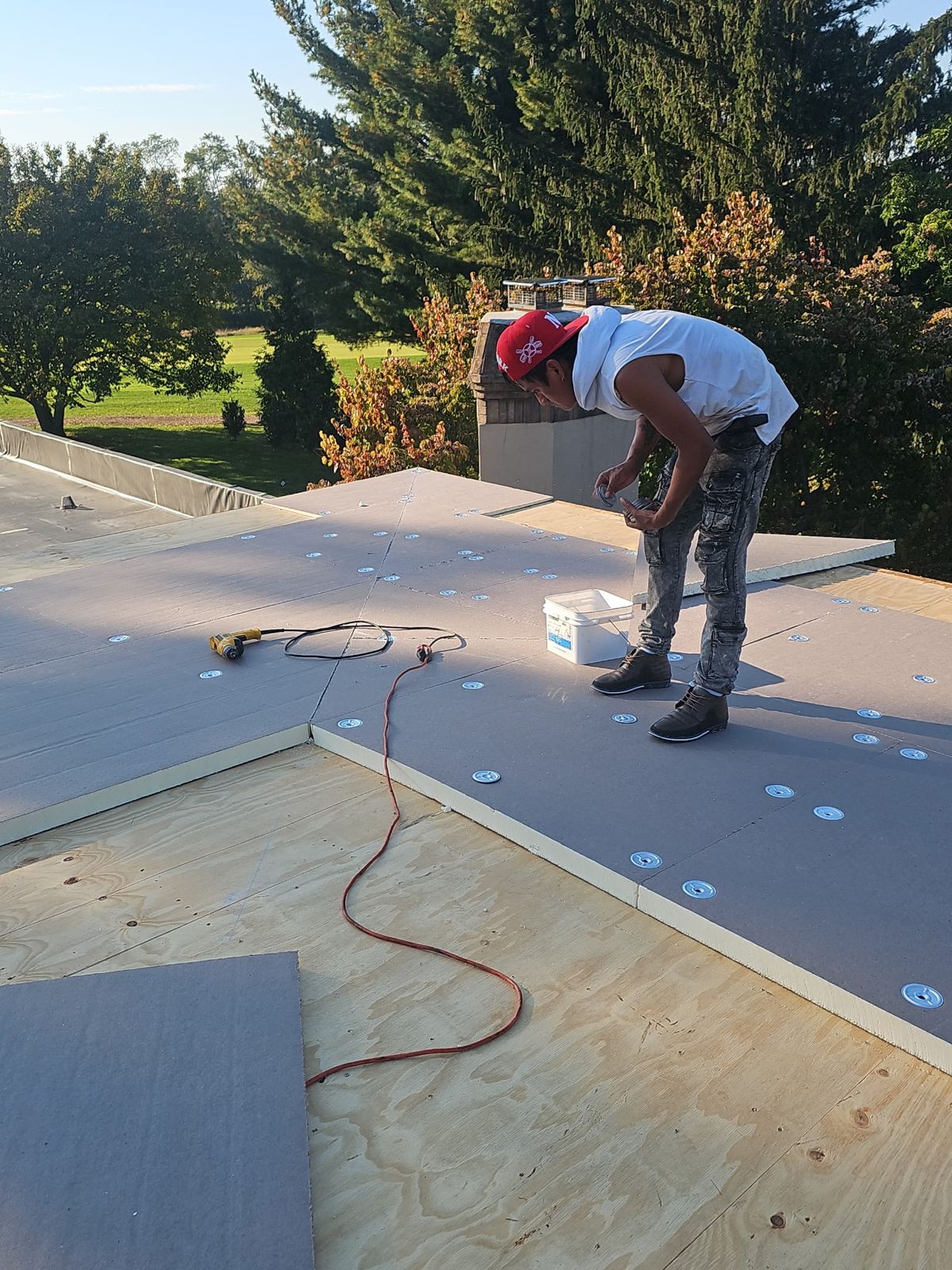
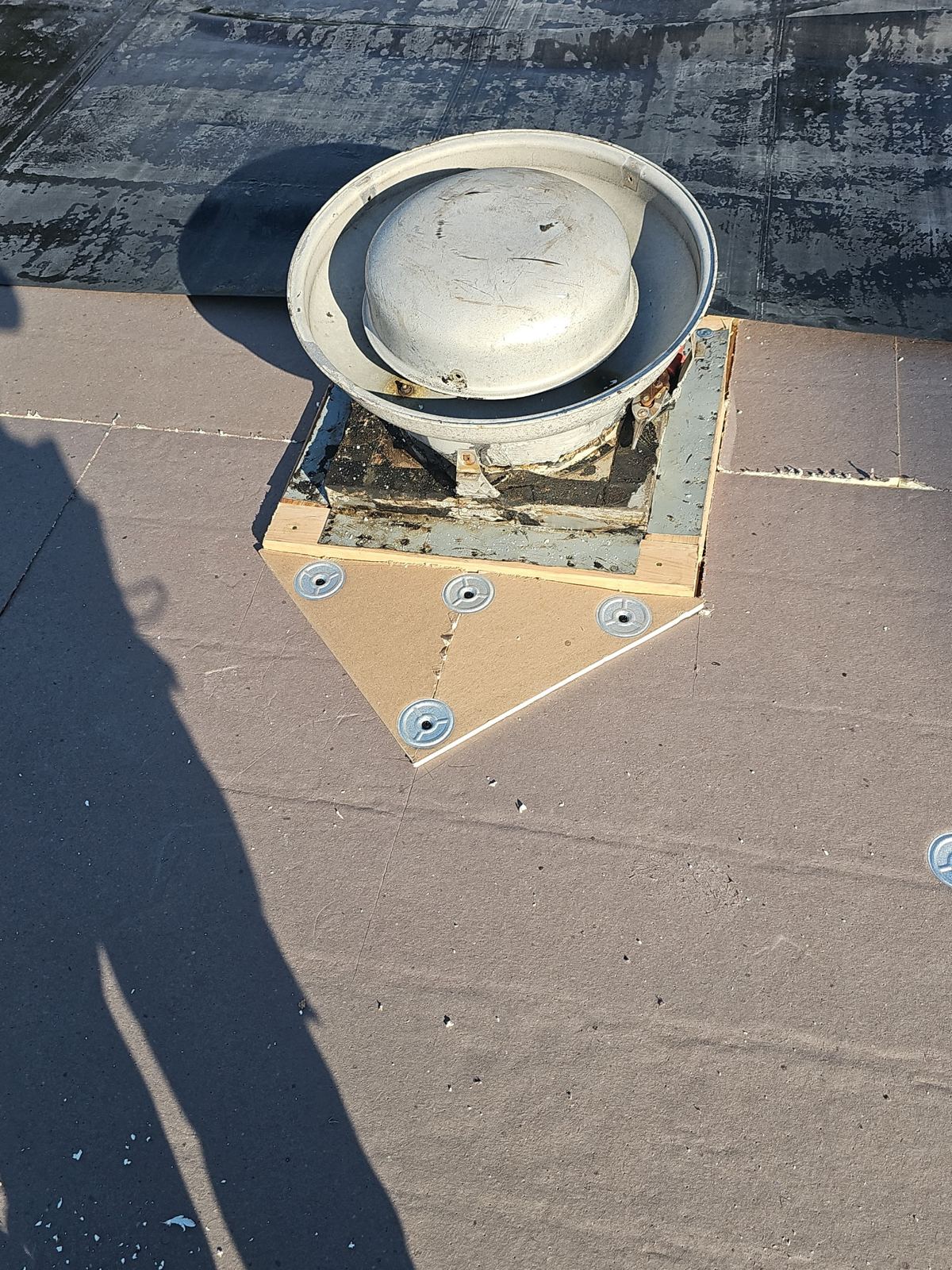
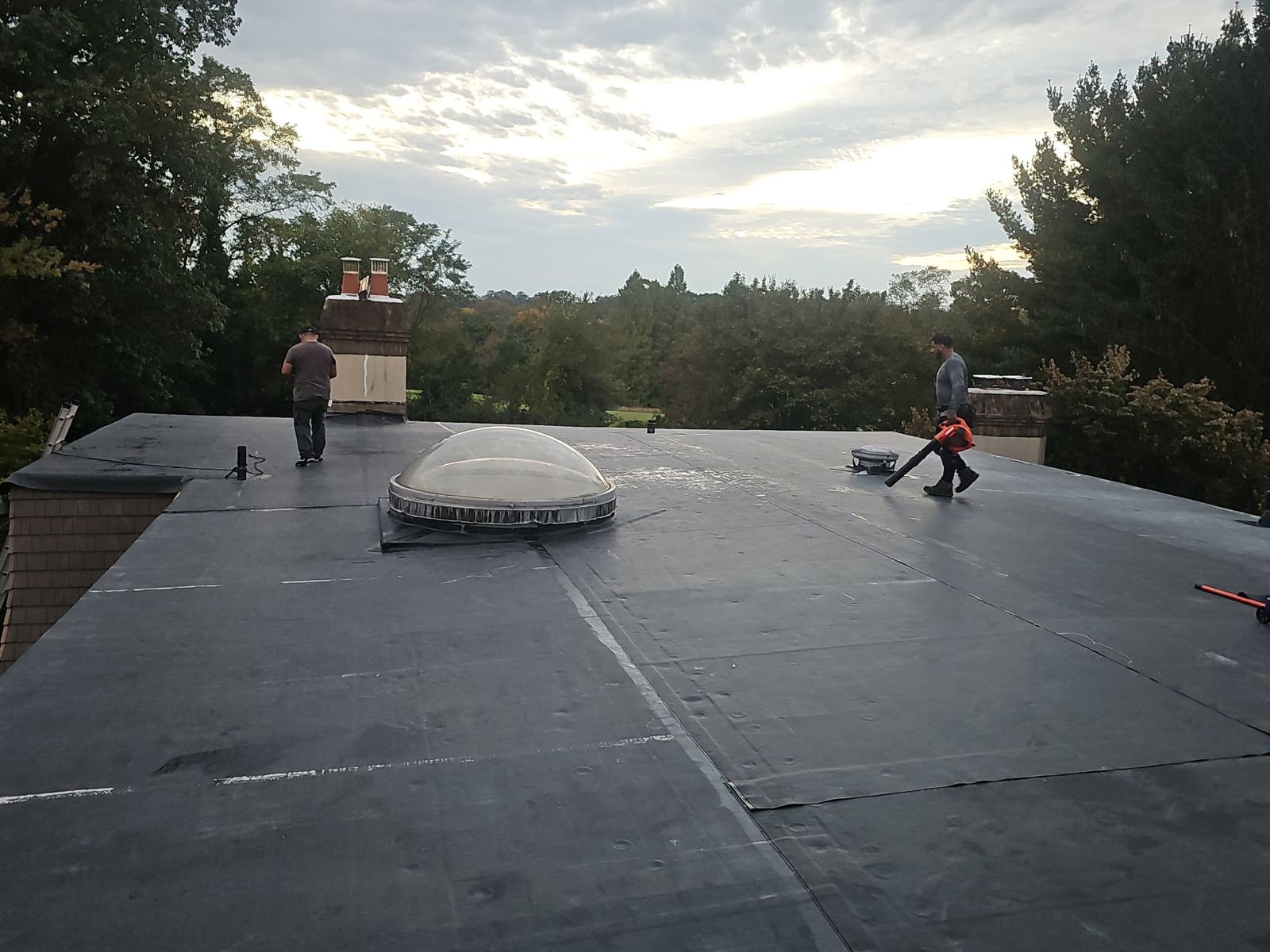
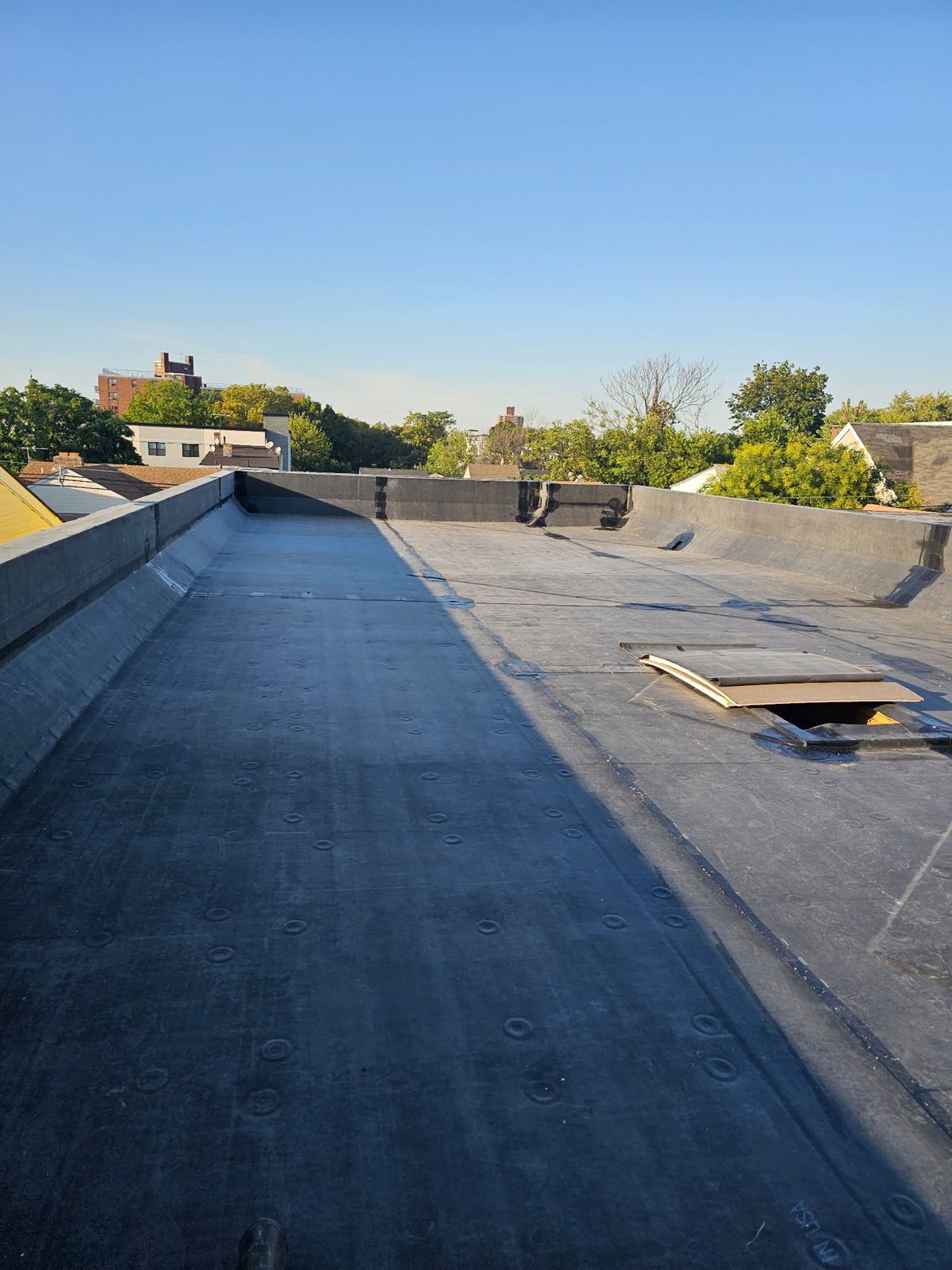
Flat and low-slope roof sections at the rear of borough houses cannot use standard asphalt shingles, as low pitches do not shed water rapidly by gravity. These flat sections require continuous membrane systems such as modified bitumen or single-ply membranes like EPDM and TPO. Single-ply EPDM rubber membranes offer high resistance to thermal expansion and contraction, while modified bitumen systems use multi-ply torch-down or self-adhering cap sheets to create waterproof barriers over flat surfaces.
Transitions between steep shingle slopes and rear flat membranes require custom metal flashing fabrication. Step flashing, counter flashing, and continuous termination bars must be integrated correctly so water sheds off the shingle slope without penetrating the edge of the flat roof membrane.
- Architectural asphalt shingles for steep slopes and porch roofs
- Self-adhering ice and water shield along eaves, valleys, and wall joints
- EPDM or modified bitumen membranes for rear flat roof sections
- Custom metal transition flashings between shingle pitches and flat surfaces
Navigating Bound Brook Permit Work and Building Codes
Residential roofing work in Bound Brook requires local construction permits issued by the municipal building department prior to the start of tear-off or installation. A licensed roofing contractor submits detailed scope-of-work documentation, including material specifications, underlayment details, and structural repair plans. Obtaining proper permits ensures that all work complies with the New Jersey Uniform Construction Code.
Municipal building codes govern key installation details such as the maximum allowable layers of roofing material, mandatory ice dam protection boundaries, and required drip edge installation along eaves and gables. In New Jersey, code requires stripping existing materials down to the structural sheathing if two layers of roofing are already present. This tear-off phase allows for full inspection and replacement of damaged wood decking before new materials are applied. Required municipal inspections occur during or after installation to verify that the work meets code standards.
- Filing of technical permit applications with the Bound Brook building department
- Adherence to New Jersey Uniform Construction Code requirements
- Complete tear-off required when existing roof layers exceed code limits
- Mandatory local municipal inspections upon project completion
Managing Insurance Claims for Storm Damage in Somerset County
Severe wind, hail, and torrential rainfall frequently affect Somerset County homes. When storm events cause damage to shingles, flashings, or flat roof sections, home insurance policies may cover the cost of structural repair or full replacement. Handling an insurance claim requires clear technical documentation to demonstrate that damage was caused by a sudden covered event rather than routine wear.
Storm Guard Roofing assists homeowners throughout the insurance claim process. We conduct initial storm damage assessments, document shingle uplift, torn membranes, and interior leaks, and prepare detailed estimates using industry-standard pricing software. We meet with the insurance adjuster on site at your Bound Brook home to review the full scope of damage, ensuring that all necessary transition details, flat roof repairs, and code-required upgrades are included in the claim adjustment.
- 24/7 emergency response for immediate tarping and leak stabilization
- Comprehensive photo documentation of wind, hail, and water damage
- On-site representation during insurance adjuster inspections
- Detailed line-item estimates aligned with insurance industry standards
Criteria for Selecting a Roofing Contractor in Bound Brook
Choosing a roofing contractor for a property in Bound Brook requires evaluating specific credentials and practical experience. Homeowners should verify that the business holds an active New Jersey Home Improvement Contractor license and carries comprehensive general liability insurance alongside full workers' compensation coverage. Working with an uninsured or underinsured contractor exposes the property owner to financial liability in the event of jobsite injuries or accidental property damage.
In addition to legal licensing, a contractor must demonstrate experience handling the specific structural demands of borough housing. Homes with steep slopes, attached front porches, and rear flat sections require a roofing contractor proficient in both shingle application and flat membrane welding or bonding. A local company with 25+ years of experience, direct family ownership, and 24/7 emergency response availability offers long-term reliability and accountability for post-installation support.
- Active New Jersey Home Improvement Contractor registration
- Full liability insurance and workers' compensation coverage
- Proven experience with steep pitches, porch transitions, and flat membranes
- Established local presence and accessible emergency service
Bound Brook questions we get asked
- How do flood history and humidity in Bound Brook affect flat roof sections?
- Properties with rear flat sections require continuous membrane systems like EPDM or modified bitumen because standing moisture and high humidity can degrade improper materials. Proper installation and sealed seams prevent moisture entrapment and rot in the roof deck.
- Why do steep roofs with attached porch roofs require special flashing in Bound Brook?
- Steep main roofs shed large volumes of water onto lower porch roofs. Without custom step flashing and counter flashing at the wall and roof intersections, water can back up under shingles and enter the wall cavity.
- Is a permit required when hiring a roofing contractor in Bound Brook, NJ?
- Yes, the municipality of Bound Brook requires building permits for roof replacements and major repairs under the New Jersey Uniform Construction Code. Storm Guard Roofing handles all permit filings and schedules the required municipal inspections.
- How quickly can Storm Guard Roofing respond to emergency roof leaks in Bound Brook?
- We offer 24/7 emergency response across Bound Brook and Somerset County. Our team can deploy emergency tarping and temporary repairs to stabilize your roof structure immediately following severe storm damage.
More in Bound Brook
Call (201) 403-0024 for a Bound Brook inspection, or send the form.