Gloucester City · Camden County
Gloucester City Roofing Contractor Services and Repairs
Storm Guard Roofing delivers structural evaluation, leak repair, and complete replacement services for residential and commercial properties in Gloucester City, Camden County, New Jersey. As a family owned business with more than 25 years of field experience, we handle complex roof geometries, emergency callouts, and property insurance claims. Homes in Gloucester City face distinct structural challenges due to regional weather exposure and historical construction methods. Hiring a licensed and insured roofing contractor ensures that work meets local building standards, properly addresses water intrusion points, and preserves property value. Homeowners can reach our team at (201) 403-0024 for scheduled inspections or 24/7 emergency response.
Structural Inspections for Gloucester City Rowhouse Flat Roofs and Parapets
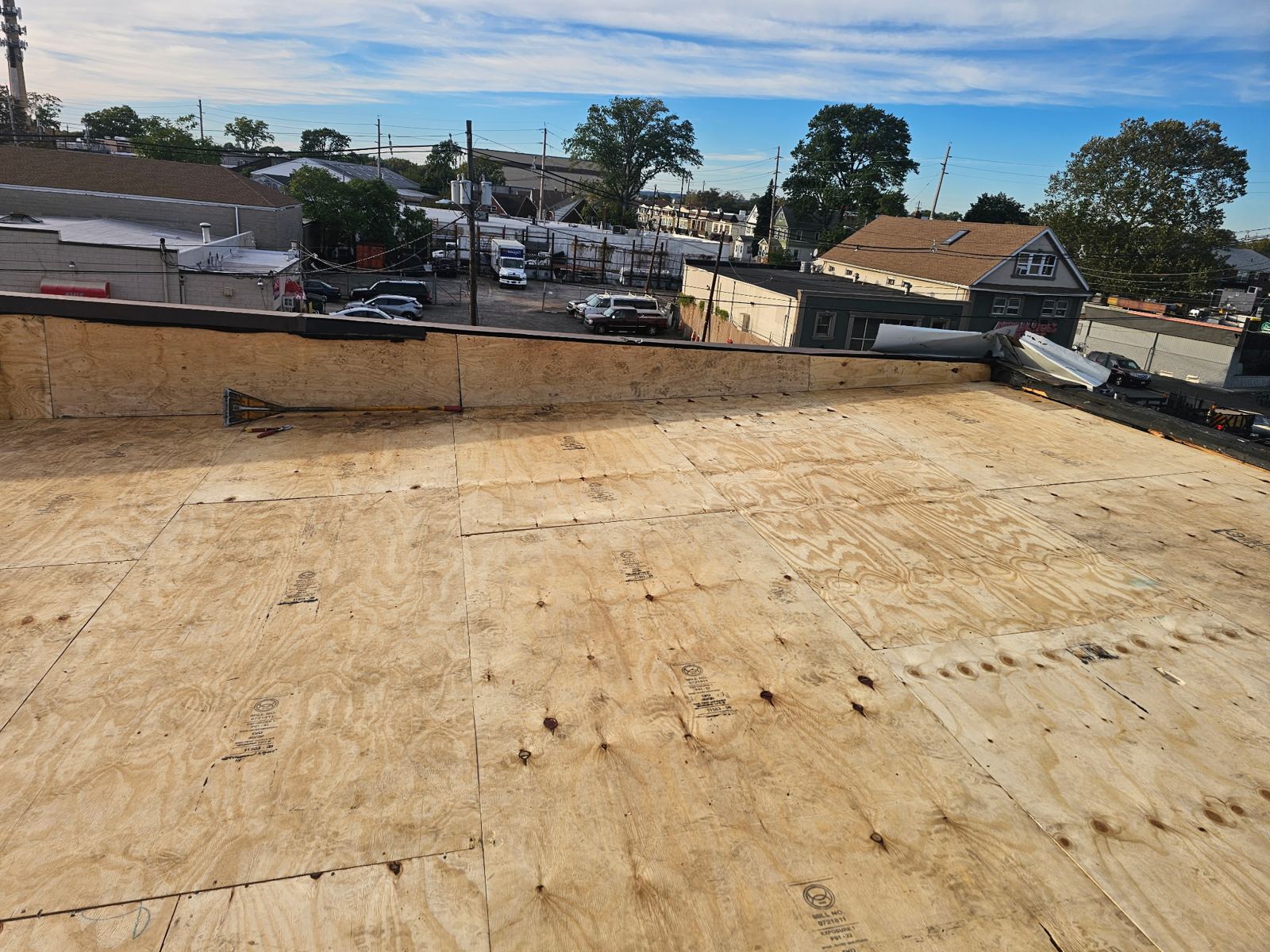
Gloucester City contains a high concentration of rowhouses built with flat roof assemblies. These structures rely on proper perimeter termination, wall flashing, and effective drainage to remain watertight. Over years of thermal expansion and contraction, the masonry and metal coping joints that cap shared party walls begin to open up. Water entering open coping joints travels along shared brick parapets, causing concealed wood rot, masonry spalling, and interior ceiling damage far from the original point of entry.
A thorough inspection by a qualified roofing contractor targets these specific vulnerability points. We inspect the entire roof plane, checking for membrane punctures, seam separation, ponding water, and deteriorating flashing along shared parapets. Catching open coping joints and damaged masonry caps early prevents water from migrating into adjacent properties along shared structural walls.
- Inspection of shared parapet walls and masonry coping joints for hairline cracks and open mortar lines.
- Core checks on flat roof membranes including modified bitumen and EPDM for seam stress or underlying deck decay.
- Evaluation of interior structural framing around party walls to identify long term moisture intrusion.
- Verification of perimeter scuppers, internal drains, and gutters to ensure standing water clears within 48 hours.
Material Selection for Flat and Pitched Roofs in Gloucester City
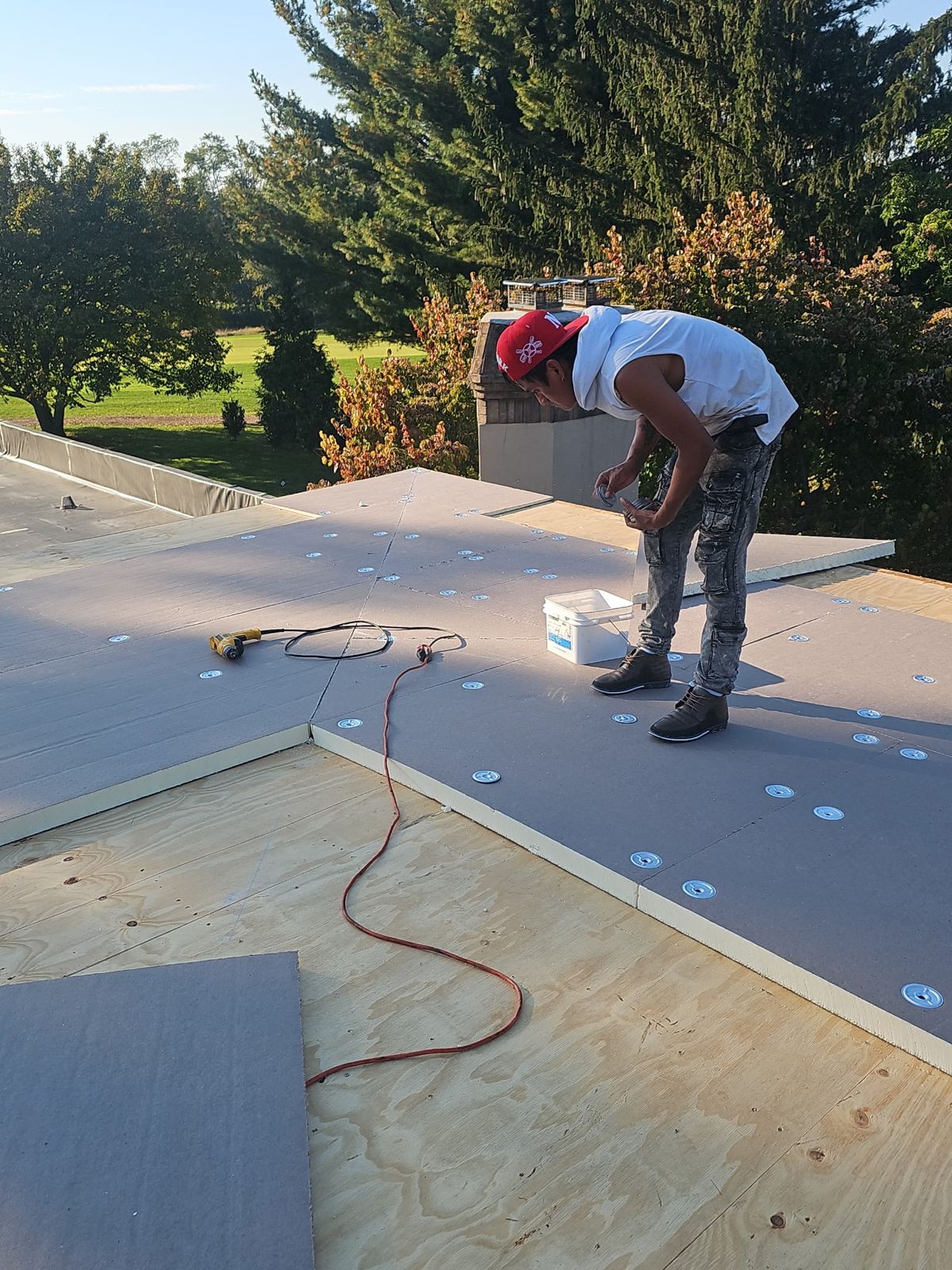
Selecting materials for Gloucester City properties requires matching the right membrane or shingle system to the structural slope of the building. Flat rowhouse roofs generally benefit from multi-ply modified bitumen systems or single-ply EPDM and TPO membranes. Modified bitumen offers thick, asphalt-based layers that tolerate foot traffic and thermal movement around shared parapet walls. Single-ply rubber membranes provide flexible, watertight coverage for low-slope surfaces, provided all wall tie-ins and penetration flashings are correctly heat-welded or mechanically attached.
Pitched roofs on detached and semi-detached homes in Camden County perform best with architectural fiberglass asphalt shingles or standing seam metal systems. Shingle installations require heavy-duty underlayment, drip edge installation along eaves and rakes, and step flashing along vertical wall intersections. Metal coping caps placed over parapet joints protect masonry from freezing temperatures and moisture absorption, keeping joints sealed against water ingress.
- Multi-ply modified bitumen membranes designed for low-slope rowhouse applications and high foot traffic.
- Single-ply EPDM rubber systems providing flexible waterproofing for flat roof decks.
- Architectural asphalt shingles with high wind ratings and ice dam protection underlayments.
- Fabricated metal coping caps and counter-flashing designed to seal open joints on shared parapets.
Municipal Permits and Building Code Compliance in Gloucester City
Roofing projects in Gloucester City must comply with New Jersey Uniform Construction Code standards and local municipal permit regulations. Before work begins, detailed plans and material specifications must be submitted to the local construction official. Obtaining a permit verifies that structural repairs, decking replacements, and membrane installations adhere to regional fire safety and wind resistance standards. Operating as a licensed and insured roofing contractor, Storm Guard Roofing coordinates directly with municipal code enforcement officers from application through final inspection.
Failure to secure proper permits can result in stop-work orders, municipal fines, and complications when selling a home. Proper documentation ensures that structural loads remain within safe limits, structural plywood decking meets thickness requirements, and ice barrier membranes are installed along eaves. Once work is complete, a municipal building inspector evaluates flashings, ventilation components, and overall system installation before signing off on the permit.
- Submittal of detailed roof plan specifications and material data sheets to local building officials.
- Compliance with New Jersey Uniform Construction Code fire resistance and structural load requirements.
- On-site coordination for required rough-in deck inspections and final permit sign-offs.
- Full contractor liability and workers' compensation coverage documentation submitted with every permit application.
Managing Property Insurance Claims for Roof Storm Damage
Severe wind, hail, and heavy rainfall cause sudden structural damage to residential roofs across Gloucester City. When wind uplifts shingles, tears flat roof membranes, or compromises parapet flashing, water quickly enters interior living spaces. Storm Guard Roofing provides 24/7 emergency response to secure damaged roofs with temporary tarps, preventing secondary water damage. Homeowners can reach our emergency dispatch directly at (201) 403-0024 at any hour of the day or night.
In addition to emergency tarping, we guide property owners through the insurance claims procedure. We document all physical damage using detailed photographs, moisture readings, and scope-of-work estimates formatted for insurance adjusters. Working directly with insurance carriers ensures that line-item estimates reflect local labor costs, current building code requirements, and necessary structural repairs needed to return the building to pre-loss condition.
- 24/7 emergency response services for emergency tarping, temporary sealing, and structural stabilization.
- Photographic evidence collection and detailed damage mapping for insurance adjusters.
- Line-item scope preparation aligning with standardized carrier estimating software.
- Direct representation during adjuster field inspections to ensure all covered structural items are included.
Criteria for Selecting a Licensed Roofing Contractor in Camden County
Property owners evaluating local companies should compare technical credentials, regional experience, and physical verification of licensing and insurance. A reliable roofing contractor will provide a valid New Jersey Home Improvement Contractor license number and certificates of insurance covering general liability and workers' compensation. Working with an established, family owned business with over 25 years of local presence ensures continuity, accountability, and familiarity with Camden County building characteristics.
Homeowners should request a detailed written contract outlining the scope of work, specified brand names of materials, cleanup procedures, and payment schedules. Avoid contractors who demand full payment upfront, refuse to obtain municipal permits, or lack experience with rowhouse parapets and flat roof membranes. Reviewing past local work on similar building types helps verify that the contractor understands local structural challenges like shared coping joints that open over time.
- Verification of active New Jersey Home Improvement Contractor licensing and full insurance coverage.
- Demonstrated experience with flat roofs, shared parapet walls, and masonry coping joint maintenance.
- Clear, written proposals containing material specifications, project timelines, and clean-up details.
- Local physical presence and direct contact information, reachable at (201) 403-0024.
Gloucester City questions we get asked
- Why do rowhouses in Gloucester City develop roof leaks along shared side walls?
- Rowhouses in Gloucester City feature shared masonry parapet walls capped with coping tiles or metal flashings. Over time, thermal movement opens up joints between coping sections, allowing rainwater to penetrate the brickwork. Water then travels downward along the shared wall cavity, resulting in interior leaks far below the roof deck.
- Is a building permit required to replace a flat roof in Gloucester City?
- Yes, replacing a flat roof membrane or structural decking in Gloucester City requires a construction permit under New Jersey building codes. Storm Guard Roofing secures all required municipal permits and schedules official inspections to confirm code compliance.
- How does a roofing contractor handle emergency repairs during severe weather?
- Storm Guard Roofing operates a 24/7 emergency response service accessible at (201) 403-0024. Our emergency crew deploys watertight tarps, seals open membrane seams, and stabilizes damaged parapet capping to protect the property until permanent repair work can take place.
- What flat roof material works best for Gloucester City rowhouse properties?
- Two-ply modified bitumen and single-ply EPDM rubber membranes are effective choices for Gloucester City flat roofs. Modified bitumen resists foot traffic and physical wear around shared party walls, while EPDM provides flexible waterproofing across wide flat surfaces.
More in Gloucester City
Call (201) 403-0024 for a Gloucester City inspection, or send the form.