Eatontown · Monmouth County
Roof Repair Services in Eatontown, NJ
Storm Guard Roofing provides specialized roof repair services throughout Eatontown and surrounding Monmouth County communities. For over 25 years, our family-owned, licensed, and insured contracting business has diagnosed and corrected moisture intrusion, structural shingle detachment, and localized water damage. Eatontown features a high concentration of mid-century residential architecture—specifically post-war ranches and homes with low-slope rear or side additions built during subsequent renovations. Positioned on the Monmouth County coastal plain, properties in Eatontown experience sustained wind exposure from Atlantic weather systems, which accelerates wear on aging shingles, open valleys, and wall flashings. If water is entering your home or storm damage has compromised your roof deck, call us immediately at (201) 403-0024 for 24/7 emergency response and targeted repair solutions. We also handle insurance claim documentation from initial damage inspection through final adjuster coordination.
Diagnosing Common Leak Sources in Eatontown Residential Roofing
Residential structures in Eatontown, particularly post-war ranches near the Fort Monmouth area and established neighborhoods along the Route 35 corridor, present distinct failure points due to roof design and age. The pitch transitions on these single-story structures often collect debris and channel high volumes of water toward vulnerable joints. Identifying a leak requires precise trace techniques, as water entering through a cracked shingle upper course frequently travels along roof rafters before leaking through interior drywall feet away from the entry point.
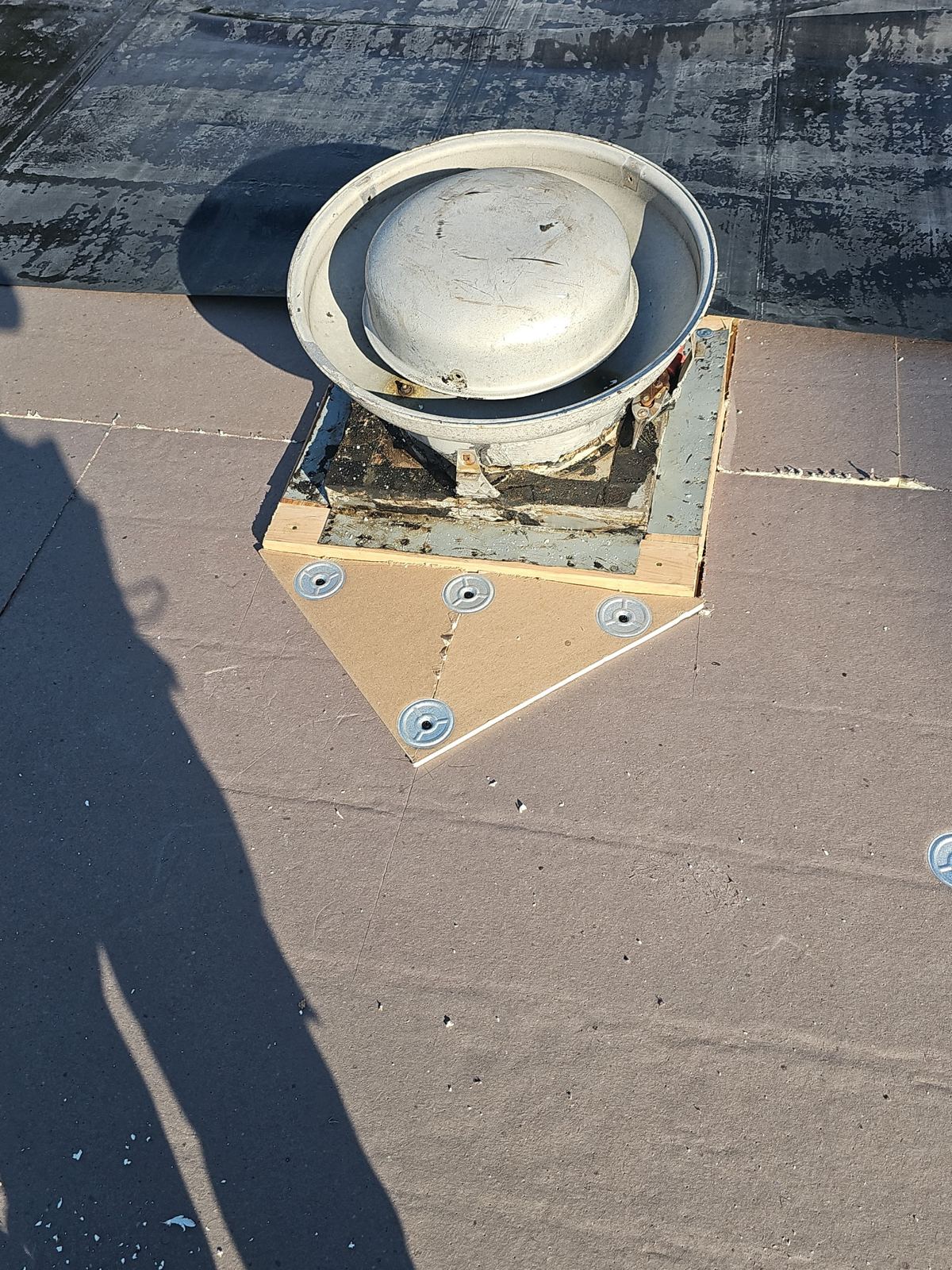
Pipe boots, attic vent collars, and chimney crickets represent the primary non-shingle failure points across Eatontown roof decks. Neoprene boot seals degrade under ultraviolet exposure after 10 to 15 years, splitting along the collar gasket. During high-intensity rains driven by coastal plain wind gusts, water bypasses the split seal and runs down the vent stack directly into ceiling insulation and framing.
- Rubber pipe boot cracking and dry-rot along plumbing soil stacks.
- Shingle detachment along rake edges exposed to high coastal plain wind pressure.
- Granule loss and asphalt matrix breakdown in older architectural and three-tab shingles.
- Nail pops caused by attic thermal expansion pushing fasteners through the shingle surface.
Flashing and Valley Failure Mechanisms on Low-Slope Additions
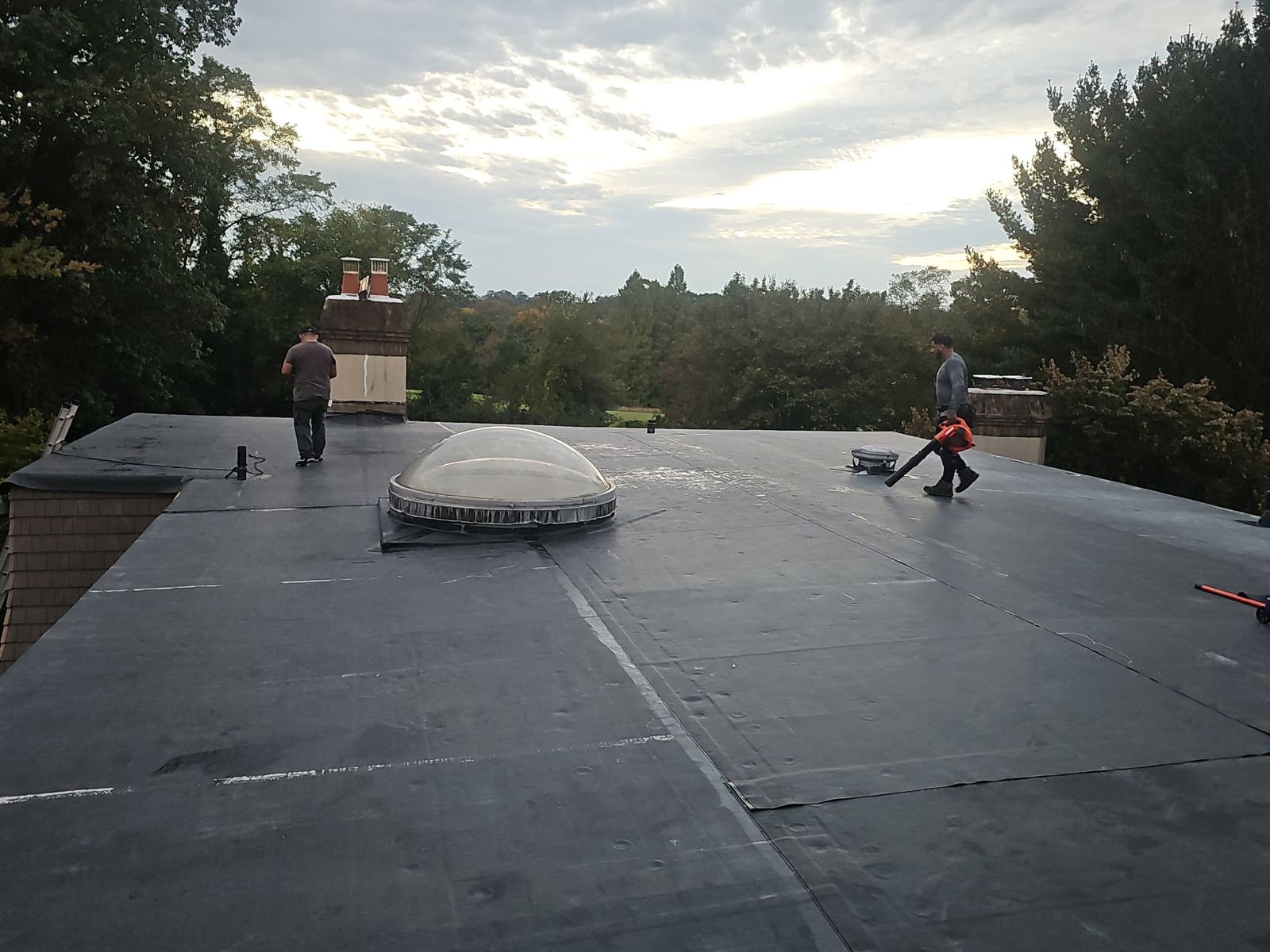
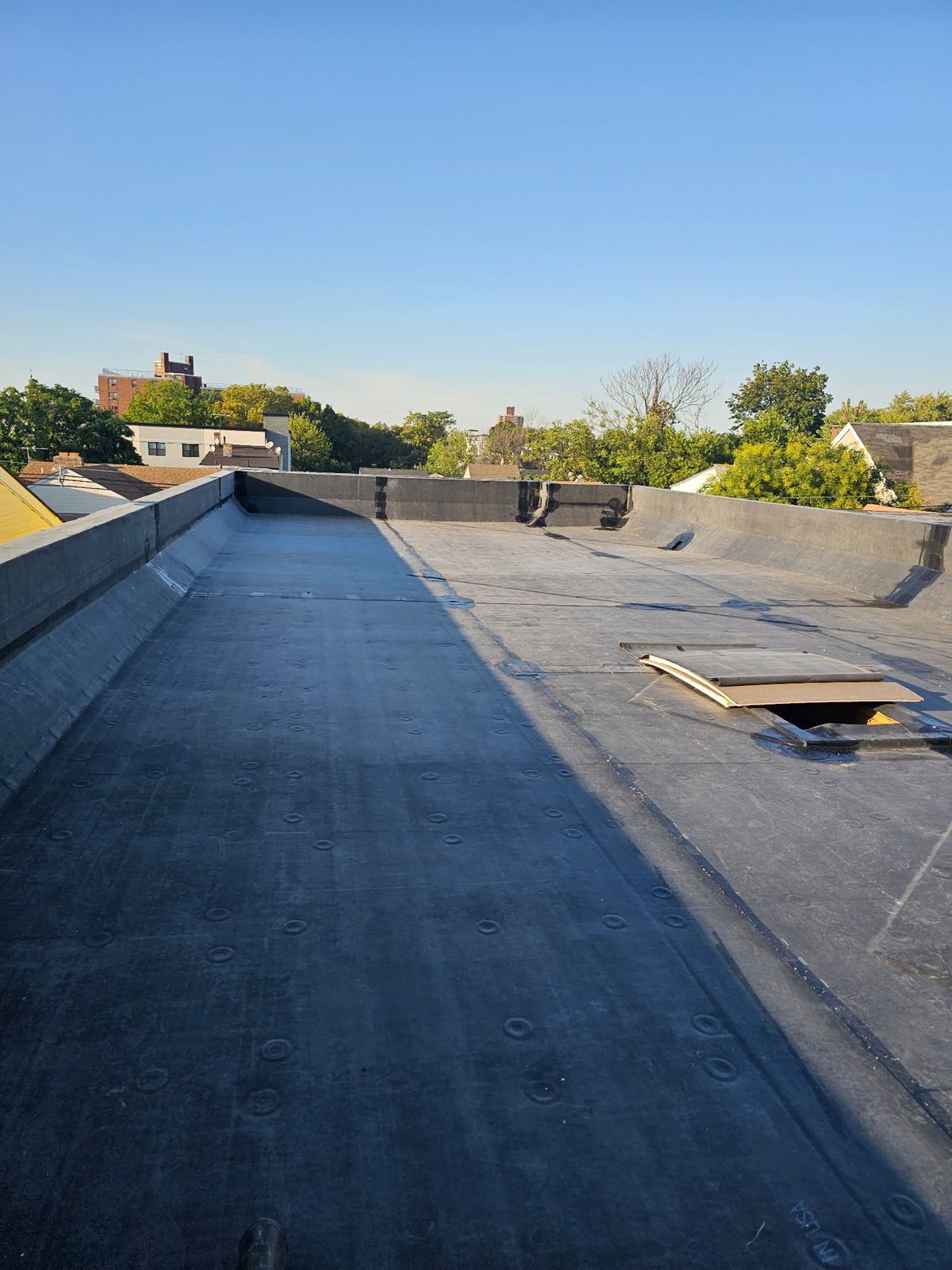
Low-slope roof additions are a common structural feature on expanded Eatontown post-war ranches. When an addition connects to an existing primary roofline, it creates a roof-to-wall interface or a shallow valley. Because low-slope sections (typically pitches between 2:12 and 4:12) shed water at a lower velocity than steep-slope main roofs, water can back up under standard shingle laps during severe downpours or snow accumulation.
Wall step flashing and open copper or aluminum valley linings frequently fail due to thermal expansion or improper original installation. Step flashing must interlock with every shingle course along sidewalls. If roofers omitted self-adhering ice and water shield membranes at these seams or relied solely on surface caulk, coastal storms force driven rain behind the siding, causing hidden wall cavity rot and interior ceiling staining.
- Failure of step and counter-flashing along masonry chimneys and dormer walls.
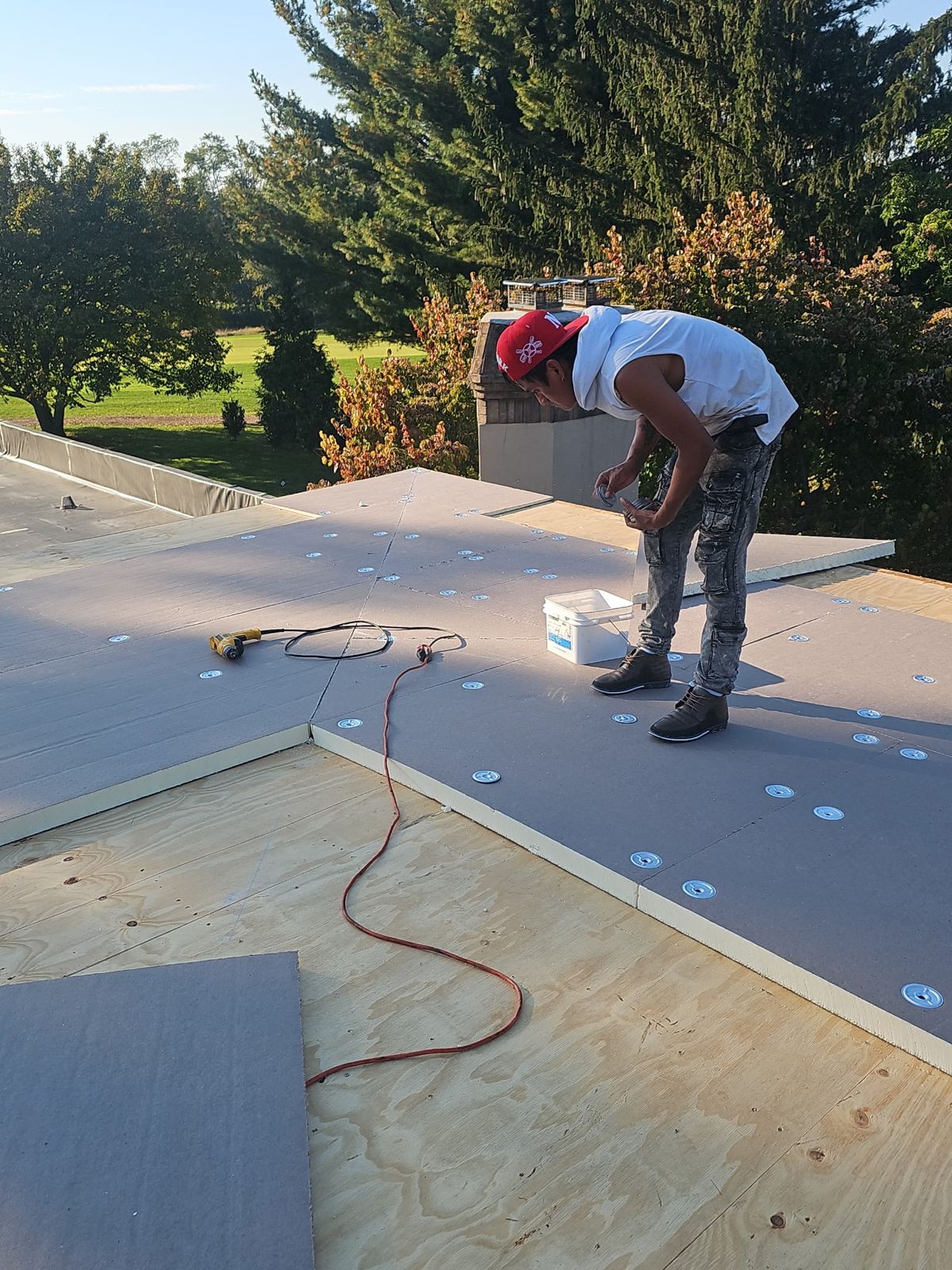
- Inadequate membrane underlayment beneath low-slope pitch transitions on home additions.
- Valley metal corrosion or seam separation from seasonal expansion and contraction cycles.
- Debris damming in shallow-pitch valleys leading to horizontal water migration.
Coastal Storm Damage and 24/7 Emergency Tarping Protocols
Eatontown sits on New Jersey's coastal plain, leaving roofs directly exposed to straight-line wind gusts, tropical weather systems, and winter nor'easters. Wind uplift impacts the perimeter edges of roof decks first. Once wind gets under an unsealed shingle tab, it creates a lever action that can tear away entire shingle sections, exposing the underlying plywood decking to immediate rain penetration.
When severe weather breaches your roof envelope, immediate containment prevents secondary water damage to interior ceilings, floorboards, and electrical systems. Storm Guard Roofing maintains a 24/7 emergency repair dispatch team reachable at (201) 403-0024. We secure vulnerable decks with heavy-duty exterior tarping anchored into solid framing members to ensure physical protection until permanent repairs take place.
We provide itemized damage assessments and direct assistance for homeowners filing insurance claims after major storm events. Our documentation includes photo evidence, wind uplift verification, and line-item repair scopes formatted for standard insurance carrier review.
- Rapid deployment of reinforced tarping matrices within hours of storm damage reports.
- Complete storm damage evaluations covering shingle uplift, creasing, and impact damage.
- Direct communication with insurance adjusters to verify scope and structural requirements.
- Plywood sheathing assessment and targeted rafter reinforcement following tree branch impacts.
Repair vs. Replacement: Structural and Financial Analysis
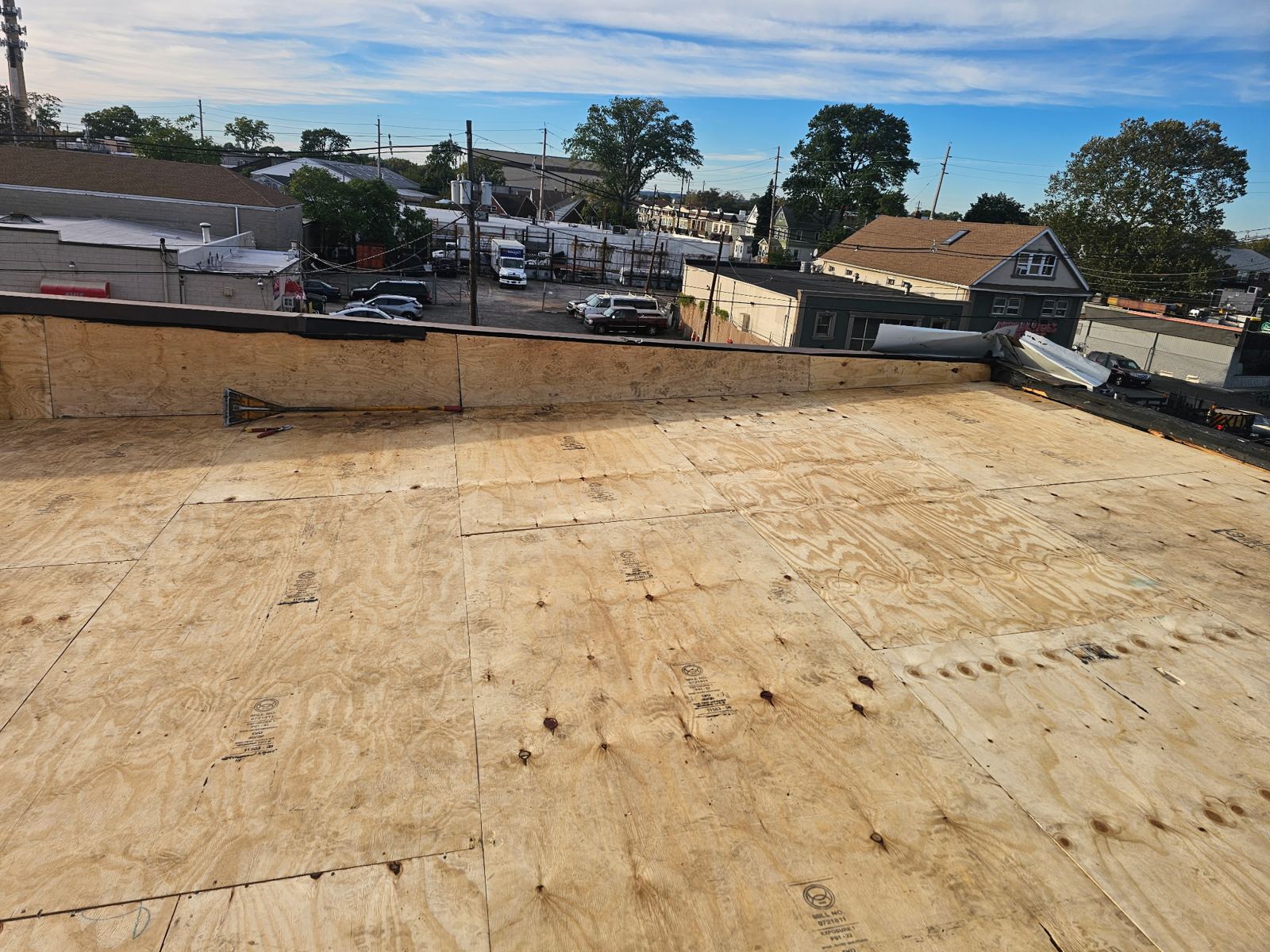
Replacing an entire roof when structural integrity remains intact across 80 percent or more of the deck is an unnecessary expense for homeowners. A targeted roof repair isolates the compromised area, replaces rotten sheathing, reinstalls code-compliant underlayment and flashing, and integrates new matching shingles cleanly into the surrounding field. This approach resolves the active leak at a fraction of the cost of a full tear-off.
Determining whether a roof qualifies for repair depends on three technical factors: the age of the existing asphalt matrix, the condition of the plywood decking, and the total percentage of affected surface area. If your roof is under 18 years old and the underlying plywood remains structurally sound outside the immediate leak zone, a localized repair provides a durable fix without interrupting the remaining service life of the roof.
- Localized repairs cost significantly less than complete roof replacements, preserving home capital.
- Spot repairs extend the functional lifespan of existing roof systems without full tear-offs.
- Replacement is recommended only when widespread deck rot or mass shingle degradation exists.
- Color and profile matching techniques ensure repaired shingle sections blend with original roofing.
Building Code Compliance and Permitting in Eatontown
Roof repair work in the Borough of Eatontown must adhere to the New Jersey Uniform Construction Code (NJ UCC). Minor shingle repairs and localized flashing maintenance typically do not require full permits, but larger structural deck replacements or roof section restorations must meet current uplift resistance and weather-resistant barrier standards enforced by municipal code officials.
Storm Guard Roofing ensures all repair work complies with Eatontown building regulations, including the application of self-adhering ice and water protection along eaves, valleys, and low-slope addition joints. Our 25+ years of regional contracting experience ensures every repair meets municipal structural standards and withstands coastal weather conditions.
- Compliance with Borough of Eatontown construction office requirements for structural repairs.
- Adherence to NJ UCC ice-barrier installation requirements along low-slope eaves and valleys.
- Fastener spacing patterns adjusted for coastal plain wind uplift zones as specified by manufacturers.
Eatontown questions we get asked
- Do I need a building permit from the Borough of Eatontown for minor roof leak repairs?
- Under the New Jersey Uniform Construction Code, ordinary roof maintenance and small shingle repairs in Eatontown generally do not require a construction permit. However, if the repair requires replacing structural plywood sheathing across large deck areas or rebuilding rafter sections, a permit from the Eatontown Construction Code Department is required. Storm Guard Roofing handles all municipal documentation when permits are triggered.
- Why are low-slope additions on Eatontown ranches particularly prone to winter leaks?
- Low-slope additions on post-war ranches have a shallower pitch, which slows down water drainage and allows snow and ice to accumulate for longer periods. During freeze-thaw cycles, meltwater backs up under standard shingles if an ice and water shield membrane was omitted during installation. We repair these sections by installing continuous rubberized underlayment and custom metal flashing tailored for low-slope pitch transitions.
- How does Storm Guard Roofing assist Eatontown homeowners with insurance claims for wind damage?
- When coastal storms lift or tear shingles from your roof, we conduct an inspection to document wind uplift, shingle creasing, and sub-deck exposure. We generate detailed, line-item reports and photographic evidence that match insurance carrier standards. Our team meets directly with your insurance adjuster on-site at your Eatontown property to review the damage scope and ensure all necessary repair work is included in your claim settlement.
- How fast can Storm Guard Roofing respond to an active roof leak emergency in Eatontown?
- Storm Guard Roofing provides 24/7 emergency response for severe roof leaks and storm damage in Eatontown. Call (201) 403-0024 at any hour, and our emergency repair crew will deploy to stabilize the roof with temporary structural tarping, stopping water intrusion before permanent repairs are executed.
More in Eatontown
Call (201) 403-0024 for a Eatontown inspection, or send the form.