Eatontown · Monmouth County
Roof Replacement Contractor in Eatontown, NJ
Storm Guard Roofing provides full roof replacement services in Eatontown, New Jersey. Operating for over 25 years as a family-owned, licensed, and insured contractor, we specialize in complete tear-offs, roof deck structural repairs, and high-wind system installations tailored to Monmouth County homes. Local building stock in Eatontown consists heavily of post-war ranches, split-level designs, and residential structures with low-slope rear additions, all subject to coastal-plain wind exposure and Atlantic moisture. Our crews manage every technical step, from permit processing with the Borough of Eatontown to final structural inspections. We also assist homeowners with insurance claim documentation for wind and storm damage, offering 24/7 emergency response. Contact Storm Guard Roofing at (201) 403-0024 for an evaluation of your roof system.
Complete Tear-Off vs. Layover Shingle Installation
Installing new asphalt shingles directly over an existing roof layer, known as a layover or overlay, hides serious sub-surface structural defects. In Eatontown, homes are exposed to coastal-plain wind conditions that place continuous uplift pressure on roof edges. Laying new shingles over old, brittle, or curled materials prevents proper thermal bonding of the adhesive strip and conceals rotted wood decking beneath.
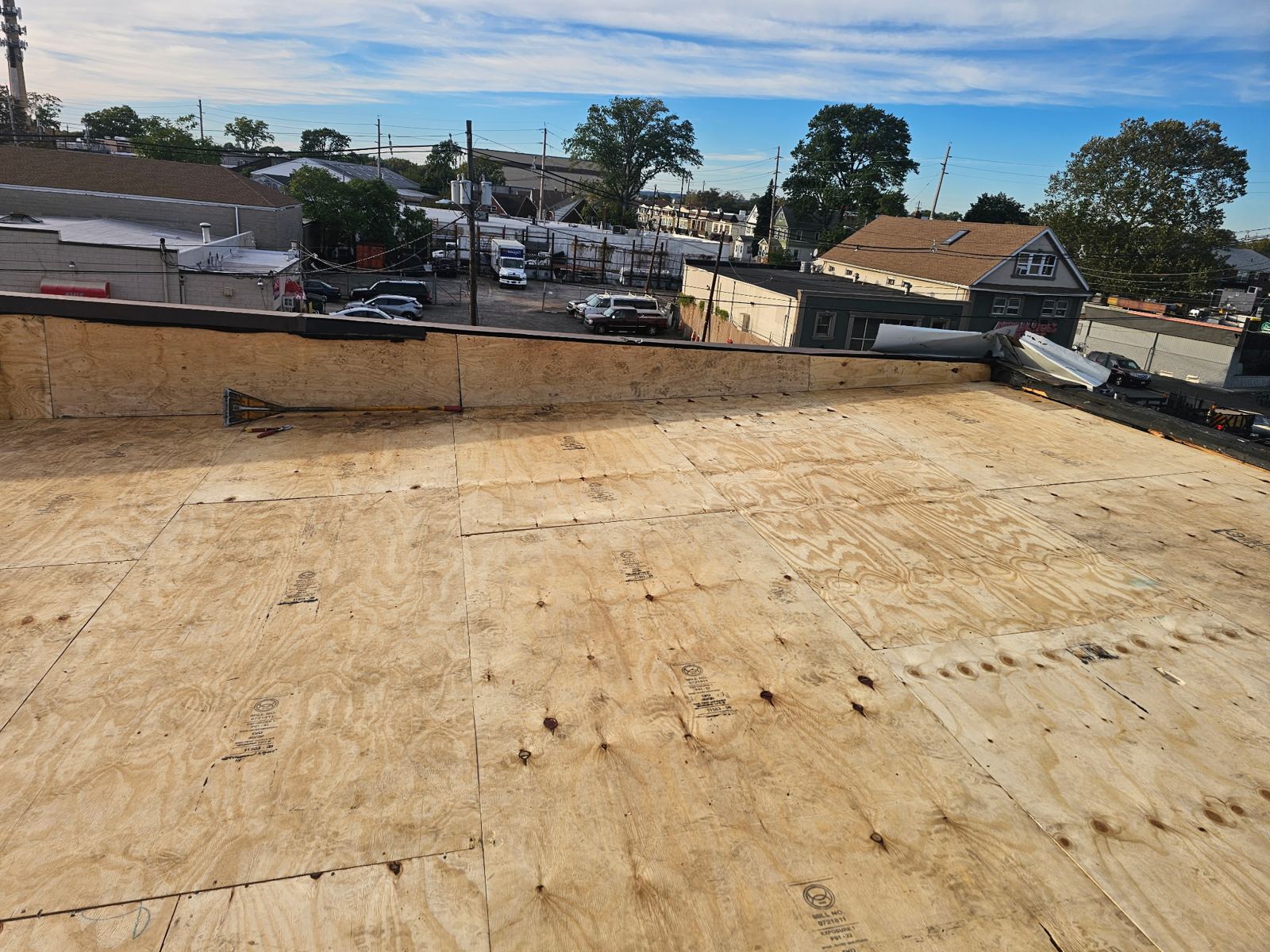
A complete tear-off removes all existing shingle layers, underlayment, and failed flashing down to the bare wooden sheath. This process enables our installation crew to inspect every sheet of plywood or tongue-and-groove planking for water staining, mold, or structural sagging before installing the new roof system. Removing old layers also ensures compliance with New Jersey residential building codes, which cap the allowable weight and number of shingle layers.
- Complete removal of existing asphalt layers down to the bare wooden deck
- Inspection of structural rafters and decking for water rot and wind-shear stress
- Elimination of uneven substrates to ensure flat placement and thermal seal of new shingles
- Compliance with New Jersey Residential Building Code rules regarding layer limits
Roof Decking Replacement and Moisture Protection
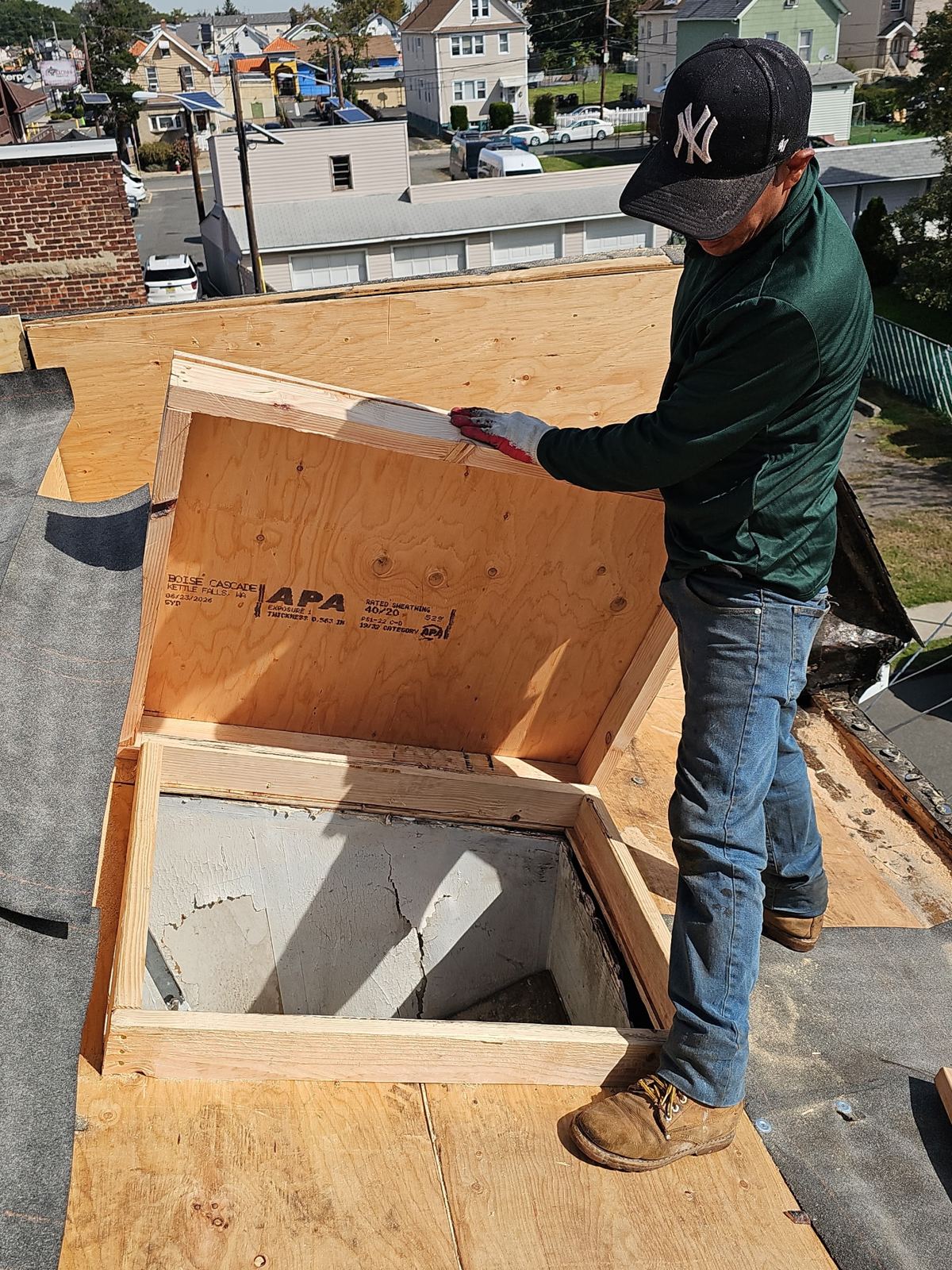
Many mid-century post-war ranches in Eatontown were framed with 1x6 tongue-and-groove decking boards or early-generation thin plywood. Extended exposure to coastal humidity, temperature swings, and roof leaks causes these boards to delaminate, cup, or rot. During a tear-off, we replace compromised decking sections with exterior-grade 1/2-inch or 5/8-inch CDX plywood to restore structural rigidity across the entire roof plane.
Proper moisture barrier installation is critical to prevent water intrusion. We install self-adhering ice and water shield membranes along all eaves, valleys, rakes, wall intersections, and chimney flashing areas. New Jersey building code requires ice barrier protection to extend at least 24 inches inward past the interior wall line, preventing ice dam backups during winter freezing cycles. Synthetic underlayment is then mechanically fastened across the remaining decking, providing higher tear resistance than old 15-pound felt paper.
- Replacement of rotted or sagging roof boards with exterior-grade CDX plywood
- Installation of self-adhering ice and water shield at eaves, valleys, and sidewalls
- High-performance synthetic underlayment application across the main roof field
- Corrosion-resistant metal drip edge installation along perimeter eaves and rakes
Shingle and Low-Slope Material Selections
Steep-slope residential roofs in Monmouth County require asphalt shingles engineered to withstand high wind velocities. Heavyweight architectural asphalt shingles carry Class F wind resistance ratings (certified up to 130 mph) and Class A fire resistance ratings. These multi-layer shingles feature reinforced nail zones that prevent tear-through during coastal windstorms.
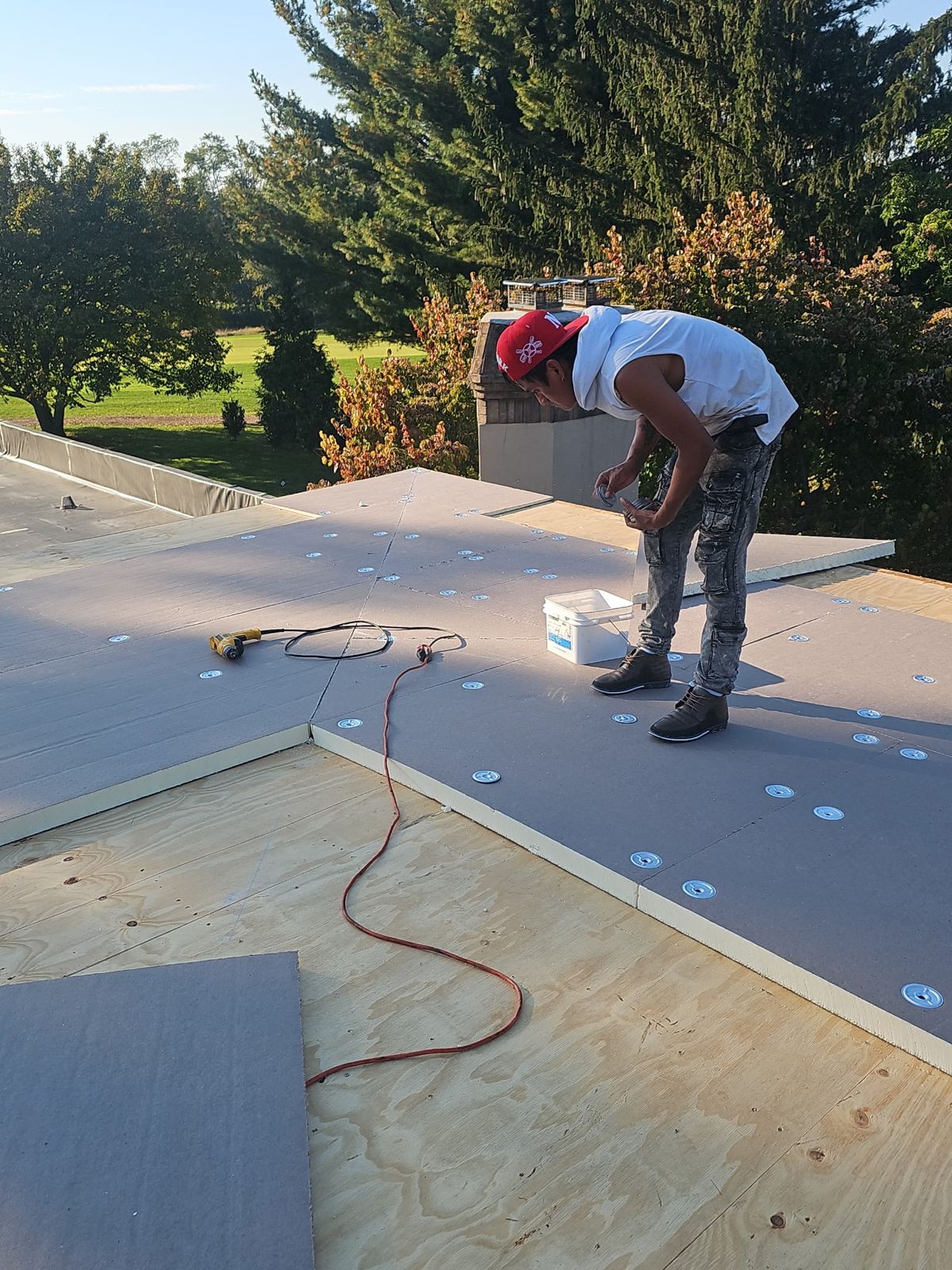
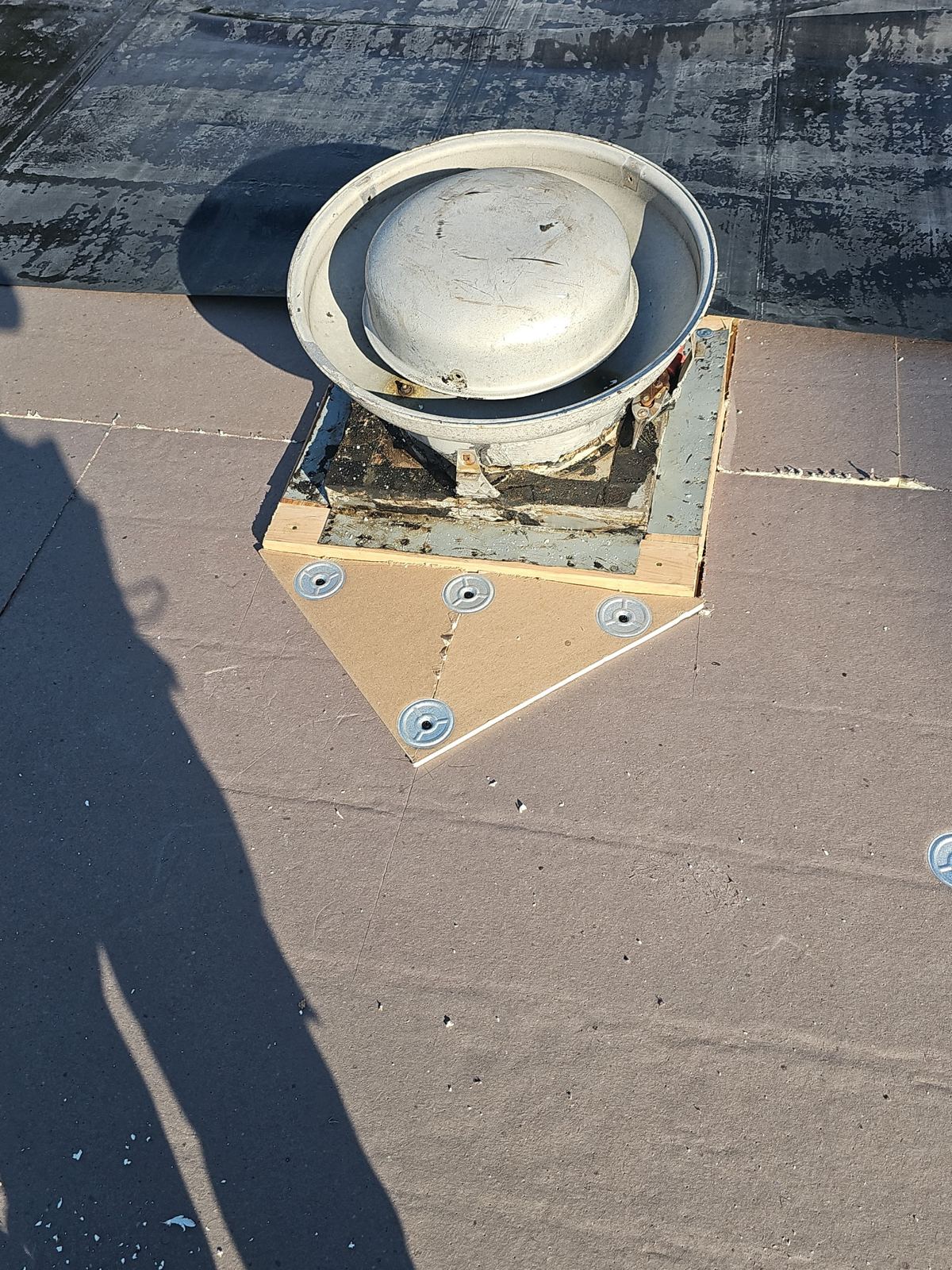
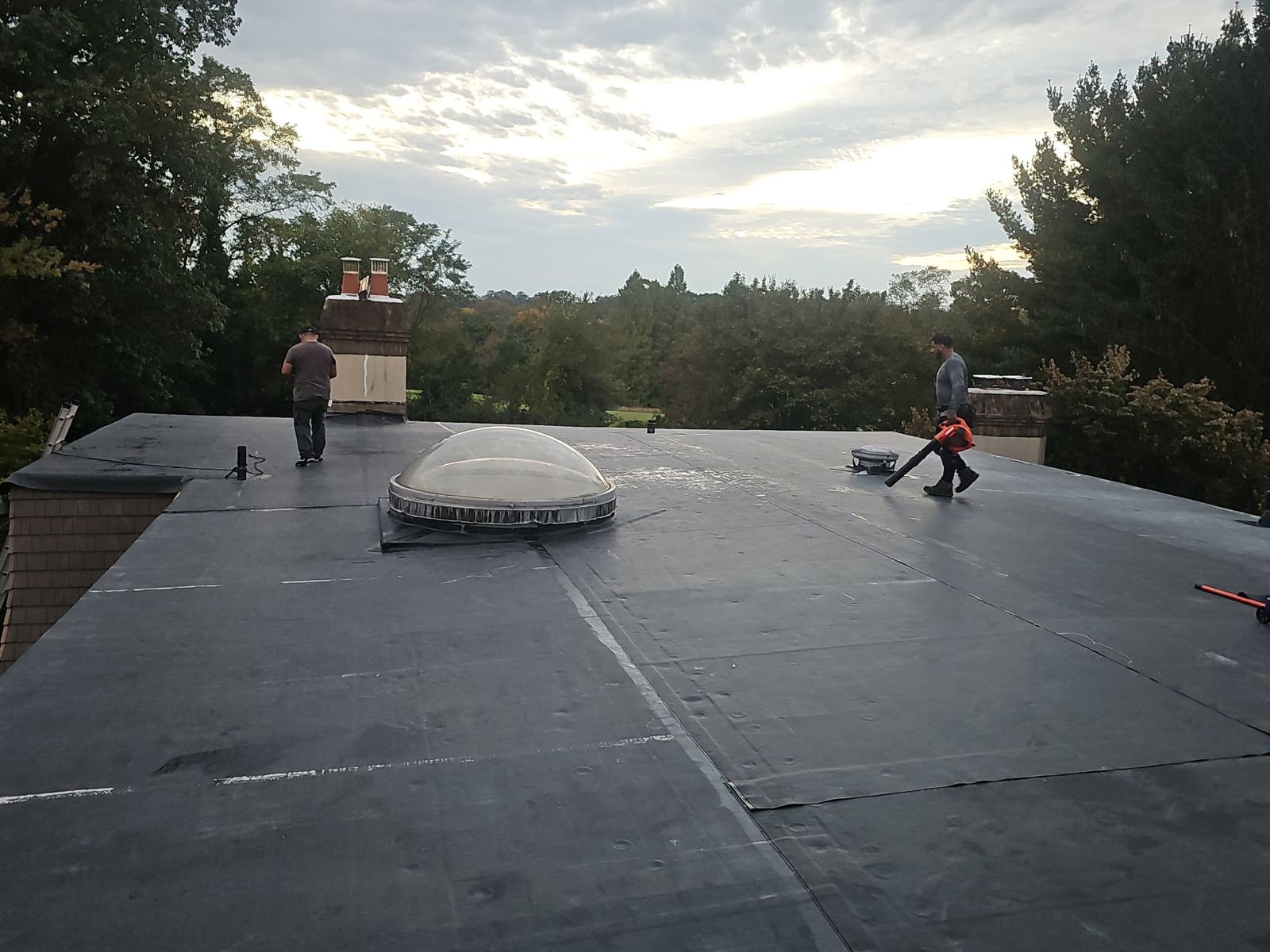
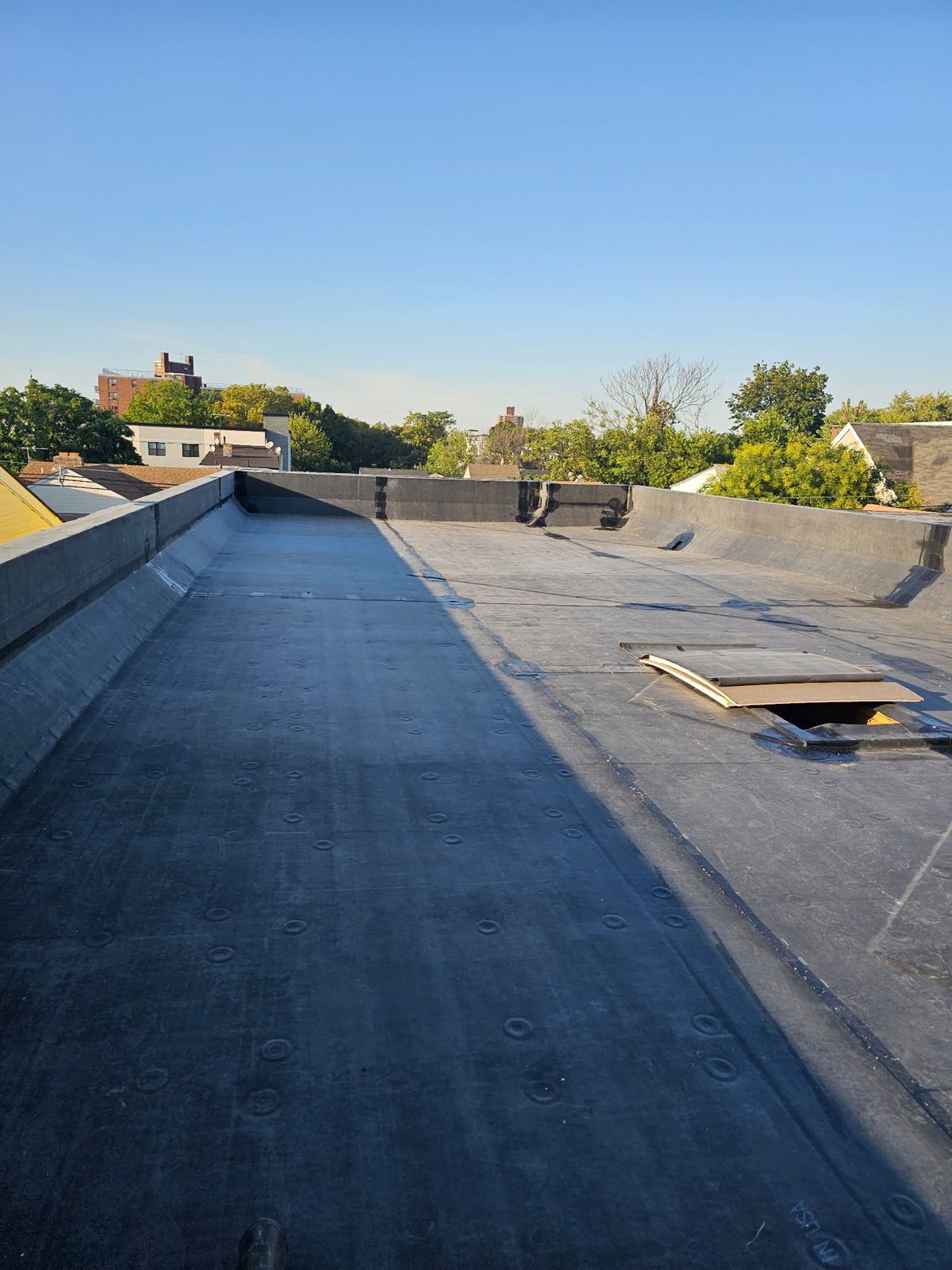
Low-slope additions, sunrooms, and converted rear porches are common features on Eatontown post-war ranches. Standard asphalt shingles installed on pitches below 2:12 fail because slow-draining water backs up under the shingle laps. For these sections, we install multi-ply self-adhered SBS modified bitumen systems or single-ply EPDM membrane systems. We custom-fabricate metal transition flashings to lock the low-slope membrane into the steep-slope shingle field, preventing water penetration at the pitch break.
- Architectural fiberglass-asphalt shingles rated for 110 to 130 mph wind uplift protection
- Self-adhered 2-ply SBS modified bitumen membrane systems for additions under 2:12 pitch
- EPDM single-ply rubber membrane installations for flat or low-pitch roofs
- Custom apron and step flashing integration at wall-to-roof and slope-change interfaces
Attic Ventilation System Balancing
Inadequate roof ventilation leads to heat buildup in summer and moisture condensation in winter. Eatontown's high summer humidity accelerates shingle decay and roof deck deterioration if hot air stays trapped in the attic space. A functional roof system requires a balanced net free ventilation area, combining soffit intake vents with high-profile continuous ridge exhaust vents.
During roof replacement, we calculate the Net Free Vent Area (NFVA) based on total attic square footage. We cut open ridge slots where necessary and install continuous ridge vents equipped with internal weather baffles to block wind-driven rain. If existing soffit vents are blocked by attic insulation, we install rafter air baffles to maintain a clear intake path from the eaves to the ridge.
- Calculation of Net Free Vent Area to meet 1:150 building code ventilation ratios
- Continuous shingle-over ridge vent installation along main roof ridgelines
- Rafter air baffle installation to preserve intake pathways from soffit vents
- Reduction of moisture accumulation, ice dam formation, and excessive summer attic heat
Project Timeline, Site Safety, and Municipal Permits
A typical roof replacement on an Eatontown single-family ranch or split-level home is completed in one to two days under clear weather conditions. Prior to starting construction, Storm Guard Roofing manages the permit application process through the Eatontown Borough Building Department (located at 47 Broad Street) to ensure all municipal requirements are satisfied.
To protect your property during tear-off, we position heavy-duty tarps over landscaping, siding, windows, and outdoor living spaces. Waste material is dropped directly into roll-off dumpsters stationed on driveway protection boards. Once the roof installation is completed, our crew performs multiple magnetic sweeps across all lawn, garden, and driveway surfaces to remove stray roofing nails before final inspection.
- Management of Eatontown Borough building permits and inspection scheduling
- Property protection using heavy tarps, plywood wall shields, and driveway boards
- Direct debris containment using dedicated roll-off dumpster containers
- Multiple magnetic sweeps of lawns and driveways for fastener recovery
Eatontown questions we get asked
- Do I need a building permit for a roof replacement in Eatontown, NJ?
- Yes. The Borough of Eatontown requires a building permit for full roof replacements involving complete tear-offs. Storm Guard Roofing handles the permit filing, submits required structural details to the local construction official, and schedules the final municipal inspection upon job completion.
- How do coastal wind conditions in Eatontown affect shingle installation?
- Eatontown's coastal-plain location exposes roofs to strong wind gusts. We install architectural shingles engineered for high-wind loads, using a six-nail fastening schedule instead of the standard four nails, and install continuous starter strips along eave and rake edges to prevent edge wind lift.
- Can you replace the flat roof on a back addition at the same time as the main roof?
- Yes. We replace low-slope rear additions, sunrooms, and garage roofs alongside steep-slope shingles. We use self-adhered SBS modified bitumen or EPDM membrane systems on low-slope pitches, integrating metal transition flashing beneath the shingle field to ensure a watertight bond between differing roof slopes.
- How does Storm Guard Roofing handle storm damage insurance claims?
- We perform comprehensive damage inspections, document wind uplift or hail impacts with photograph evidence and dimensional measurements, and write line-item estimates. We meet directly with your insurance adjuster at your Eatontown property to review the scope of damage and provide 24/7 emergency tarping services if leaks occur prior to full replacement.
More in Eatontown
Call (201) 403-0024 for a Eatontown inspection, or send the form.