Hanover · Morris County
Roof Repair Services in Hanover Township, NJ
Storm Guard Roofing provides specialized roof repair services throughout Hanover Township, including Whippany, Cedar Knolls, and Malapardis. Hanover contains a distinct mix of residential and commercial properties, ranging from post-war ranches and split-level homes to low-slope commercial buildings along the Route 10 and Ridgedale Avenue business corridors. Severe northern New Jersey winter weather, freeze-thaw cycles, high wind events, and heavy summer rainfall continuously stress roof assemblies across Morris County. Water penetration damages roof decking, wall framing, insulation, and interior finishes if left unaddressed. Storm Guard Roofing brings over 25 years of family-owned experience to every project. We are fully licensed and insured in New Jersey, offering 24/7 emergency response and comprehensive insurance claim handling. Call (201) 403-0024 for immediate leak isolation, structural tarping, and permanent technical repairs.
Common Leak Sources in Hanover Residential and Commercial Roofs
Hanover Township's post-war ranches and split-level residences built during the mid-to-late 20th century feature roof slopes typically ranging between 4/12 and 6/12 pitch. Over decades of exposure, asphalt shingle roofs on these structures develop specific vulnerabilities. The primary point of failure in older ranches occurs along valley sections where accumulated leaf debris retains moisture, accelerating granule loss and mat degradation. Split-level configurations introduce multiple wall-to-roof intersections, increasing the likelihood of water entering behind worn siding or compromised step flashing during wind-driven rain.
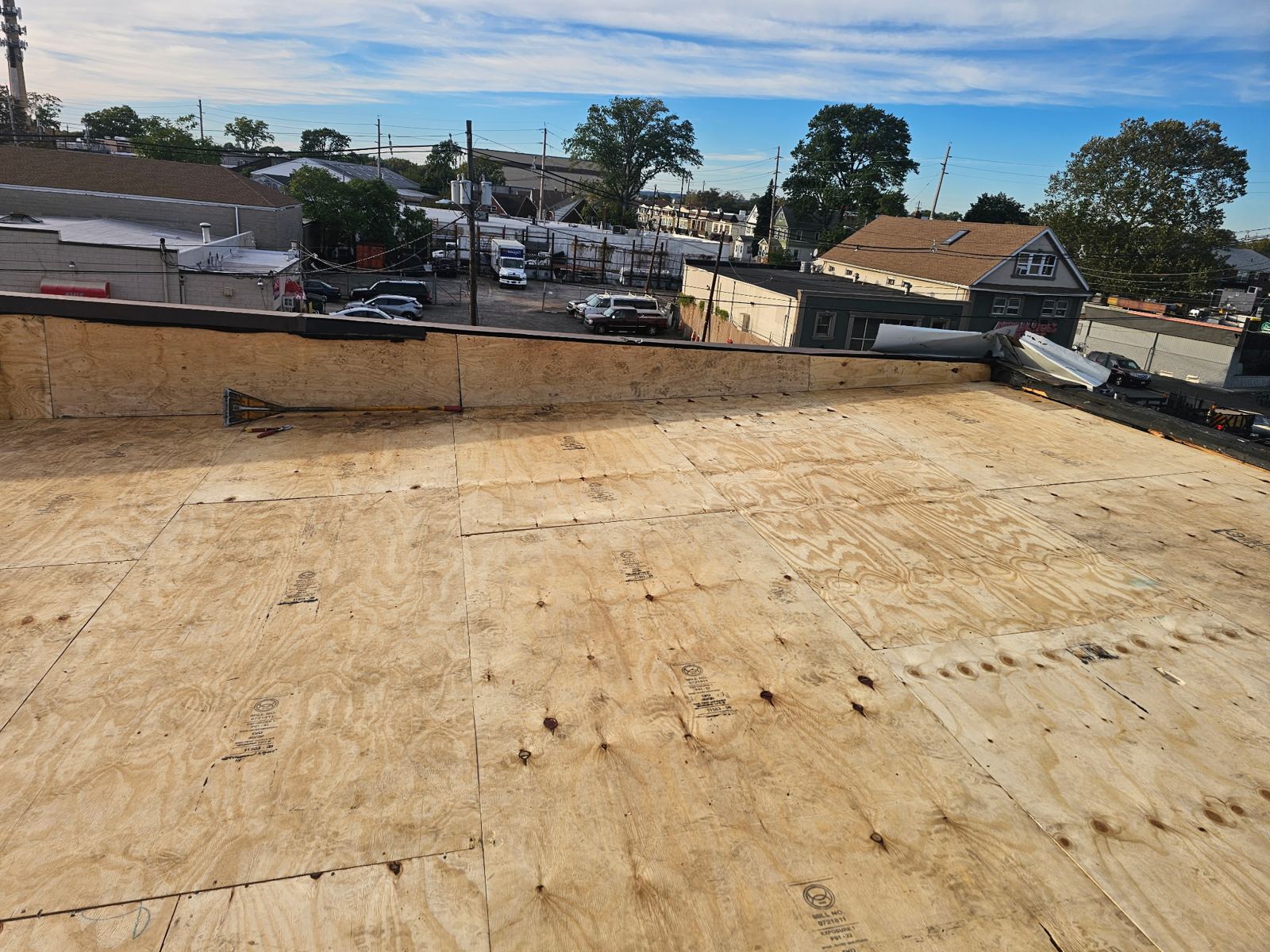
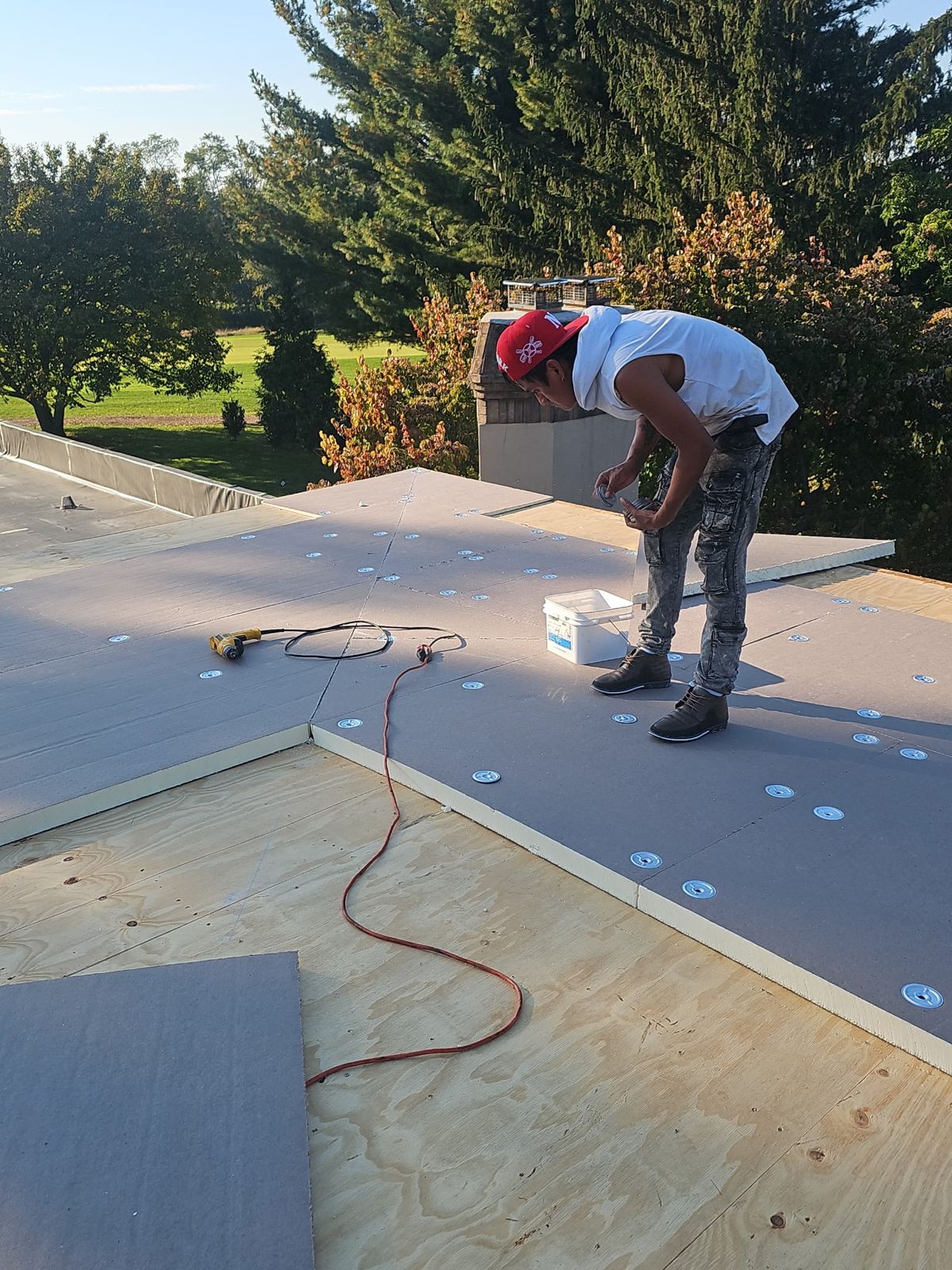
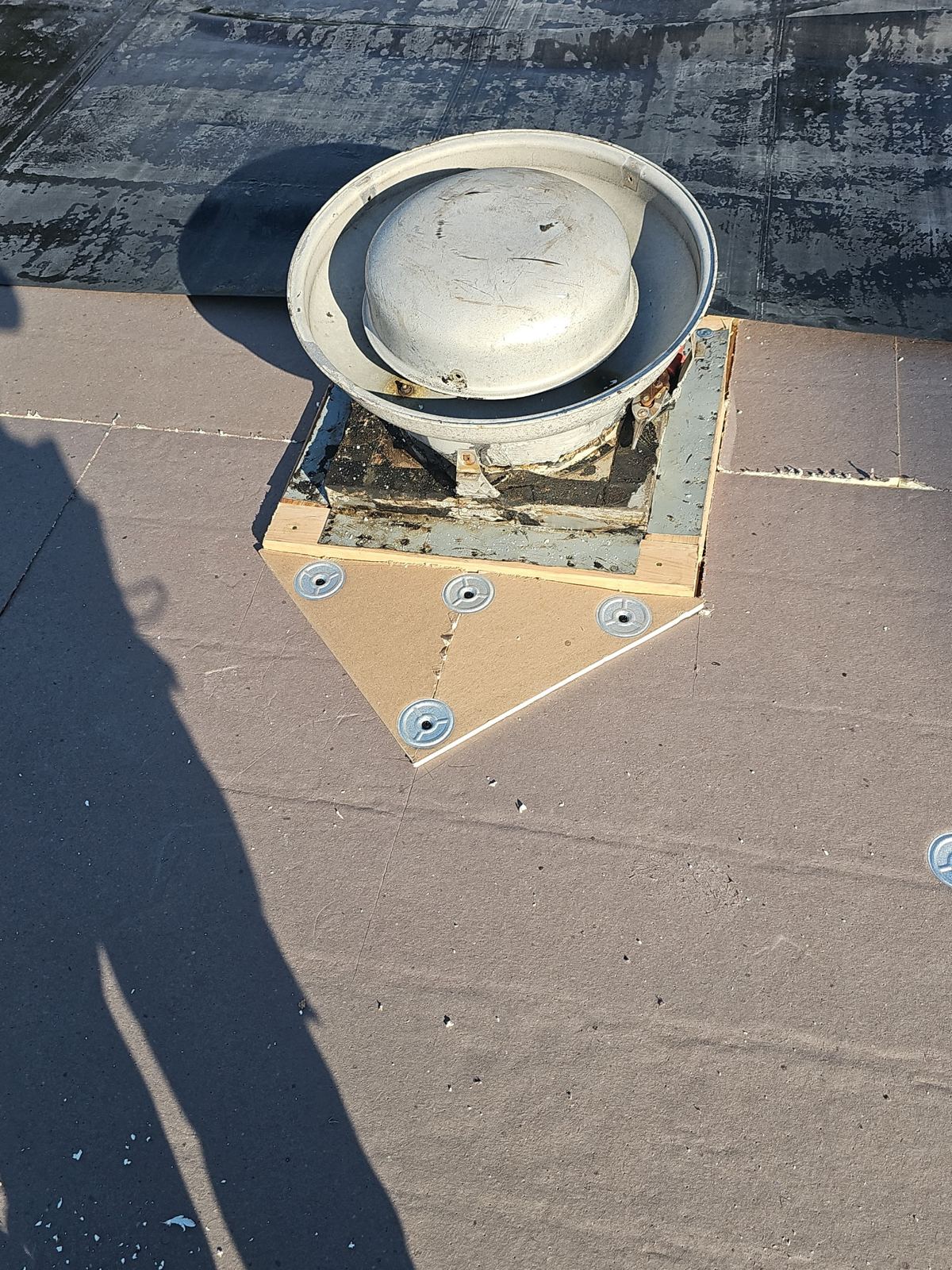
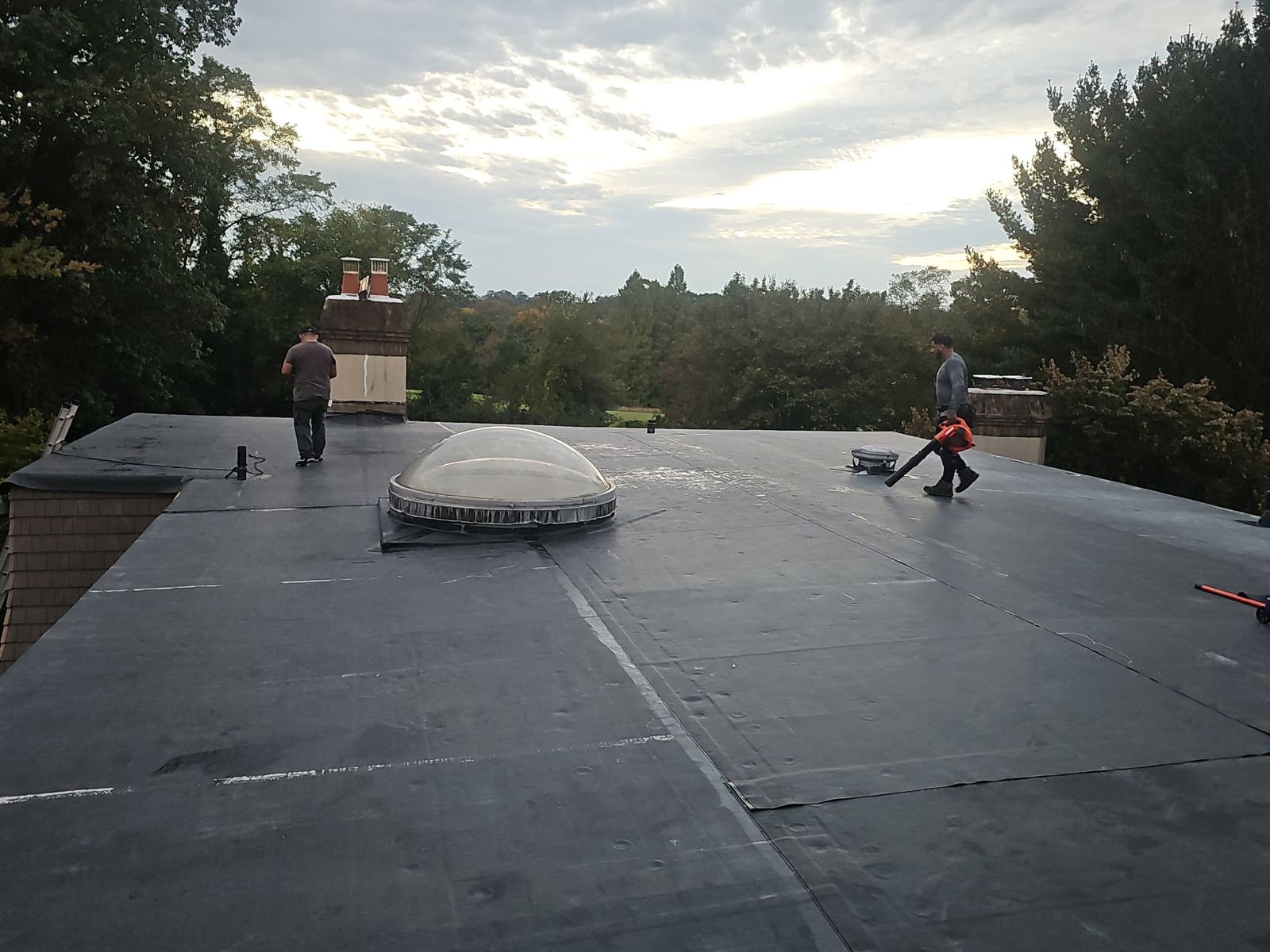
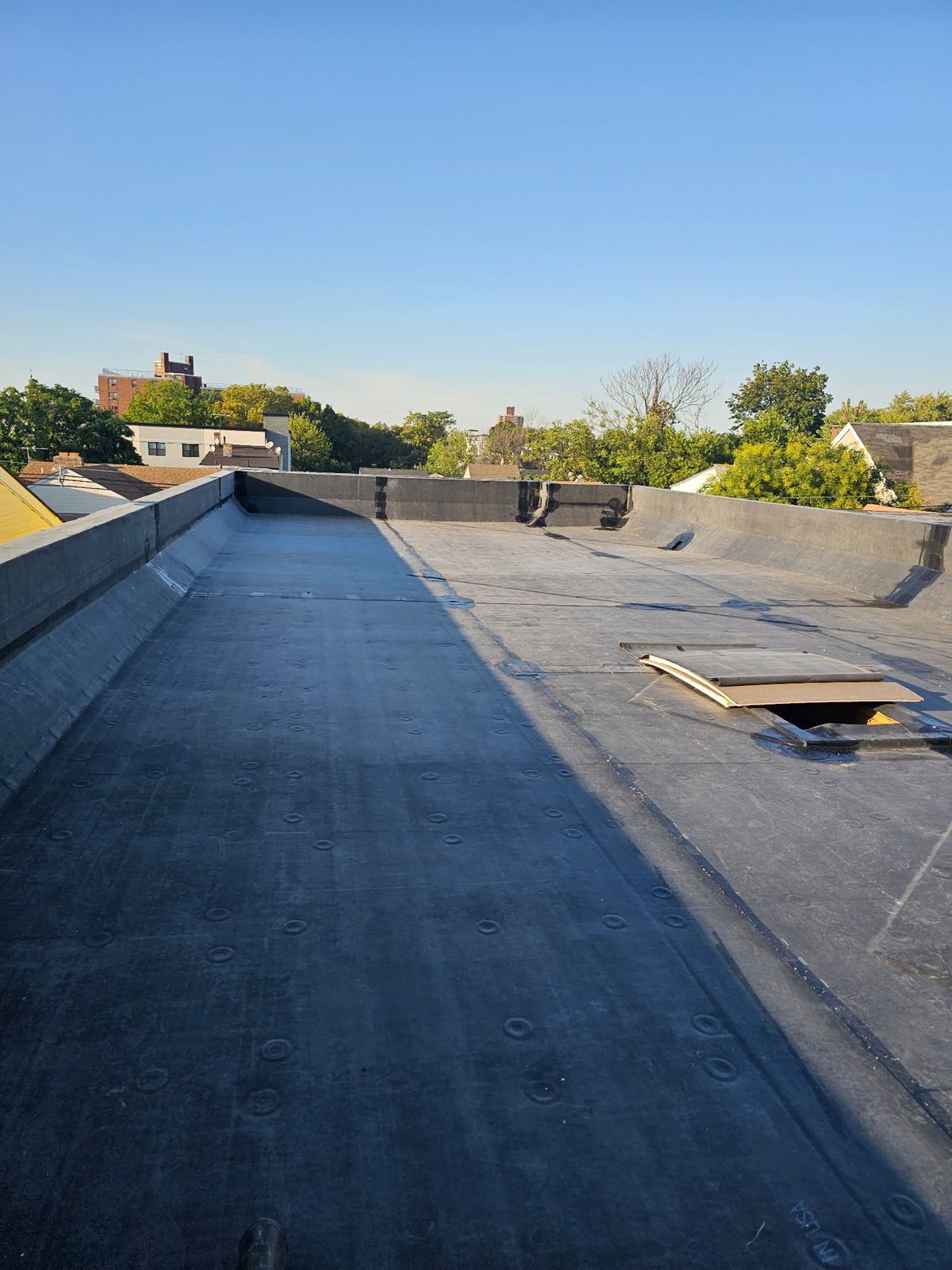
Commercial properties along the Route 10, Route 24, and Ridgedale Avenue corridors present distinct repair requirements. These low-slope structures frequently utilize single-ply membranes such as EPDM or TPO, as well as multi-ply modified bitumen systems. Leaks in these commercial systems rarely manifest directly below the surface entry point. Water migrates horizontally across rigid polyisocyanurate insulation boards before penetrating the steel or concrete deck. Effective repair demands systematic moisture tracing, seam stress testing, and probing flashings at parapet walls, scuppers, and HVAC curb penetrations.
- Deteriorated rubber neoprene pipe boots around plumbing vents causing localized attic leaks.
- Separated lap seams and mechanical attachment failures on low-slope commercial membranes.
- Granule erosion and shingle cracking on aging post-war ranch roof slopes.
- Damaged ridge caps caused by high winds and microburst events.
Step Flashing, Counter-Flashing, and Valley Failures
Transition areas represent the highest statistical risk for structural roof leaks. On split-level homes in Hanover, upper roof levels meet lower sidewalls, requiring individual L-shaped metal step flashings interwoven between each shingle course. When original galvanized steel flashing degrades or thins out, water penetrates behind the exterior wall cladding. Similarly, step flashing surrounding brick chimneys must be integrated with lead counter-flashing embedded directly into mortar joints. Mortar deterioration permits rain to run behind the metal, rotting the underlying timber frame and ceiling joists.
Valleys collect high volumes of runoff during intense storms. In older Hanover installations, open metal valleys or closed-cut shingle valleys experience extreme hydraulic pressure. As winter temperatures fluctuate, freeze-thaw cycles push water upward beneath shingle edges—a process known as ice damming. Storm Guard Roofing repairs compromised valleys by removing damaged shingle courses, inspecting the wooden substrate for rot, installing self-adhering polymer-modified ice and water membrane, and re-shingling with mechanical fasteners set to exact manufacturer depth specs.
- Precision installation of copper or heavy-gauge aluminum step flashing at sidewall junctions.
- Tuck-pointing and lead counter-flashing resetting along brick chimney bases.
- Valley reconstruction using self-adhering ice and water protection underlayment.
- Sealing and mechanical refastening of low-slope transition metal flashings.
Emergency Storm Damage Repair and 24/7 Tarping
High wind storms, severe summer thunderstorms, and ice events in Morris County cause sudden physical damage to roofing systems. Tree limbs falling onto split-level or ranch roofs puncture structural decking, while severe wind gusts uplift unsealed shingle tabs along eaves and rakes. Exposed wood deck or compromised underlayment allows active water entry into living spaces. Emergency stabilization must occur immediately to limit interior drywall, electrical, and structural framing damage.
Storm Guard Roofing operates a 24/7 emergency response system accessible at (201) 403-0024. Our technicians deploy heavy-duty 6-mil reinforced polyethylene tarps directly to damaged roof sections. Emergency tarps are secured using 2x4 wood furring strips fastened directly into rafter lines, ensuring stability against subsequent wind pressure without causing unnecessary secondary damage. We fully document all storm damage with photographic evidence, itemized structural estimates, and precise loss details required by insurance adjusters for residential and commercial property claims.
- 24/7 emergency response dispatch across all Hanover Township neighborhoods.
- Structural weatherproofing using anchored 6-mil reinforced tarping systems.
- Complete damage documentation, photo logging, and insurance claims assistance.
- Removal of fallen tree debris and temporary structural shoring where necessary.
Repair vs. Replacement: Structural and Cost Evaluation
Property owners frequently face the decision between localized roof repair and total roof replacement. A full tear-off represents a major capital expenditure, whereas a targeted structural repair addresses active leak points at a fraction of the cost. A repair is technically and financially appropriate when the existing shingle matrix retains structural flexibility, granule adhesion exceeds 70%, and localized damage is isolated to fewer than two roof squares (200 square feet). If the underlying plywood or tongue-and-groove deck remains sound, targeted repairs extend total system service life by 5 to 10 years.
Conversely, widespread thermal degradation, extensive shingle blistering, curled shingle tabs across multiple exposures, or widespread roof deck rot indicate that spot repairs will only defer an inevitable replacement. Storm Guard Roofing conducts rigorous inspections to evaluate shingle brittleness using manual bend tests, moisture meters for deck substrate saturation, and visual assessments of structural rafter sag. We provide objective, factual evaluations so Hanover homeowners can make informed financial decisions without sales pressure.
- Detailed evaluation of shingle granule retention, flexibility, and mat condition.
- Moisture detection in wood deck boards, rafters, and interior insulation.
- Cost-benefit analysis comparing targeted repair expenditure against full replacement.
- Clear written scopes of work detailing exact material and labor specifications.
Hanover Building Codes and Permitting Standards
Roof repair work in Hanover Township must strictly adhere to the New Jersey Uniform Construction Code (UCC). While small-scale emergency repairs involving minor shingle replacement or spot flashing touch-ups typically do not require full structural plan submissions, larger structural repairs or multi-square re-roofing projects must be registered with the Hanover Township Construction Department in Whippany. All work must conform to local snow load requirements, uplift wind speed ratings, and manufacturer-specified fastening schedules.
In New Jersey, local codes mandate specific ice dam protection along the lower roof edges. During repairs near eaves, we ensure that self-adhering ice and water membrane extends at least 24 inches inside the interior warm wall line. Furthermore, all low-slope commercial repairs along Hanover corridors must maintain compliance with fire safety ratings and local municipal drainage requirements. Storm Guard Roofing handles permit application filings, inspection scheduling, and structural compliance certification.
- Compliance with Hanover Township Construction Department building code requirements.
- Adherence to New Jersey Uniform Construction Code (UCC) wind uplift standards.
- Verification of ice dam membrane installation along eave borders.
- Full licensing and liability insurance compliance for residential and commercial sites.
Hanover questions we get asked
- How quickly can Storm Guard Roofing respond to an active roof leak in Hanover?
- Storm Guard Roofing provides 24/7 emergency dispatch throughout Hanover Township, including Whippany and Cedar Knolls. Call (201) 403-0024 for immediate response. Our emergency crews arrive equipped to install structural tarps, trace moisture infiltration, and mitigate active leaks to prevent further interior property damage.
- Are post-war ranch and split-level roofs in Hanover prone to specific leak issues?
- Yes. Post-war split-level homes in Hanover feature multiple wall-to-roof transitions where step flashing can fail or loosen over time. Ranches often experience valley deterioration and pipe boot failure due to sun exposure and ice accumulation during New Jersey freeze-thaw cycles. Targeted repair of these specific components restores system integrity.
- How do you trace and repair leaks on low-slope commercial roofs along Route 10?
- Low-slope EPDM, TPO, and modified bitumen systems along Hanover commercial corridors require probing of lap seams, perimeter flashings, scuppers, and HVAC curb penetrations. Water often travels horizontally across insulation boards before penetrating the interior deck. We conduct mechanical probes and thermal checks to locate entry points and weld or patch membranes to manufacturer standards.
- Does Storm Guard Roofing assist Hanover homeowners with insurance claims for storm damage?
- Yes. Storm Guard Roofing assists with storm damage claims involving hail, high winds, and falling tree limbs. We provide comprehensive photo documentation, detailed repair scope estimates, and meet directly with insurance adjusters on site to ensure all structural repair costs are accurately represented.
More in Hanover
Call (201) 403-0024 for a Hanover inspection, or send the form.