Kearny · Hudson County
Roof Repair Services in Kearny, NJ
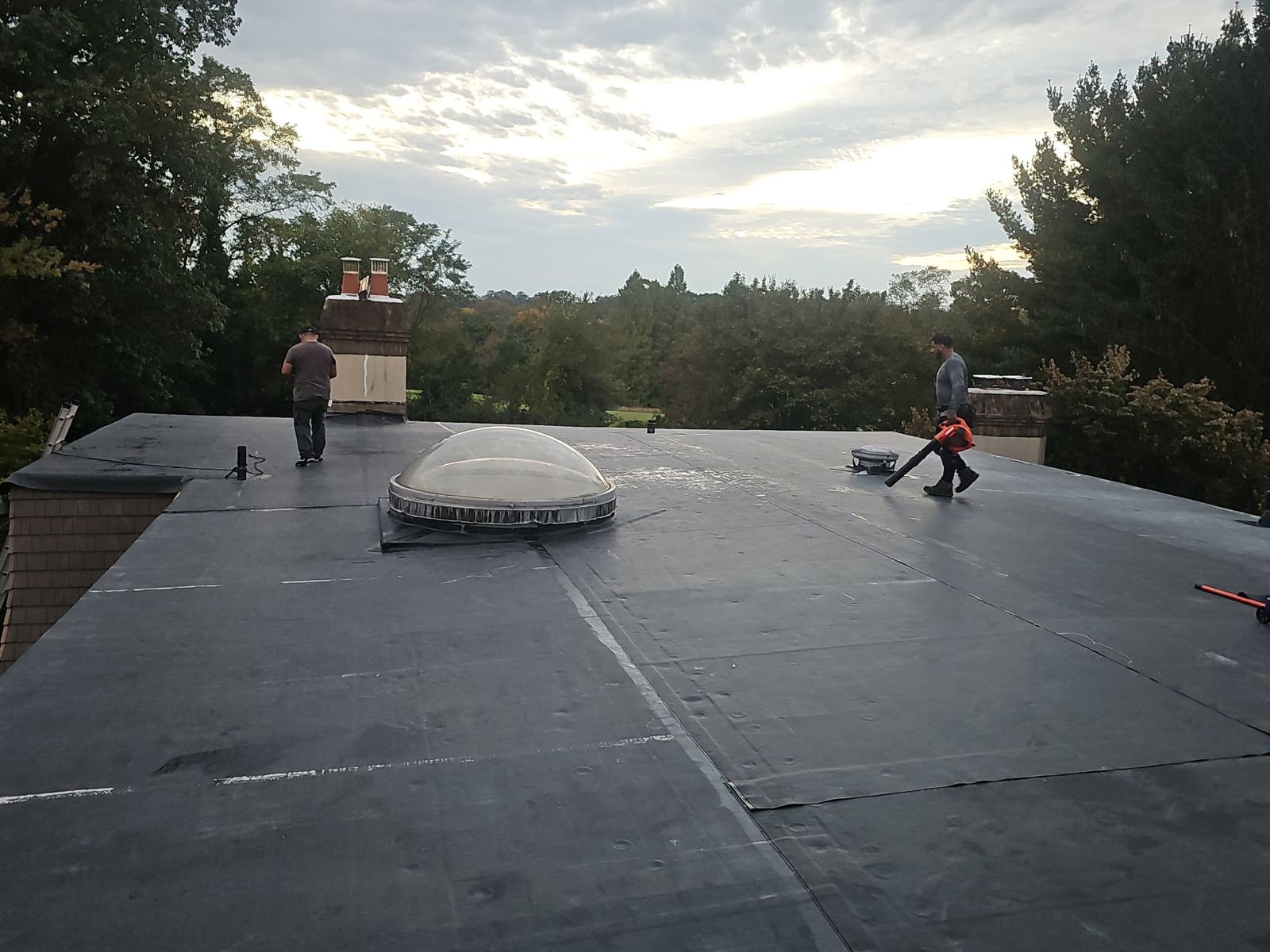
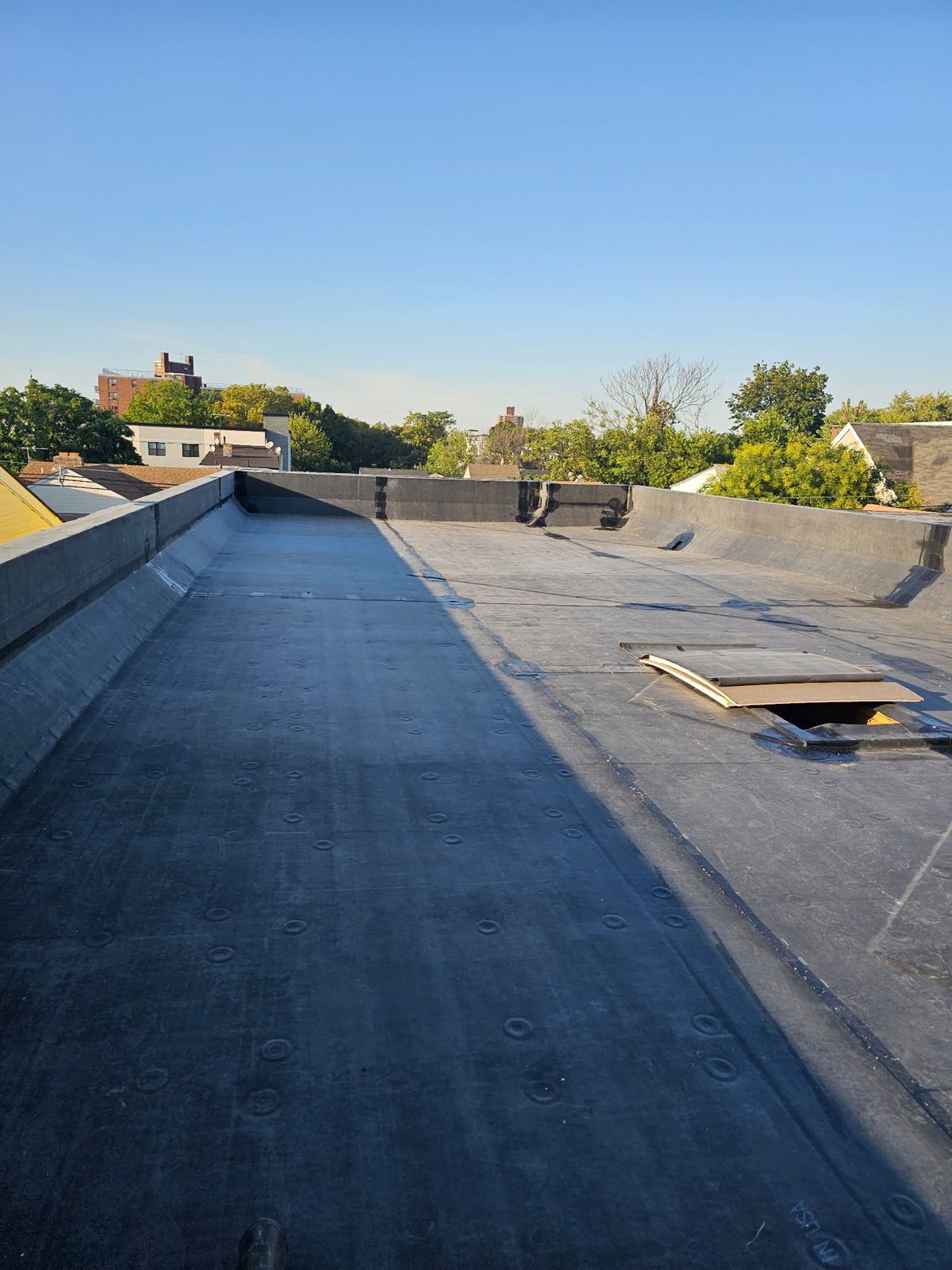
Storm Guard Roofing provides targeted, technical roof repair services in Kearny and Hudson County. Operating as a family-owned business for over 25 years, our team is fully licensed and insured in New Jersey, maintaining a 24/7 emergency response team for active water leaks and structural storm damage. Call (201) 403-0024 for immediate assistance. We handle insurance claims directly, supplying line-item damage reports, photographic proof, and detailed scope specifications required by adjusters. Kearny residential districts—including the historic Manor section and the high-density residential streets running parallel to Kearny Avenue—present distinct roofing challenges. The municipal building stock largely features dense two-family stock with flat rear roofs, parapets, and salt-air corrosion on metal caps from the adjacent Passaic and Hackensack Rivers. Generic repairs fail when multi-layer urban roofs are treated like standard suburban gables. We isolate precise leak locations—such as broken wall step-flashing, open rubber membrane seams, and rusted parapet caps—and perform permanent structural repairs to restore water tightness without pushing full roof replacements.
Kearny Housing Stock and Flat-to-Pitch Transition Failures
The structural layout of multi-family homes in Kearny creates recurring failure points. Many of the town's two-family houses feature steep-slope shingle fronts paired with low-slope or flat roof additions at the rear. The interface where a sloped roof drains directly onto a flat EPDM or modified bitumen membrane carries heavy water volume during rainfall. If the transition tie-in lacks self-adhering membrane underlayment and heavy-gauge transition flashing, runoff forces its way under the lower courses of asphalt shingles.
Masonry parapet walls running along shared property lines or outer edges present another leak vector. Bricks and mortar joints move independently of timber roof framing during temperature shifts. Cracks in parapet mortar allow wind-driven rain to bypass top wall flashings and travel down interior wall cavities, emerging as ceiling stains far from the external wall opening. Furthermore, salt-air exposure from nearby tidal rivers accelerates oxidation on galvanized steel and aluminum coping caps. Pitted caps allow moisture to seep straight into structural brickwork.
- Transition Seam Splitting: Moisture penetration at the junction where sloped asphalt shingles meet rear low-slope rubber membranes.
- Parapet Mortar Joint Decay: Fractured brick mortar allowing water to slip behind vertical turn-up flashings.
- Salt-Air Metal Degradation: Corrosion and pinhole leaks on parapet coping caps, copper valleys, and aluminum wall flashings.
- Substrate Board Rot: Water saturation in underlying tongue-and-groove planking beneath flat membrane roofs.
Step Flashing, Mortar Reglets, and Valley Repairs
Flashing strips protect vulnerable junctions where roof lines intersect vertical chimneys, dormers, and brick sidewalls. In older Kearny homes, wall flashings degrade due to building settlement, thermal expansion, and drying caulks. When counter-flashing is merely caulked to the face of a wall instead of cut into a mortar joint with a reglet groove, moisture breaches the sealant bond and runs down behind step flashing cards.
Valleys direct concentrated water flow off sloped roof planes. Woven asphalt valleys crack over time across their center fold due to heat and ice accumulation. Open metal valleys fabricated from lower-grade steel develop rust holes under salt-air exposure. Our repair process involves removing compromised materials to exposed wood decking, inspecting framing members for structural integrity, installing high-temperature ice and water shields, and securing heavy-gauge metal flashing correctly set into masonry reglets.
- Reglet Counter-Flashing Integration: Saw-cutting brick mortar joints to insert rigid metal counter-flashing rather than applying surface sealant.
- Step Flashing Replacement: Inserting new heavy-gauge lead or aluminum step cards along dormer walls and masonry intersections.
- Valley Pan Reconstruction: Installing heavy-duty metal valley pans over self-adhering membranes to handle heavy rainfall.
- Chimney Apron Refitting: Custom-fitting base, step, and cap lead flashings to seal brick chimneys against rear runoff.
24/7 Emergency Tarping and Storm Damage Mitigation
Severe weather events in Hudson County drag high winds and torrential rain across Kearny, lifting aged shingles and tearing open membrane seams on flat rear roofs. Storm Guard Roofing operates a 24/7 emergency repair unit to seal active leaks immediately. Immediate emergency mitigation limits structural wood saturation, keeps ceiling drywall intact, and prevents water entry into electrical distribution boxes. Call (201) 403-0024 for fast emergency response.
We secure emergency tarps mechanically rather than relying on unanchored sandbags or bricks that shift during high winds. Tarps are pulled taut over ridges or parapet edges and anchored with wooden 1x2 furring strips fastened directly into structural rafters. Once the structure is temporarily secured, we formulate a permanent repair plan and document all storm damage to assist with insurance claim processing.
- Mechanical Tarp Anchoring: Securely fastened tarps utilizing wood furring strips engineered to resist high wind pressure.
- Shingle Wind-Uplift Repair: Replacing blown-off shingle tabs and weaving replacement shingles into intact surrounding fields.
- Flat Roof Membrane Patching: Heat-welding or cold-adhesive patching over tears, punctures, and split seams on flat EPDM surfaces.
- Insurance Claim Support: Providing detailed site documentation, damaged photo logs, and itemized repair quotes for insurance adjusters.
Evaluating Repair Economics Versus Complete Replacement
Property owners in Kearny are frequently told that a localized ceiling leak requires a complete, costly roof tear-off. At Storm Guard Roofing, we base recommendations on physical roof conditions. If the surrounding shingles maintain full asphalt granule coverage, remain flexible, and adhere to the underlying deck, isolated spot repairs are structurally sound and cost-effective. A targeted flashing or membrane repair can extend a roof's operating life by 5 to 10 years.
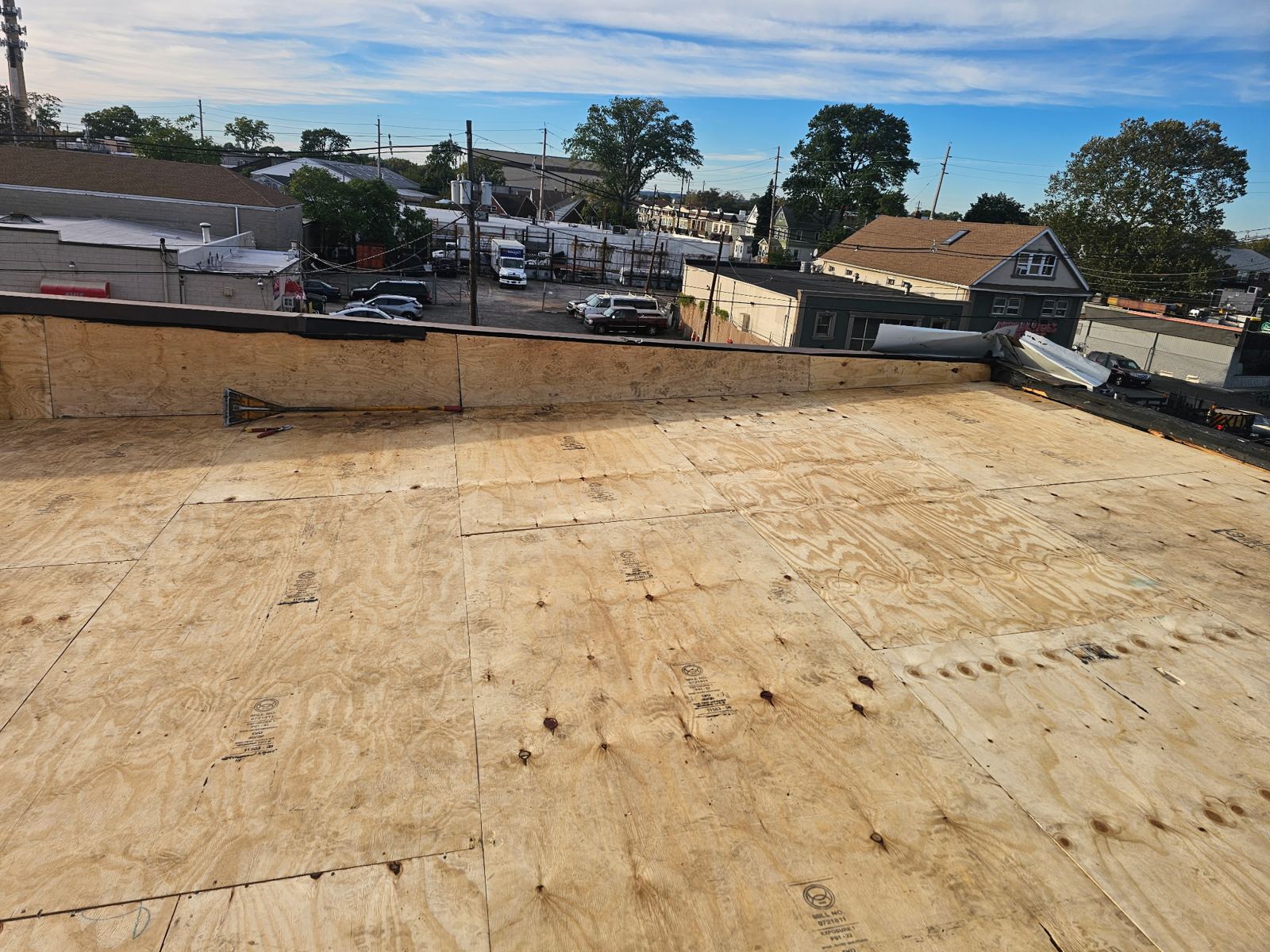
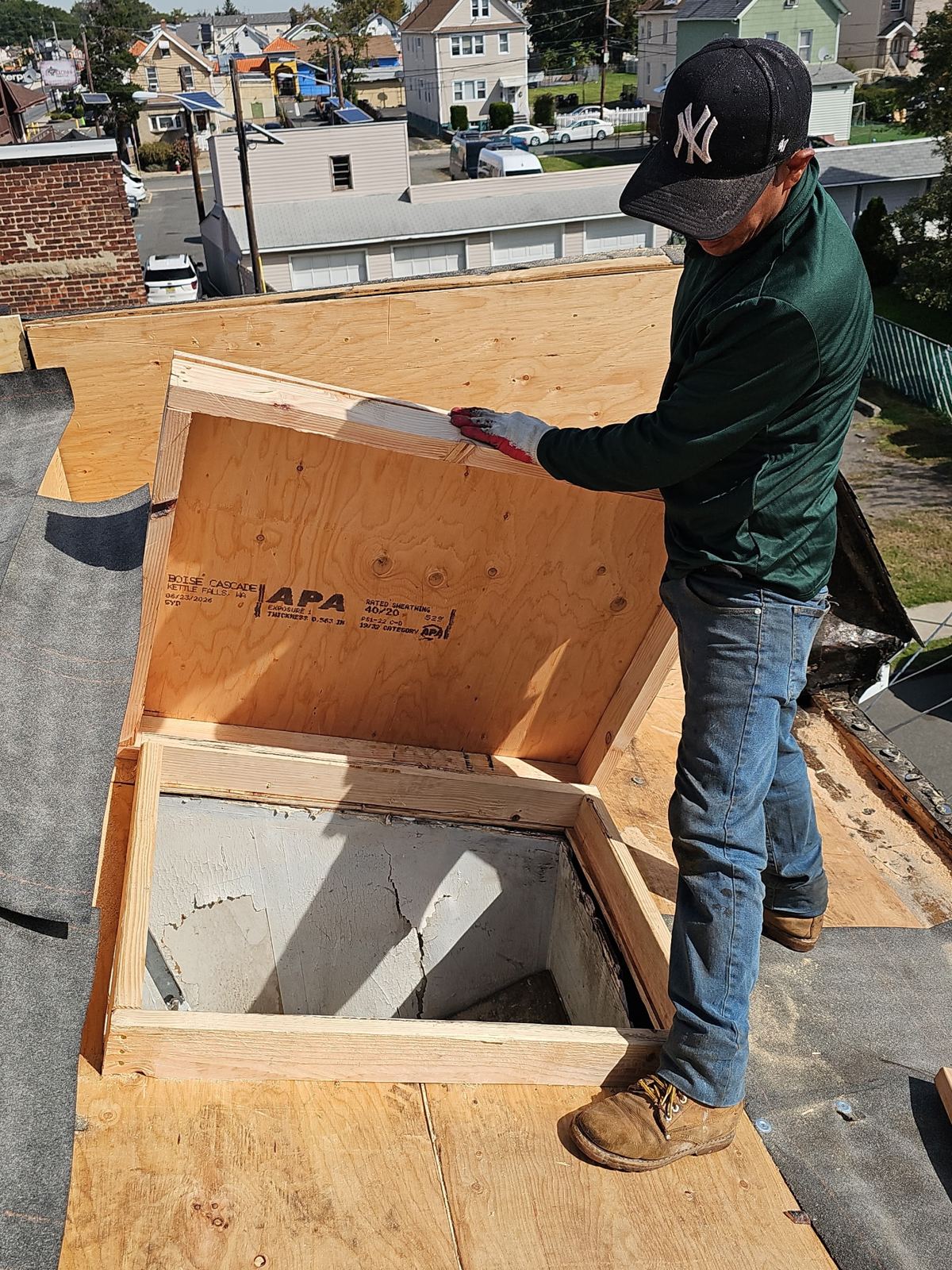
We test the pliability of original shingles to verify they can be lifted during repair work without cracking. We also examine underlying wood decking from inside attic spaces or scuttle hatches to confirm deck structural strength. If rot is isolated to a localized area—such as around a leaking pipe boot or low spot on a flat roof—we remove the compromised wood, fasten new CDX plywood decking, install new membrane or shingle layers, and leave sound roof areas undisturbed.
- Shingle Flexibility Testing: Checking asphalt mat integrity to confirm repairability without cracking neighboring shingles.
- Targeted Deck Replacement: Cutting out rotted plywood or planking down to healthy rafter bays and inserting new structural decking.
- Cost-Benefit Analysis: Comparing surgical repair costs against full replacement expenses to maximize existing asset life. purchase.
- Localized Component Upgrades: Replacing failing pipe boots, wall flashings, or ridge vents while preserving intact field shingles.
Kearny Building Code Compliance and Jobsite Logistics
Roofing repairs in the Town of Kearny must follow New Jersey Uniform Construction Code mandates. Minor maintenance work and localized spot repairs typically do not require extensive municipal reviews, but structural framing alterations and significant deck replacements require formal permit filings. Storm Guard Roofing coordinates municipal filings directly with the Kearny Construction Code Department and schedules required field inspections.
Jobsite management requires careful attention on dense Kearny streetscapes where houses sit close to side lot lines. Homes along residential streets like Johnston Avenue or Davis Avenue have narrow walkways and shared driveways. We deploy containment nets, plywood tarps, and magnetic catchers to protect neighboring properties, side windows, and parked cars from loose debris during repair work.
- Municipal Permitting Handling: Managing necessary filings with the Kearny Construction Code Department on Kearny Avenue.
- Narrow-Lot Debris Protection: Installing vertical debris nets to protect neighboring structures in close-density residential zones.
- Post-Repair Testing: Performing controlled water tests on completed flashings and flat roof seams before sign-off.
- Magnetic Site Sweeps: Executing thorough magnetic sweeps across driveways and yards to eliminate metallic fasteners.
Kearny questions we get asked
- How do you repair leaks where a sloped front roof meets a flat rear roof on a Kearny two-family home?
- We strip back the lowest shingle courses on the sloped roof and the edge of the flat roof membrane. We inspect the wood substrate for rot, install a self-adhering ice and water membrane across the junction, and integrate custom-bent transition flashing beneath new asphalt shingles and tied directly into the flat EPDM or modified bitumen membrane.
- Does salt air from the Passaic and Hackensack Rivers affect metal roof caps in Kearny?
- Yes. Tidal salt air accelerates oxidation on standard galvanized metal parapet coping caps and flashing. During repairs, we inspect metal caps for rust pitting and pinhole leaks. We replace corroded caps with heavy-gauge aluminum, stainless steel, or custom-fabricated copper that resists salt-air corrosion.
- Do minor roof repairs in Kearny require a construction permit from the town?
- Minor maintenance and non-structural spot repairs typically do not require full construction permits under New Jersey UCC regulations. However, if a repair requires replacing structural decking sheets or modifying framing, permits are filed with the Kearny Construction Code Department on Kearny Avenue. Storm Guard Roofing handles all permit determinations and filings.
- What emergency steps should I take if a leak opens up during a severe storm in Kearny?
- First, contain interior water with buckets and push furniture away from the area. If water is pooling behind ceiling drywall, carefully poke a small hole in the center of the bulge to relieve weight and prevent a sudden ceiling collapse. Call Storm Guard Roofing at (201) 403-0024 for immediate 24/7 emergency tarping and temporary leak containment.
More in Kearny
Call (201) 403-0024 for a Kearny inspection, or send the form.