Livingston · Essex County
Roof Repair Services in Livingston, NJ
Storm Guard Roofing provides specialized roof repair services in Livingston, New Jersey. With over 25 years of experience as a family-owned, licensed, and insured contractor, we focus on identifying and fixing localized roof defects before water compromises your home interior. We provide 24/7 emergency response for active leaks, storm damage, and emergency tarping, alongside insurance claims assistance for weather-related losses. Call (201) 403-0024 to speak directly with a technician. Livingston homes present specific roofing challenges based on age, structure, and local weather patterns. Rather than selling full replacements when original materials remain functional, our repair service addresses targeted failure points including flashing defects, worn valleys, and roof-to-wall transitions.
Common Leak Sources on Livingston Residential Properties
Local building stock in Livingston features post-war ranches and splits, many expanded with additions that create new valleys and tie-ins. Neighborhoods such as Bel-Air, Riker Hill, and Northfield contain many homes where original split-level designs or single-story ranches have been expanded over time with second-story additions or master suite extensions.
These architectural modifications alter how water drains across the roof surface. Where new roof planes intersect with older framing, high-volume runoff concentrates at transition flashing and new valley lines. In split-level homes, multi-tiered roof elevations create long sidewall steps that are prone to wind-driven rain penetration and winter ice dams.
- Valley intersections where secondary addition slopes channel water onto existing lower roof sections.
- Step flashing along vertical wall junctions on multi-level split-level layouts.
- Plumbing vent boots deteriorated by solar radiation and thermal expansion.
- Chimney counter-flashing separated from mortar joints by seasonal freeze-thaw cycles.
Flashing and Valley Failure Mechanics
Valleys and flashings direct concentrated volumes of water off your roof. In Essex County, winter freeze-thaw cycles turn minor gaps in these transition points into active indoor leaks. When valley metal fails or step flashing loses sealant integrity, water migrates beneath shingles and saturates the underlayment and plywood decking.
Woven and closed-cut shingle valleys experience accelerated granule loss from continuous water flow. As granules wear away, raw asphalt exposure leads to surface cracking. Step flashings along dormers and split-level sidewalls rely on precise layering between shingle courses. Poor initial installation, loose fasteners, or metal corrosion allow water to track sideways into wall cavities before leaking onto interior ceilings.
- Corrosion and perforation in aged aluminum or copper valley liners.
- Delamination of organic underlayment felt under high-volume water channels.
- Counter-flashing pull-away along brick and stone chimney structures.
- Fastener back-out along step flashing flanges due to wood deck movement.
Storm Damage, Emergency Tarping, and Insurance Claims
Severe weather events in northern New Jersey cause sudden damage to asphalt shingle roofs. High winds uplift shingle tabs, breaking the factory adhesive seal and pulling fasteners through the mat. Tree canopy density across Livingston also creates hazards, as heavy branches snap during windstorms or ice events and puncture roof decks.
Storm Guard Roofing provides 24/7 emergency response to protect homes immediately after storm damage occurs. Our emergency tarping service secures vulnerable roof sections with heavy-duty poly tarps anchored with wood furring strips. This stops ongoing water entry while long-term repairs are planned. We assist with insurance claims by documenting damage, writing detailed repair specifications, and meeting with adjusters on site.
- 24/7 emergency response for active water intrusion and tree impact damage.
- Secure emergency tarping fastened to internal framing to prevent wind lift.
- Complete photo documentation and itemized scope of work for insurance adjusters.
- Direct coordination with insurance field representatives during site visits.
Repair vs. Replacement Financial Logic
Replacing a roof prematurely creates unnecessary expense when structural components and the majority of shingles remain sound. Deciding between localized repair and full replacement requires an objective evaluation of shingle age, granular retention, and deck integrity.
If an architectural shingle roof is under 15 years old, retains structural flexibility, and suffers damage limited to a single slope or valley detail, localized repair is the financially practical choice. Replacing isolated valley metal, step flashing runs, or damaged shingle fields restores watertight performance at a fraction of full replacement costs. Full replacement becomes necessary only when shingles across all exposures exhibit widespread brittleness, curling, or systemic granule loss.
- Roof system under 15 years old with isolated damage favors repair over replacement.
- Sound underlying decking with isolated flashing failure points warrants targeted repair.
- Widespread shingle cracking across all slopes indicates end-of-life status.
- Repair costs exceeding 30-40% of total replacement cost suggest full replacement evaluation.
Livingston Permits, Codes, and Technical Standards
Roof repairs in Livingston must conform to the New Jersey Uniform Construction Code (NJUCC). Minor shingle repairs and flashing maintenance typically do not require permits from the Livingston Township Construction Department, allowing for rapid repair execution. If structural decking or rafter repair is required, local building codes govern framing sizes and ice barrier installation.
When carrying out roof repairs, Storm Guard Roofing installs self-adhered ice and water shield membranes beneath repaired valley bases and flashing zones. This secondary layer extends inside the interior warm wall line, preventing back-up from ice dams during winter months.
- Compliance with NJUCC requirements for structural framing and underlayment repair.
- Installation of polymer-modified self-adhering membranes in critical leak zones.
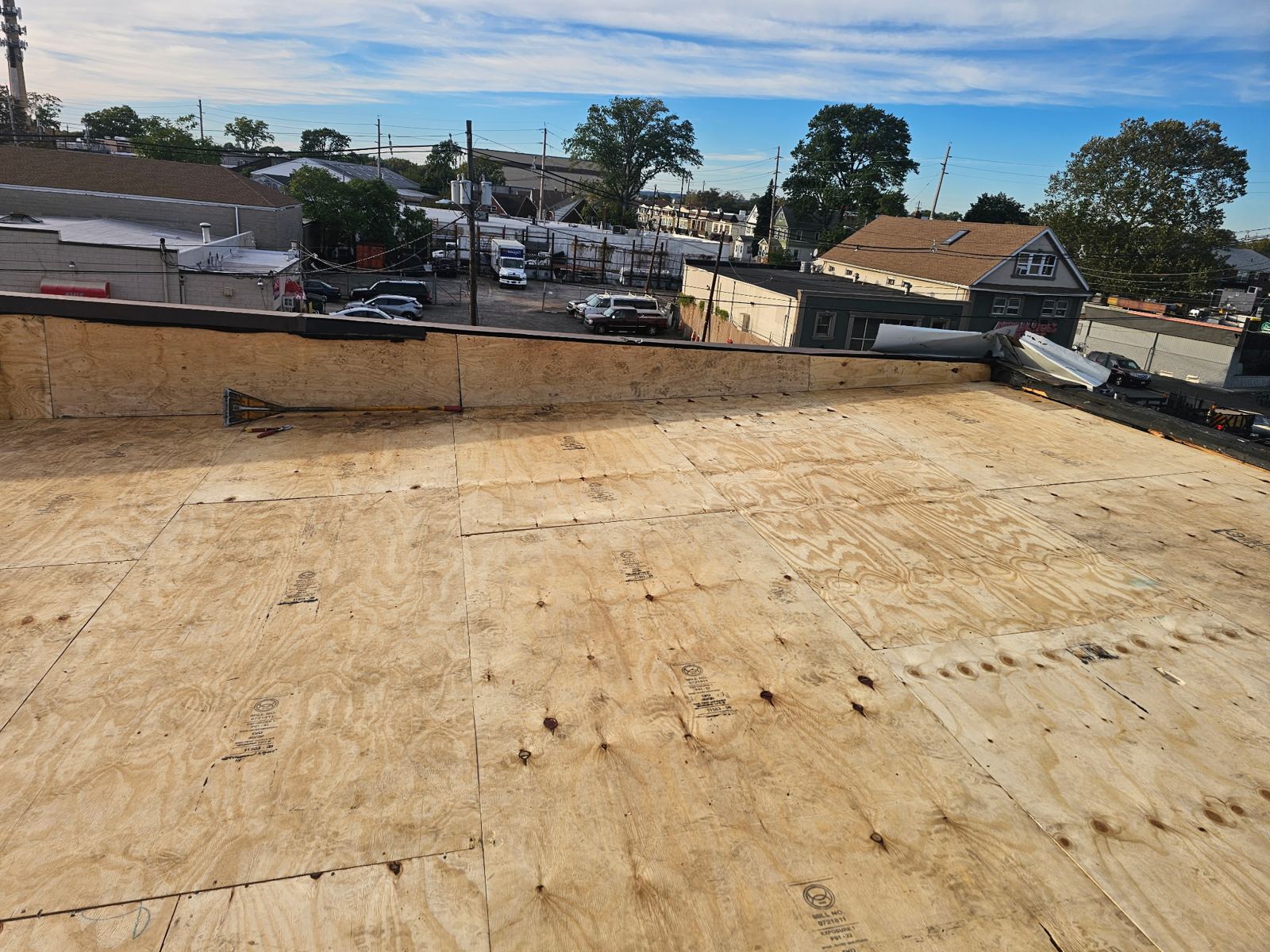
- Selective deck board replacement using CDX plywood matching original thickness.
- Clean-up using magnetic sweepers to remove fasteners from driveways and lawns.
Livingston questions we get asked
- How do additions on Livingston split-level homes increase leak risks?
- Additions create complex roof intersections, including low-slope tie-ins and new valley runs. These structural junctions receive concentrated water runoff from upper slopes, accelerating shingle wear and stressing flashing connections.
- Does Livingston Township require a permit for roof leak repairs?
- Minor roof repairs and flashing fixes generally do not require a construction permit in Livingston Township. However, if structural roof decking or framing repairs are required, permit filings and inspections may apply.
- Can Storm Guard Roofing handle my insurance claim after storm damage in Livingston?
- Yes. We document all storm damage with detailed photographs, prepare line-item scope estimates, and meet directly with your insurance adjuster on site to assist throughout the claim process.
- How fast can Storm Guard Roofing respond to an emergency roof leak in Livingston?
- We provide 24/7 emergency response. In cases of tree impact, severe wind damage, or active indoor leaks, our crews are dispatched promptly to secure the roof with emergency tarping.
More in Livingston
Call (201) 403-0024 for a Livingston inspection, or send the form.