Middlesex · Middlesex County
Roof Repair Services in Middlesex, Middlesex County, NJ
Storm Guard Roofing provides targeted, emergency, and scheduled roof repair services throughout Middlesex Borough in Middlesex County, New Jersey. With over 25 years of hands-on field experience, our family-owned company is licensed and insured to perform structural shingle repairs, flashing restoration, and emergency leak containment. Call (201) 403-0024 for immediate dispatcher access and 24/7 emergency response. The local building stock in Middlesex consists largely of small-lot post-war homes with rear additions and long unbroken gutter runs. These structural configurations create distinct vulnerability zones under weather patterns typical of Central Jersey. Heavy rain, winter ice dams, and wind events expose specific framing joints, slope transitions, and edge details to moisture intrusion. We focus exclusively on diagnosing the mechanical source of water penetration and restoring roof integrity without forcing an unnecessary full roof replacement. We also assist homeowners with insurance claims handled from initial inspection through final repair sign-off.
Structural Leak Vulnerabilities in Middlesex Housing
Middlesex Borough features a dense concentration of mid-century residential construction, including post-war Cape Cods, expanded ranches, and split-level structures. Over decades, many homeowners added rear single-story additions to expand kitchen or living areas. These rear additions create low-pitch-to-steep-pitch roof transitions where water flow slows down and collects heavy volumes of runoff from the primary roof plane.
The architectural layout of these small-lot properties often incorporates long unbroken gutter runs along the front and rear eaves. When these long gutters fill with autumn leaves or freeze during winter cold snaps, runoff backs up under the lower courses of asphalt shingles. This causes deck rot along the subfascia, perimeter rake boards, and lower roof margins. Storm Guard Roofing isolates these exact structural points of failure to execute targeted, durable repairs.
- Addition Tie-ins: Low-slope rear additions meeting original steep-sloped roofs require specialized valley flashing and ice-and-water shielding.
- Long Eave Exposure: Continuous gutter lines back up during heavy downpours, pushing water past shingle overhangs into soffit framing.
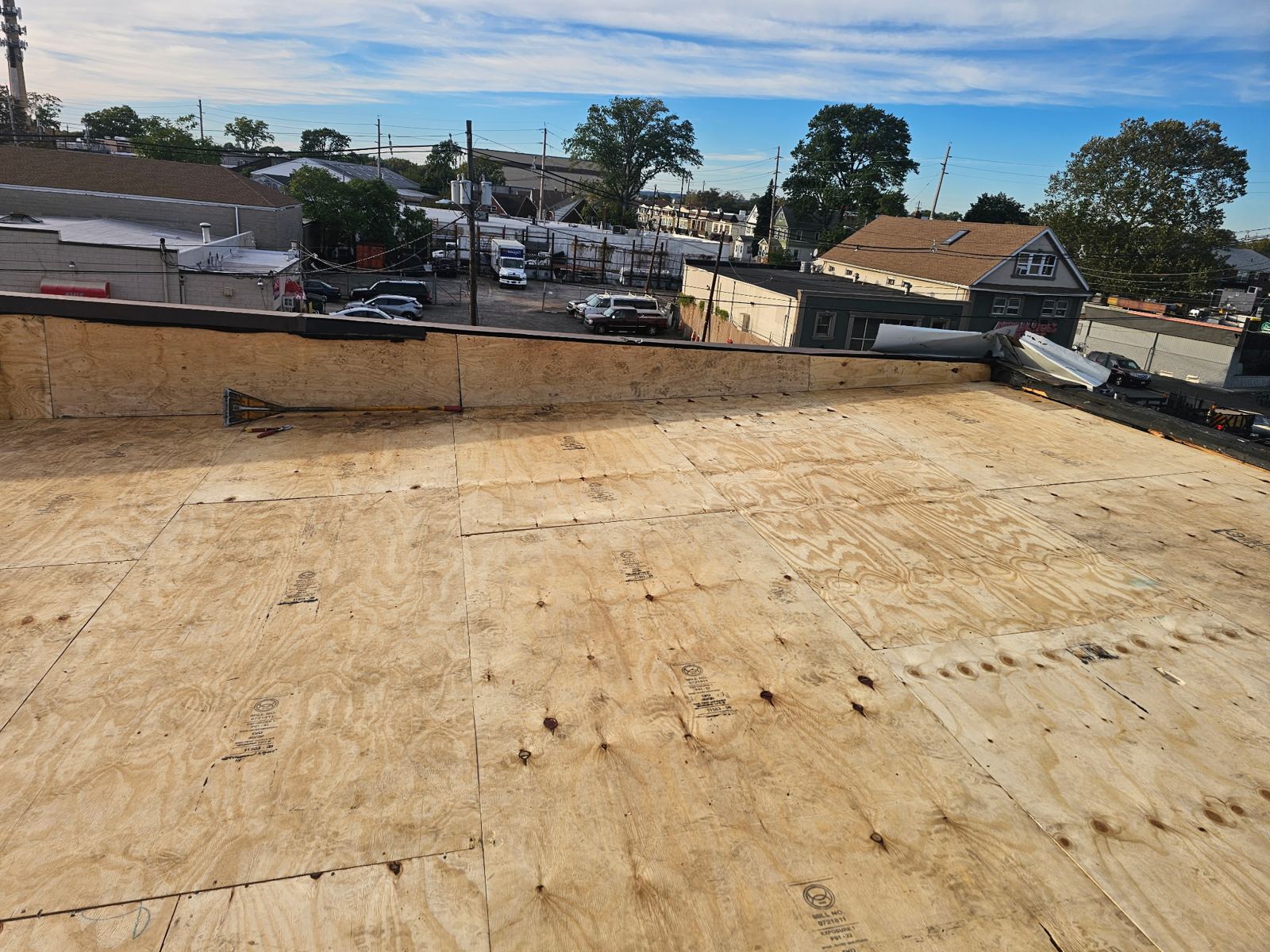
- Post-War Decking Repair: Older plywood or tongue-and-groove roof sheathing in Middlesex homes requires selective board replacement when localized leaks rot the wood decking.
Diagnostic and Repair Protocols for Flashing and Valley Failures
Flashing failures represent the majority of active roof leaks in Middlesex. Step flashing installed along brick chimneys, dormers, and sidewalls degrades over time due to thermal expansion, rusted fasteners, or failing sealant layers. When water bypasses sidewall flashing, it travels unseen behind wall cladding before staining interior ceilings and structural framing.
Roof valleys handle the highest volume of water on any roof structure. In older Middlesex residences, closed-cut or open metal valleys deteriorate, leading to micro-tears in the underlying roofing felt. Storm Guard Roofing strips back damaged shingles, removes corroded metal components, and installs heavy-duty ice and water shielding prior to weaving in new step flashing and matching asphalt shingles.
- Chimney Counter-Flashing: Cutting new reglets into masonry mortar joints to insert ground-in copper or aluminum counter-flashing.
- Dead Valley Remediation: Installing self-adhering modified bitumen membranes in low-pitch roof intersections where water and debris pool.
- Plumbing Vent Flashings: Removing cracked neoprene pipe boots and replacing them with heavy-duty lead or stainless steel vent stack flashings.
24/7 Emergency Storm Damage Repair and Tarping
Severe weather events along the Raritan River valley frequently bring microburst winds, hail, and wet snow loads. High winds can strip aged three-tab or architectural shingles off the nail line, exposing structural decking to immediate rainfall. Falling tree limbs present immediate structural risks that require rapid mitigation to prevent severe interior loss.
Storm Guard Roofing operates a 24/7 emergency dispatch service reachable directly at (201) 403-0024. We deploy crews to secure exposed roof decks using heavy-duty, UV-rated tarps secured with wooden furring strips. This prevents interior water damage to ceiling drywall, electrical systems, and personal property while permanent repair scopes and material matches are finalized.
- Mechanical Tarping: Securing tarps from ridge lines down to gutter edges so wind loads cannot catch the temporary cover.
- Tree Limb Damage Mitigation: Removing structural debris, inspecting exposed rafters, and installing weather-tight temporary membranes.
- Insurance Claim Documentation: Providing detailed photo logs, moisture readings, and itemized scope reports required by insurance adjusters.
Evaluating Roof Repair Costs Relative to Full Replacement
Homeowners are frequently advised by sales representatives to replace an entire roof system when localized damage occurs. A complete tear-off and re-roof costs thousands of dollars more than a targeted repair and is often unnecessary if the surrounding field shingles retain structural flexibility and granule adhesion.
If the majority of the roof plane is sound and under 15 to 20 years old, replacing damaged sections, wall flashing, or valley underlayment resolves the issue at a fraction of full replacement costs. Storm Guard Roofing conducts physical evaluations of granule loss, mat decay, and decking condition to determine whether a repair is structurally sound and financially practical for your budget.
- Targeted Component Fixes: Replacing failing vent boots, step flashing, or localized shingle clusters preserves existing field materials.
- Shingle Profile Matching: Sourcing matching asphalt shingle profiles and color blends to maintain architectural uniformity across repair zones.
- Decking Preservation: Replacing isolated rotted plywood sheets without disturbing surrounding, undamaged roof sections.
Middlesex Borough Permitting and Building Code Standards
Roofing work in Middlesex, NJ must adhere to the New Jersey Uniform Construction Code (NJUCC). While minor maintenance and isolated emergency repairs do not always require a municipal permit, structural deck replacement or section repairs exceeding specific square footage thresholds require building department notification and inspection.
As a licensed and insured New Jersey contractor, Storm Guard Roofing ensures all work aligns with local building standards. We manage permit filings when required for major structural repairs, follow strict manufacturer fastener schedules for wind resistance, and install code-compliant ice-barrier protection along low-slope add-on transitions.
- Code Compliance: Installing self-adhering membrane underlayment past the interior wall line in accordance with local building codes.
- Fastener Specification: Using code-compliant galvanized ring-shank nails driven to correct penetration depths into solid decking.
- Inspection Coordination: Executing structural repairs to satisfy Middlesex Borough municipal code inspections.
Middlesex questions we get asked
- Do I need a building permit for a roof repair in Middlesex Borough?
- Minor maintenance, such as replacing a few damaged shingles or resealing a vent pipe boot, typically does not require a permit in Middlesex Borough. However, if the repair involves replacing structural sheathing boards or rebuilding large damaged sections of the roof deck, a permit under the New Jersey Uniform Construction Code is required. Storm Guard Roofing handles all necessary permit documentation.
- How do long gutter runs on post-war Middlesex homes cause roof leaks?
- Post-war homes in Middlesex frequently feature long unbroken eave lines. During heavy downpours or winter ice dams, these continuous gutters can overflow or trap melting ice. Standing water backs up under the lower shingle edges, penetrating the roof deck and rotting the subfascia. We repair this by replacing damaged decking and installing self-adhering ice and water membrane along the eaves.
- Can a leak where a rear addition meets the main roof line be repaired without replacing the whole roof?
- Yes. Rear additions on Middlesex homes create transition points where different roof slopes meet. Leaks at these joints are usually caused by torn valley underlayment or improperly installed flashing. We strip back materials at the addition intersection, install continuous self-adhering ice and water shield, and integrate custom metal flashing without requiring a full roof replacement.
- How does Storm Guard Roofing handle storm damage insurance claims in Middlesex?
- When severe weather damages your roof, call (201) 403-0024 for 24/7 response. We secure the structure with emergency tarping, conduct a thorough technical inspection, photo-document all damaged shingles and deck components, and prepare an itemized repair scope. We communicate directly with your insurance adjuster to ensure all repair steps and mitigation costs are properly covered.
More in Middlesex
Call (201) 403-0024 for a Middlesex inspection, or send the form.