Millville · Cumberland County
Roof Repair and Leak Restoration in Millville, NJ
Storm Guard Roofing provides specialized roof repair, emergency leak isolation, and structural stabilization across Millville and Cumberland County. Operating as a family-owned contractor for over 25 years, our teams focus specifically on diagnosing and resolving targeted roof failures without pushing unnecessary full replacements. Millville features a distinct local building stock that spans dense single-family neighborhoods around Union Lake, older Victorians near Downtown, spread-out rural residential parcels, light-industrial facilities along Route 47, and agricultural pole barns requiring exposed-fastener metal repairs. The local climate subjects these structures to high moisture levels from the Maurice River basin, severe summer thunderstorm cells, and winter freezing-and-thawing cycles. When structural water intrusion occurs, Storm Guard Roofing delivers 24/7 emergency response, licensed and insured technical repairs, and full insurance claims assistance. Call (201) 403-0024 to dispatch a qualified repair mechanic to your property.
Identifying Leak Sources Across Millville Building Stock
Millville's structural landscape varies from traditional asphalt shingle homes in Union Lake to wide-footprint light-industrial buildings and steel-clad pole barns in outer Cumberland County. Each structural format exhibits distinct failure modes under localized weather stress. Wind gusts driven across open agricultural land push rain under shingle laps, while prolonged high humidity in the Maurice River valley accelerates seal strip degradation on older architectural shingles.
On residential properties, water rarely drops straight down from the entry point. Rain frequently penetrates damaged cap shingles or worn pipe boots, travels along the top of the synthetic or felt underlayment, runs down rafters, and enters the living space feet away from the initial exterior break. On light-industrial buildings and pole barns, thermal expansion causes exposed fasteners to back out of wood framing or steel purlins, deteriorating EPDM washer gaskets and creating silent paths for water intrusion that rot internal wood supports.
- Wind-driven rain lifting tab edges on aging asphalt shingle roofs along rural corridors.
- Backed-out neoprene washer fasteners on metal roofs and agricultural pole barns causing perimeter leaks.
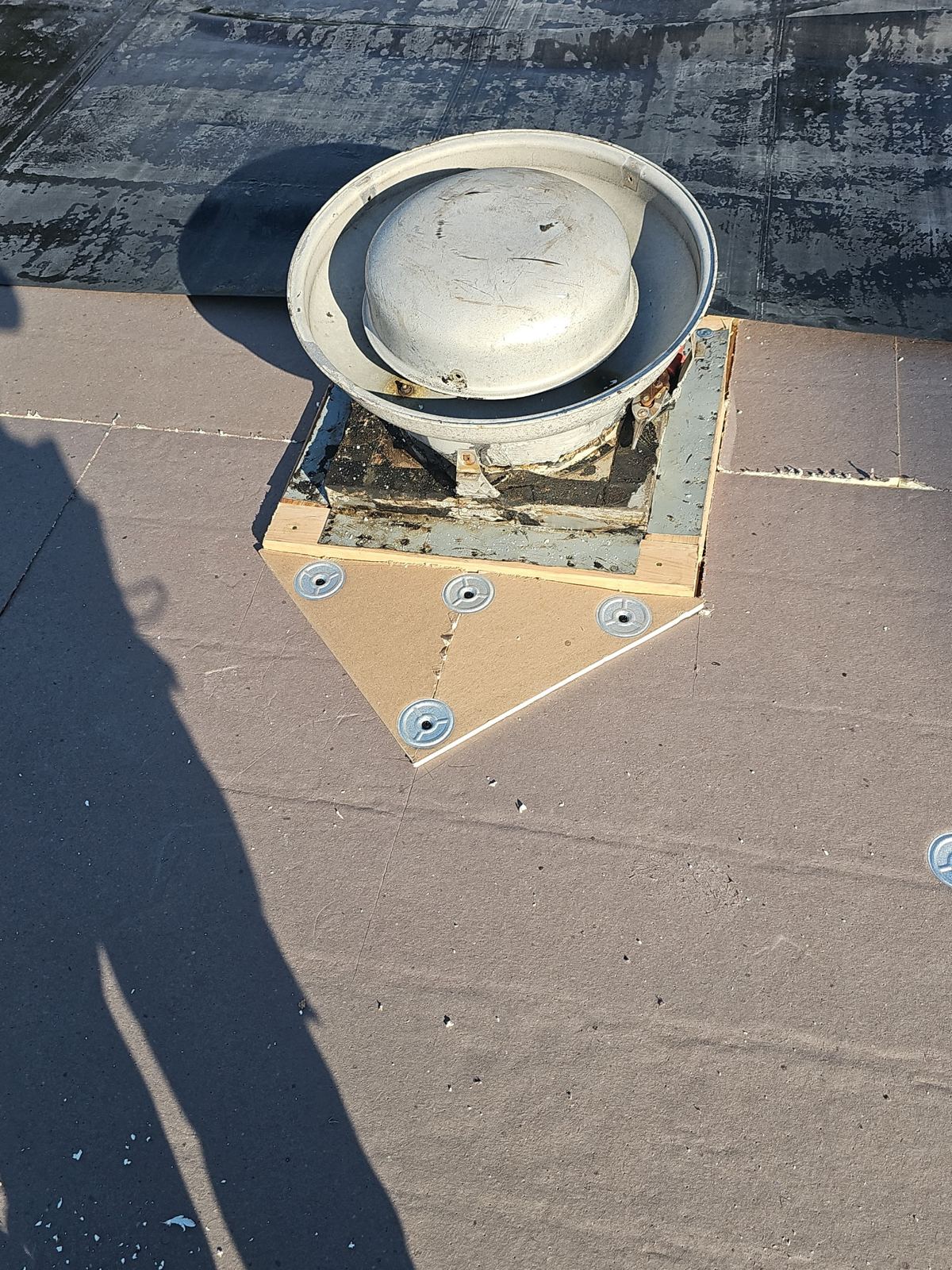
- Cracked vent pipe boots and degraded silicone sealant around attic power vents and exhaust flues.
- Degraded fascia board and soffit moisture rot caused by clogged gutters or ice dam backup.
Flashing and Valley Failure Mechanisms
Roof intersections represent the primary failure points on any structure. Step flashing along sidewalls, counter-flashing embedded in masonry chimneys, and low-slope roof valleys carry the highest volume of runoff water during heavy South Jersey rainfall events. When these metal components corrode, shift due to foundation settling, or lose their sealant bond, catastrophic water infiltration follows.
In older Millville homes near the downtown district, step flashing behind step-down sidewalls often fails due to metal oxidation or improperly nailed historical repairs. In valley areas, woven or closed-cut shingles subjected to heavy debris accumulation retain moisture, accelerating granule loss and cracking open the underlying valley roll material. Correcting these failures requires stripping back neighboring shingle courses, inspecting the wooden deck beneath, installing self-adhered ice and water shield, and resetting heavy-gauge aluminum or copper flashing according to current New Jersey Uniform Construction Code standards.
- Step flashing separation from vertical exterior sidewalls and step-down additions.
- Counter-flashing mortar joint failure on brick and block masonry chimneys.
- Valley membrane breakdown under heavy leaf debris accumulation and standing water.
- Eaves flashing gaps that allow wind-driven moisture behind gutter aprons and fascia boards.
24/7 Emergency Tarping and Storm Damage Mitigation
Severe coastal storms, squall lines, and winter nor'easters frequently bring high winds that strip shingles, tear off ridge caps, or drop tree limbs onto structures across Millville. When structural envelope compromise occurs outside standard business hours, immediate containment is critical to prevent severe drywall, insulation, and electrical damage. Storm Guard Roofing operates a direct 24/7 emergency dispatch service to secure residential and light-industrial properties immediately.
Emergency response focuses on immediate stabilization. Technicians perform high-tensile membrane tarping, mechanically securing heavy-duty waterproof tarps using wooden furring strips anchored directly into structural framing rather than relying on temporary sandbags or bricks. This temporary barrier protects open wood decking while long-term repairs are planned. Additionally, our field representatives document all storm impact evidence, including uplift patterns, hail strikes, and secondary water damage, producing clear photographic reports used during the insurance claim handling process.
- Rapid 24/7 dispatch for emergency roof tarping and debris clear-off across Cumberland County.
- Mechanical attachment of industrial tarps using wood battens to withstand sustained wind exposure.
- Comprehensive storm damage assessment for insurance adjuster review and line-item approval.
- Emergency stabilization for damaged metal roof panels and blown-off ridge capping on pole barns.
Repair Costs Relative to Full Roof Replacement
Determining whether to repair a localized failure or replace an entire roofing system depends on system age, overall deck conditions, and the square footage of damaged material. A targeted repair focuses financial resources strictly on isolated failure points—such as replacing damaged pipe boots, resetting wall flashing, or re-laying a wind-damaged slope section—allowing property owners to maximize the total service life of their existing roof.
In contrast, full replacement becomes necessary when widespread core failure occurs, such as organic shingle mat decay, system-wide granule depletion, or widespread decking rot across multiple slopes. Minor targeted repairs typically cost a fraction of a full system tear-off and installation. However, per-square costs for localized repair labor are inherently higher than broad replacement labor due to the meticulous handwork required to interlace new underlayment and shingles into existing, brittle material without damaging adjacent courses. Storm Guard Roofing provides transparent assessments to help Millville owners calculate the most economical path forward.
- Isolated repairs extend remaining roof service life when structural decking remains dry and sound.
- Lowers immediate capital expenditure compared to complete tear-off and disposal fees.
- Prevents minor flashing or boot leaks from turning into structural wood rot requiring structural deck replacement.
- Requires precise technical labor to tie new underlayments into historical roofing materials cleanly.
Metal Roof and Pole Barn Repair Services
Millville features numerous spread-out residential properties, agricultural sites, and light-industrial operations utilizing standing seam and exposed-fastener metal roofs. Pole barns and commercial outbuildings experience heavy mechanical stress from atmospheric expansion and contraction cycles, which loosen structural screw fasteners and degrade neoprene seals over time. Left unaddressed, water creeps past loose screw holes, rotting wood girts, purlins, and truss connections.
Our repair teams handle targeted metal panel restoration, replacing backing fasteners with oversized screw profiles featuring weather-resistant EPDM washers. We re-seal failed lap joints, install replacement ridge cap closures, and repair damaged perimeter metal trim on light-industrial facilities along Route 47 and surrounding rural roads. Addressing individual metal panel defects prevents localized rust from spreading and preserves the structural framework of agricultural and industrial buildings.
- Replacement of oxidized or backed-out fasteners with oversized weather-seal hardware on pole barns.
- Sealing exposed metal panel side laps and end laps using high-solids elastomeric compounds.
- Repair and replacement of damaged ridge caps, foam closure strips, and metal rake edges.
- Waterproofing panel penetrations around commercial HVAC curbs, plumbing stacks, and exhaust vents.
Millville questions we get asked
- Do I need a permit from the City of Millville for localized roof repairs?
- In the City of Millville, localized maintenance and spot roof repairs generally do not require a building permit from the local Construction Code office. However, if the repair involves structural deck replacement or structural rafter repairs exceeding standard maintenance thresholds, permits and inspections may be required under the New Jersey Uniform Construction Code. Storm Guard Roofing manages all permitting requirements when structural alterations are necessary.
- How do wind patterns near Union Lake and the Maurice River impact roof failure rates?
- Properties surrounding Union Lake and open farmland along the Maurice River basin experience unimpeded, high-velocity wind gusts. These localized wind patterns apply severe uplift pressure on roof edges, ridge caps, and loose metal panels. Over time, sustained uplift breaks the thermal sealant adhesive on asphalt shingles and loosens mechanical fasteners on metal pole barns, leading to sudden leaks during high-rain events.
- How does Storm Guard Roofing handle storm damage insurance claims for Millville homeowners?
- Storm Guard Roofing works directly on behalf of property owners through the insurance claim process. After storm events, our licensed inspectors conduct an on-site evaluation, taking high-resolution photos and preparing detailed scope reports that outline wind lift, hail impacts, or fallen branch damage. We meet with your insurance carrier's field adjuster on-site to review the damage and ensure all required line items for repair are properly documented.
- What is the typical turnaround time for emergency leak tarping in Millville?
- Storm Guard Roofing maintains a 24/7 emergency response service for Millville and surrounding Cumberland County communities. Our emergency crew can typically mobilize and arrive on-site within hours of your call to secure the building envelope using heavy-duty tarps mechanically anchored with wood battens, stopping internal water damage immediately while permanent repair quotes are calculated.
More in Millville
Call (201) 403-0024 for a Millville inspection, or send the form.