Mount Laurel · Burlington County
Roof Repair Services in Mount Laurel, NJ
Mount Laurel Township experiences variable Mid-Atlantic weather, including freezing thermal cycles in winter, severe summer thunder squalls, and occasional tropical remnants tracking up the Delaware Valley. Storm Guard Roofing provides targeted roof repair services across Burlington County, addressing structural leaks, shingle displacement, and substrate degradation. As a family-owned contractor with over 25 years of experience, we operate with full state licensing and insurance, maintaining a 24/7 emergency dispatch line at (201) 403-0024. Roof repairs must address the precise root cause of moisture entry rather than applying temporary surface sealants. Whether dealing with wind-driven rain along Route 38 or ice dam backup in residential subdivisions, our diagnostic approach restores roof integrity without requiring unnecessary full tear-offs. We handle insurance claims directly to streamline structural restorations after severe weather events.
Common Leak Sources in 1970s–1990s Mount Laurel Developments
A significant portion of Mount Laurel's residential properties consists of townhouse and colonial developments built from the 1970s through the 1990s, such as those found around Ramblewood, Birchfield, and Larchmont. These structures frequently feature complex rooflines, multiple dormers, and tight soffit venting systems. Over decades, tight soffit venting restricts baseline attic airflow, causing heat and moisture to accumulate beneath the roof deck during summer months. This trapped hot air accelerates shingle curling, adhesive bond failure, and underlayment breakdown from below.
When winter temperatures drop below freezing, poor intake ventilation combined with interior heat loss promotes ice dam formation along eaves and gutters. Water backs up behind the ice block, breaching shingle laps and infiltrating the roof sheathing. Additionally, original neoprene pipe boots installed during initial construction typically degrade within 12 to 15 years. Ultraviolet exposure cracks the rubber collar around plumbing stacks, allowing direct moisture ingress along the vent pipe into interior ceiling cavities.
- Thermal degradation of shingle adhesives caused by restricted intake airflow in tight soffit configurations.
- Ice dam penetration along lower roof margins due to attic heat loss and improper soffit intake balance.
- Failed neoprene pipe boot seals around plumbing vent stacks causing interior drywall water stains.
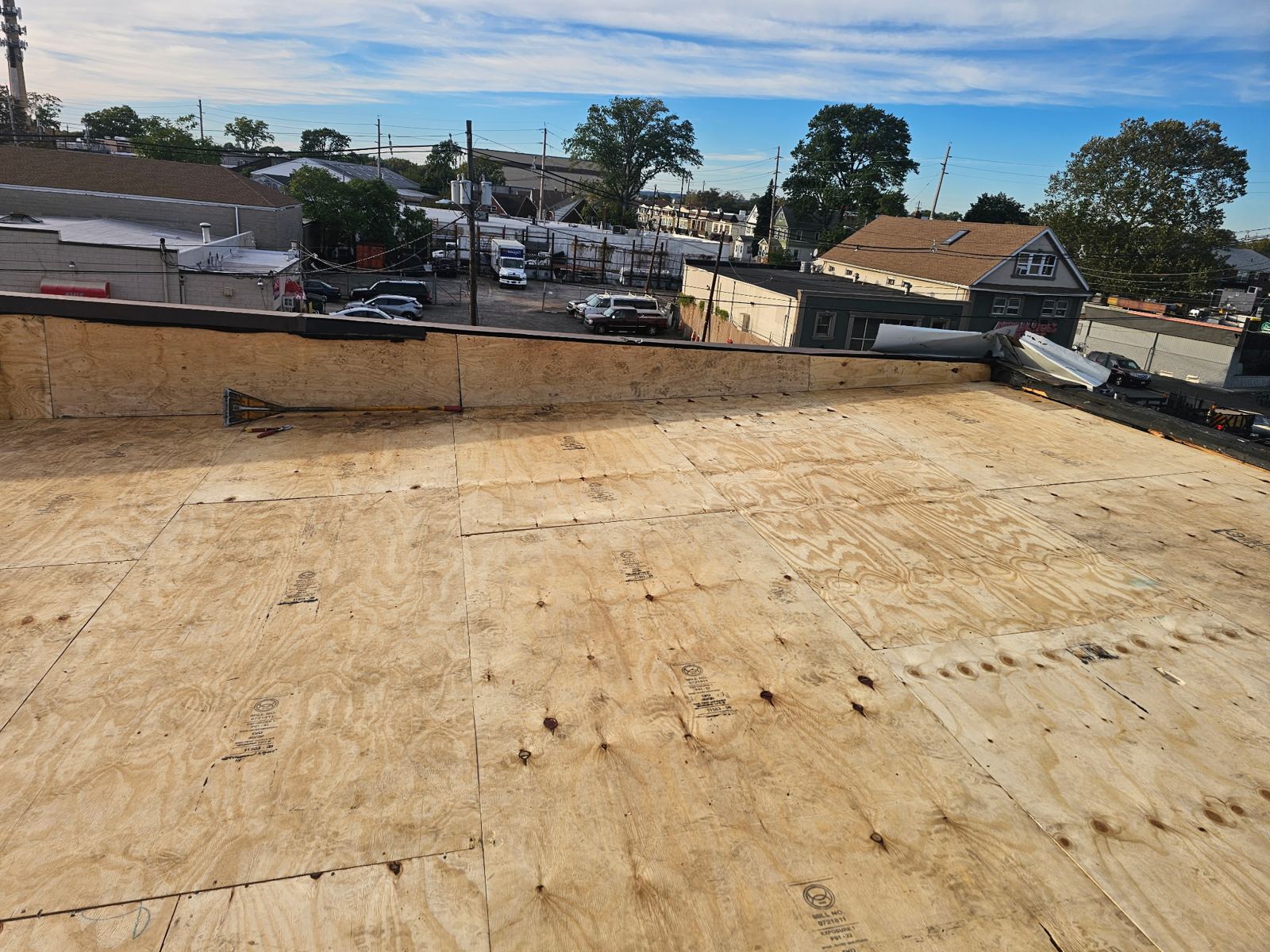
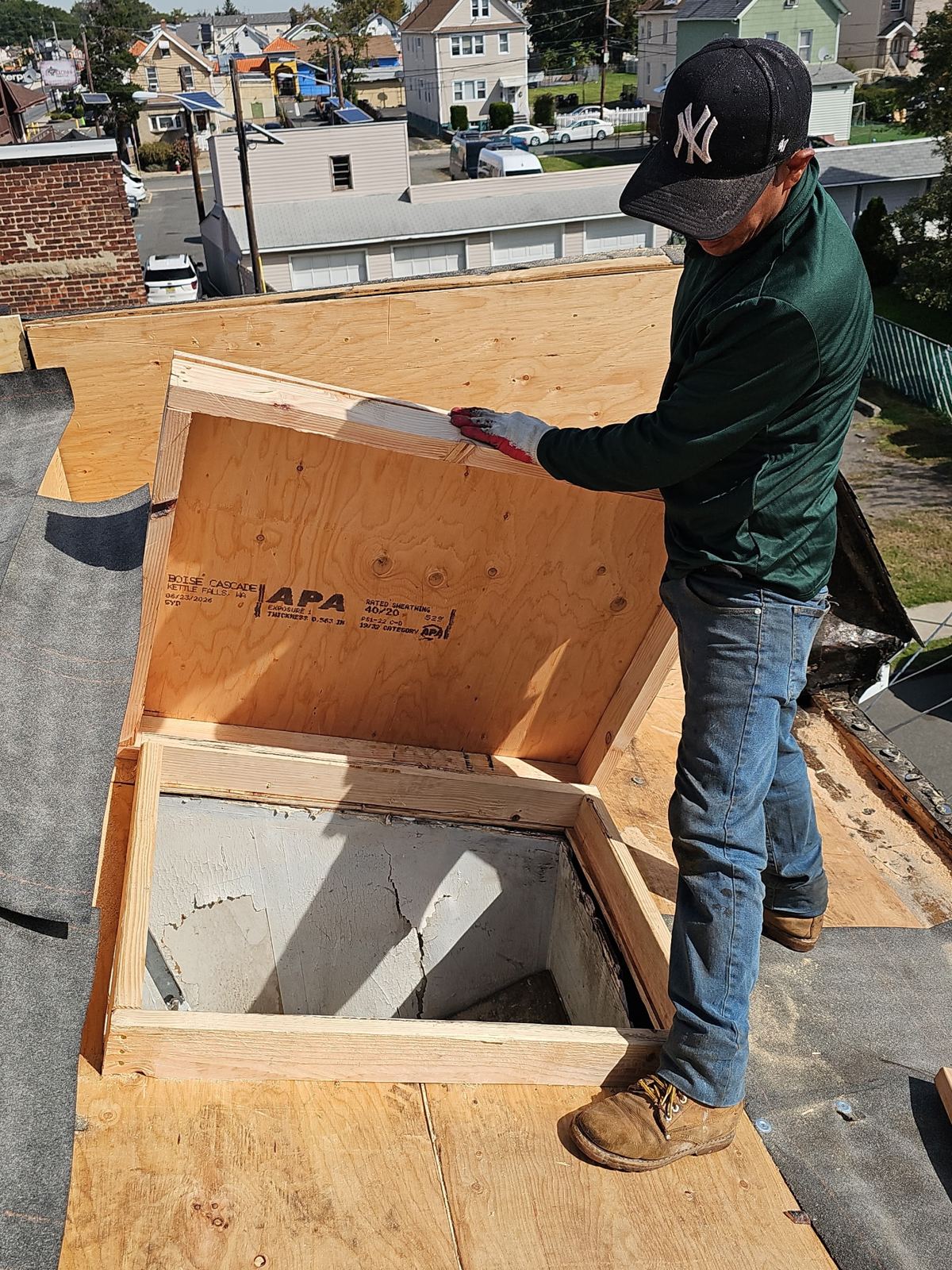
- Delaminated plywood sheathing around skylight curbs and chimney saddles.
Step Flashing, Counter Flashing, and Valley Repairs
Valleys and wall-to-roof intersections carry the highest volume of water runoff on any roof structure. In Mount Laurel neighborhoods featuring two-story colonials and attached townhouses, side-wall step flashing and valley transitions represent primary failure points. Standard original installations often relied on continuous wall flashing or incorrectly layered step flashing. Over time, building settlement and thermal expansion cause metal flashing to pull away from brick chimneys or vinyl siding, breaking the polyurethane sealant bond.
When repairing valley systems—whether closed-cut or open metal valleys—we remove the surrounding shingle rows to inspect the underlying water barrier. In older roofs, original felt underlayment in the valley rots out, leading to hidden deck rot along the rafter lines. Repairs require installing self-adhering polymer-modified bitumen membrane beneath new heavy-gauge metal valley flashing or properly woven architectural shingles, tied directly into the existing drainage plane.
- Corrosion and sealant separation at step flashing along dormers and two-story side walls.
- Mortar joint degradation and loose counter flashing on brick and stone chimneys.
- Valley underlayment rot caused by concentrated water runoff and debris accumulation.
- Wall intersection breaches behind vinyl siding J-channels where kick-out flashing was omitted.
Severe Weather Impact and Insurance Claim Stabilization
Burlington County experiences sudden microbursts, severe thunderstorms, and winter nor'easters that test the wind uplift resistance of asphalt shingles. Wind gusts exceeding 50 mph lift shingle tabs, breaking the factory thermal sealant strip. Once unsealed, shingles flap in subsequent winds, creasing at the top edge and shedding protective ceramic granules. Granule loss exposes the asphalt substrate to rapid solar UV degradation, leading to leaks during high-volume rain events.
Storm Guard Roofing assists Mount Laurel homeowners with storm damage repairs and the insurance claim documentation process. When straight-line winds or hail cause localized damage, we conduct a technical physical inspection, documenting creased shingles, impact spalls, and displaced ridge caps. We provide itemized repair scopes aligned with standard carrier estimating platforms, ensuring adjusters receive precise mechanical evidence of wind uplift and water entry without requiring complete unneeded replacements when localized section repairs are technically feasible.
- Creased and uplifted shingle tabs resulting from high-velocity severe storm gusts.
- Hail impact fractures that rupture the underlying glass fiber mat of architectural shingles.
- Wind-blown ridge vent displacement allowing horizontal rain infiltration into the attic ridge line.
- Direct carrier documentation including photo logs, slope measurements, and repair specifications.
24/7 Emergency Tarping and Immediate Moisture Mitigation
Active roof leaks during heavy rainfall demand immediate intervention to prevent structural timber rot, ceiling collapse, and mold growth within wall assemblies. Storm Guard Roofing maintains a 24/7 emergency response team reachable at (201) 403-0024. Upon arrival, our technicians prioritize active stabilization by deploying heavy-duty, UV-resistant reinforced synthetic tarps secured with wood furring strips anchored directly into sound framing members, avoiding furring into compromised sheathing.
Emergency tarping secures the envelope until weather conditions permit a permanent repair. In Mount Laurel, structural repairs must comply with the New Jersey Uniform Construction Code (NJUCC). Emergency stabilization prevents secondary interior structural losses, allowing time to coordinate permits with the Mount Laurel Township Department of Community Development when repair scopes exceed localized spot maintenance thresholds.
- Immediate dispatch for active interior ceiling leaks and sudden tree limb impacts.
- Secure structural tarping using mechanical anchor strips to withstand continuing high winds.
- Moisture containment to limit drywall saturation, ceiling sag, and insulation ruin.
- On-site structural assessment to prepare permanent repair scopes meeting Burlington County building codes.
Repair Costs Relative to Full Roof Replacement
Homeowners often evaluate whether a leaking roof requires a complete replacement or if a targeted repair is structurally sufficient. On roofs under 15 to 18 years old with localized damage—such as isolated pipe boot failure, wind-damaged ridge shingles, or step flashing leaks—a targeted repair is the most economical solution. Replacing specific flashings, damaged decking sections, and shingle fields typically costs a fraction of a full tear-off, extending the functional service life of the remaining roof by 5 to 10 years.
However, if a roof exhibits widespread structural failure, pervasive deck rot, or shingle degradation across all slopes due to long-term poor ventilation, localized repairs become inefficient. During our diagnostic evaluation, we assess shingle pliability, deck stiffness, granule loss percentages, and original installation methods. If a repair can be completed without compromising adjacent shingle courses or violating local building codes, we execute a targeted repair to keep costs controlled and structural integrity intact.
- Spot repairs preserve functioning roof areas while isolating and fixing localized moisture breaches.
- Lower immediate expenditure compared to complete material tear-off and disposal fees.
- Targeted repairs extend overall roof lifespan when underlying deck and ventilation remain sound.
- Clear diagnostic parameters determine whether shingle condition permits mechanical tie-ins.
Mount Laurel questions we get asked
- Do I need a permit from Mount Laurel Township for a roof repair?
- Under the New Jersey Uniform Construction Code as enforced by Mount Laurel Township, minor localized shingle repairs and flashing patches do not typically require a construction permit. However, if the repair involves replacing structural sheathing boards over a large area or reconstructing structural roof framing, a permit from the Mount Laurel Department of Community Development is required. We handle all required municipal filings when structural scope boundaries are met.
- Why do roofs on 1980s townhouses in Mount Laurel develop leak issues near the eaves?
- Many 1980s townhouse developments in Mount Laurel were constructed with tight soffit venting configurations and limited continuous ridge vents. Over time, restricted soffit intake impedes air circulation, causing ice dams in winter and severe thermal build-up in summer. Moisture forced backward by ice dams penetrates the shingle courses at the eaves, decaying the plywood edge and leaking into lower-level ceilings or wall cavities.
- Can Storm Guard Roofing repair a leaking roof in Mount Laurel during rainy winter months?
- Yes. During active rainfall or winter conditions, we perform emergency stabilization using heavy-duty mechanical tarps and temporary leak seals to stop water entry immediately. Once dry weather conditions allow for safe ladder work and proper adhesive bonding, our crews return to perform permanent repairs, replacing damaged underlayment, flashing, and shingles.
- How does Storm Guard Roofing match shingles on older Mount Laurel homes during a repair?
- We evaluate the manufacturer, profile, and color fading of your existing shingles. For older 1970s and 1980s homes where original shingle lines may be discontinued, we source modern architectural shingles engineered to match color scales and profile dimensions, utilizing strategic shingle placement near valleys or dormers to keep tie-in points visually aligned and fully weather-tight.
More in Mount Laurel
Call (201) 403-0024 for a Mount Laurel inspection, or send the form.