New Brunswick · Middlesex County
Roof Repair Services in New Brunswick, NJ
New Brunswick roofs face specific structural and environmental stresses. The local building stock consists largely of rental-heavy older frame housing in neighborhoods like the Fifth Ward and the Easton Avenue corridor, alongside flat-roofed mixed-use commercial and residential buildings downtown near George Street. Storm Guard Roofing provides targeted, technical roof repair services across Middlesex County. Operating for over 25 years as a family-owned, licensed, and insured contractor, we stabilize active leaks, correct flashing defects, and restore water-shedding integrity without forcing unnecessary replacements. Our technicians remain available for 24/7 emergency response and handle complex insurance claims directly with adjusters. Call (201) 403-0024 to schedule a diagnostic inspection.
Roof Leak Sources in New Brunswick Building Types
New Brunswick features two primary architectural profiles that dictate specific leak vulnerabilities. In the dense residential areas surrounding Rutgers University, multi-family and single-family rental properties are predominantly wood-framed structures built in the late 19th and early 20th centuries. These multi-story frame buildings frequently develop leaks along aging asphalt shingle courses, dried-out rubber boots at plumbing stacks, and degraded sidewall step flashing where rooflines meet vertical dormers. High tenant turnover and deferred maintenance often allow minor shingle lifts to turn into subfloor and ceiling rot.
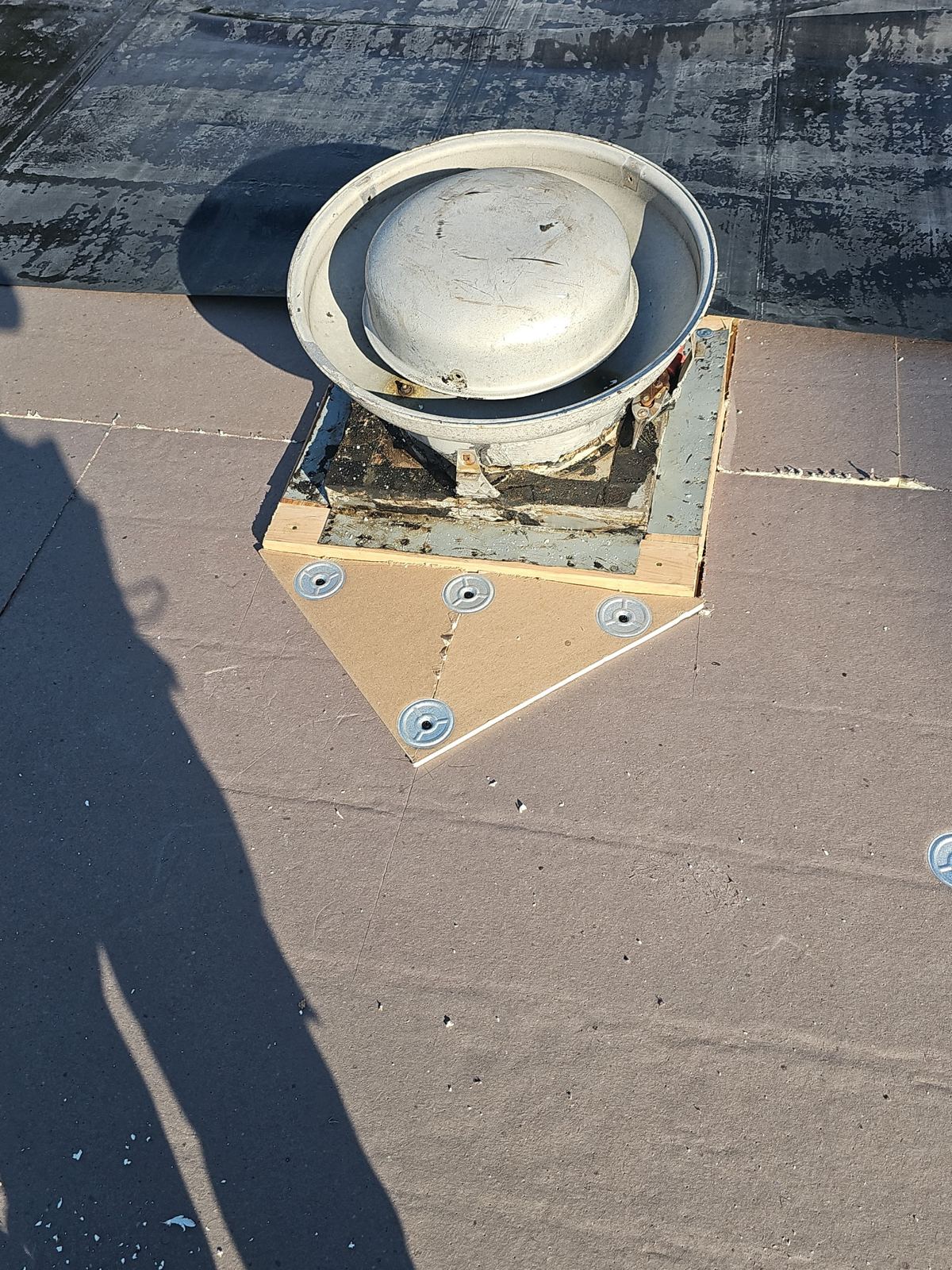
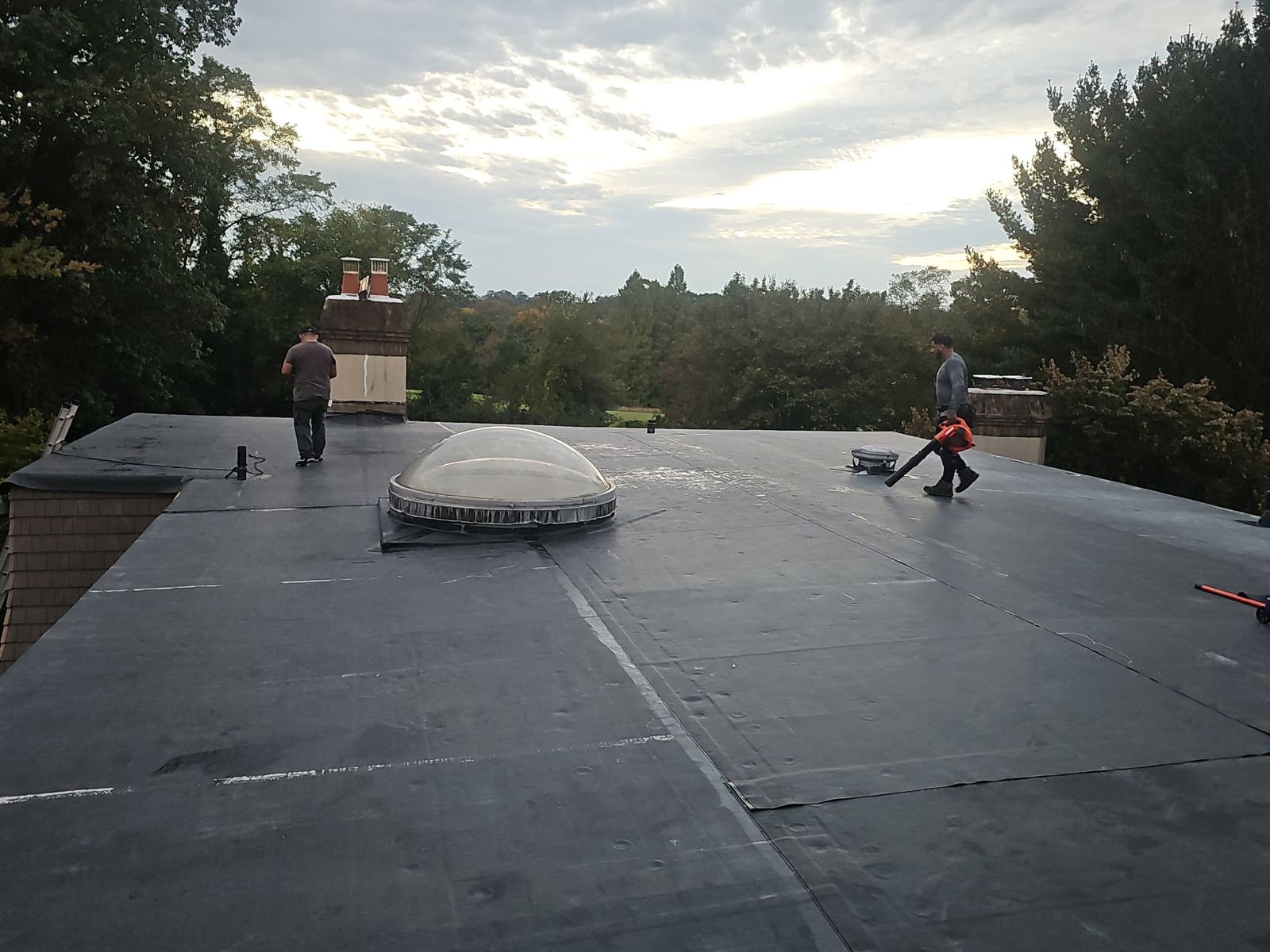
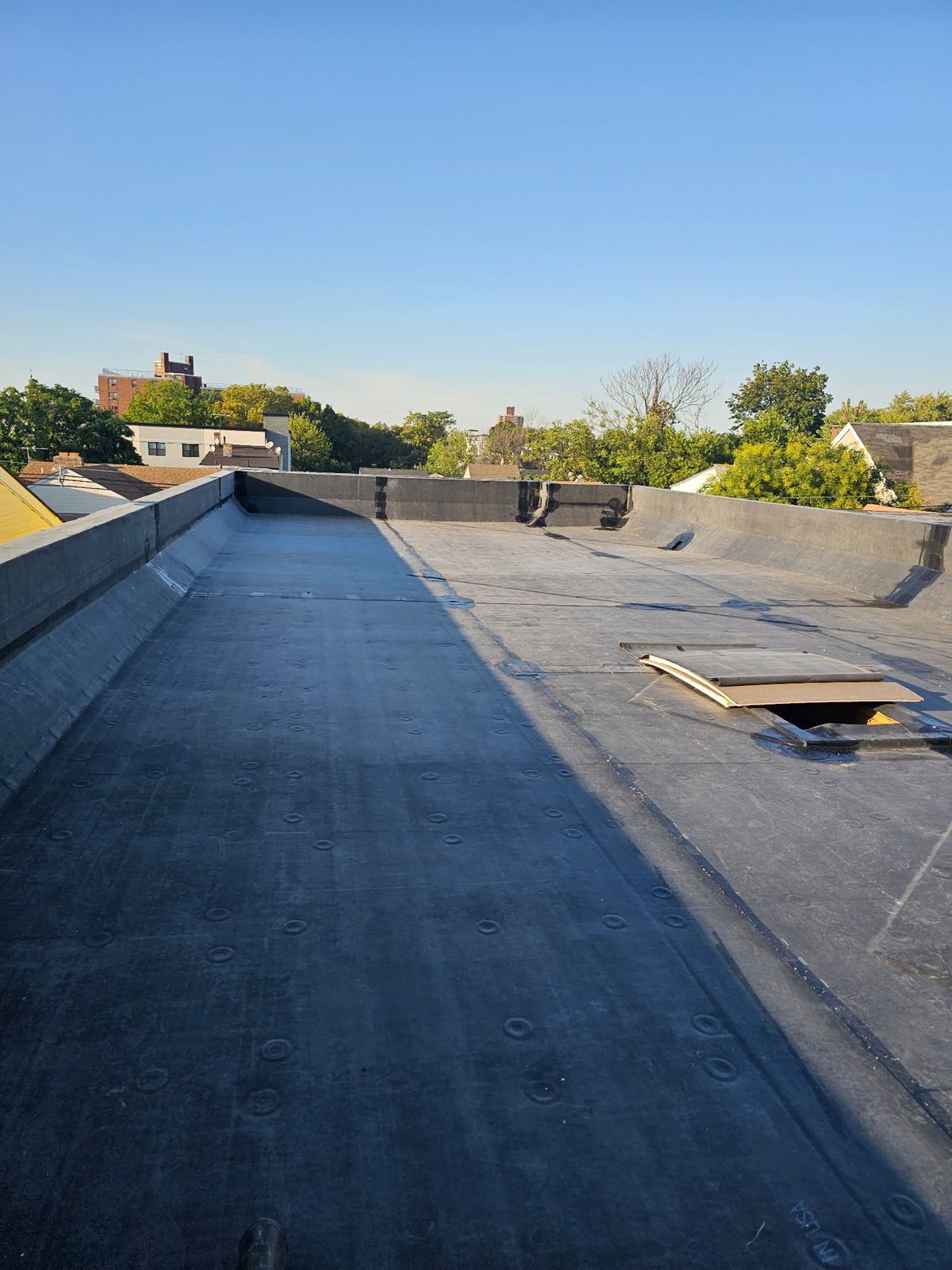
Downtown New Brunswick, along Albany Street and French Street, consists primarily of low-rise, flat-roofed mixed-use buildings. These roofs utilize EPDM, modified bitumen, or built-up asphalt membranes. Common failure points on these commercial structures include unsealed membrane lap seams, deteriorated perimeter termination bars, backed-up roof drains causing standing water, and failed pitch pockets around HVAC equipment penetrations.
- Aging step and counter-flashing along brick chimneys and dormers on older frame houses
- Open lap seams and deteriorated scuppers on flat commercial EPDM and modified bitumen roofs
- Cracks in rubber pipe boots and vent collar flashings caused by UV exposure and thermal cycling
- Wind-lifted or missing architectural shingles exposing underlying felt underlayment
Flashing Failure, Valley Breakdown, and Water Intrusion Mechanics
Water follows gravity, capillary action, and wind vectors to enter a building envelope. In New Brunswick, severe freeze-thaw cycles during winter months expand water trapped under compromised flashings and valleys, accelerating structural decay. Step flashing along sidewalls must overlap sequentially with each shingle layer. When thermal expansion pulls these metal strips away from wall framing, driven rain travels sideways behind siding and enters the interior ceiling framing.
Roof valleys experience the highest volume of water flow on a sloped roof. In older frame construction, woven or open metal valleys suffer from debris accumulation and ice damming. As ice backs up from clogged gutters along lower roof eaves, meltwater pushes upward under shingle overlaps, rotting the roof deck beneath. Chimney penetrations require a two-part flashing system: step flashing woven into the shingles, covered by counter-flashing embedded into the brick mortar joints. Mortar deterioration allows water to bypass the metal barriers entirely, causing interior plaster leaks along the chimney chase.
- Step flashing separation caused by thermal movement of wood framing in historic structures
- Ice dams backing behind gutters, forcing water under the first three courses of shingles
- Mortar joint erosion around chimney counter-flashing allowing vertical water penetration
- Metal valley corrosion and puncture holes beneath debris build-up in high-volume drainage paths
Emergency Tarping, Storm Damage, and Insurance Claims Handling
Coastal weather patterns moving up the Raritan River basin regularly bring high wind gusts, severe hail, and nor'easters to Middlesex County. When wind speeds exceed 50 mph, older asphalt shingles with compromised adhesive sealant strips tear free, leaving bare plywood decking exposed to precipitation. Falling tree limbs from mature oak and maple trees in residential neighborhoods like Historic Middlesex can puncture structural roof sheathing during thunderstorms.
Storm Guard Roofing maintains a 24/7 emergency response service to halt active water entry. Our crews install heavy-duty, UV-resistant emergency tarps secured with wood furring strips anchored into structural rafter lines—never merely sandbagged or nailed through functional shingles. Following emergency stabilization, we document all storm-created damage with photographic evidence, moisture meter readings, and structural assessment reports. We manage the insurance claim process directly with your carrier, ensuring all direct impact repairs and consequential scope requirements comply with state codes.
- Immediate 24/7 emergency tarp deployment to prevent interior water damage to ceilings and electrical systems
- Structural rafter anchoring techniques that secure tarps against wind lift without damaging sound roofing materials
- Comprehensive photographic documentation and line-item scope reports formatted for insurance adjusters
- Complete management of storm damage insurance claims, including supplement filings for hidden deck rot
Economic Breakdown: Targeted Repairs vs. Complete Replacement
Property owners often face a choice between a targeted repair and a full roof replacement. On a technical level, if a shingle roof is under 15 years old, the underlying felt or synthetic underlayment remains pliable, and less than 20 percent of the surface exhibits damage, a localized repair is economically sound. Replacing broken shingles, re-flashing a chimney, or rebuilding a failed valley restores water-shedding performance at a fraction of full tear-off costs.
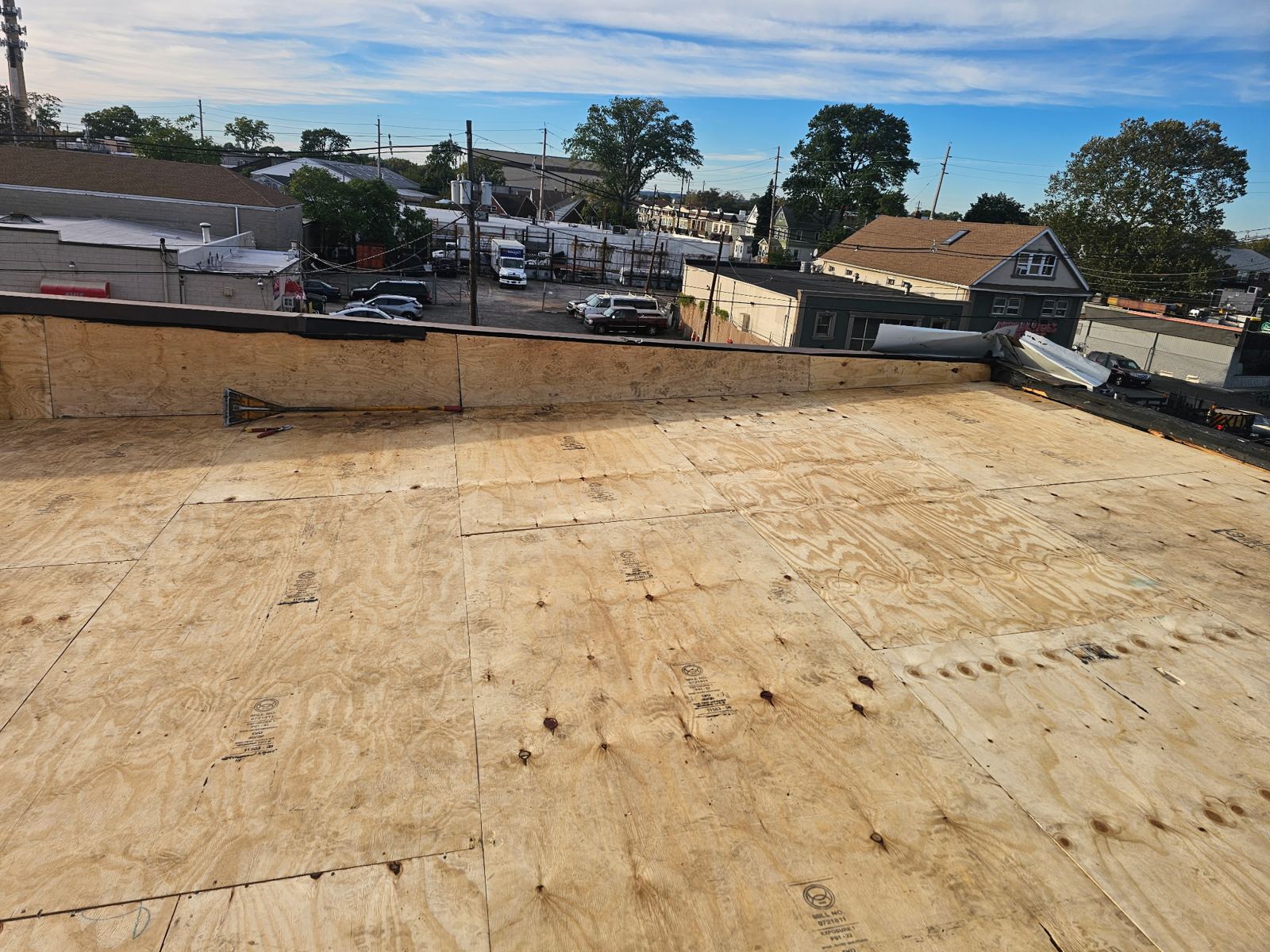
However, when underlying plywood decking has structural rot, or when shingle granule loss exceeds critical thresholds across multiple slopes, repairs become short-term palliatives. For property managers handling rental units near Rutgers, maintaining structural integrity without disrupting tenants requires precise diagnosis. Storm Guard Roofing provides clear assessments: if a repair can reliably extend the roof's operational life by 3 to 7 years, we execute the repair. If systemic failure makes a patch ineffective, we detail why structural replacement is required.
- Targeted repairs save immediate capital when structural plywood sheathing remains dry and sound
- Pipe boot replacements and flashing rebuilds isolate and correct specific leak pathways without disturbing sound fields of shingle
- Detailed inspections isolate whether moisture originates from exterior roof failure or interior attic condensation
- Accurate evaluation of shingle flexibility prevents costly, repeated emergency service calls on aged roofs
City Code Compliance and Permit Requirements in New Brunswick
Roof repairs in New Brunswick must adhere to the New Jersey Uniform Construction Code (NJ UCC) enforced by the City of New Brunswick Construction Code Enforcement office at 75 Bayard Street. While minor non-structural repairs involving small patches of shingles or flat roof membrane sealant do not require municipal permits, extensive repairs involving structural deck replacement or modifications to load-bearing rafters mandate official plan reviews and building permits.
For multi-family rental housing, municipal inspectors routinely conduct code compliance checks. Unaddressed roof leaks that cause interior ceiling drops or mold accumulation violate local housing maintenance codes. Storm Guard Roofing ensures all repair work complies with fire ratings, ice barrier requirements near eaves, and proper wind resistance standards required in Middlesex County, keeping property owners fully compliant with municipal regulations.
- Compliance with New Jersey Uniform Construction Code standards for all residential and commercial repairs
- Knowledge of local building permit thresholds set by New Brunswick Construction Code Enforcement
- Mandatory installation of self-adhering ice and water membrane during valley and eave repairs
- Proper waste disposal and site cleanup meeting Middlesex County environmental standards
New Brunswick questions we get asked
- How quickly can Storm Guard Roofing respond to an active roof leak in New Brunswick?
- We provide 24/7 emergency response throughout New Brunswick, including the Fifth Ward, downtown, and near the Rutgers University campus. Call (201) 403-0024 for immediate dispatch. Our crews stabilize the site with heavy-duty tarps to stop interior water damage before completing permanent structural repairs.
- How do you repair flat roofs on mixed-use buildings in downtown New Brunswick?
- Flat roof repairs require membrane-specific techniques. For EPDM rubber roofs, we clean the surface, apply primer, and adhere uncured EPDM flashing patches or seam tape. On modified bitumen roofs, we torch-apply or cold-adhere matching membrane patches over cleaned, primed substrates, resealing perimeter termination bars and scuppers to restore watertight seams.
- Does repairing a damaged roof section require a permit from the City of New Brunswick?
- Minor repairs covering isolated shingle replacements or pipe boot seals generally do not require a building permit under the New Jersey Uniform Construction Code. However, if the repair involves replacing structural sheathing boards or affects a large percentage of the roof area, a permit from the New Brunswick Construction Code Enforcement department at 75 Bayard Street is required. We handle all necessary permit filings.
- Can a leaking roof on an older rental property near Rutgers be repaired without replacing the whole roof?
- Yes. If the overall shingle field retains its structural integrity and the leak is isolated to flashing, a valley, or a damaged pipe boot, a targeted repair is fully effective. We inspect the wood deck from the attic or interior to confirm structural soundness before recommending a localized repair over a full replacement.
More in New Brunswick
Call (201) 403-0024 for a New Brunswick inspection, or send the form.