New Brunswick · Middlesex County
Roof Replacement Services in New Brunswick, NJ
New Brunswick features a distinct building stock comprised of rental-heavy older frame housing in neighborhoods like the Fifth Ward and College Avenue area, alongside flat-roofed mixed-use structures downtown on George Street and French Street. Operating in Middlesex County, Storm Guard Roofing provides dedicated roof replacement services engineered to address the specific structural demands and weather exposure of the Raritan River valley. As a family-owned business with over 25 years of experience, we maintain full licensing and insurance to execute complete tear-offs and system reinstalls. We assist property owners with insurance claims, coordinate municipal permits, and maintain a 24/7 emergency response team for urgent structural breaches. Contact Storm Guard Roofing at (201) 403-0024 for site evaluations.
Full Tear-Off Versus Overlay Installation Criteria
Property owners in New Brunswick must evaluate whether to lay new shingles over an existing roof or execute a complete tear-off down to the structural decking. While the New Jersey Uniform Construction Code permits up to two layers of asphalt shingles, overlaying an aged roof presents significant technical risks. Layovers conceal deck rot, trapped moisture, and structural sagging. On older frame homes near Rutgers University, weight is also a critical factor; adding a second layer applies up to 400 additional pounds per square to century-old framing.
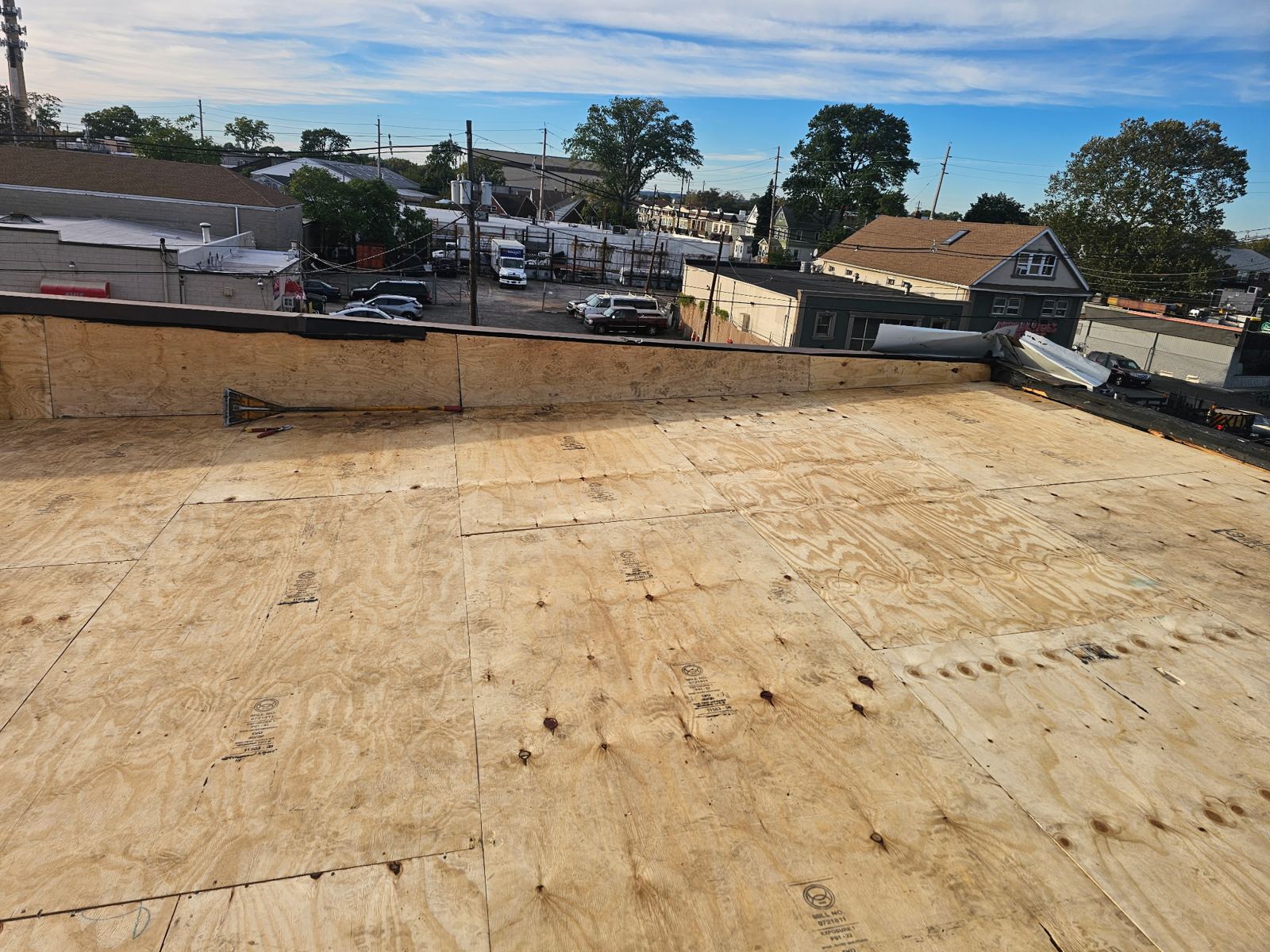
A full tear-off strips away all old shingles, underlayment, drip edges, and flashings to expose the raw wooden substrate. This step allows contractors to identify and replace rotted sheathing before new materials are applied. Complete removal also permits installing self-adhering ice and water shields directly on the wood deck along eaves and valleys, creating an airtight seal against wind-driven precipitation.
- Exposes aging rafter ties and decking for structural inspection prior to new roof installation.
- Prevents excess dead weight loads on older frame housing in historic New Brunswick districts.
- Enables installation of code-compliant ice and water shields directly on bare sheathing.
- Eliminates trapped heat and moisture pockets that accelerate premature shingle degradation.
Substrate Inspection, Decking Repairs, and Ventilation Upgrades
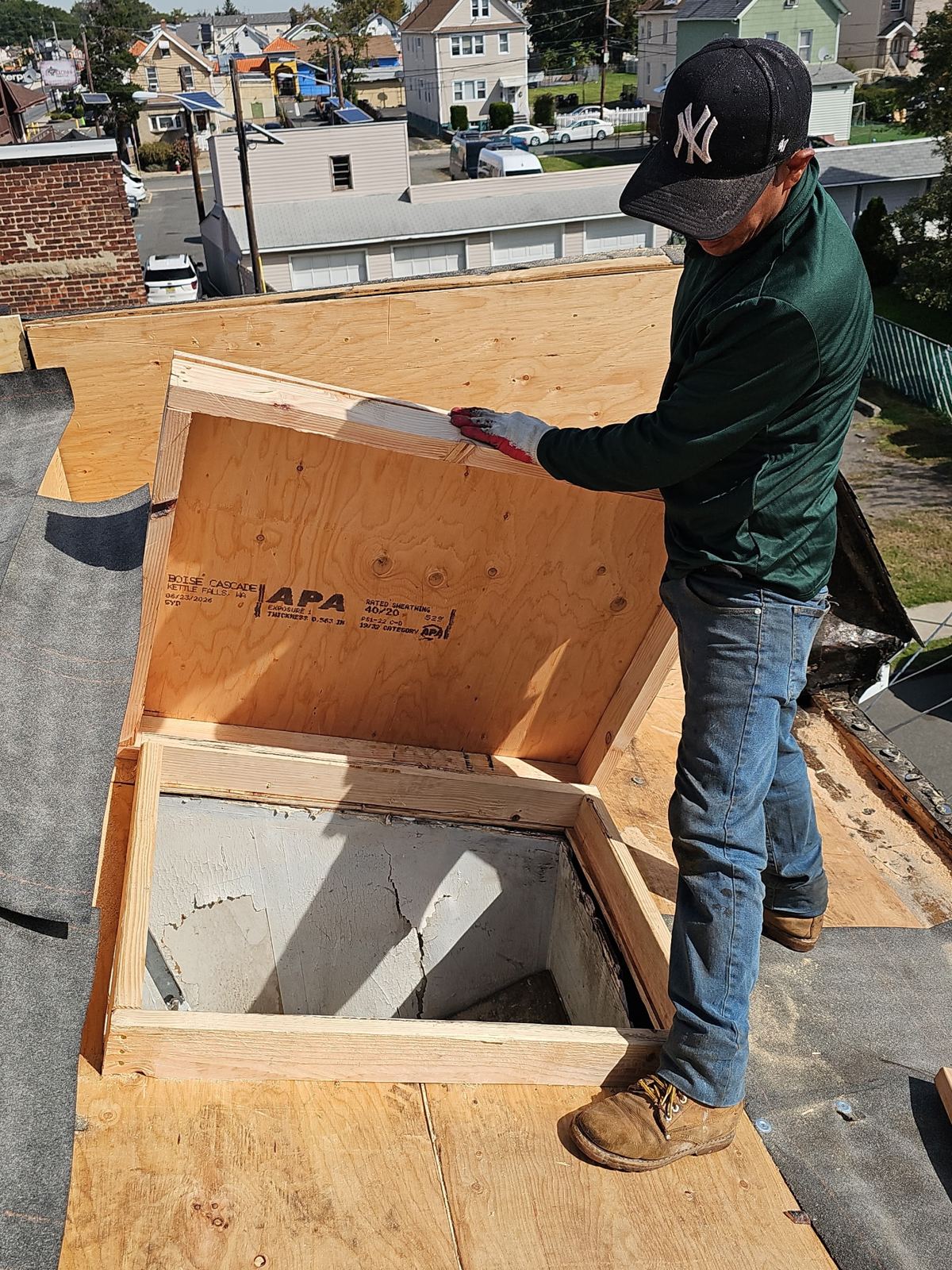
After stripping the old roof assembly, the exposed deck is evaluated for structural integrity. In New Brunswick’s older homes, decking often consists of tongue-and-groove boards or skip sheathing rather than continuous plywood panels. Gaps exceeding one-quarter inch must be covered or re-sheeted with CDX plywood or OSB panels to meet modern shingle manufacturer fastening standards. Water-damaged, warped, or rotted boards are removed back to adjacent rafter centers and replaced with matching structural materials.
Ventilation systems are upgraded concurrently with deck repairs. High-occupancy rental properties generate substantial interior humidity. Without adequate attic airflow, winter moisture condenses on roof sheathing, leading to mold growth and wood decay. A proper installation pairs continuous soffit intake vents with ridge exhaust vents to maintain a balanced airflow ratio, regulating attic temperatures and preventing winter ice dams along eave edges.
- Replacement of compromised deck boards with APA-rated CDX plywood or OSB sheathing.
- Application of corrosion-resistant metal drip edges along eaves and rakes to protect deck perimeters.
- Installation of self-adhered rubberized asphalt membranes in valleys, eaves, and wall intersections.
- Balancing soffit intake and ridge exhaust venting to meet local building code airflow requirements.
System Choices: Architectural Shingles and Flat-Roof Membranes
Roof replacement in New Brunswick demands material systems selected for specific slope conditions and structural uses. Steep-slope residential roofs are best served by heavy fiberglass-asphalt architectural shingles rated for 130 mph wind uplift and Class A fire protection. Multi-layered dimensional shingles offer superior impact resistance compared to standard three-tab products. Utilizing high-wind starter strips and ring-shank nails ensures protection during severe storm events along the Raritan River basin.
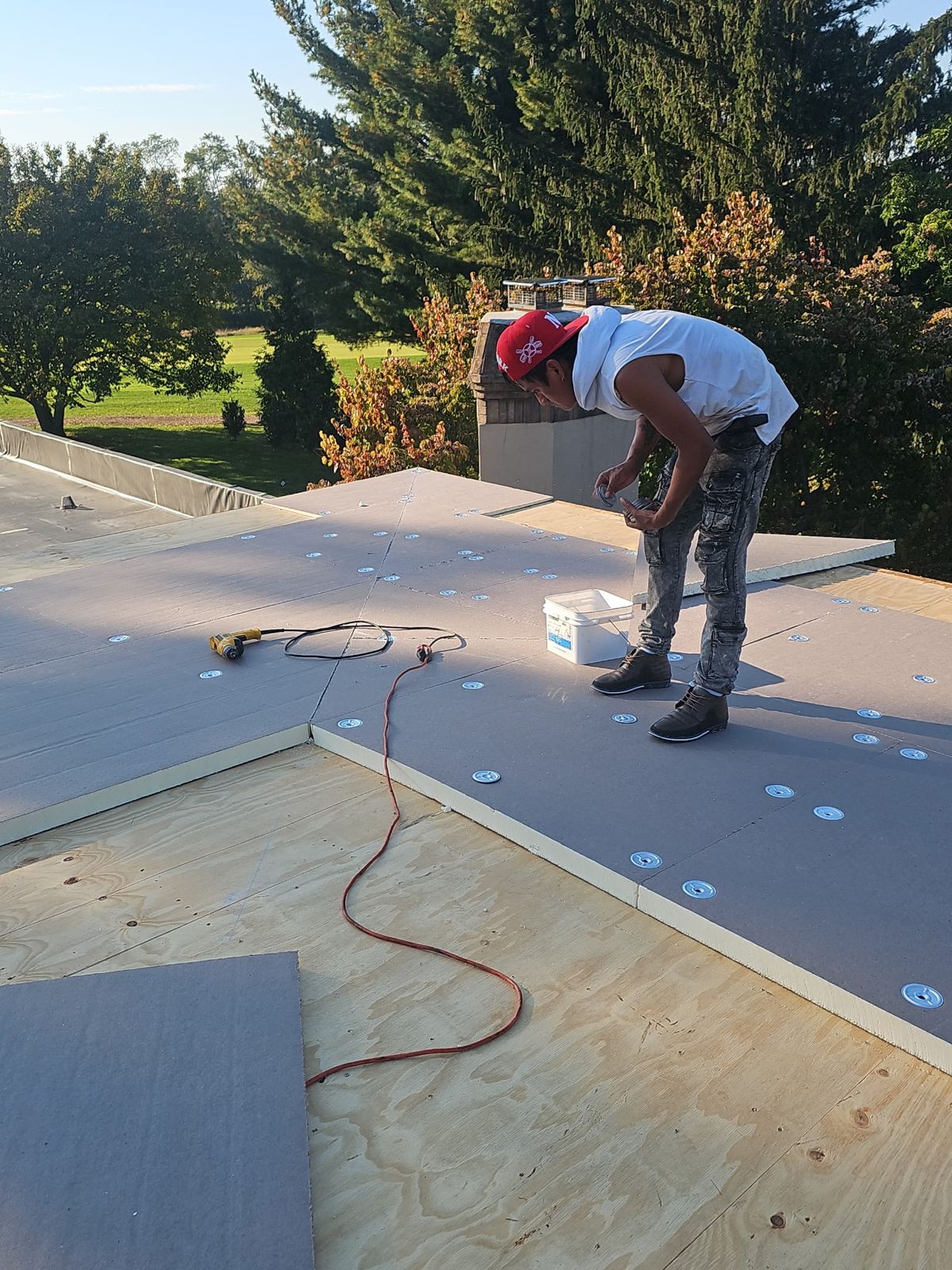
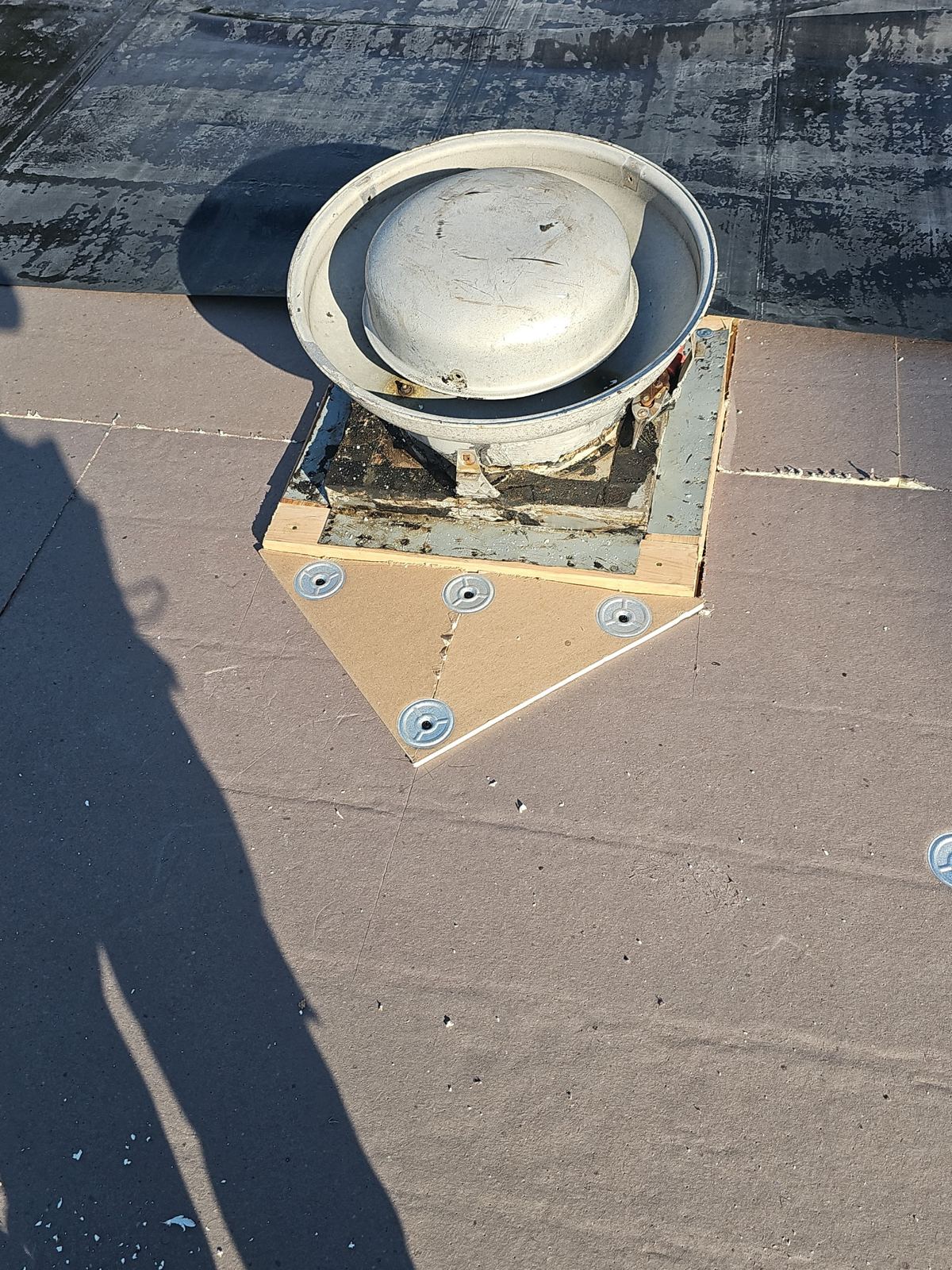
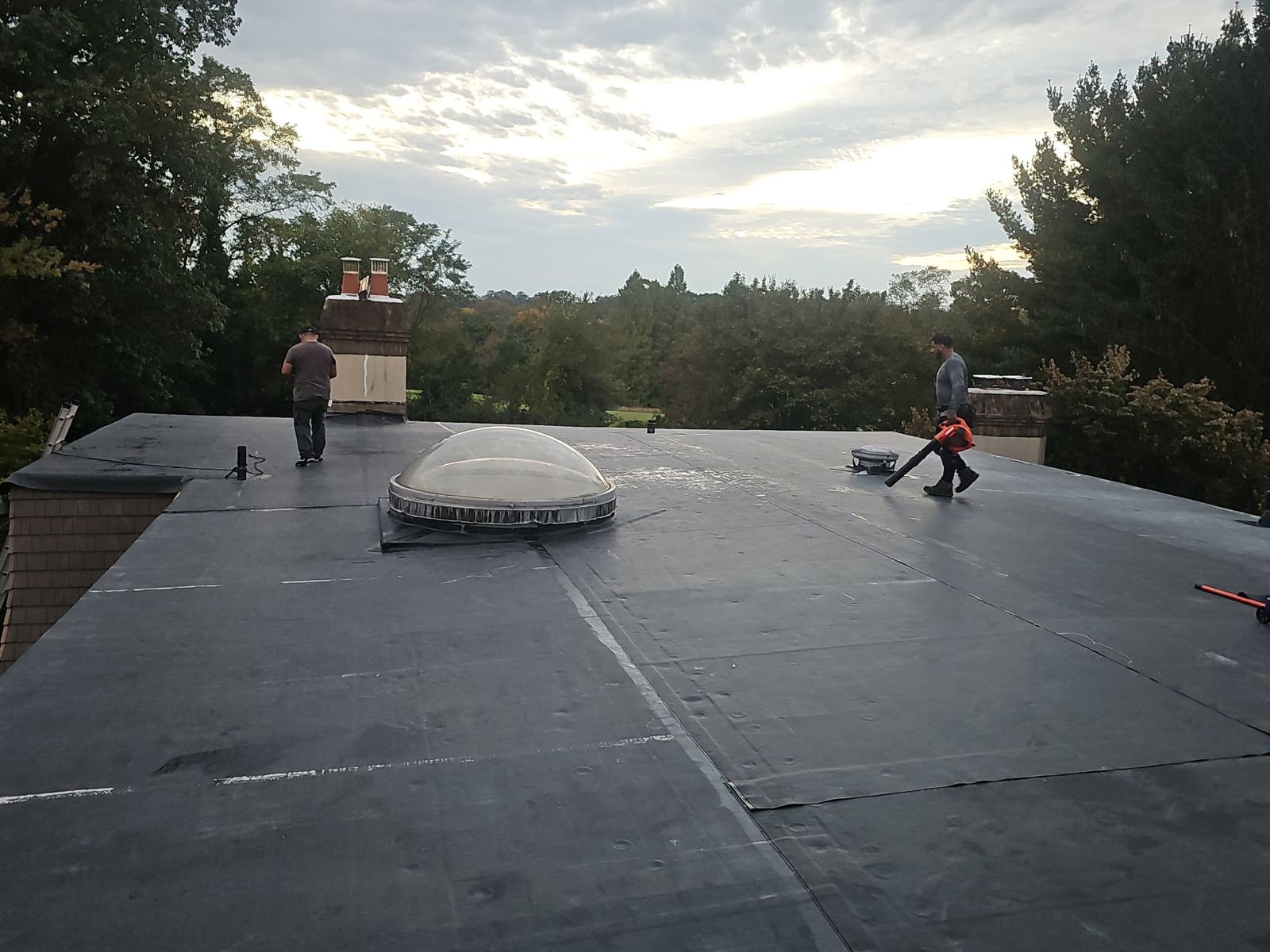
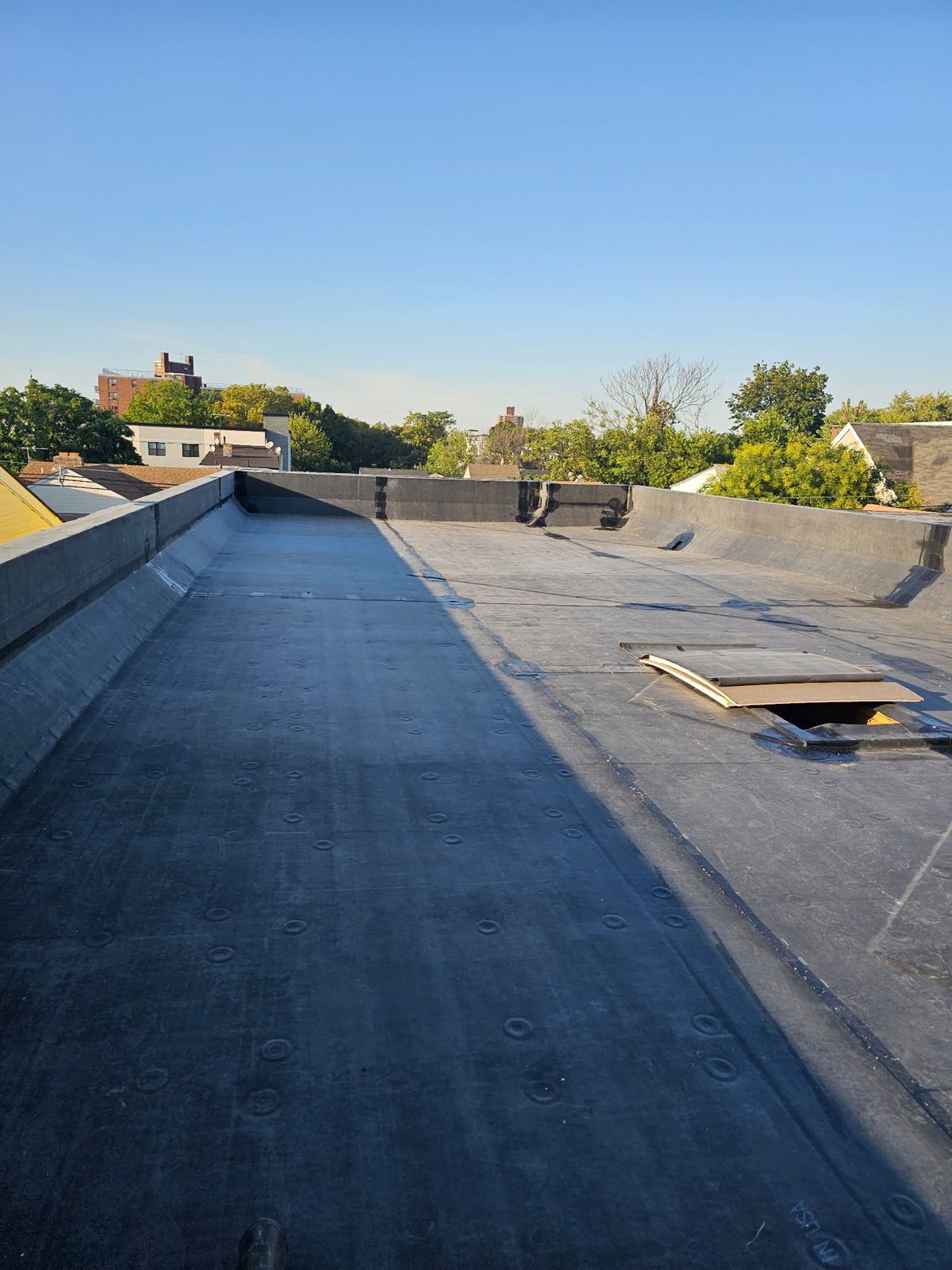
Low-slope and flat roofs on downtown mixed-use buildings along George and French Streets require impermeable membrane systems. Single-ply EPDM rubber and TPO membranes are fully adhered or mechanically fastened over rigid polyisocyanurate insulation boards. Multi-ply SBS modified bitumen systems applied with cold adhesives or heat welds provide durable waterproofing across flat decks. Tapered insulation crickets are installed to direct water runoff toward scuppers or internal drains, preventing standing water.
- Dimensional architectural shingles providing high wind uplift resistance for steep-slope properties.
- Single-ply EPDM and TPO membrane assemblies suited for downtown commercial and flat roofs.
- SBS modified bitumen multi-ply roofs for heavy foot-traffic areas and low-slope additions.
- Heavy-gauge copper, aluminum, or lead flashings customized around chimneys and parapet walls.
Permit Processing, Site Logistics, and Disruption Control
Full replacements require permits issued by the New Brunswick Construction Office at 78 Bayard Street under the New Jersey Uniform Construction Code. In dense neighborhoods like the Fifth Ward or the College Avenue area, narrow lots and shared driveways require precise logistics. Dumpster positioning, temporary street parking permits, and sidewalk safety barriers must be arranged to avoid obstructing municipal traffic or neighboring lots.
Residential replacement projects are typically completed within one to two days, limiting tenant disruption on multi-family units. Crews protect property perimeters with heavy tarps, plywood covers for landscaping, and driveway boards. Tear-off debris is funneled directly into dumpsters. Upon project completion, technicians conduct multiple magnetic sweeps across driveways and yards to remove loose nails before final municipal inspection.
- Complete permit filing and code compliance management with New Brunswick officials.
- Structured staging plans using protective tarps, catch nets, and driveway boards.
- Accelerated 1- to 2-day execution limits disruption for multi-family occupants.
- Detailed post-installation magnetic cleanup to secure grounds from stray metallic fasteners.
Insurance Claim Navigation and Emergency Protection
Severe weather along the Raritan River valley, including high winds and severe freeze-thaw cycles, can inflict irreparable roof damage. When a replacement is required due to wind loss or structural impact, Storm Guard Roofing guides property owners through the insurance claim process. We compile line-item estimates using industry-standard software, document shingle failure with high-resolution images, and meet directly with field adjusters to verify scope requirements.
If wind gusts or storm debris breach the roof envelope, immediate action is necessary to safeguard the interior structure. Storm Guard Roofing operates a 24/7 emergency response unit providing emergency tarping, temporary seals, and structural containment. Property owners in Middlesex County can access emergency leak response or request a formal replacement quote by contacting us at (201) 403-0024.
- On-site insurance adjuster representation and line-item scope verification.
- Comprehensive photographic documentation of storm damage for claim filings.
- 24/7 emergency weather-proofing and tarping services across New Brunswick.
- Family-owned, licensed, and insured contractor support backed by 25+ years of experience.
New Brunswick questions we get asked
- Do I need a building permit for a full roof replacement in New Brunswick, NJ?
- Yes. The New Brunswick Construction Department requires a building permit under the New Jersey Uniform Construction Code for full roof replacements. Storm Guard Roofing handles permit application filings, documentation, and scheduling of final municipal inspections.
- Can a new roof be installed over an existing layer of shingles on a rental house near Rutgers?
- While state code allows up to two layers, laying over existing shingles is not recommended for older frame housing in New Brunswick. Overlays hide rot, add substantial weight to century-old rafters, and prevent the installation of leak barrier membranes directly on the deck. A complete tear-off is recommended for long-term structural integrity.
- What flat roof systems are recommended for mixed-use buildings on George Street?
- For flat-roofed downtown structures, single-ply EPDM rubber or TPO membranes, as well as multi-ply SBS modified bitumen systems, are recommended. These systems incorporate rigid tapered insulation to prevent ponding water and are custom-flashed around parapet walls, skylights, and commercial HVAC units.
- How long does a roof replacement take on a multi-family property in Middlesex County?
- Most standard residential and multi-family roof replacements in New Brunswick are completed within one to two business days. Low-slope commercial membrane installations may take longer depending on deck repairs, insulation requirements, and square footage.
More in New Brunswick
Call (201) 403-0024 for a New Brunswick inspection, or send the form.