North Brunswick · Middlesex County
Roof Repair Services in North Brunswick, NJ
Storm Guard Roofing provides focused residential roof repair services throughout North Brunswick and surrounding communities in Middlesex County. Operating for over 25 years as a family-owned, licensed, and insured contractor, our team specializes in diagnosing active leaks, repairing failed flashing, fixing storm damage, and stabilizing roofs without pushing unnecessary full replacements. We maintain a 24/7 emergency response team to protect your property when severe weather compromises your roof structure. Call (201) 403-0024 for prompt diagnostic service, emergency tarping, or insurance claim assistance. North Brunswick homes face harsh weather exposure, including severe winter freeze-thaw cycles, summer squalls, and heavy rainstorms. These climate conditions test shingle adhesives, pipe boots, and wall flashing systems. Rather than recommending costly replacements for localized problems, our technicians pinpoint the exact point of water entry and execute precise repairs that restore structural integrity and extend the service life of your existing roof system.
Pinpointing Leaks in North Brunswick Housing Stock
North Brunswick features distinct residential architecture, notably 1970s ranches in neighborhoods near Berdines Corner and Linwood, alongside townhome clusters near Hidden Lake and Society Hill. Local building stock prominently includes townhome clusters and 1970s ranches with shared roof planes and long shared gutter runs. These structural configurations create specific drainage challenges. When water backs up in a continuous gutter line or migrates along a shared party wall, identifying the true origin of a leak requires systematic physical inspection.
Water entering a home rarely drips straight down from the exterior entry point. Rain frequently penetrates a deteriorated pipe boot or lifted shingle high on the slope, travels down the felt underlayment, and leaks into the living space several feet away. On low-pitch 1970s ranches, aging three-tab asphalt shingles can allow wind-driven rain to push water under shingle laps via capillary action. In multi-unit townhome developments, compromised step flashing along a party wall can direct runoff from an adjacent unit into your interior ceiling cavity.
- Pipe Boot Collars: UV radiation cracks neoprene rubber boots within 10 to 15 years, allowing water to run down plumbing soil stacks.
- Shingle Uplift: High wind gusts detach weakened adhesive strips, flipping tabs and exposing unsealed nail heads.
- Ice Dam Backups: Winter freeze-thaw cycles trap melting snow behind clogged gutters, forcing standing water under lower shingle courses.
- Shared Gutter Overflows: Long, unbroken gutter runs collect heavy foliage, causing water to spill over fascia boards and rot soffit structures.
Flashing and Valley Failures on Shared and Multi-Plane Roofs
Flashing functions as the primary water barrier at roof penetrations, vertical wall intersections, dormers, and valleys where two roof slopes converge. In North Brunswick, flashing breakdown accounts for a large majority of non-storm roof leaks. Ranches built during the 1970s often feature single-layer aluminum step flashing sealed with standard asphalt roofing cement. Over decades of thermal expansion and contraction, sealants dry out and separate from siding or masonry, creating direct openings for rainfall.
Valleys bear the heaviest water volume during severe storms. Woven or open metal valleys on continuous roof structures endure continuous friction from rushing runoff. When open metal valley pans corrode or woven asphalt shingles crack along the valley centerline, moisture breaches the underlying membrane. On multi-family townhomes, improperly integrated step flashing along neighboring sidewalls allows rain to bypass exterior siding and enter interior wall framing. Storm Guard Roofing removes degraded flashings, replaces rotted plywood backing, and installs heavy-gauge metal counterflashing paired with self-adhered waterproof underlayments.
- Step Flashing Displacement: Thermal movement pulls wall flashings away from dormers, chimneys, and shared party walls.
- Chimney Counterflashing Decay: Mortar joints erode over time, letting rainwater seep behind lead or aluminum aprons.
- Valley Centerline Cracking: High water velocity wears down shingle granules and cracks exposed valley folds.
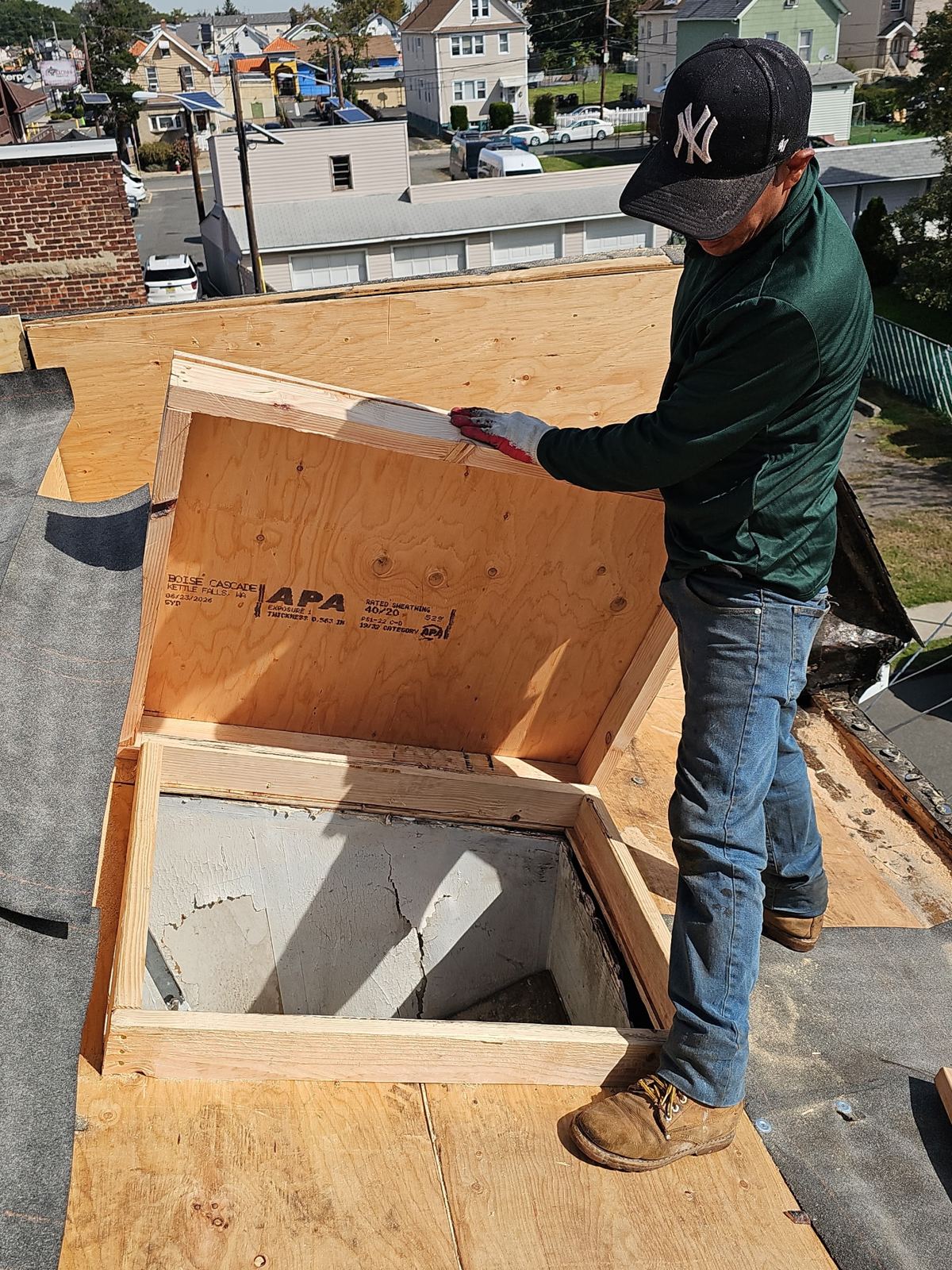
- Skylight Frame Failures: Aging rubber gaskets and low-side apron flashings leak along skylight curb perimeters.
24/7 Emergency Tarping and Storm Damage Mitigation
High wind gusts and heavy storm fronts along the Route 1 and Route 130 corridors can cause sudden roof trauma. Fallen tree limbs, blown-off shingle fields, and torn ridge caps demand rapid intervention to prevent water from destroying interior drywall, flooring, and electrical runs. Storm Guard Roofing provides 24/7 emergency response throughout North Brunswick. Our crew deploys heavy-duty, UV-resistant tarps secured with wooden batten strips to prevent wind uplift and seal exposed decking against further rain.
Beyond physical emergency repairs, we assist homeowners with the technical requirements of insurance claims. Navigating a storm damage claim requires detailed physical evidence. We document the full extent of damage using high-resolution photography, roof pitch measurements, and written physical inspection reports. Our technicians meet directly with insurance adjusters on site to identify storm-created openings, hail impact spalling, and wind-lifted shingle courses, ensuring your claim covers all necessary structural repairs.
- Emergency Tarp Securing: Deployment of heavy-duty waterproof tarps battened down to withstand ongoing wind and rain.
- Structural Deck Inspection: Checking sheathing and rafters for fractures or deflection following heavy branch impacts.
- Insurance Claim Documentation: Preparing photographic evidence, damage maps, and itemized repair scopes for insurance adjusters.
- Debris Removal: Clearing heavy branches, detached shingles, and broken gutter sections from roof slopes to reopen drainage pathways.
Repair Mechanics vs. Full Replacement Costs
Replacing an entire roof prematurely wastes capital when targeted structural repairs can restore full weather protection. The decision to repair or replace depends on four main physical metrics: shingle age, extent of deck rot, total damaged area, and remaining granular adhesion. If a roof is under 18 years old and issues are localized—such as a single failed valley, missing ridge shingles, or damaged pipe boots—a targeted repair is the correct technical choice.
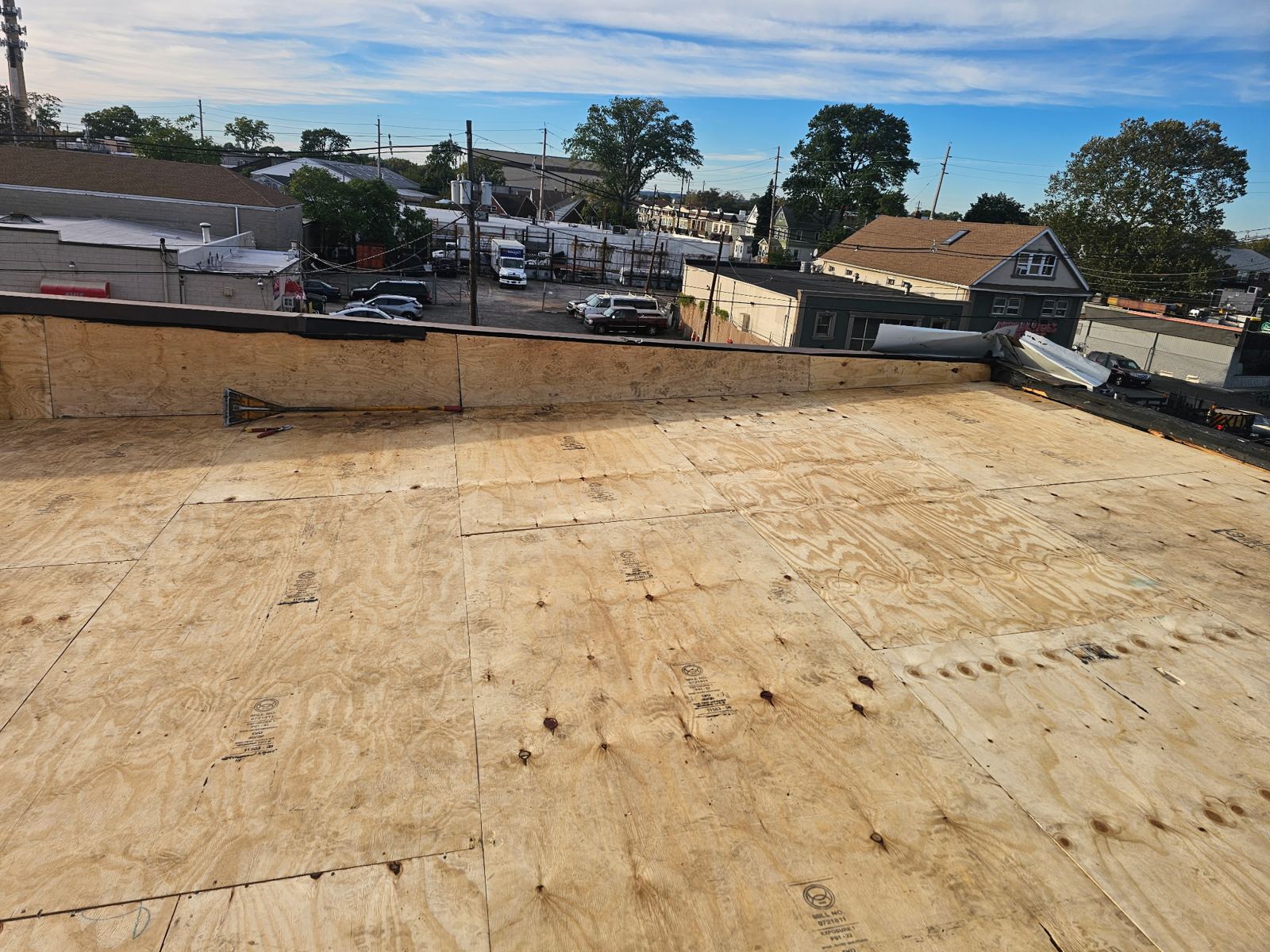
A professional repair costs a fraction of a complete tear-off and replacement. By removing only compromised shingle courses, replacing rotted plywood sheathing, weaving in new architectural asphalt shingles that match the existing profile, and laying fresh underlayment, Storm Guard Roofing restores watertight performance. If an inspection reveals widespread decking decay, persistent shingle cupping, or systemic granular loss across more than 30 percent of the roof plane, we provide a clear assessment explaining why a spot repair is no longer viable.
- Cost Preservation: Localized shingle and flashing repairs eliminate the need for complete tear-off labor and disposal fees.
- Targeted Sheathing Swaps: Replacing damaged 1/2-inch plywood panels without disturbing sound adjacent structural decking.
- Interlocking Shingle Weaving: Fitting new shingles precisely into existing courses to maintain original wind resistance ratings.
- Lifespan Extension: Adding 5 to 10 years of functional protection to a structurally sound roof system.
North Brunswick Permit Compliance and Construction Codes
Roofing repairs in North Brunswick Township must adhere to New Jersey Uniform Construction Code standards. Minor isolated maintenance repairs typically do not require full municipal permits, but structural work involving sheathing replacement or alterations to shared townhome roof planes requires formal filing with the North Brunswick Community Development Department. Storm Guard Roofing manages municipal compliance requirements, ensuring all work adheres to local structural and weather resistance standards.
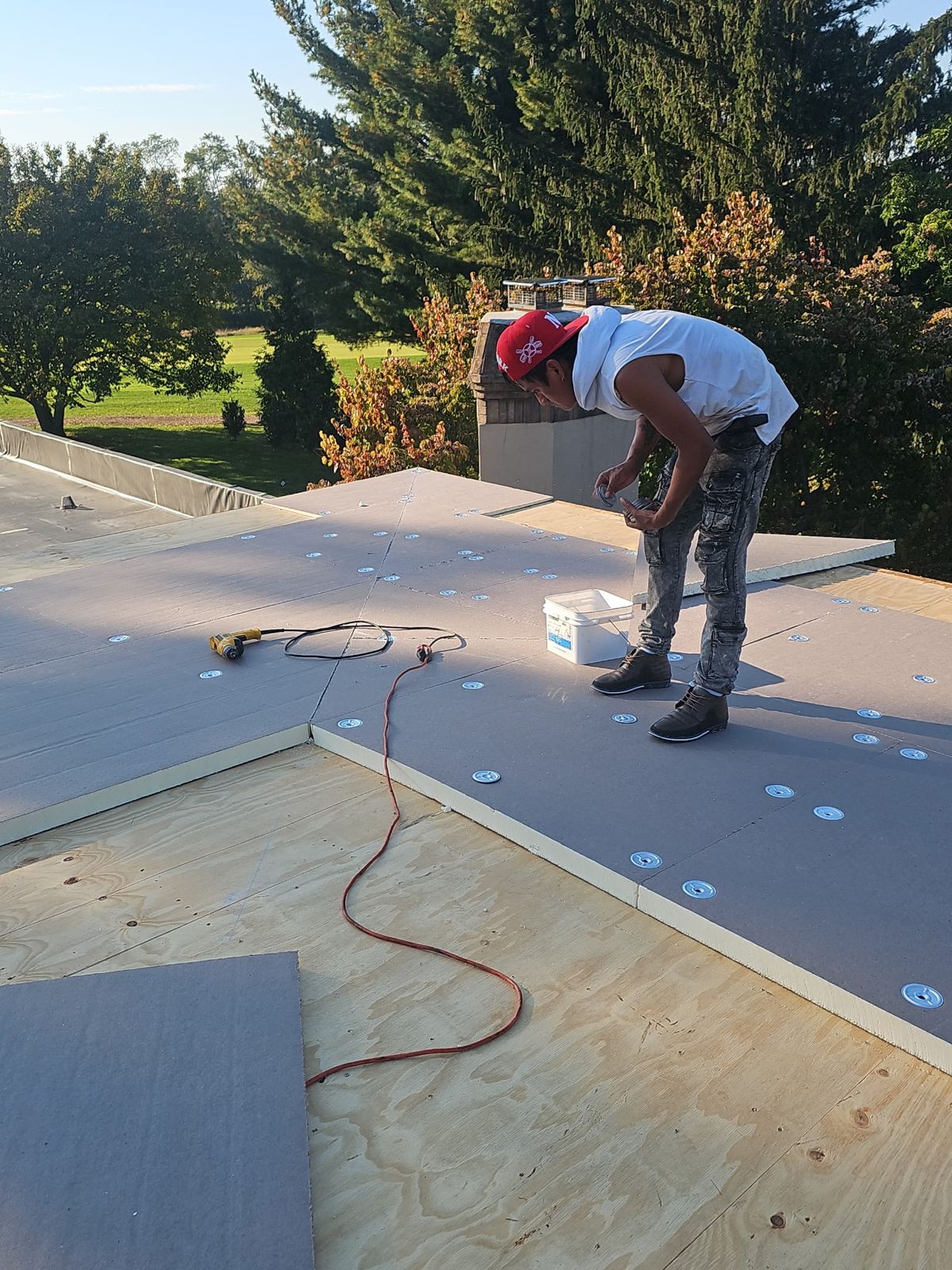
New Jersey building code mandates self-adhering polymer-modified bitumen sheets along roof eaves and valleys during deck exposure to guard against ice dam penetration. Our repair teams strictly apply these standards, using corrosion-resistant hot-dipped galvanized fasteners and double-layered underlayment at vulnerable structural joints. We ensure every repair satisfies municipal standards for wind uplift resistance and moisture control.
- Code-Compliant Ice Barriers: Installing self-adhering waterproof membranes along eaves, valleys, and wall junctions.
- Fastener Patterns: Applying four to six hot-dipped galvanized nails per shingle according to local wind zone ratings.
- Decking Thickness Standards: Verifying plywood sheathing meets structural span ratings before applying new materials.
- Permit Administration: Submitting technical documentation and coordinating site inspections with the municipal construction office.
North Brunswick questions we get asked
- How do you handle roof repairs on North Brunswick townhomes with shared roof planes?
- On townhomes in communities like Society Hill or Hidden Lake, shared roof planes require exact boundary isolation. We trace the leak source relative to party walls, inspect shared flashing lines, and clear continuous gutter runs. We perform targeted repairs on your specific roof section without disrupting the adjacent unit's shingle weave or flashing seals.
- Will my homeowners insurance cover roof leak repairs after a thunderstorm in Middlesex County?
- If the leak stems from covered storm events—such as high wind gusts tearing shingles or severe hail damaging flashing—homeowners insurance generally covers the repair. Storm Guard Roofing documents the physical damage, prepares technical repair scopes, and meets directly with your insurance adjuster on site.
- Can leaking chimney or wall flashing on a 1970s ranch be fixed without replacing the whole roof?
- Yes. On 1970s ranches in North Brunswick, wall and chimney flashings often fail before the main asphalt shingle field reaches end-of-life. We strip back adjacent shingles, remove damaged flashing, install self-adhering ice and water protection, and fit new custom metal flashing without replacing the sound sections of your roof.
- How fast can Storm Guard Roofing deploy emergency tarping in North Brunswick?
- We operate a 24/7 emergency response service. During severe weather events in North Brunswick, our technicians deploy quickly to secure heavy-duty tarps over open punctures or wind-torn shingle fields, stopping interior water damage until permanent repairs can be completed. Call (201) 403-0024 for immediate dispatch.
More in North Brunswick
Call (201) 403-0024 for a North Brunswick inspection, or send the form.