Piscataway · Middlesex County
Roof Repair Services in Piscataway, Middlesex County
Storm Guard Roofing provides specialized roof repair services throughout Piscataway, Middlesex County, New Jersey. With over 25 years of experience as a family-owned, licensed, and insured contractor, we address localized structural and cosmetic roof failures caused by severe weather, aging materials, and environmental strain. When severe storms or sudden leaks compromise your home, our team delivers 24/7 emergency response and structural stabilization, reachable directly at (201) 403-0024. We specialize exclusively in diagnosis, leak isolation, flashing restoration, and targeted material replacement. Rather than pushing full roof tear-offs when unnecessary, we evaluate the exact point of failure to restore the integrity of your existing system. From the established neighborhoods near River Road to residential developments near Lake Nelson and Possumtown, we understand how Central Jersey weather patterns impact local residential architecture. We also assist homeowners through every step of insurance claims handling when storm damage occurs.
Primary Leak Sources in Piscataway Residential Architecture
Diagnosing roof leaks requires a clear understanding of regional architecture and local microclimates. Local building stock: Split-levels and colonials on wooded lots where fall leaf load overwhelms undersized downspouts. When gutters fill with dense oak and maple debris, rainwater cannot clear the eaves efficiently. Water backs up beneath the starter strip, saturating fascia boards, rotting soffit plywood, and bypassing the drip edge into interior wall framing.
Additional common leak points in Piscataway homes include aged neoprene pipe boots around plumbing vents, deteriorating ridge cap shingles on two-story colonials exposed to wind, and compromised step flashing near wall-to-roof intersections. On multi-level split-level structures, water frequently migrates horizontally along interior rafters before manifesting as a ceiling stain, making precise attic inspection and moisture tracing necessary to isolate the true entry point rather than applying temporary surface patches.
Flashing, Chimney, and Valley Repair Technical Details
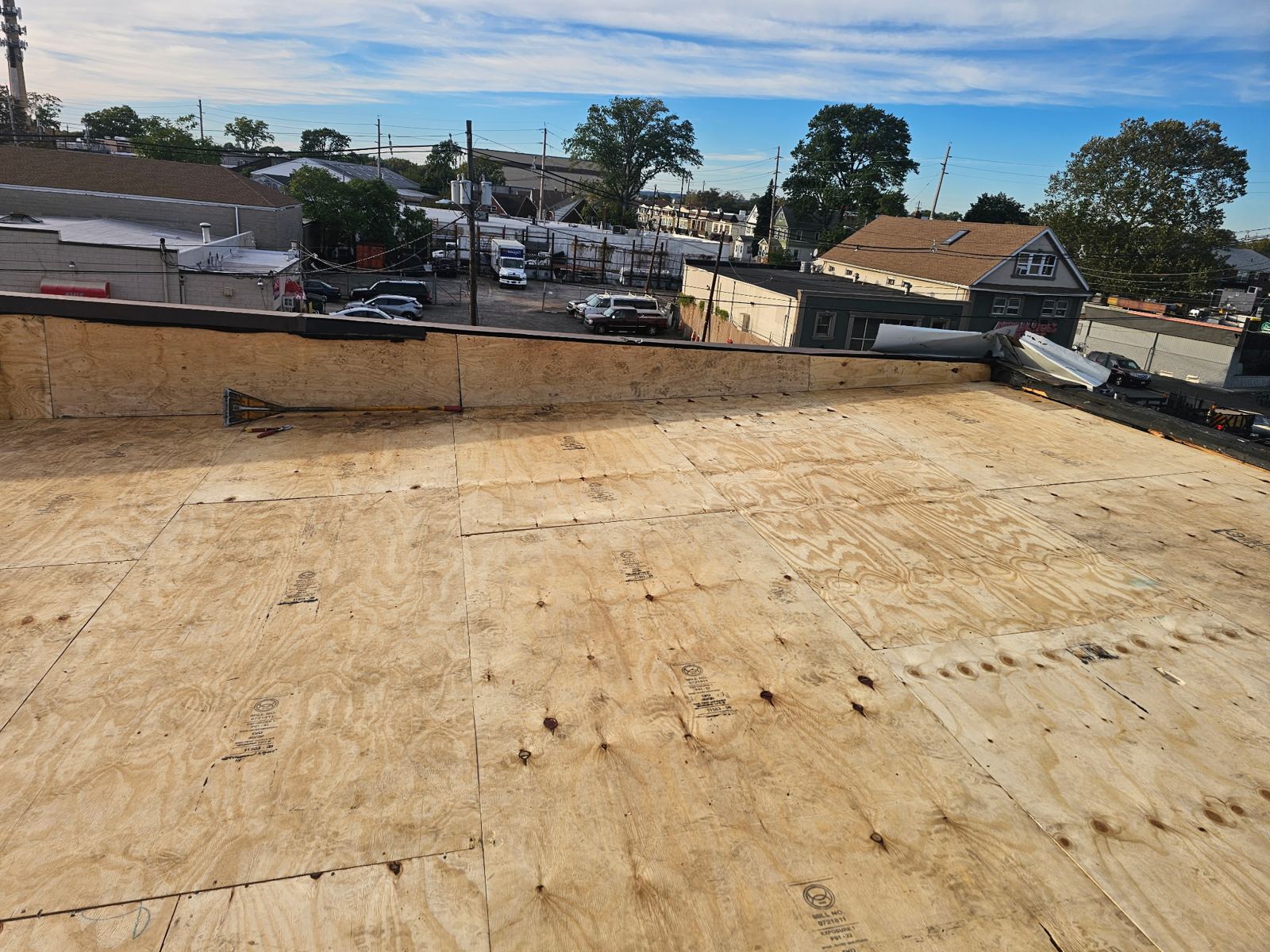
Wall step flashing and roof valleys handle the highest volumes of water runoff during heavy rainstorms. In older Piscataway neighborhoods, continuous wall flashing or improperly counter-flashed brick chimneys often fail before the surrounding asphalt shingles reach the end of their usable lifespan. Our repair process involves carefully removing surrounding shingles, inspecting the underlying plywood deck for rot, and installing self-adhering ice and water shield membranes up wall intersections. We re-flash chimneys using custom-bent aluminum or copper step and counter-flashing embedded directly into mortar joints with polyurethane sealants.
Valley failures on mid-century homes typically occur where original woven or closed-cut valleys collect organic silt and trap moisture. We restore compromised valleys by clearing degraded underlayment, reinforcing the valley centerline with heavy-gauge metal valley flashing, and re-weaving surrounding dimensional shingles to establish a clean water path that sheds leaves and debris efficiently.
24/7 Emergency Tarping and Storm Damage Mitigation
High winds flowing across the Raritan River corridor and sudden summer microbursts frequently tear shingles from exposed ridgelines or drop tree limbs onto residential roofs across Piscataway. When structural damage occurs, immediate intervention prevents water from destroying interior insulation, drywall, and electrical systems. Storm Guard Roofing provides 24/7 emergency response to halt active water entry immediately. Call (201) 403-0024 for prompt emergency dispatch during severe weather events.
Our emergency tarping protocols utilize heavy-duty, UV-resistant poly tarps secured with wood furring strips anchored directly into structural rafters—never nailed loosely through active shingle fields. This technique secures broken roof decks and exposed shingle areas against driving rain, standing up to high wind gusts until permanent structural repairs and formal insurance assessments can be completed.
Managing Roof Repair Insurance Claims in Middlesex County
Wind gusts exceeding 50 mph and severe hail can lift shingle tabs, breaking the thermal sealant bond and creating hidden leak paths that are not always visible from the ground. When storm debris or high winds damage your roof, navigating the insurance recovery process requires precise, technical documentation. Storm Guard Roofing assists homeowners by conducting comprehensive site inspections, capturing high-resolution photos of uplifted shingles, impact points, fractured matting, and interior water damage.
We compile detailed field reports that align with local building codes, including the New Jersey Uniform Construction Code. By presenting clear evidence of physical loss directly to insurance adjusters, we help ensure the scope of work covers all necessary structural repairs, underlayment replacement, and matching shingle courses, preventing partial patches that leave your home vulnerable to future water intrusion.
Financial Economics: Targeted Repair vs. Full Replacement
A leaking roof does not automatically require a total replacement. If the majority of the shingle field retains its granular coating, structural decking is sound, and the roof system is under 15 to 20 years old, targeted repairs offer strong financial value. Repairing an isolated leak point, replacing damaged step flashing, or rebuilding a compromised valley costs a fraction of a complete tear-off and re-roof, extending the functional lifespan of the existing roof by years.
Conversely, if an aging roof exhibits widespread loss of asphalt granules, widespread shingle curling, multiple compromised valley systems, or widespread plywood deck delamination, isolated repairs offer diminishing returns. During our evaluation, we assess shingle strip adhesion, deck rigidity, and overall ventilation. We provide honest, factual assessments so you can decide whether a targeted structural repair makes economic sense or if replacement is the more prudent path forward.
Piscataway questions we get asked
- Do minor roof repairs in Piscataway require a township building permit?
- Minor spot repairs, such as replacing a few damaged shingles or repairing flashing around a vent pipe, typically do not require a construction permit from the Piscataway Township Building Department. However, major structural repairs involving structural decking replacement or alteration of roof framing do require permits and inspections under the NJ Uniform Construction Code.
- How do I know if my Piscataway home needs a flashing repair versus a complete roof replacement?
- If water stains appear near a chimney, dormer wall, or skylight while the main shingle field remains flat and fully covered in mineral granules, the issue is usually localized flashing failure. A complete replacement is generally only necessary when the underlying asphalt substrate across the entire roof is cracked, brittle, or curling.
- How does the heavy tree canopy in Piscataway affect my roof's leak risk?
- High tree coverage leads to heavy leaf accumulation in valleys and gutters, trapping moisture against the shingle edges and accelerating granule loss. Dense shade also delays drying, promoting moss growth that can lift shingle edges and allow wind-driven rain underneath.
- How fast can Storm Guard Roofing secure a leaking roof during severe weather in Piscataway?
- We offer 24/7 emergency response. Call (201) 403-0024 to dispatch a crew to install emergency tarping and temporary seals, preventing further water intrusion into your home's framing and living spaces until weather permits permanent repairs.
More in Piscataway
Call (201) 403-0024 for a Piscataway inspection, or send the form.