Willingboro · Burlington County
Roof Repair Services in Willingboro, NJ
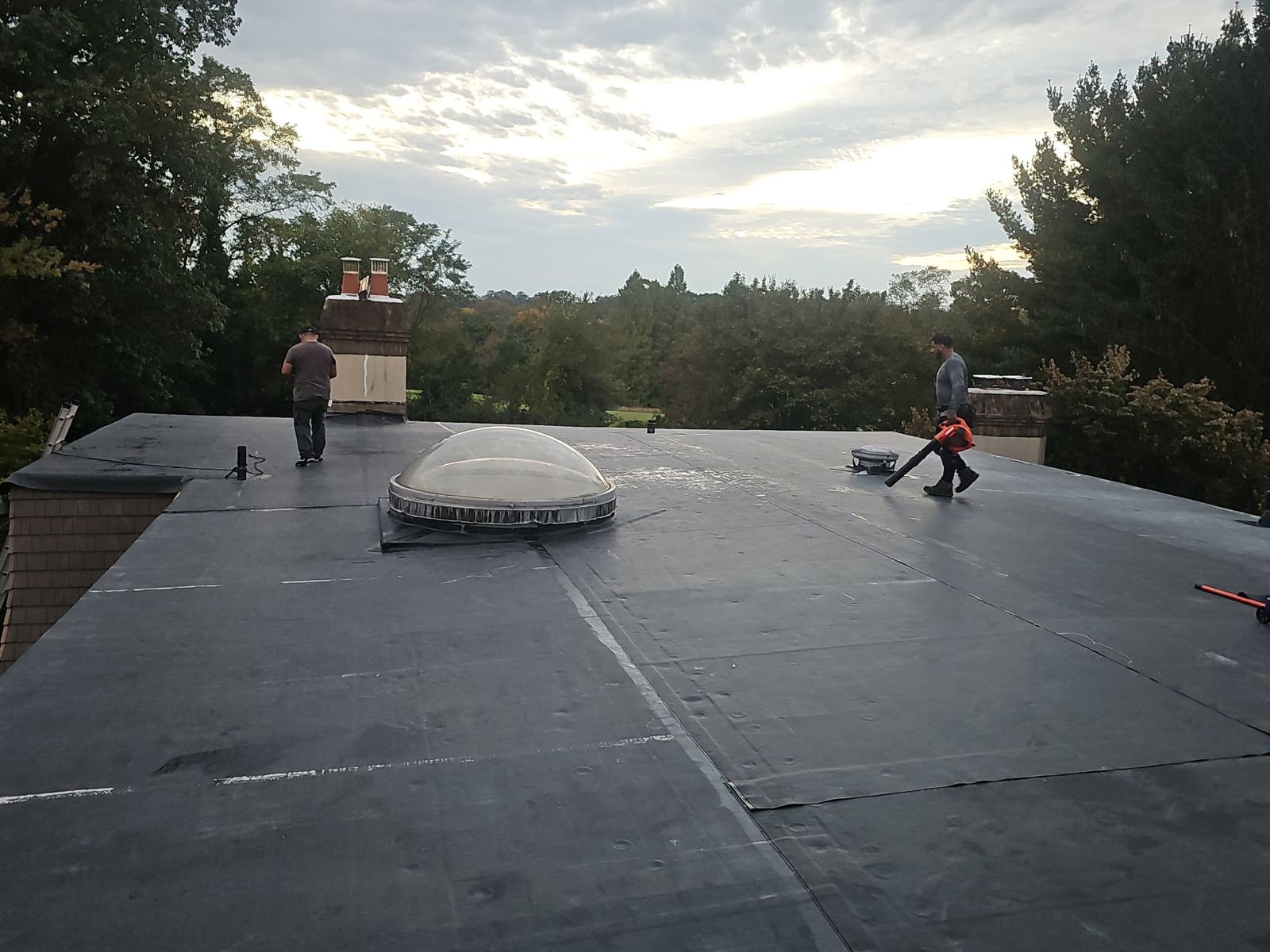
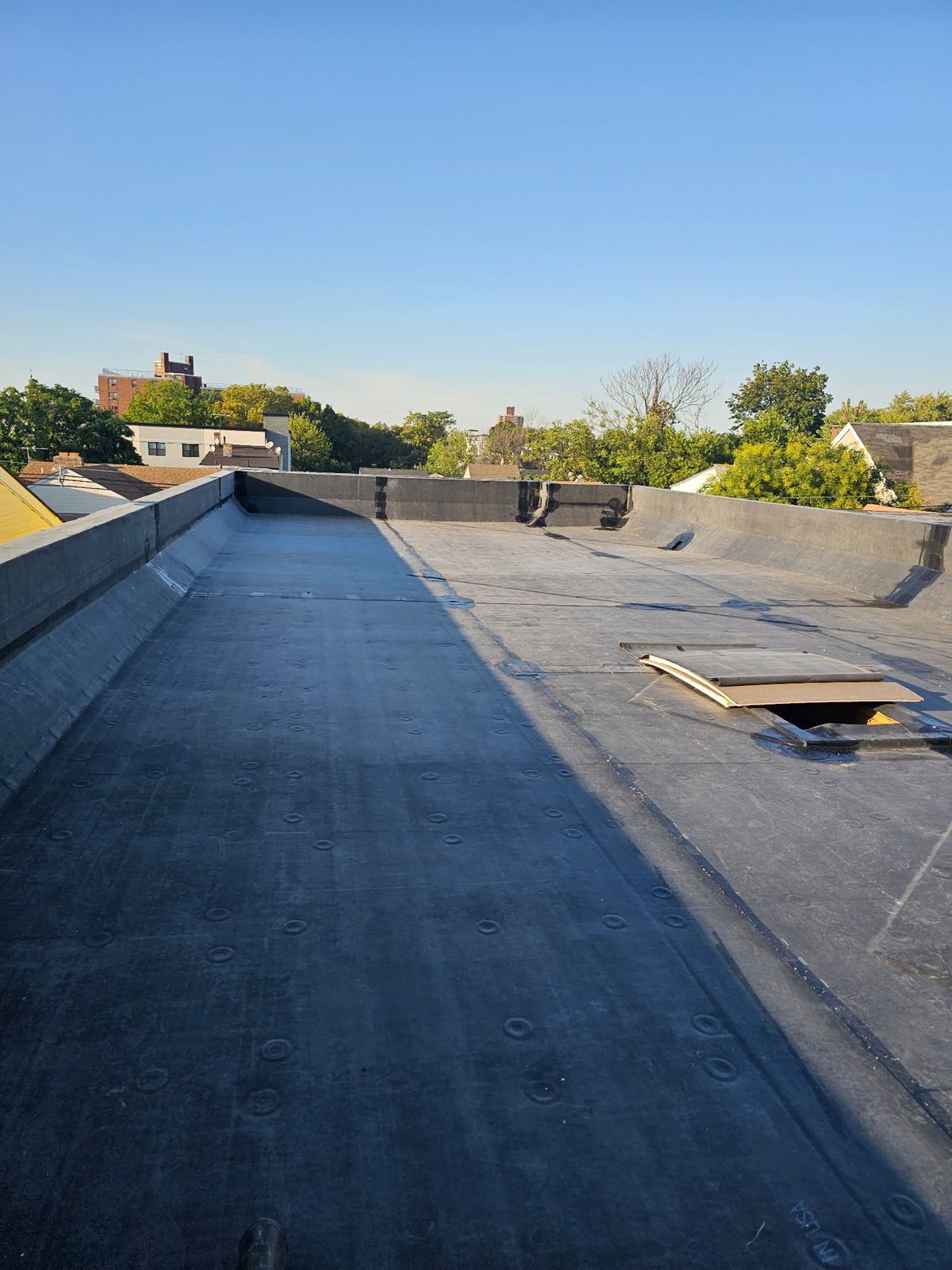
Storm Guard Roofing provides specialized roof repair services across Willingboro, Burlington County. Willingboro’s residential landscape is largely defined by mid-century planned-community ranches located throughout original sections such as Pennypacker Park, Buckingham Park, Country Club Ridge, Garfield Park, and Twin Hills. These single-story homes frequently feature low-slope roof sections, integrated chimney systems, and rear additions constructed with original single-ply EPDM or modified bitumen membranes tied directly into steep-slope architectural or 3-tab shingle fields. When age, storm movement, or thermal contraction breaks these material transitions, targeted structural repairs are required to halt water ingress. Operating as a family-owned, licensed, and insured roofing contractor with over 25 years of trade experience, Storm Guard Roofing delivers precise leak detection, 24/7 emergency response tarping, and complete insurance claim support. Call (201) 403-0024 for immediate local assistance in Willingboro.
Common Leak Sources in Willingboro Planned-Community Ranches
The single-story ranch homes built throughout Willingboro present distinct structural vulnerabilities tied to their original design and subsequent room additions. A primary failure point is the transition line where a standard pitched shingle roof meets a low-slope rear addition. Many of these additions were completed using single-ply EPDM or TPO membranes tucked beneath upper shingle courses. Over time, adhesive breakdown, thermal contraction, and standing water open these tie-in seams, allowing water to migrate backward under the shingle underlayment.
Additional localized water entry stems from plumbing vent penetrations and wall flashing assemblies. Mid-century ranches in Willingboro utilize multiple roof penetrations for exhaust vents and plumbing stack boots. Neoprene collars on pipe boots degrade under ultraviolet radiation, cracking around the PVC pipe base within 10 to 15 years. Flashing along brick chimneys in gable ends or low-slope sections fails when original step flashing corrodes or mortar counter-flashing joints pull away from the masonry.
- Tie-in seams between pitched shingle main roofs and low-slope single-ply addition roofing
- Cracked neoprene plumbing pipe boots and degraded ridge vent seals
- Corroded step flashing and loose counter-flashing along brick chimney bases
- Wind-lifted shingle tabs along unshielded eave edges and rakes
Flashing Failures, Valley Degradation, and Leak Diagnostics
Water entry points rarely align directly above the ceiling stains visible inside a home. In Willingboro residences, water often enters through damaged valley metal or failed step flashing along sidewalls, then travels down structural rafters before dripping onto interior drywall. Diagnosing these leaks requires tracking water pathways from the point of entry back to the outer roof envelope. Valley degradation is common in open-metal or closed-cut valley configurations where tree debris accumulates from mature suburban canopies, holding moisture against shingle edges.
Resolving flashing and valley failures requires systematic material removal rather than applying temporary surface caulking. Step flashing repairs involve stripping back adjacent shingle courses, inspecting the wooden roof deck for internal rot, installing self-adhering ice-and-water shield over the deck-to-wall intersection, and weaving new heavy-gauge aluminum step flashing under wall siding.
- Stripping localized shingle courses to expose bare decking and verify structural integrity
- Replacing corroded wall step flashing and securing step-cuts into masonry joints with elastomeric sealant
- Installing self-adhering rubberized ice barrier membranes under replacement valley fields
- Re-weaving replacement shingles using hot-dipped galvanized roofing nails
Emergency Tarping and Wind/Hail Storm Damage Mitigation
Severe weather in Burlington County—including heavy wind gusts, hail storms, and nor'easters—can detach aging shingles or drive wind-borne tree branches onto residential roofs. When structural damage creates an active, high-volume leak, immediate action is required to limit interior damage to ceilings, electrical systems, and structural framing. Storm Guard Roofing maintains a 24/7 emergency response service capable of performing emergency roof tarping throughout Willingboro regardless of time or weather conditions.
Emergency tarping must be installed correctly to prevent high winds from tearing the protective membrane away. Tarps are secured using wood batten strips anchored outside primary water flow paths to prevent puncturing intact decking. Following immediate stabilization, our team provides full documentation, including detailed photography, structural assessment notes, and line-item repair estimates required by insurance adjusters to process storm damage claims efficiently.
- Rapid 24/7 deployment for emergency tarping and temporary leak containment
- Mechanically secured batten systems that resist wind uplift without causing secondary deck damage
- Comprehensive physical photo-documentation of wind-lifted shingles, hail impacts, and structural loss
- Direct communication with home insurance adjusters to streamline repair processing
Repair vs. Replacement Economics for Willingboro Homeowners
Homeowners faced with a roof leak must weigh the financial and practical differences between a targeted repair and a complete roof replacement. In many Willingboro ranches, the overall shingle field retains significant operational service life, but localized component failure—such as a single deteriorated valley, damaged pipe boot, or isolated storm impact—causes water intrusion. Under these conditions, executing a precise localized repair is far more economical than tearing off the entire roofing system.
A targeted repair restores structural watertight integrity while preserving the remainder of the functioning roof assembly. Storm Guard Roofing evaluates shingle flexibility, granule loss, deck stiffness, and underlayment condition across all slopes. If 80% or more of the roof membrane remains structurally sound and free of widespread decay, a targeted repair is the correct technical and financial choice.
- Preservation of sound shingle fields when core structural underlayment remains intact
- Cost-effective elimination of localized leaks without full-building tear-off expenses
- Direct deck inspection during repair to verify absence of wood rot or sub-layer sag
- Selective material integration matching existing shingle profiles, exposure, and color tones
Willingboro Township Permitting Requirements and Code Compliance
Roof repairs in Willingboro Township must conform to local building codes and municipal regulations enforcing structural safety. Minor spot repairs under specified area thresholds generally do not require a full construction permit, but work must meet the current New Jersey Uniform Construction Code (NJ UCC) standards. When localized repairs require replacing structural deck sheathing or low-slope single-ply membranes on addition sections, specific installation practices must be followed.
Local codes mandate proper ice barrier membrane installation extending from the eave edge inward past the warm interior wall line to prevent ice dam backing. Storm Guard Roofing handles all municipal code requirements, compliance checks, and permitting paperwork when structural scope thresholds are met in Willingboro, ensuring all work withstands municipal inspections and preserves property values.
- Strict adherence to New Jersey Uniform Construction Code standards for residential repairs
- Proper integration of ice barrier membranes along lower eave lines and low-slope transition edges
- Local permit management with Willingboro Township Code Enforcement when required by scope
- Compliance with proper material disposal and waste recycling mandates in Burlington County
Willingboro questions we get asked
- Why do low-slope rear addition roofs on Willingboro ranches leak near the shingle junction?
- Leaks occur at these junctions because asphalt shingles and low-slope single-ply membranes (like EPDM or TPO) expand and contract at different rates under temperature shifts. Over time, the sealant or lap seam binding the two materials together degrades, allowing wind-driven rain or backed-up water to seep under the upper shingle courses.
- How do I know if my Willingboro roof leak requires a simple repair or a full replacement?
- If the leak is isolated to a specific penetration, flashing detail, or storm impact zone, and the surrounding shingle field is flexible with intact granules, a targeted repair is appropriate. If shingles are brittle, curling, losing granules across all slopes, or the decking exhibits widespread rot, a full replacement is indicated.
- Does Storm Guard Roofing handle insurance claims for storm damage in Willingboro?
- Yes. Storm Guard Roofing conducts physical damage assessments, provides line-item repair estimates, documents wind or hail impacts with photographs, and works directly with your insurance carrier adjuster during the claims process.
- What is the response time for 24/7 emergency roof repair and tarping in Willingboro?
- Storm Guard Roofing operates a 24/7 emergency response service for Willingboro and surrounding Burlington County communities, dispatching crews promptly to perform tarping and temporary leak control to limit interior water damage.
More in Willingboro
Call (201) 403-0024 for a Willingboro inspection, or send the form.