Fort Lee · Bergen County
Roof Replacement Services in Fort Lee, New Jersey
Storm Guard Roofing installs complete roof replacements for residential and multi-family properties throughout Fort Lee, New Jersey (ZIP 07024). Operating as a family-owned, licensed, and insured roofing contractor with over 25 years of local field experience, we deliver technical roof replacement solutions engineered for Bergen County climate conditions. Properties built along the Palisades cliffs face extreme wind exposure off the Hudson River corridor, where high wind gusts routinely damage ridge caps and flashing. Whether your home requires an emergency tear-off following severe storm damage or an upgrade for an aging roof structure, we handle all decking restoration, ventilation improvements, structural flashing, insurance claims, and municipal permits. We provide 24/7 emergency response for active leaks and structural failures. Contact our team directly at (201) 403-0024 to evaluate your roof replacement project.
Complete Tear-Off vs. Re-Roof Overlays in Fort Lee
In Fort Lee, applying a second layer of shingles over an existing roof (an overlay) often conceals underlying structural defects. The borough's mixed housing stock—ranging from detached single-family homes in Coytesville to multi-family residential structures near the Main Street corridor—frequently hides rotting plywood, active mold, or pull-through fastener failure beneath old asphalt layers. Overlaying adds excessive dead weight to the rafter framework, traps ambient heat during humid summer months, and prevents the installation of required ice and water protection along eaves and valleys.
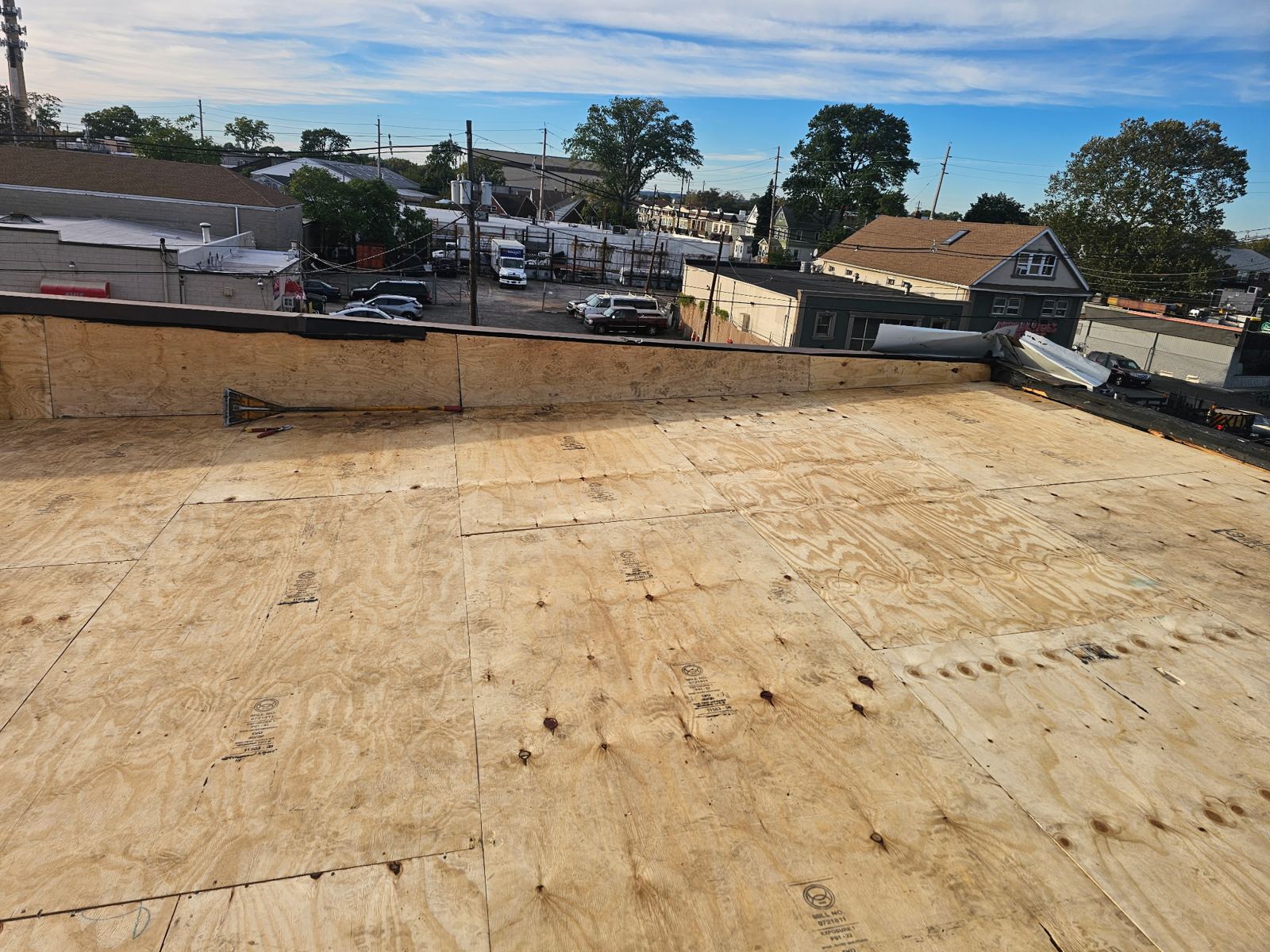
Storm Guard Roofing executes complete tear-offs down to the original roof sheathing. Removing all worn layers allows our crews to inspect the structural integrity of the wood deck, replace compromised sheathing, and install self-adhering membranes directly against the wooden substrate for leak prevention.
- Exposes rotted, delaminated, or water-damaged plywood sheathing before new materials are installed.
- Allows direct installation of self-adhering ice and water protection along eaves, valleys, and side-wall flashings.
- Prevents excessive dead load weight on structural rafters, complying with New Jersey Uniform Construction Code standards.
- Ensures full manufacturer warranty compliance, which is restricted or voided when installing over old shingles.
Decking Assessment and Attic Ventilation Upgrades
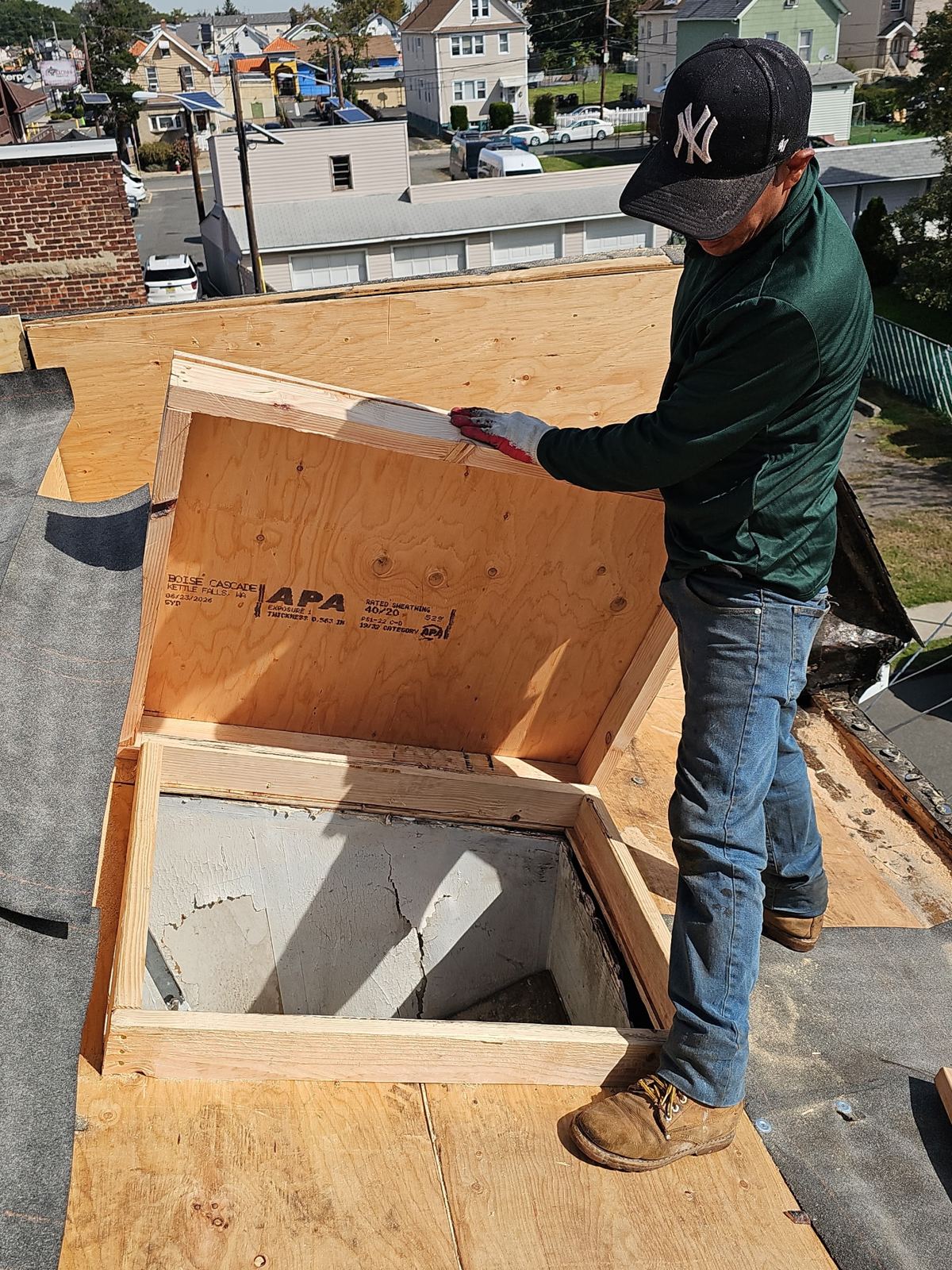
Solid sheathing forms the foundation of a durable roof replacement. During the tear-off process on homes in neighborhoods like Linwood Park or Bridge Plaza, our team inspects every square foot of plywood or historic tongue-and-groove planking. Any wood exhibiting rot, water saturation, or structural sagging is removed back to the center of the underlying rafter and replaced with CDX exterior-grade plywood matching the existing deck depth.
Proper attic ventilation is essential along the Palisades, where cold winter temperatures meet high humidity from the Hudson River valley. Poor airflow traps moist air inside the attic space, causing condensation, structural wood decay, ice dam formation, and premature shingle failure. We calculate intake and exhaust ratios to balance air circulation during every replacement project.
- Replacement of damaged roof sheathing using exterior-grade CDX plywood secured with ring-shank nails.
- Installation of continuous ridge vents combined with cleared soffit intake paths to maintain balanced airflow.
- Application of heavy-duty synthetic underlayments that offer higher tear resistance than standard 15-lb felt paper.
- Custom-bent aluminum and lead wall step flashing replacement around chimneys, dormers, and vertical brick joints.
Sloped Roof Material Options and High-Wind Fastening Specs
High wind exposure near the Palisades subjects Fort Lee roofs to severe wind uplift forces, where ridge caps and flashing take the most damage. To prevent wind tear-offs, Storm Guard Roofing specs higher uplift-rated shingles on exposed slopes. We install architectural fiberglass-asphalt shingles designed to withstand sustained high winds and wind-driven rain.
System longevity depends on installation technique. On exposed slopes throughout Fort Lee, our installers use six-nail patterns in the nail line rather than standard four-nail applications to maximize pull-through resistance. Additionally, we hand-seal ridge and hip caps with high-grade asphalt cement to prevent wind gusts from lifting cap units during severe coastal storms.
- Architectural asphalt shingles rated for high wind uplift performance along the Hudson River corridor.
- Six-nail installation pattern in the designated manufacturer nail line on all sloped roof surfaces.
- Hand-sealed ridge and hip caps using elastomeric sealant to prevent wind lift on exposed roof lines.
- Self-adhering leak barrier applied a minimum of six feet up from eave edges and along all valley centerlines.
Low-Slope and Flat Roof Systems Near the Bridge Approach
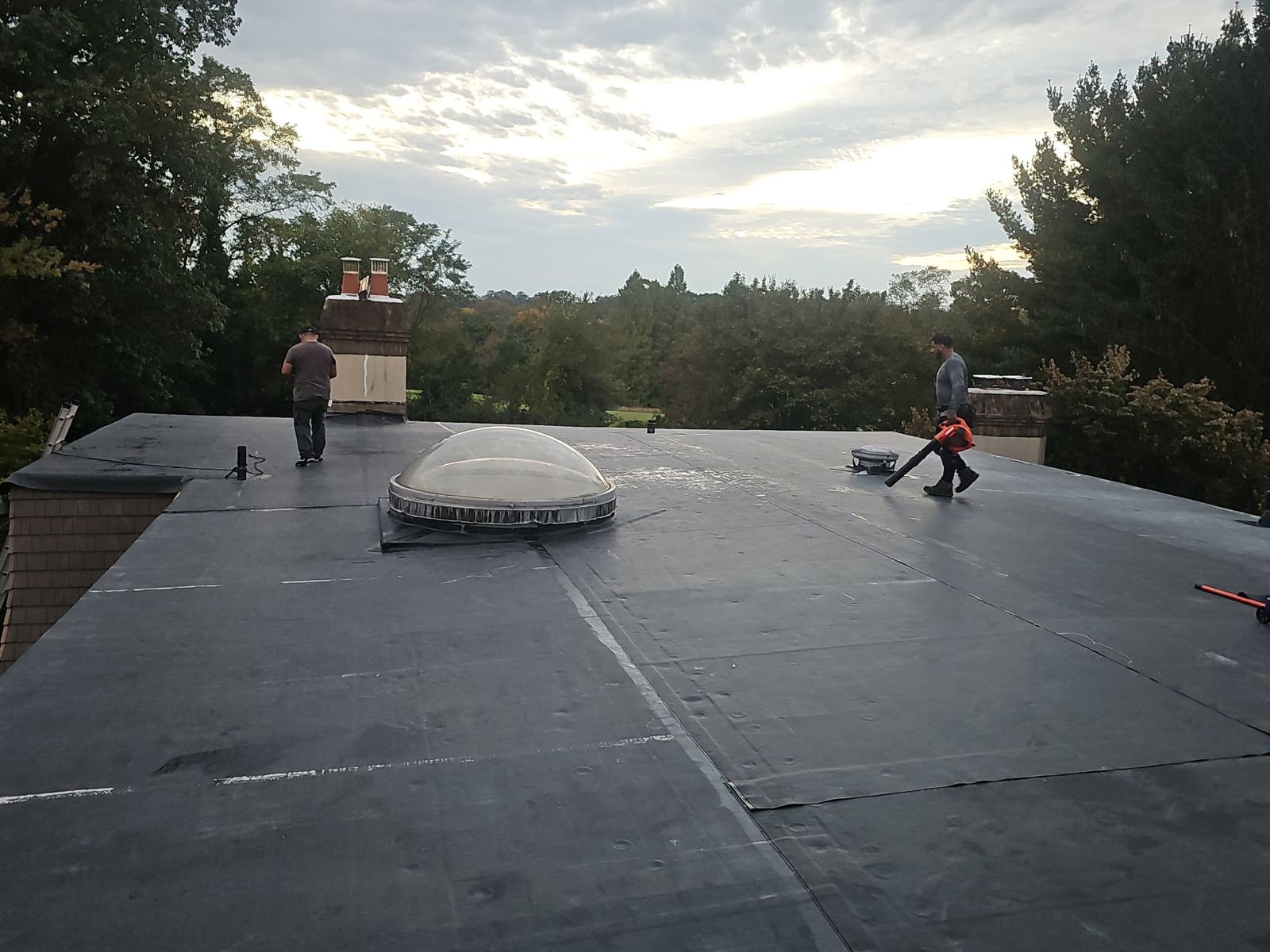
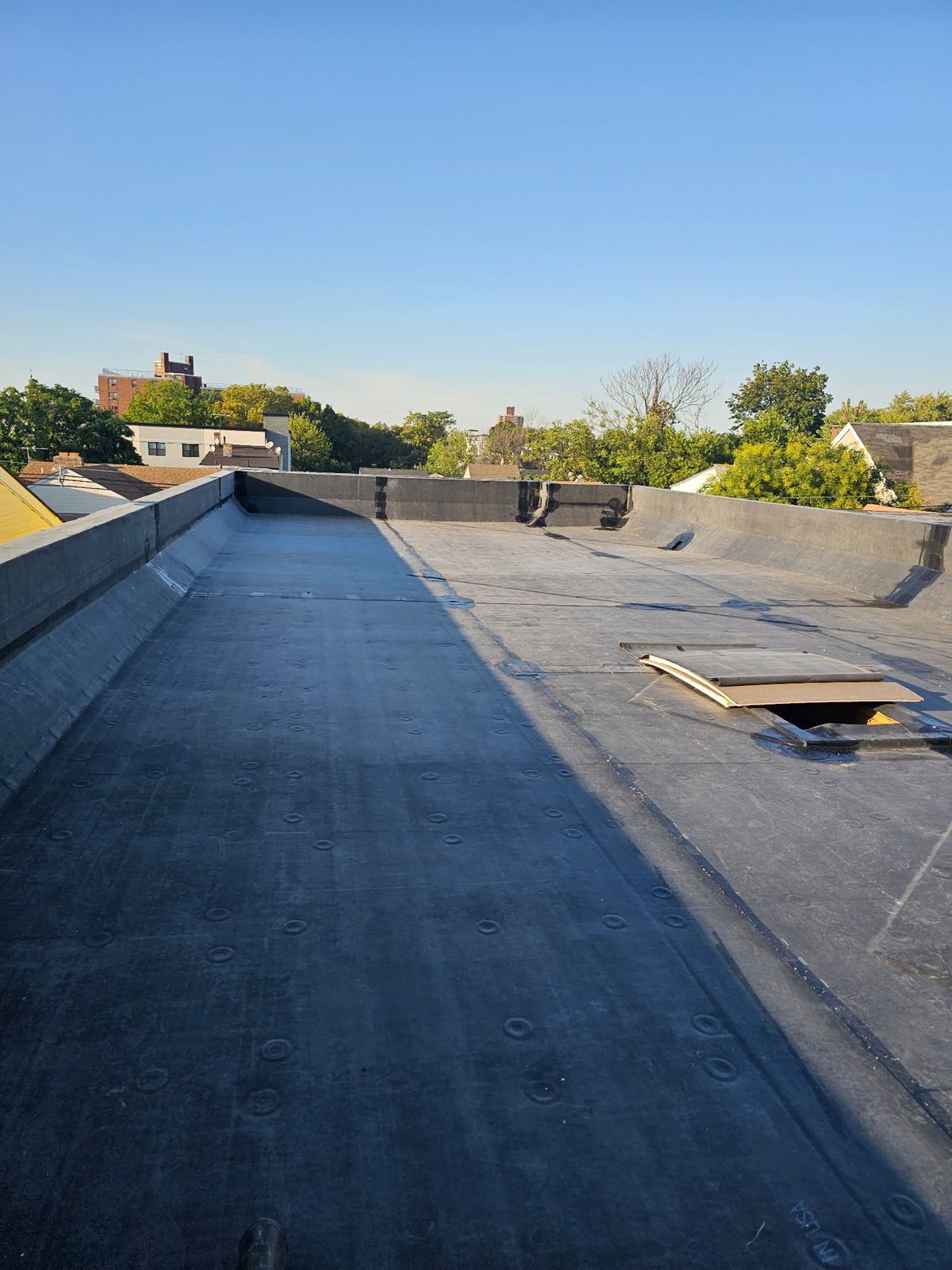
Residential additions, multi-family units, and commercial spaces along Palisade Avenue and near the Bridge Plaza corridor frequently incorporate low-slope or flat roofing sections. High wind turbulence generated along open roadways and the George Washington Bridge approach creates wind suction forces across flat membrane roofs.
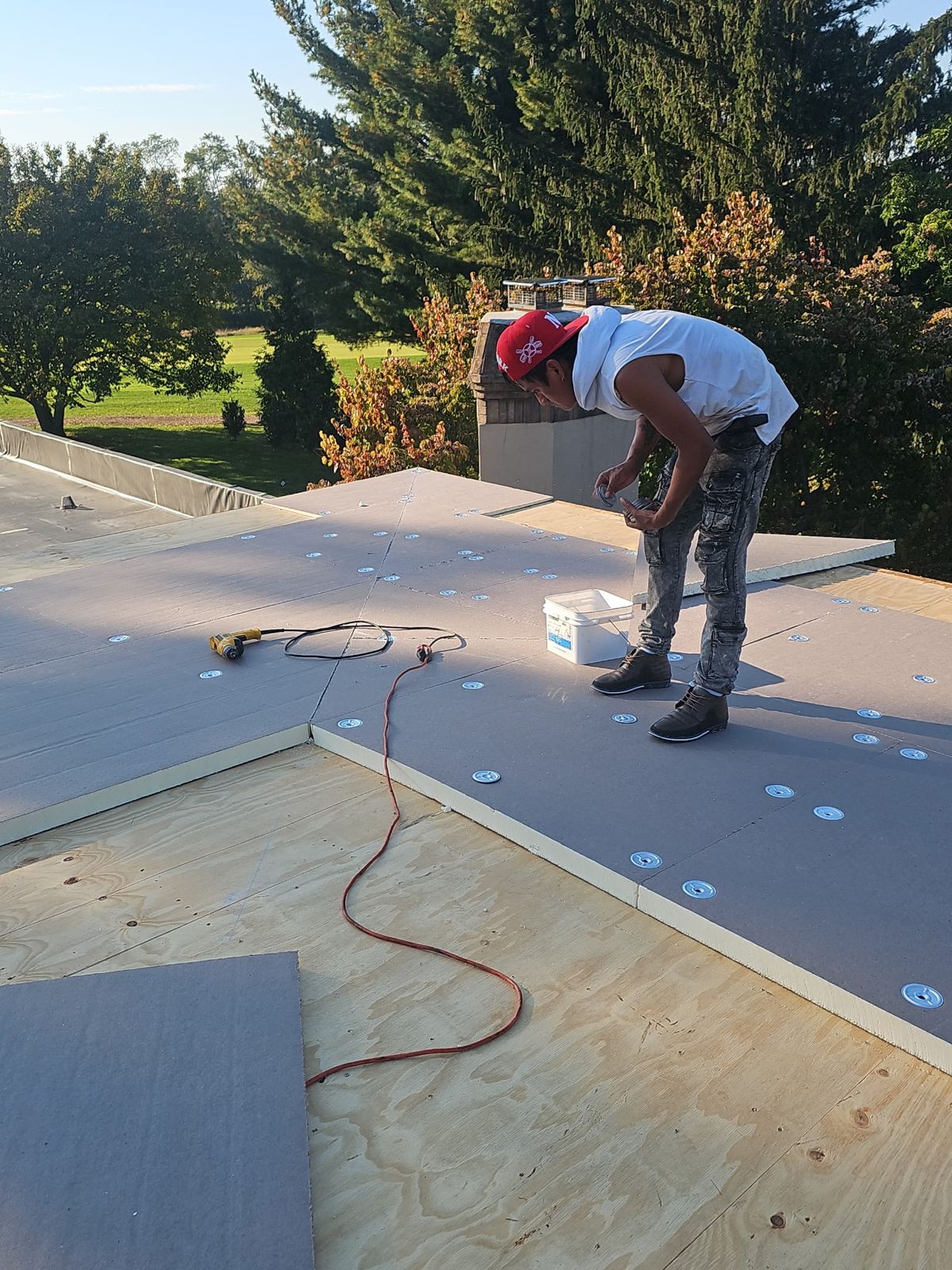
On flat roofs near the bridge approach we add extra perimeter fastening and mechanically attached edge metal, because the perimeter is where wind pulls a membrane loose. Storm Guard Roofing installs multi-ply modified bitumen and heavy-gauge TPO single-ply systems built for wind resistance. Fastening termination bars directly into solid masonry or wood blocking creates a secure seal that keeps wind and rain out.
- Multi-ply SBS modified bitumen and TPO single-ply membranes designed for flat and low-slope roof transitions.
- Mechanically attached edge metal and continuous metal cleat profiles along all roof perimeters.
- Extra perimeter base-tie-in mechanical fasteners spaced at close intervals to withstand high wind uplift.
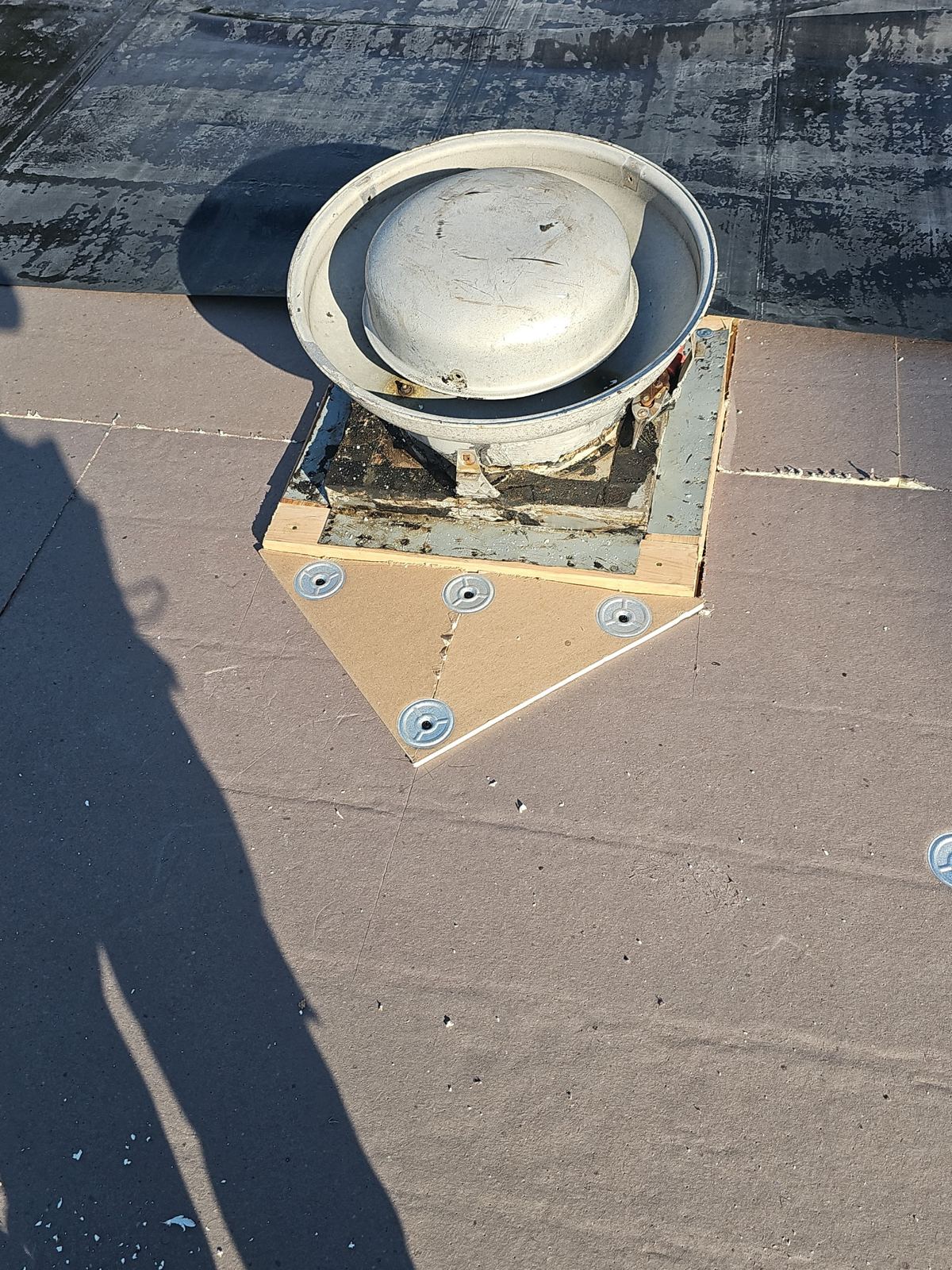
- Tapered insulation boards installed to establish positive drainage toward gutters and exterior roof scuppers.
Project Timeline, Fort Lee Permitting, and Property Protection
A standard residential roof replacement in Fort Lee is typically completed within one to two days, weather permitting. Storm Guard Roofing manages the entire permitting process directly with the Fort Lee Building Department on Main Street, ensuring all construction complies with local building codes and passes final municipal inspections.
Navigating narrow streets and high-density properties along Palisade Avenue or in Coytesville requires controlled staging and debris management. We line driveways, siding, and landscaping with protective plywood shields and heavy tarps. After completing the installation, our crews perform magnetic sweeps to pick up stray nails and metal debris around the perimeter.
- Full management of Fort Lee municipal permit applications, building documentation, and final inspections.
- Property protection including tarping, plywood shields over windows and decks, and magnetic driveway sweeps.
- Dedicated haul-off trucks for immediate debris removal to keep streets and driveways clear.
- Complete documentation provided for homeowners working with insurance claims for storm-related losses.
Fort Lee questions we get asked
- Why is a full tear-off necessary instead of an overlay for my Fort Lee home?
- Fort Lee experiences high wind exposure off the Hudson River along with ice and heavy rain. A complete tear-off removes weighed-down shingle layers, allows structural inspection of underlying plywood decking, enables rotted wood replacement, and ensures self-adhering ice shields are placed directly on the deck as required by code.
- How do you prevent flat roof wind damage near the Bridge Plaza area?
- On flat roofs near the bridge approach we add extra perimeter fastening and mechanically attached edge metal, because the perimeter is where wind pulls a membrane loose. Securing the membrane edges with reinforced termination bars prevents high winds from penetrating beneath the material.
- What specific installation practices protect shingles on properties near the Palisades cliffs?
- We spec higher uplift-rated shingles on exposed slopes near the Palisades cliffs. We install these shingles using six-nail patterns in the nail line instead of standard four-nail applications, and we hand-seal ridge and hip caps with elastomeric sealant to stop high winds from peeling back roof edges.
- Does Storm Guard Roofing handle Fort Lee replacement permits and insurance claims?
- Yes. We manage all permit filings and inspection scheduling directly with the Fort Lee Building Department in ZIP 07024. For storm damage, we assist homeowners by providing full technical documentation, detailed damage evaluations, and line-item estimates required by insurance adjusters.
More in Fort Lee
Call (201) 403-0024 for a Fort Lee inspection, or send the form.