Orange · Essex County
Roof Replacement in Orange, Essex County, NJ
Replacing a roof on Orange’s residential building stock—ranging from pre-war multi-family properties along the Central Avenue corridor to early 20th-century residences near the Montrose Park border—requires a technical approach tailored to aging structural framing. Historical slate underlayments, dormer flashings, and aged brick chimneys demand specific installation practices. Storm Guard Roofing brings over 25 years of family-owned operational experience to full roof replacements throughout Orange, Essex County. We handle complete tear-offs, structural deck repairs, low-slope membrane integrations, ventilation engineering, and insurance claim processing. Call (201) 403-0024 for 24/7 emergency response or to schedule an on-site technical inspection. Licensed and insured in New Jersey.
Full Tear-Off vs. Overlay on Orange Pre-War Structures
An overlay involves installing a new layer of asphalt shingles directly over an existing roof layer. While New Jersey construction codes allow up to two layers of asphalt shingles, overlays are problematic for older structures in Orange. Pre-war multi-family buildings and single-family homes often carry legacy slate underlayments, damaged tongue-and-groove planking, or underlying moisture rot that remains hidden unless the existing surface is stripped completely.
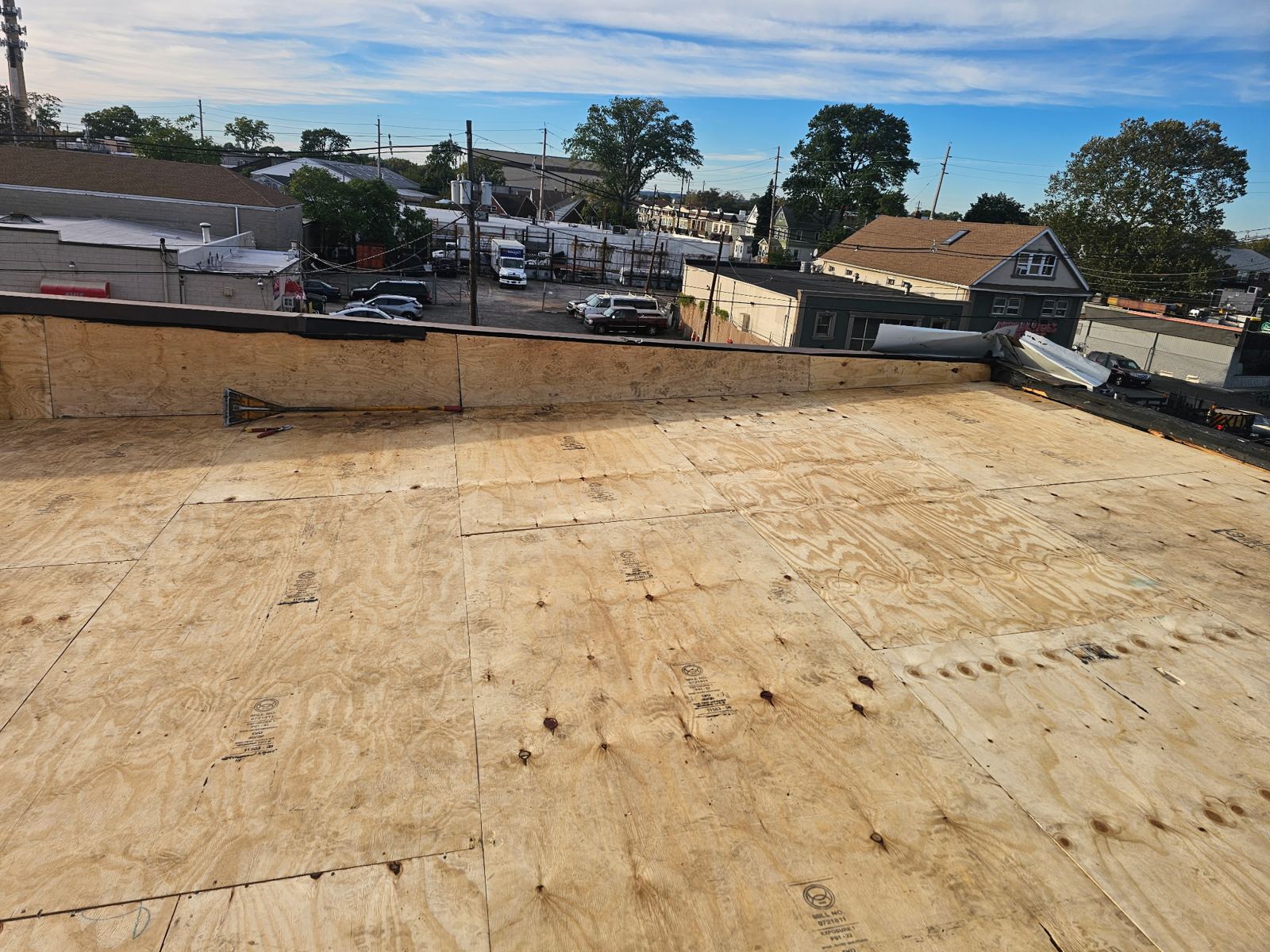
A complete tear-off removes all materials down to the bare rafters or decking boards. This process reveals structural deficiencies caused by decades of humidity, leaks, and thermal contraction. Removing old layers eliminates hundreds of pounds of dead load from aging roof trusses, preventing long-term structural sagging along ridgelines and eaves.
- Complete removal of legacy asphalt layers and historical slate fragments
- Full visual inspection of tongue-and-groove rafter decking and structural joists
- Prevention of excess dead load weight on century-old framing assemblies
- Verification of clean substrate attachment for ice and water shield application
Decking Restoration, Dormer Detailing, and Masonry Integration
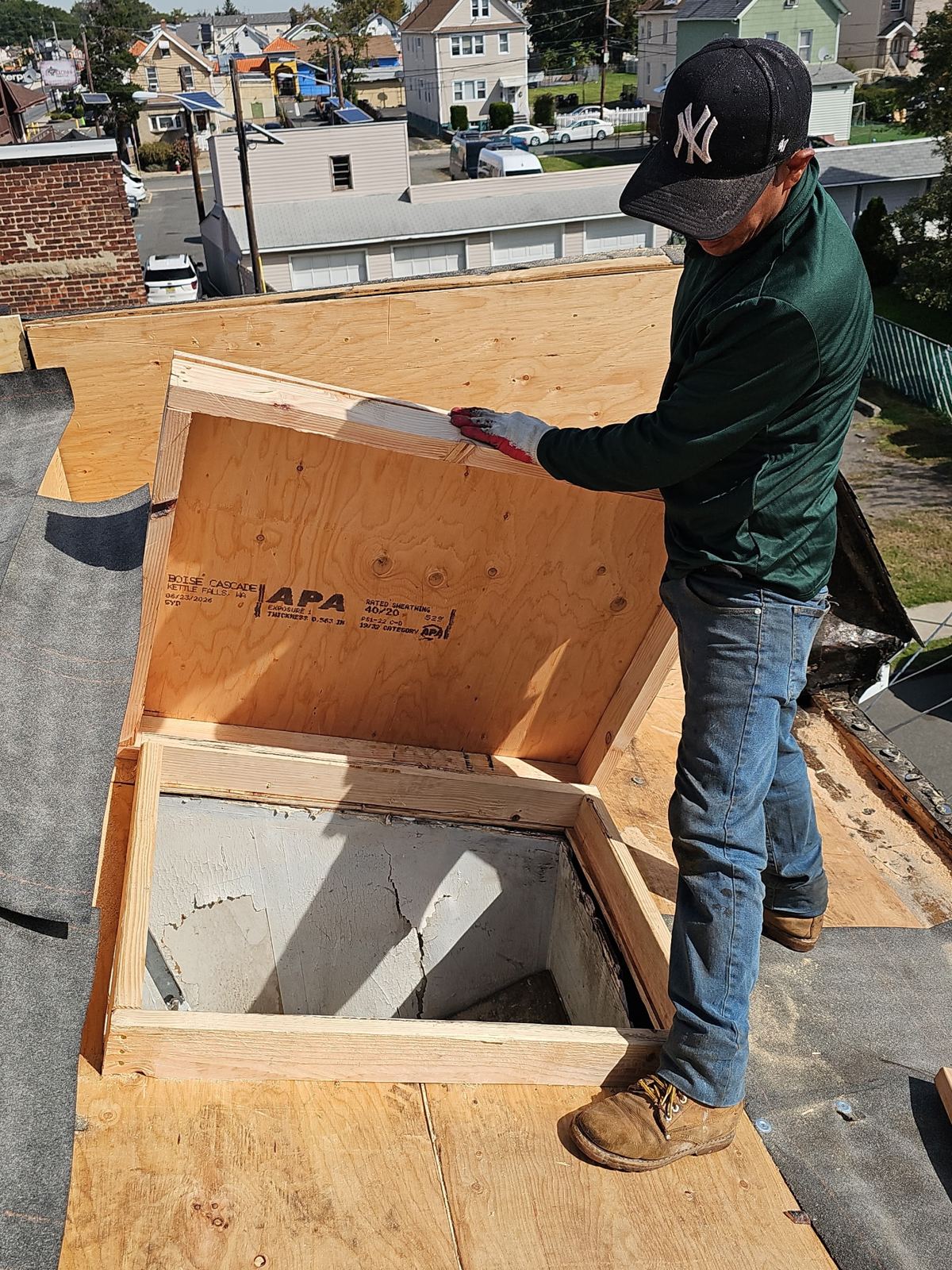
Many pre-war structures in Orange feature original 1x6 step-sheathing or open pine planking initially designed to support slate tiles. Modern dimensional asphalt shingles require continuous structural decking to achieve designated wind resistance ratings and proper nail retention. During replacement, damaged or spaced original planking is overlaid or replaced with exterior-grade CDX plywood.
Historical homes across Orange frequently incorporate complex architectural features, including multi-pitch dormers and prominent brick chimneys. Water intrusion commonly occurs at these junctures. Step flashing must be cut and embedded directly into chimney mortar joints using counter-flashing techniques, rather than relying on surface-applied caulk. Dormer sidewalls require step flashing integrated with weather-resistive wall barriers to stop wind-driven rain.
- Installation of 1/2-inch or 5/8-inch CDX plywood over open board planking
- Custom lead or aluminum step and counter-flashing embedded into brick chimney mortar joints
- Ice and water membrane application in dormer valleys, sidewalls, and low-slope intersections
- Repointing of chimney brickwork when surface deterioration threatens flashing integrity
Material Selection for Steep-Slope and Low-Slope Configurations
Orange multi-family housing and Victorian-era properties often combine steep main roof lines with flat or low-slope porch roofs, rear extensions, and bay windows. Installing standard shingles on slopes below a 2:12 pitch leads to capillary action, where standing water is pulled under shingle laps. Roof replacement projects on these properties require hybrid system engineering.
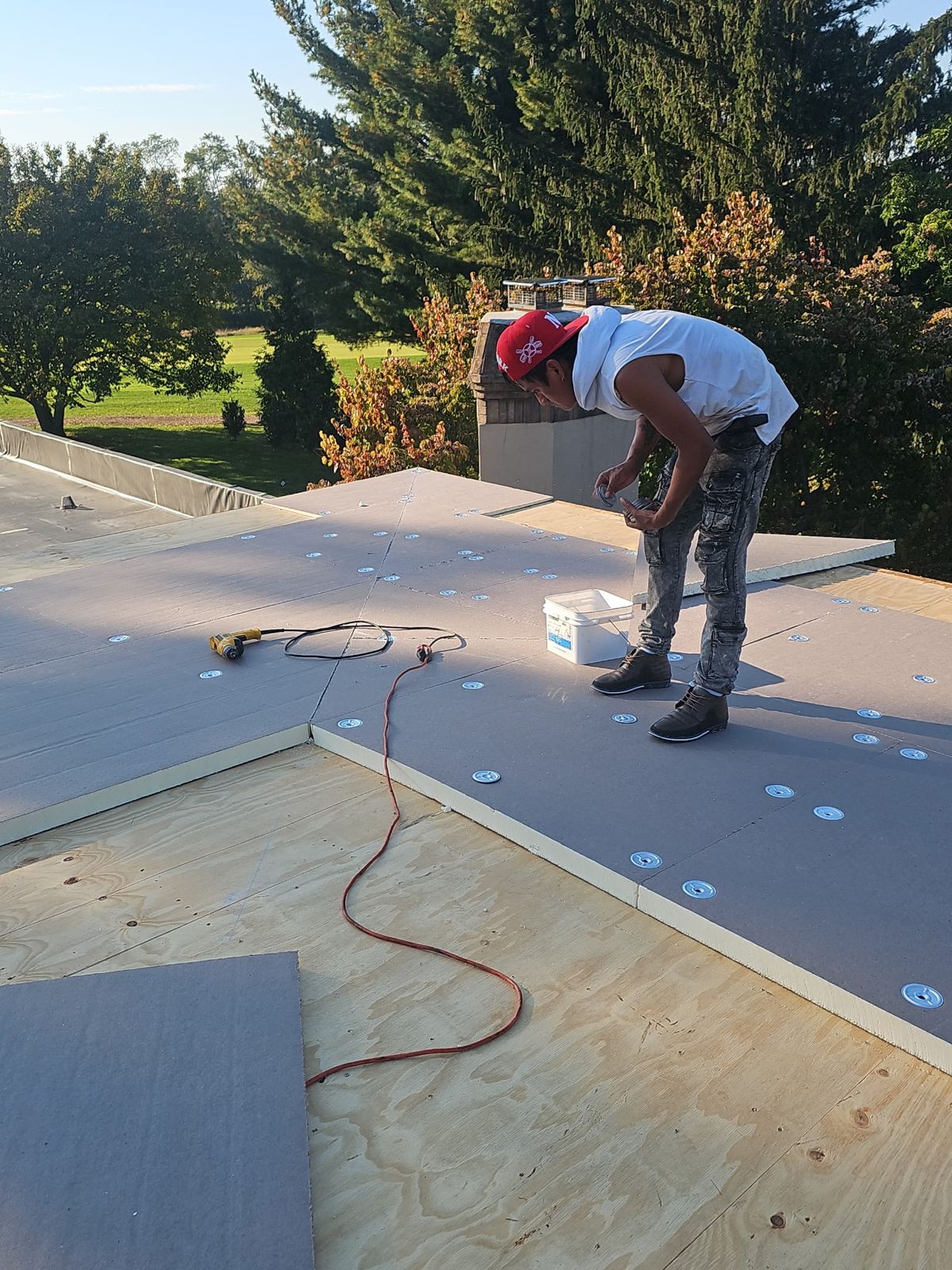
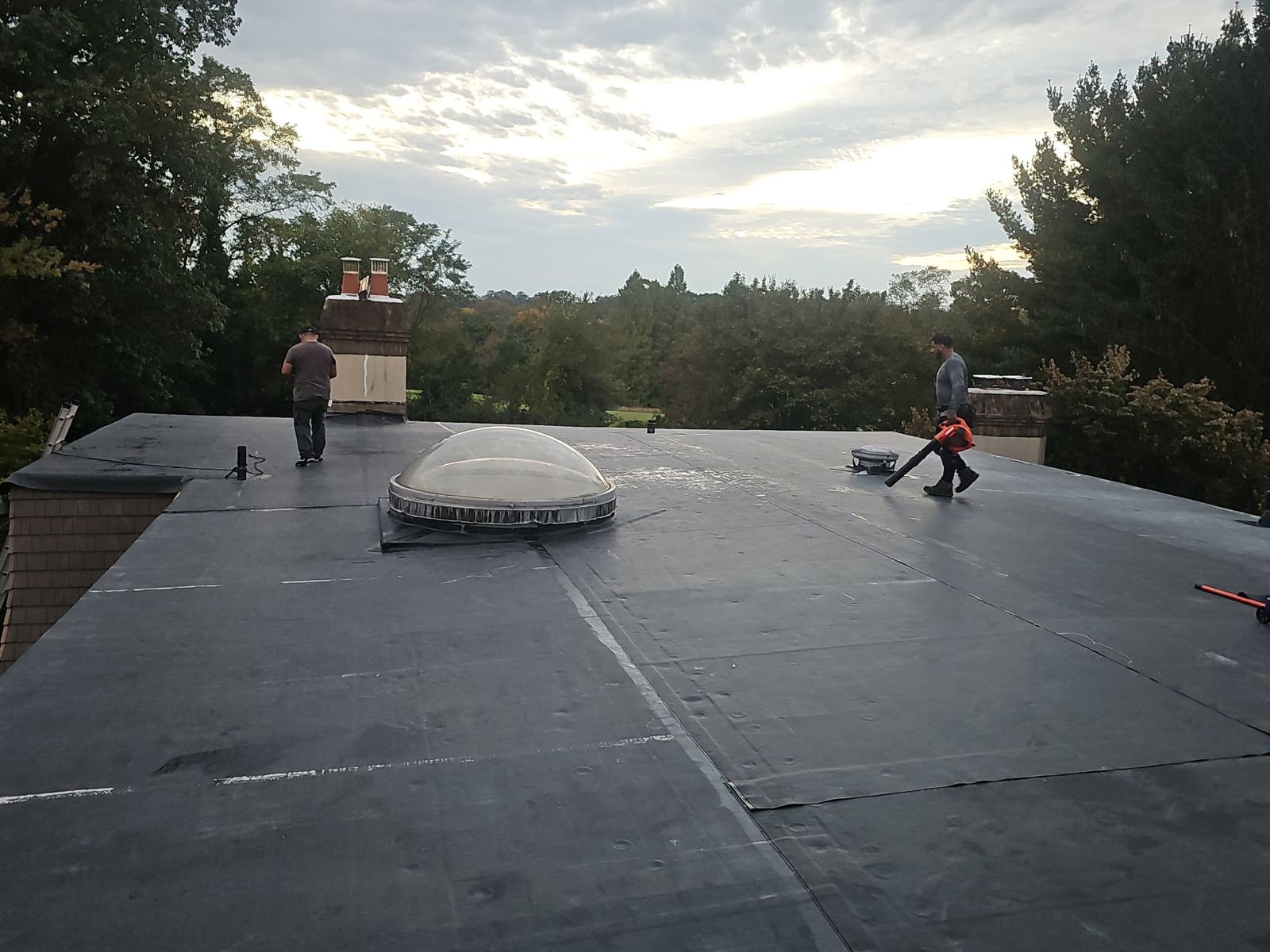
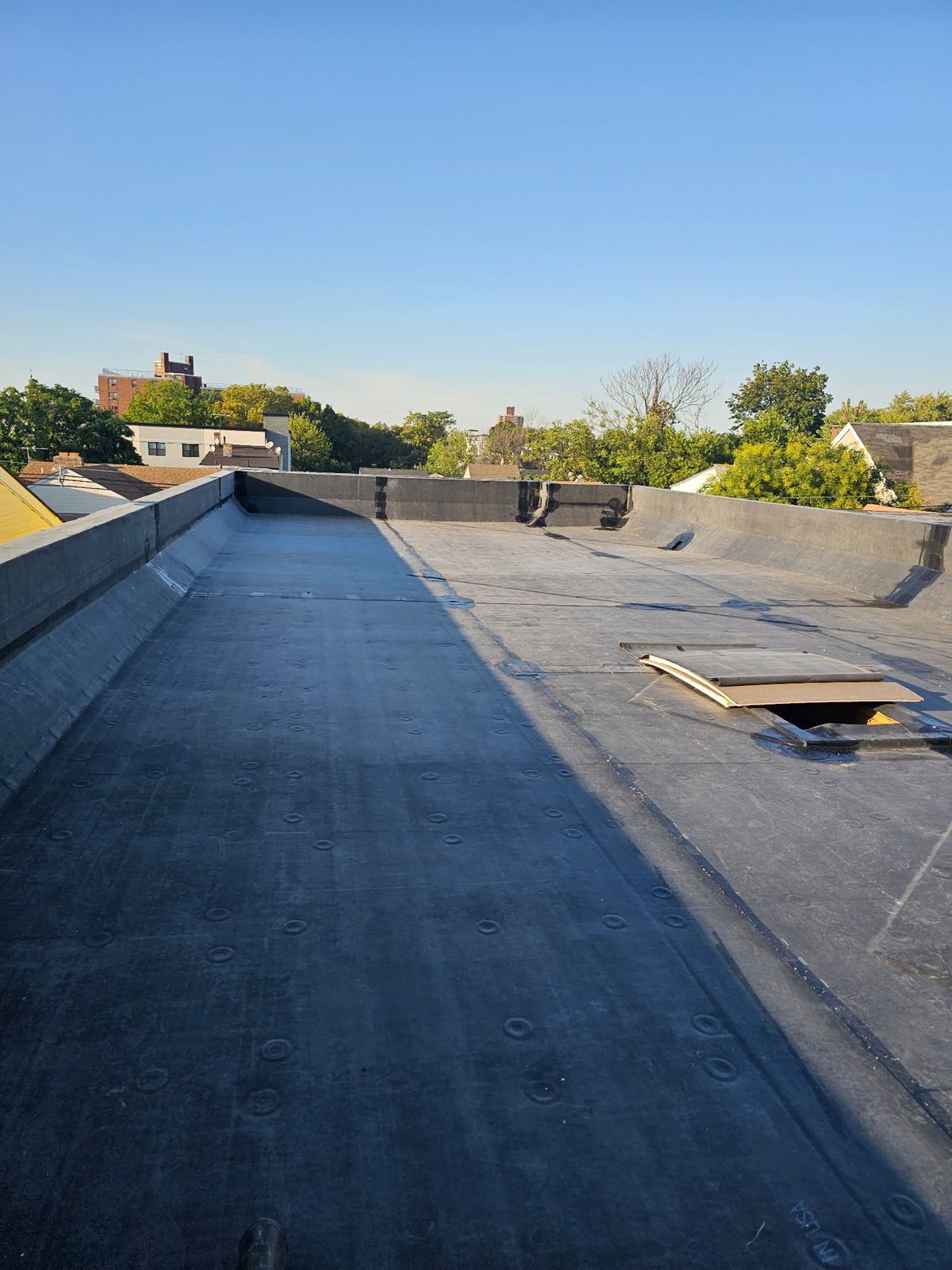
Steep-slope sections receive heavy-duty architectural asphalt shingles engineered for wind resistance up to 130 mph. For low-slope areas, single-ply EPDM (synthetic rubber) or SBS-modified bitumen membrane systems are heat-welded or mechanically attached to create a waterproof barrier over flat spaces.
- Architectural fiberglass asphalt shingles rated for Class A fire resistance and high wind loads
- Single-ply EPDM or self-adhering SBS modified bitumen systems for flat and low-slope sections
- Heavy-duty drip edges installed along eaves and rakes to direct water runoff away from fascia boards
- Pitch transition flashing metal installed where steep shingle planes meet flat membrane surfaces
Attic Ventilation Upgrades for Essex County Climates
Northern New Jersey experiences significant seasonal temperature swings, from freezing snowstorms in winter to high summer humidity. Inadequate roof ventilation traps heat and moisture in the attic space, causing premature shingle deterioration, deck rot, and severe ice damming along eaves during winter freeze-thaw cycles.
Older Orange homes often have boxed fascia or enclosed trim without functional soffit intake vents. During roof replacement, we evaluate the attic net free ventilating area (NFVA) and install continuous ridge vents paired with intake options, such as edge-venting or soffit retrofit vents, establishing a balanced airflow system.
- Calculation of NFVA based on attic square footage to meet modern construction codes
- Continuous ridge vent installation along peak rooflines for maximum hot air exhaust
- Installation of intake vents at rakes or soffits to pull cooler ambient air into the attic space
- Reduction of heat accumulation to protect shingle warranties and minimize winter ice dam formation
Project Timelines, Site Safety, and Orange Municipal Compliance
Roof replacement on single-family or multi-family residences in Orange typically takes between one and three days depending on total square footage, pitch, and structural repairs. Working on tight residential lots—such as those near the Valley Arts District—requires strict site management to protect adjacent driveways, gardens, and neighboring structures.
Storm Guard Roofing handles the full permitting process with the City of Orange Township Department of Planning and Development. We ensure all work aligns with New Jersey Uniform Construction Code standards. Additionally, if your replacement is driven by storm damage, our staff manages technical documentation and coordination with insurance adjusters.
- Submittal and procurement of City of Orange Township building permits
- Plywood wall protection and tarps deployed to safeguard surrounding windows, masonry, and shrubbery
- Continuous magnetic rolling sweeps to collect nails and metal debris from driveways and walkways
- Assistance with storm damage documentation and direct insurance claim handling
Orange questions we get asked
- How does the City of Orange Township handle roof replacement permits and inspections?
- The City of Orange Township requires building permits for complete roof replacements to verify structural integrity and compliance with the NJ Uniform Construction Code. Storm Guard Roofing handles permit submission, manages job site staging according to municipal parking regulations, and schedules required municipal inspections.
- My pre-war multi-family home in Orange originally had slate shingles. Can asphalt shingles be installed directly over existing plank decking?
- No. Architectural shingles require a continuous structural deck such as CDX plywood to meet manufacturer nailing specifications and wind resistance ratings. If original slate lath or spaced pine planks remain, we install solid plywood sheathing over the existing rafters after removing old roofing materials down to the structural frame.
- How do you handle flat roof sections on multi-family or rear porch additions in Orange?
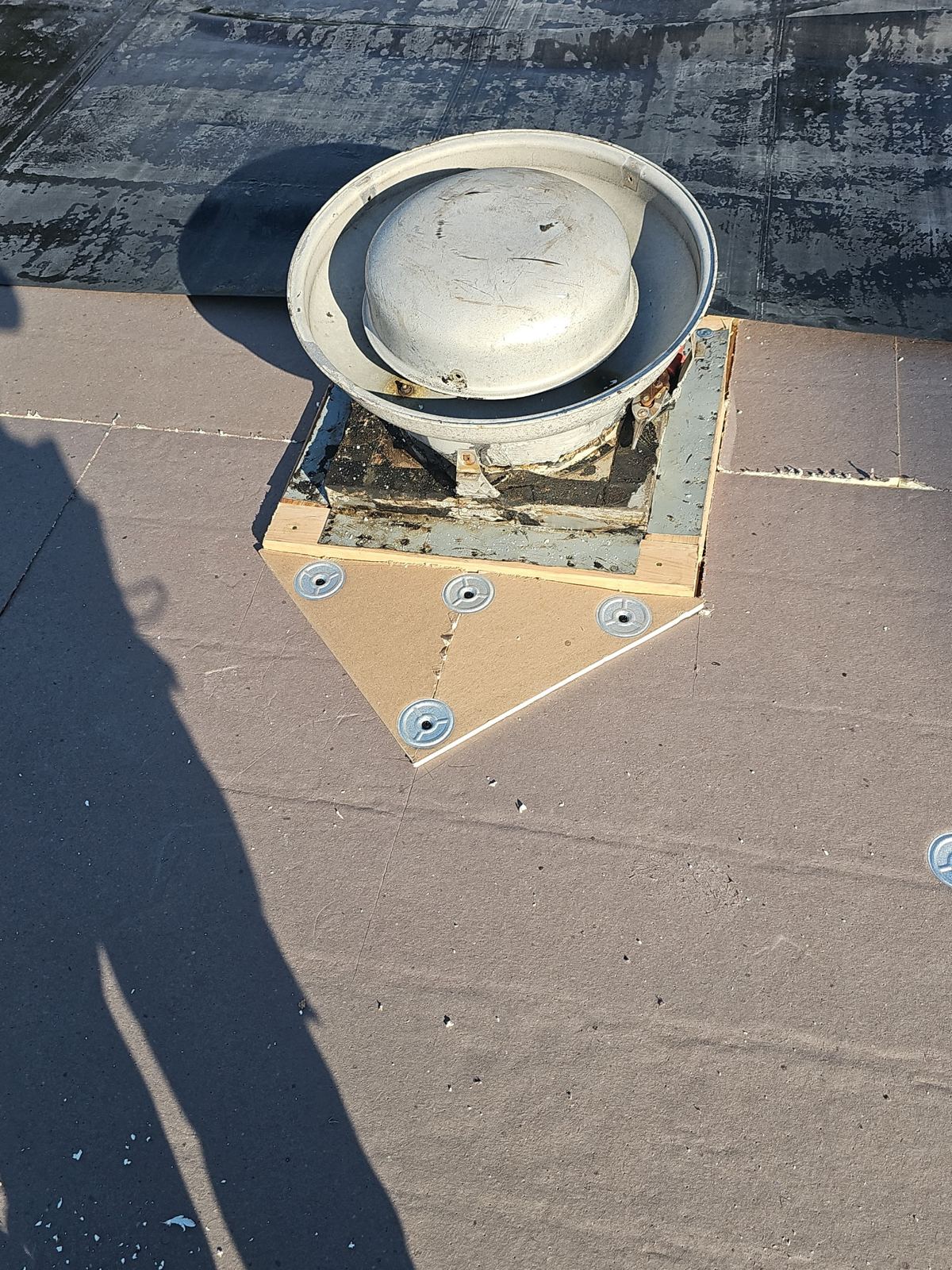
- Low-slope sections under a 2:12 pitch require membrane systems rather than asphalt shingles. We install single-ply EPDM or SBS modified bitumen rolled roofing, complete with ice and water shield underlayment at transitions, curb flashings around skylights, and custom metal drip edges sealed to water run-off points.
- What steps are taken to protect surrounding brick masonry and dormers during tear-off on narrow Orange lots?
- On dense lots common along Central Avenue or near the Valley Arts District, we position catch-nets, plywood wall shields, and tarping against brick chimneys, dormers, and adjacent structures. Debris is guided directly into containment trucks or dumpsters to protect neighboring properties and shared driveways.
More in Orange
Call (201) 403-0024 for a Orange inspection, or send the form.