Gloucester City · Camden County
Gloucester City Roof Replacement: Decking, Flat Roofs, and System Upgrades
Storm Guard Roofing provides direct technical evaluations and full roof replacement services for residential properties throughout Gloucester City, Camden County, New Jersey. Operating as a family-owned business for over 25 years, our team is licensed and insured, offering complete project oversight from initial inspection to final site cleanup. We maintain a 24/7 emergency response service to handle sudden storm failures and assist property owners through every stage of insurance claims. Gloucester City features a distinct building stock dominated by historic rowhouses with flat roofs, shared parapets, and coping joints that open over time, alongside single-family steep-slope residences. Executing a standard roof replacement in this municipality requires precise material selection, structural wood deck verification, and proper flashing integration around shared party walls. Call (201) 403-0024 to speak directly with an estimator about scheduling an on-site evaluation for your home.
Complete Tear-Off vs. Overlay on Gloucester City Roofs
Installing a second layer of shingles over existing roofing materials, known as an overlay, introduces hidden structural risks. An overlay conceals rotten plywood decking, saturated underlayment, and compromised structural framing. In Gloucester City, where older rowhouses and detached homes experience decades of thermal expansion and contraction, adding a secondary layer traps moisture and adds excessive weight to roof rafters. A complete tear-off down to the structural sheathing remains the standard method for guaranteeing long-term system performance.
Removing all old layers allows installers to inspect the substrate, correct structural sag, and re-fasten loose decking boards. It also enables proper installation of ice and water shields along eaves, valleys, and wall intersections. Skipping full removal prevents high-performance underlayments from adhering directly to the wood deck, increasing the likelihood of leaks during wind-driven rain events.
- Complete removal exposes hidden rot, insect damage, and structural deck fatigue across all roof sections.
- Eliminates excess weight loads on older rowhouse rafter frames and load-bearing walls.
- Allows code-compliant installation of self-adhering waterproof underlayment directly against wood decking.
- Ensures valid manufacturer material coverage by avoiding installation over degraded substrate layers.
Structural Decking Repair and Ventilation Upgrades in Gloucester City
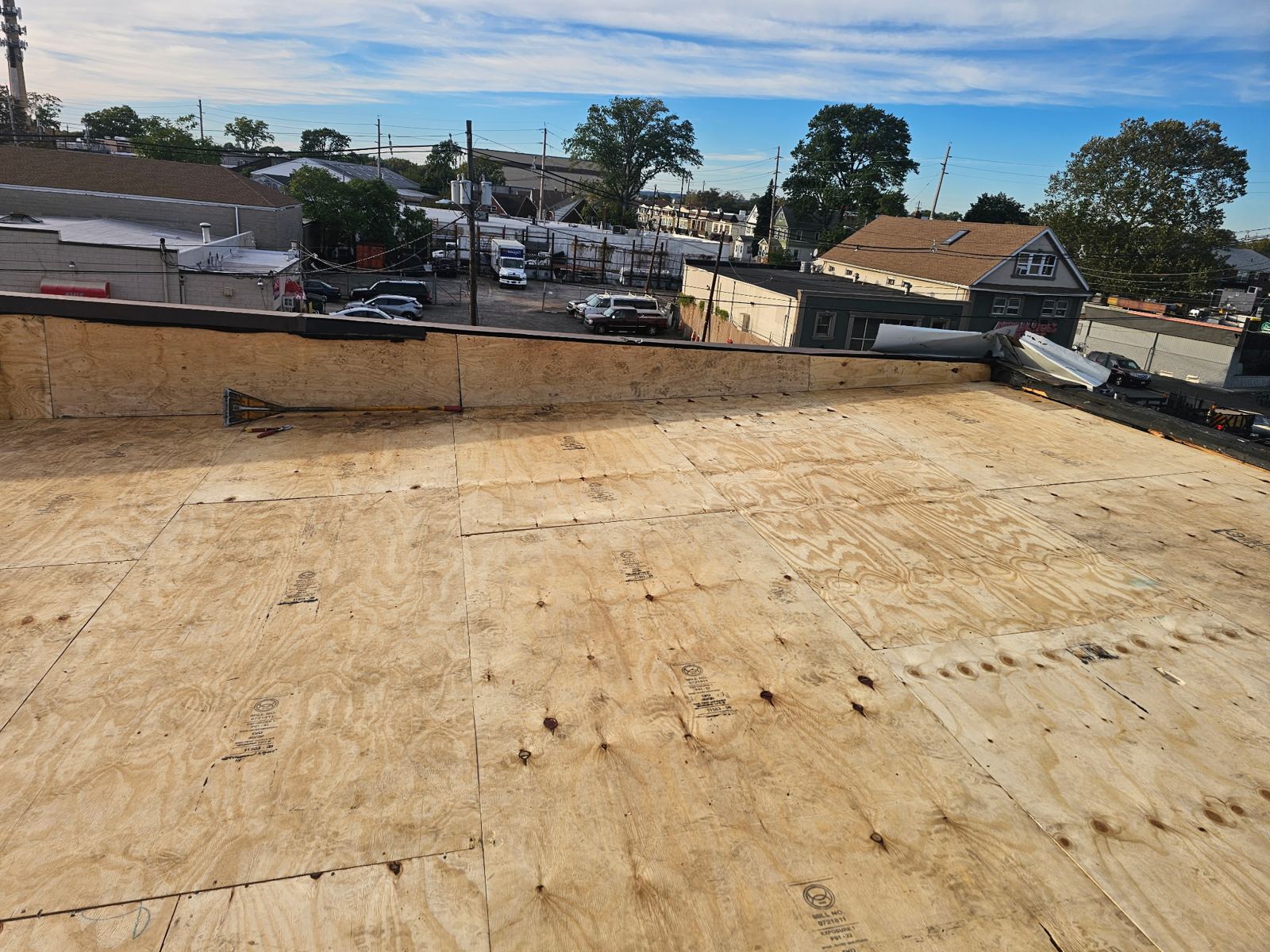
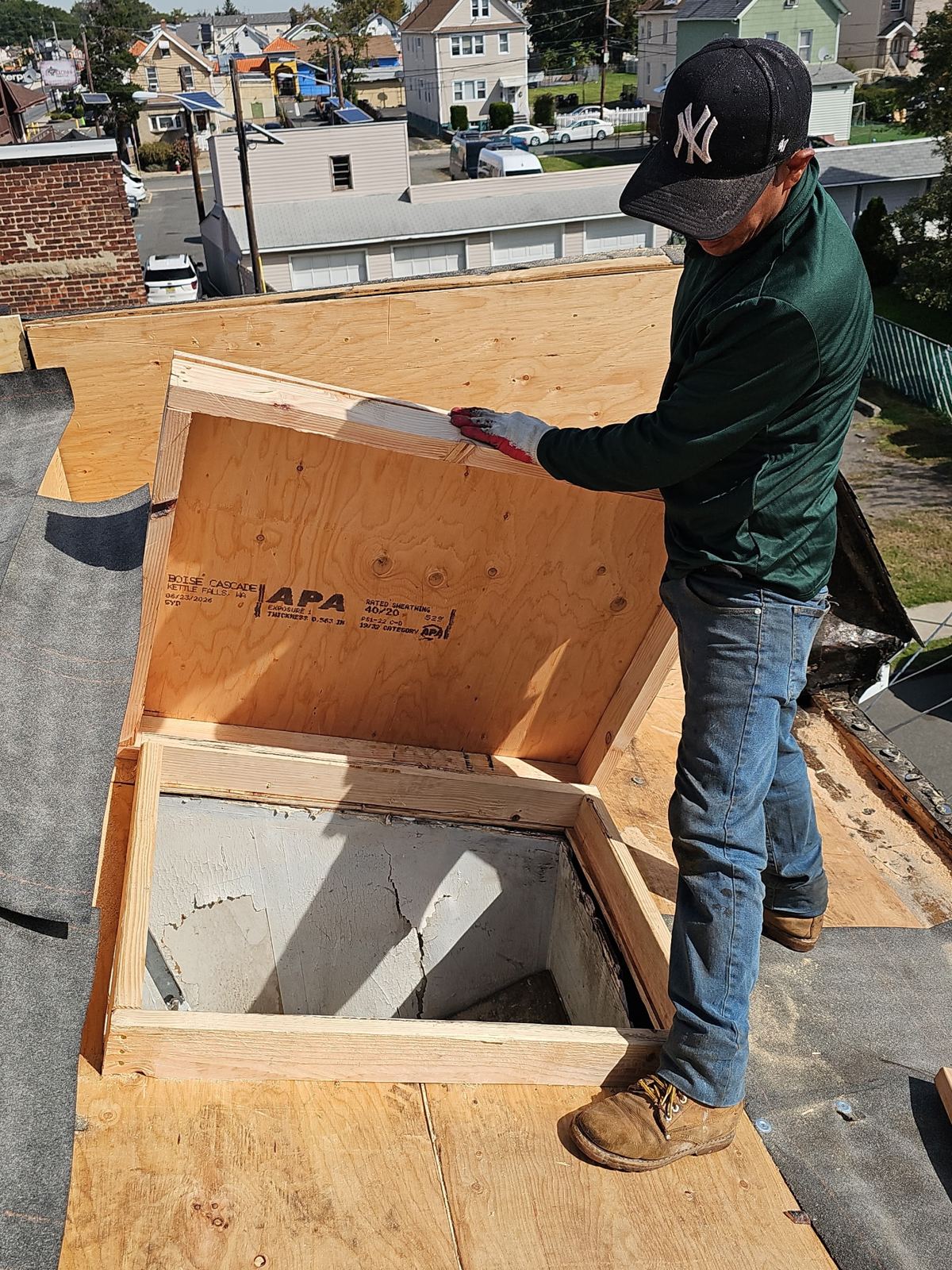
Substrate integrity determines how long a new roof lasts. During a full tear-off, compromised structural components must be addressed immediately. In many older Camden County structures, original tongue-and-groove planking or early-generation plywood exhibits delamination, dry rot, or core sagging around chimney flues and sidewalls. Damaged wood is removed and replaced with exterior-grade plywood or OSB, matching the thickness of the surrounding deck to ensure a flat, uniform surface for new materials.
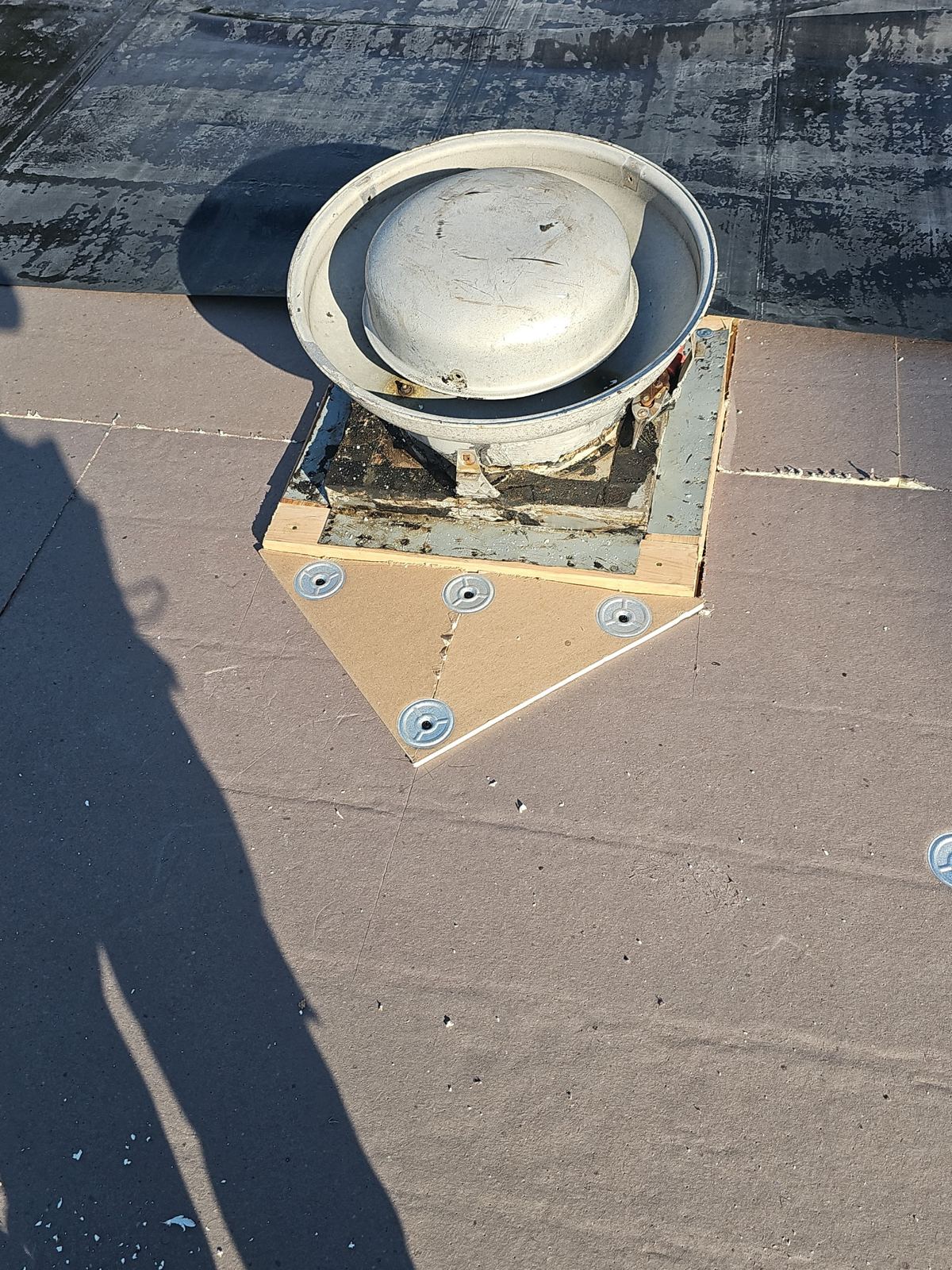
Ventilation balance is equally critical. Inadequate attic airflow traps thermal energy during summer and allows moisture accumulation during winter, causing shingle blistering and internal structural rot. Modernizing the ventilation system involves calculating net free vent area and balancing intake continuous soffit vents with exhaust ridge vents or specialized flat roof power vents. Correct air movement maintains stable attic temperatures and preserves structural framing.
- Replacement of water-damaged tongue-and-groove boards and delaminated plywood sheathing.
- Reinforcement of weakened rafters and structural collar ties prior to new underlayment placement.
- Calculation of proper intake and exhaust balance to eliminate attic heat pockets and moisture condensation.
- Integration of low-profile ridge vents, soffit baffles, or static roof louvers designed for narrow urban footprints.
Shingle and Low-Slope Systems for Gloucester City Rowhouses
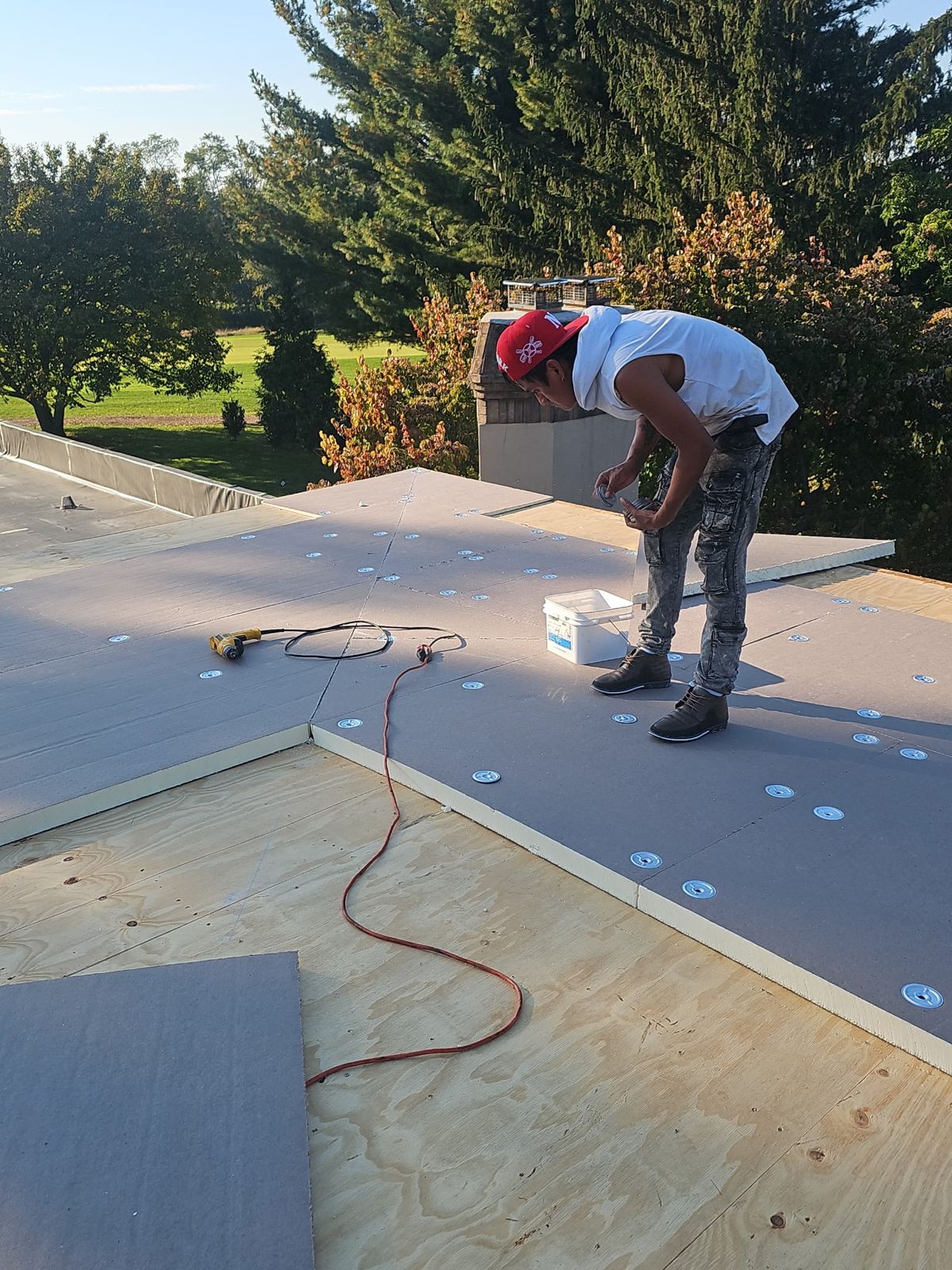
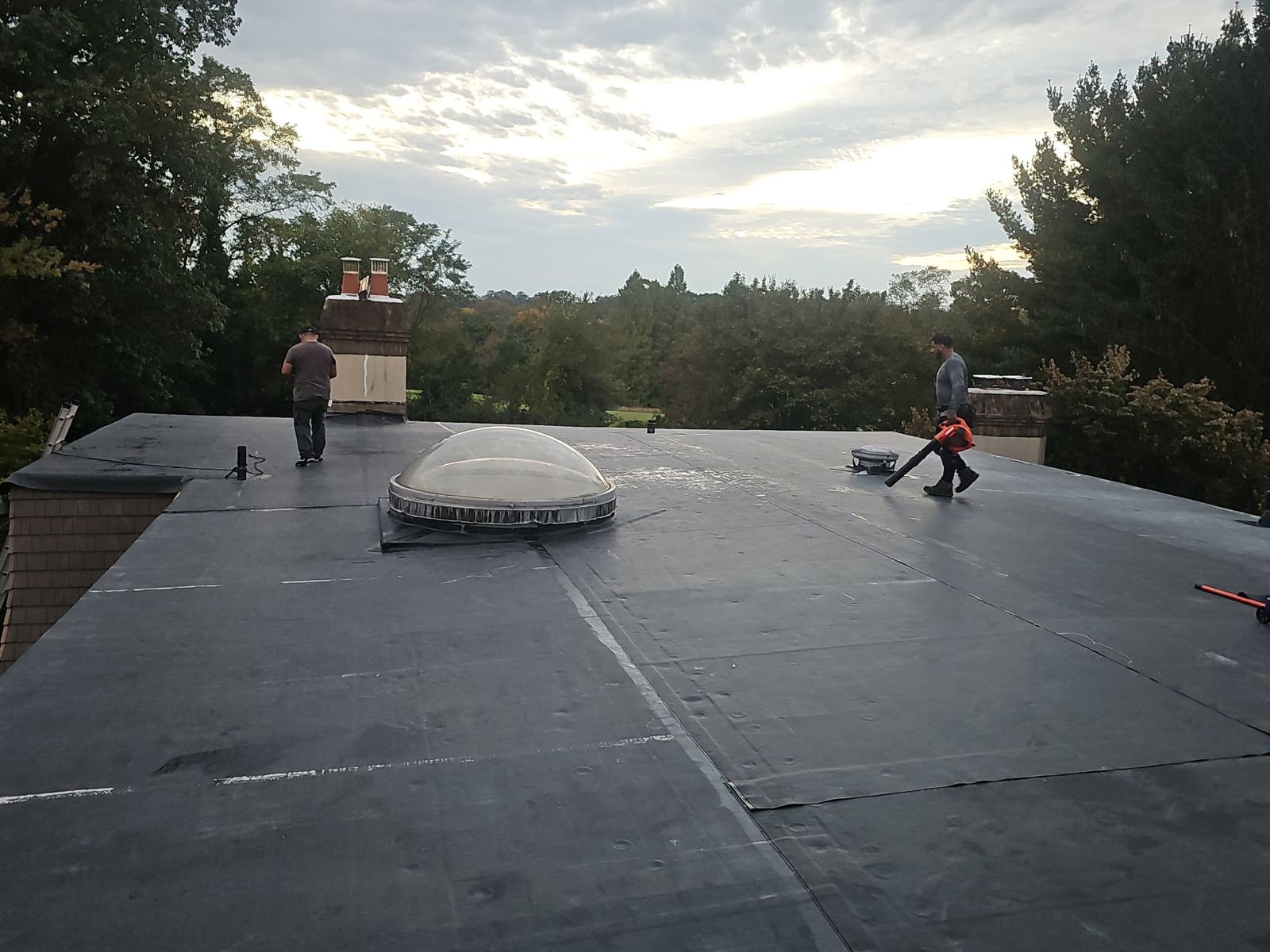
Gloucester City architectural styles require distinct material specifications for steep-slope and low-slope surfaces. Steep-slope structures benefit from heavy-duty architectural fiberglass asphalt shingles engineered to withstand high wind uplift. For low-slope areas and rowhouses with flat roofs, single-ply membranes like EPDM and TPO, or multi-ply modified bitumen systems, provide continuous watertight protection across minimal slopes.
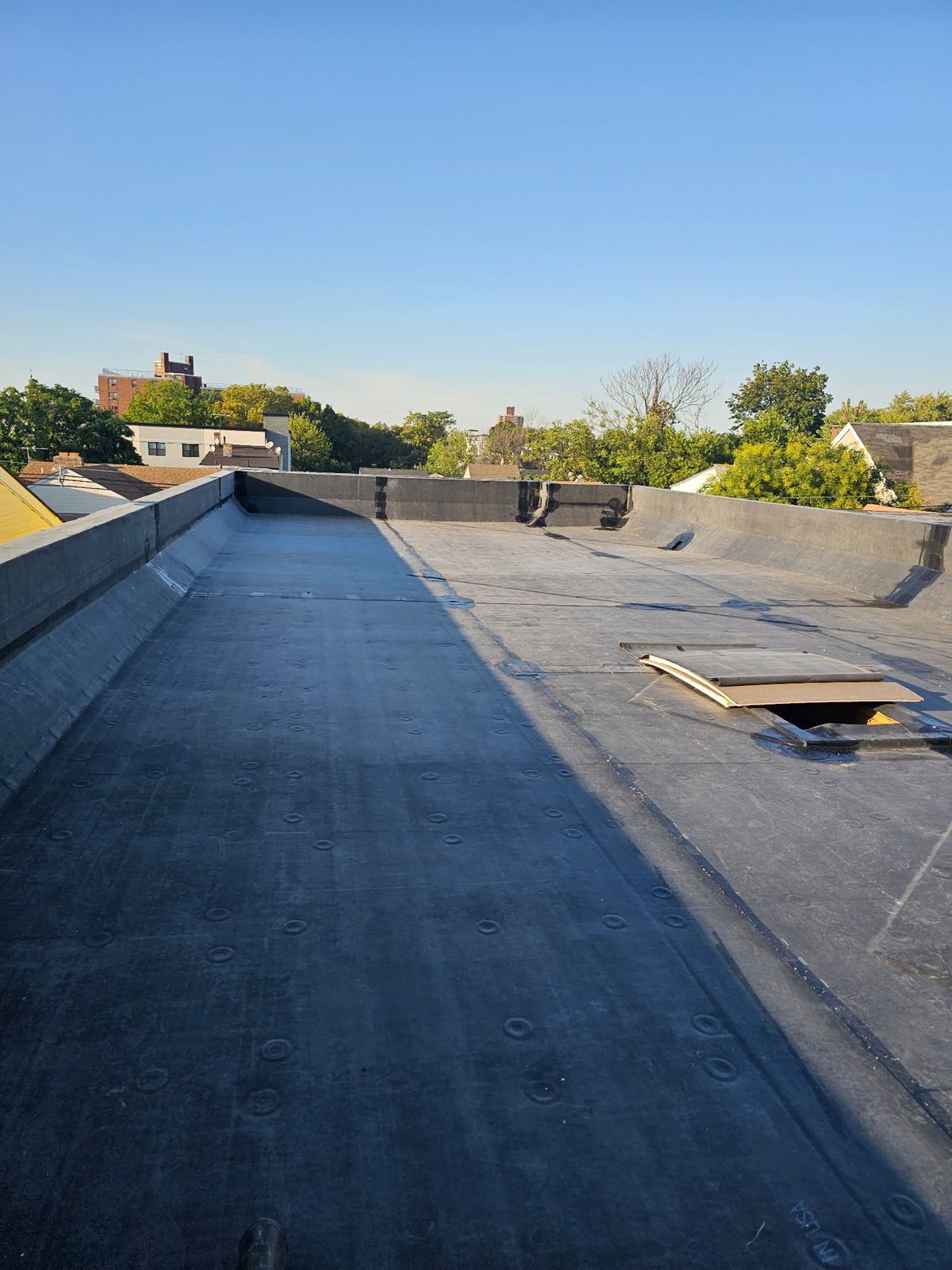
Low-slope rowhouse roofs present specific detailing requirements along shared parapets. Over time, mortar joints degrade and coping joints open over time, allowing water penetration behind standard wall flashings. Correcting these leak paths requires installing modified bitumen cap sheets that terminate properly up parapet walls, backed by custom metal counter-flashing and sealed masonry termination bars.
- High-wind architectural asphalt shingles for steep-slope home applications with multi-tier warranties.
- EPDM rubber and TPO single-ply membrane systems for flat roof sections requiring continuous seam welds.
- Multi-ply SBS modified bitumen installations designed for durability on low-slope urban rowhouse roofs.
- Custom-fabricated metal wall coping caps, parapet wall flashing, and counter-flashing over masonry joints.
Installation Timelines, Site Safety, and Disruption Control
Managing a roof replacement project in dense residential neighborhoods requires tight site logistics. Most single-family shingle tear-offs finish within one to two days, while rowhouse flat roofs requiring parapet restoration may span two to three days depending on deck conditions. Property protection begins before tear-off starts, utilizing heavy tarps and plywood shields over siding, air conditioning units, landscaping, and windows.
Debris management relies on strategically placed dumpsters and magnetic sweeping along driveways, walkways, and shared alleys to capture stray nails and metal scrap. Noise and crew presence are managed through defined working hours, ensuring minimal disruption to adjoining properties along narrow Gloucester City streets.
- Pre-construction property tarping to protect wall siding, windows, decks, and surrounding plantings.
- Systematic daily material tear-off and immediate waste containment within dedicated roll-off containers.
- Continuous magnetic floor sweeping across shared walkways, lawns, and concrete access paths.
- Defined work hours adhering to local noise guidelines while maintaining rapid project completion timelines.
Storm Damage Insurance Claims and 24/7 Emergency Services
Severe weather events can cause sudden structural damage through falling tree limbs, heavy wind uplift, or hail penetration. Storm Guard Roofing provides 24/7 emergency response to stabilize damaged properties immediately through temporary tarping and water diversion. Immediate containment prevents secondary interior water damage to drywall, electrical systems, and personal belongings.
For homeowners navigating insurance claims, our team offers detailed line-item damage documentation, photos, and scope assessments. We work directly with insurance adjusters during site inspections to ensure all structural damage, decking repairs, flashing replacements, and local code updates are properly included in the carrier estimate scope.
- Immediate 24/7 dispatch for emergency tarping, temporary seals, and structural stabilization.
- Comprehensive photographic evidence collection and technical damage reporting for insurance adjusters.
- Direct communication with insurance claim representatives to verify full material and labor scopes.
- Assistance with mortgage company endorsement processes for insurance proceeds disbursement.
Gloucester City questions we get asked
- Why is a complete tear-off necessary for roof replacement on Gloucester City rowhouses?
- A complete tear-off is necessary to inspect the underlying wood decking for hidden water rot, structural sagging, and mold. In Gloucester City, many rowhouses have aged tongue-and-groove planking that can fail under extra weight. Overlays conceal deck defects and prevent underlayments from bonding directly to the structure.
- How are leaks prevented along shared parapets and coping joints on flat rowhouse roofs?
- On Gloucester City rowhouses with flat roofs, shared parapets and coping joints open over time, allowing water to enter behind flashings. We resolve this by removing compromised flashing, applying waterproof membrane up and over parapet walls, and installing custom metal counter-flashing sealed with masonry termination bars.
- What low-slope materials work best for flat roof replacement in Camden County?
- Modified bitumen multi-ply systems, EPDM rubber, and TPO single-ply membranes are the primary choices for low-slope roof replacement. Modified bitumen provides thick impact resistance, while EPDM and TPO deliver seam integrity and ultraviolet resistance for flat urban structures.
- What emergency response options are available if a storm damages my roof?
- Storm Guard Roofing operates a 24/7 emergency response service accessible at (201) 403-0024. We dispatch technicians to install emergency tarps, secure loose materials, and prevent interior water entry while assisting you through the insurance claims process.
More in Gloucester City
Call (201) 403-0024 for a Gloucester City inspection, or send the form.